

Colorado academy trains next generation of wildland firefighters
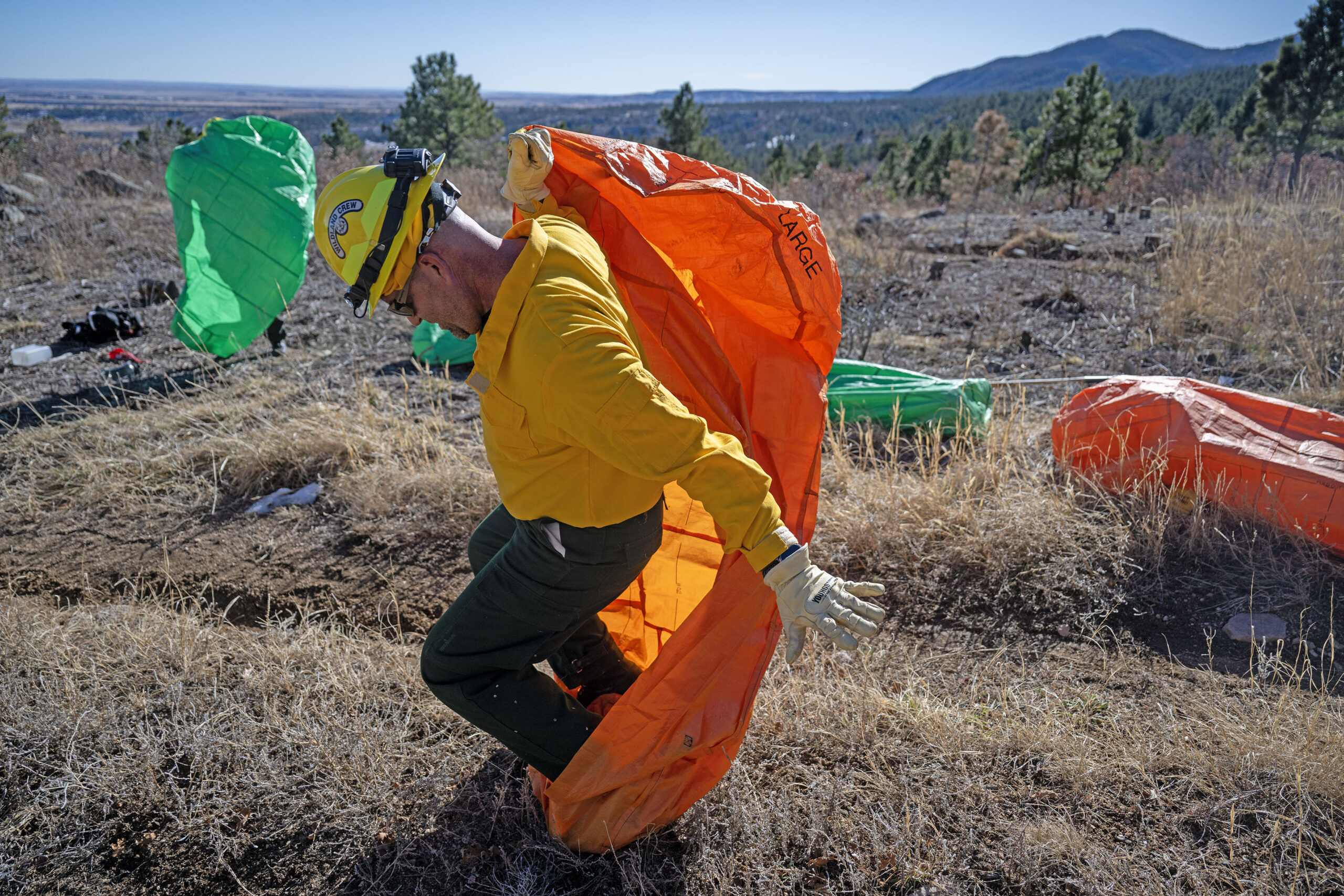
Wildfire activity is on the upswing in Colorado and across the U.S., and state firefighting and incident management agencies are stepping up their efforts to keep up with the changes.
“In the past, firefighters gained skills gradually over many seasons,” said Schelly Olson, spokeswoman for the Colorado Wildland Fire and Incident Management Academy. “They no longer have that luxury. Today, new firefighters may encounter large, complex fires early in their careers.”
Recent history seems to support Olson’s statement. Of the five largest wildfires in Colorado history, four have taken place since 2020. That year produced the three biggest blazes the state has ever seen: The Cameron Peak, East Troublesome and Pine Gulch fires scorched more than a half-million acres combined.

Last year, the Lee fire, which started in early August, burned for more than a month before fire crews could contain it, topping out at 137,758 acres.
Wildland fire season has typically run from May-September in Colorado. But the seasons have grown longer in recent years, and fire behavior has become more extreme as climate change exacerbates conditions that are favorable to wildfires — namely, warmer temperatures, low humidity and dry fuels. According to the Colorado Department of Public Health and Environment, these conditions will likely lead to more wildfires.
To keep up with the evolving state of fire behavior, CWFIMA officials are making adjustments as they train the next generation of wildland firefighters, Olson said.
The fire training agency recently held its winter academy at the University of Colorado at Colorado Springs, where more than 900 staff, instructors and students engaged in classroom instruction and field work covering a broad array of topics related to wildland firefighting and incident management, including basic firefighting, wildfire behavior, mitigation, community engagement and more.
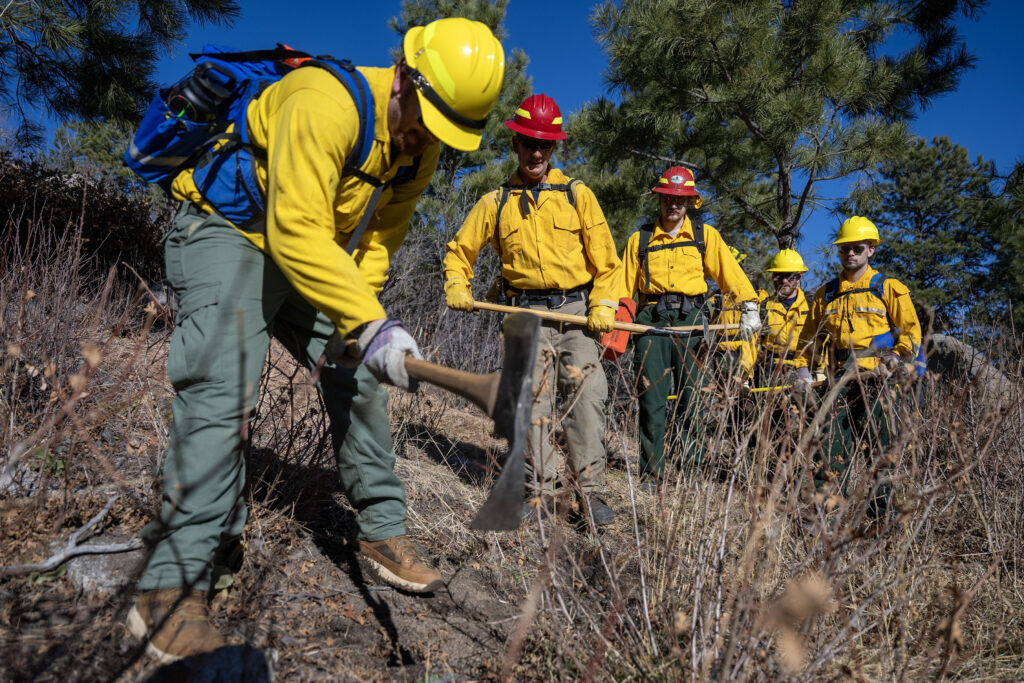
Instructors, mentors and students come in from agencies across the state, including local, state, federal, tribal, military and private-sector organizations, officials said.
“For many students, this is their first opportunity to train alongside firefighters from other agencies and jurisdictions, gaining exposure to different organizational cultures, capabilities and operational perspectives,” said Bill Wain, CWFIMA incident commander.
“This experience reinforces a critical lesson for the next generation of firefighters: Solving the wildfire problem in the United States requires collaboration, shared responsibility and unified action across a diverse network of partners.”

Classroom instruction was briefly interrupted earlier in the week because of an incident at UCCS. On Monday evening, a man allegedly fired a weapon at a student during a confrontation on the campus. No injuries were reported, and the suspect was arrested the following day. CWFIMA moved the classes to a separate location, and instruction resumed with minimal delays.
On Thursday, instructors took about a dozen students to Cheyenne Mountain State Park, where they were able to put their classroom instruction to practical use. Prior to the outing, the students spent several days taking courses in Basic Firefighting Training and Introduction to Wildland Fire Behavior, two classes taught in conjunction with each another.
“This is basically the nitty-gritty of wildland firefighting,” said Tanner Webb of the Colorado Division of Fire Prevention and Control. “We’re teaching these students the basics: digging line, getting down to the bare minimal soil, cutting away brush with chain saws.”
Students worked at weather assessment, fire line digging, checking for hot spots and using an array of firefighting tools.
“A lot of the fundamentals haven’t changed much since the early firefighters,” Webb said. “Understanding the weather, and how it affects fire behavior, is important. So is safety. That’s a top priority for us. Trees can grow back; you can’t grow people back.”
Students also practiced deploying the one piece of equipment they hope they never have to use.
A fire shelter is essentially a tent made of fiberglass and aluminum foil, designed to reflect heat and provide a certain amount of breathable air. It’s the firefighter’s last-ditch survival mechanism, deployed when a fire is advancing too quickly and there’s nowhere to run.
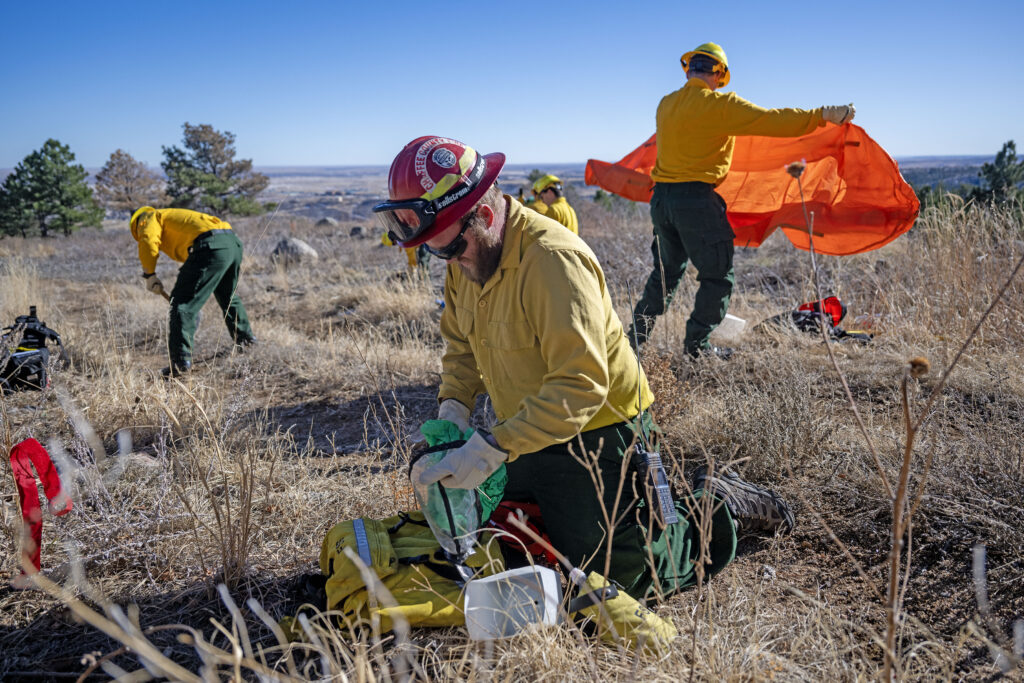
“Shelter deployments are part of the curriculum, and every firefighter does it each year as a refresher,” Webb said. “You don’t ever want to need it, but if you do, you have to know how to deploy it quickly and proficiently.”
Brad Surber, a student at the academy, said he learned a great deal in a short time.
“I know so much more now than I did a week ago,” said Surber, a Chaffee County firefighter. “Structure fires are usually contained to one or two areas. Wildland fires are much bigger, and it takes a totally different strategy to fight them.”
In recent years, CWFIMA had placed an increased emphasis on supporting the mental health and well-being of the firefighters. Fighting a large wildfire for days on end can take a mental toll as well as a physical one, Olson said.
“We recognize fatigue, cumulative stress and trauma as operational risks,” she said. “CWFIMA now includes courses and lectures about stress awareness, peer support, risk management and leadership accountability for crew well-being.”
Upon completion of the courses, students will be qualified to join a crew and begin their wildland firefighting careers under experienced supervision and mentorship, officials said. Surber plans to return home to Chaffee County and join a crew there.
“This has been a great experience,” he said. “I’ve learned so much from the instructors here. I’m excited to apply what I’ve learned.”

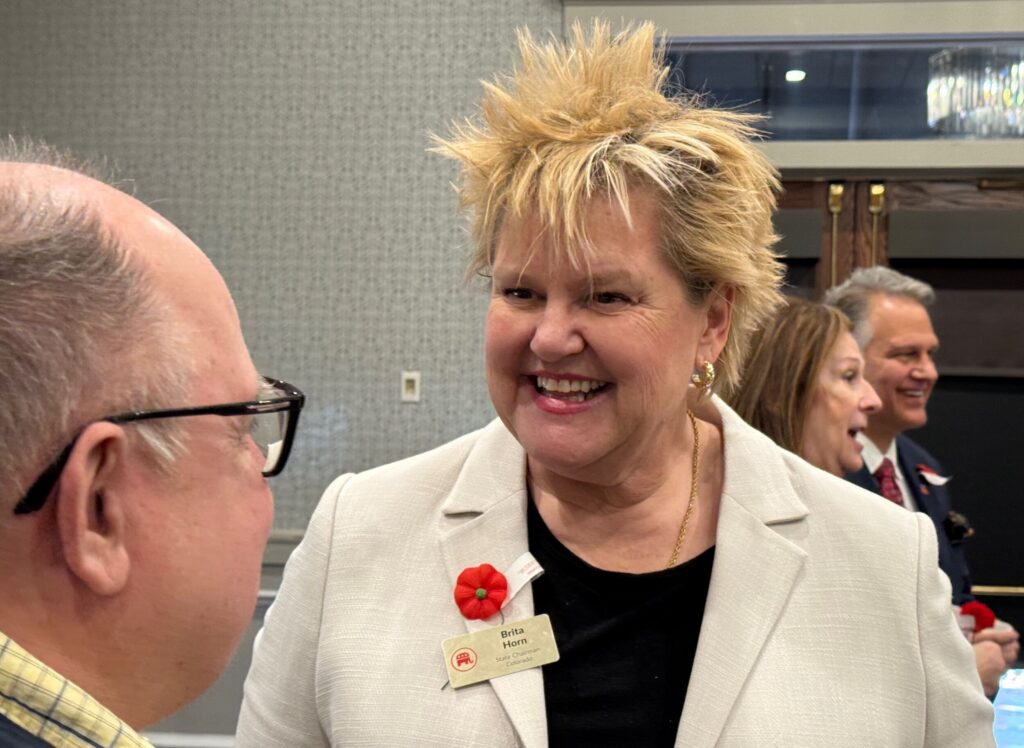
Colorado GOP chair Brita Horn loses ‘no-confidence’ vote, vows to refocus on ‘mending that divide’
Ernest Luning
ernest.luning@coloradopolitics.com
Updated 4 hours ago
The Colorado Republican Party’s state central committee approved a resolution expressing “no confidence” in state chair Brita Horn in a landslide late Monday night near the end of an online meeting marked by rancor and confusion. Almost 80% of the...

Colorado lawmakers tackle legislation on sexual assault
Jenny Deam
jenny-deam@coloradopolitics.com
Updated 1 day ago
A panel of Colorado lawmakers on Monday unanimously approved a bill that supporters say will offer protections and support to victims of domestic violence, stalking, sex trafficking and sexual assault, including mandatory training for law enforcement on trauma. The measure,...

More than 20 Colorado counties receive grants to improve land record-keeping systems
Maren Prince
maren.prince@denvergazette.com
Updated 18 hours ago
More than 20 Colorado counties received a total of $2.5 million to improve their land record-keeping systems, according to a Monday news release. The State’s Electronic Recording Technology Board awarded 22 counties with grants ranging from $5,000 to $350,000, according...

Morgan County man accused of killing wife, staging her suicide charged with first-degree murder
Kyla Pearce
kyla.pearce@gazette.com
Updated 15 hours ago
A grand jury announced the indictment of 52-year-old Ronald Lowry, who is accused of killing his wife in October 2023 and staging the crime scene to look like a suicide. Lowry, who was arrested Friday in Morgan County, was charged...

Denver mayor says his commute time tripled following ‘road diet’ change
Mark Samuelson Special to The Denver Gazette
mark.samuelson@denvergazette.com
Updated 2 days ago
Mayor Mike Johnston is pushing back sharply against the claim by Denver councilmembers and bike activists that the city succumbed to lobbying pressure in revising a “road diet” plan for East Alameda Avenue, while noting that his own commute time...

Iranians in Colorado weigh in on Khamenei’s death
Mark Samuelson Special to The Denver Gazette
mark.samuelson@denvergazette.com
Updated 3 days ago
As the joint U.S.-Israeli attack on Iranian targets continued into a second day following the death of leader Ayatollah Khomeini, Iranians living in Denver weighed in, saying they welcome the opportunity for a regime change in the Islamic Republic. “The...

Front Range Passenger Rail pitches to Colorado Springs ahead of possible ballot measure
Savannah Eller
savannah-eller@coloradopolitics.com
Updated 2 days ago
If all goes to plan, a measure for a sales tax to fund passenger rail service could be coming to Front Range ballots in 2026. “We have a plan that we think is viable, and we’ll actually be able to...
Garfield County sheriff illegally collaborated with ICE, cease and desist letter claims
Michael Braithwaite
michael.braithwaite@gazette.com
Updated 5 days ago
A cease and desist letter filed Wednesday alleged that the Garfield County sheriff intentionally violated state law by collaborating with the U.S. Immigration and Customs Enforcement (ICE). The letter, filed by the law firm Towards Justice, claimed that Garfield County...

Toll to sexual assault survivors rises if they feel blamed and disbelieved
Jenny Deam
jenny-deam@coloradopolitics.com
Updated 5 days ago
Natalie, a single mother, dropped off her son at daycare, went to therapy and then returned home. She swallowed a fistful of pills, washing them down with a six-pack of beer. She was ready to end her life. “I just...

Colorado rape cases rarely result in an arrest and prosecution
Evan Wyloge
evan-wyloge@coloradopolitics.com
Updated 2 days ago
Authorities say they are especially difficult cases. In Colorado, most go nowhere. Over the past decade, for every 10 reports of rape, there is only one arrest. Warning: This story contains descriptions of sexual violence. Kiersten May remembered a fuzziness...
PREV
PREVIOUS

10th Circuit rebuffs Jeffco's attempt to expand immunity footprint
The Denver-based federal appeals court confirmed on Wednesday that it would not treat a judge’s decision to move a civil case forward as the automatic equivalent of denying immunity to governmental officials. The order from the U.S. Court of Appeals for the 10th Circuit came one month after a trial judge deemed Jefferson County’s appeal […]

Colorado Coalition for the Homeless workers rally, citing low pay, high turnover
Dozens of Colorado Coalition for the Homeless frontline workers and members of the Service Employees International Union (SEIU) Local 105 rallied Thursday outside of a downtown CCH office building on north Broadway, calling on the nonprofit to address low wages and poor working conditions. The rally also comes on the heels of the city’s recent […]