

In rare move, evenly divided Colorado Supreme Court issues no opinion on child welfare case
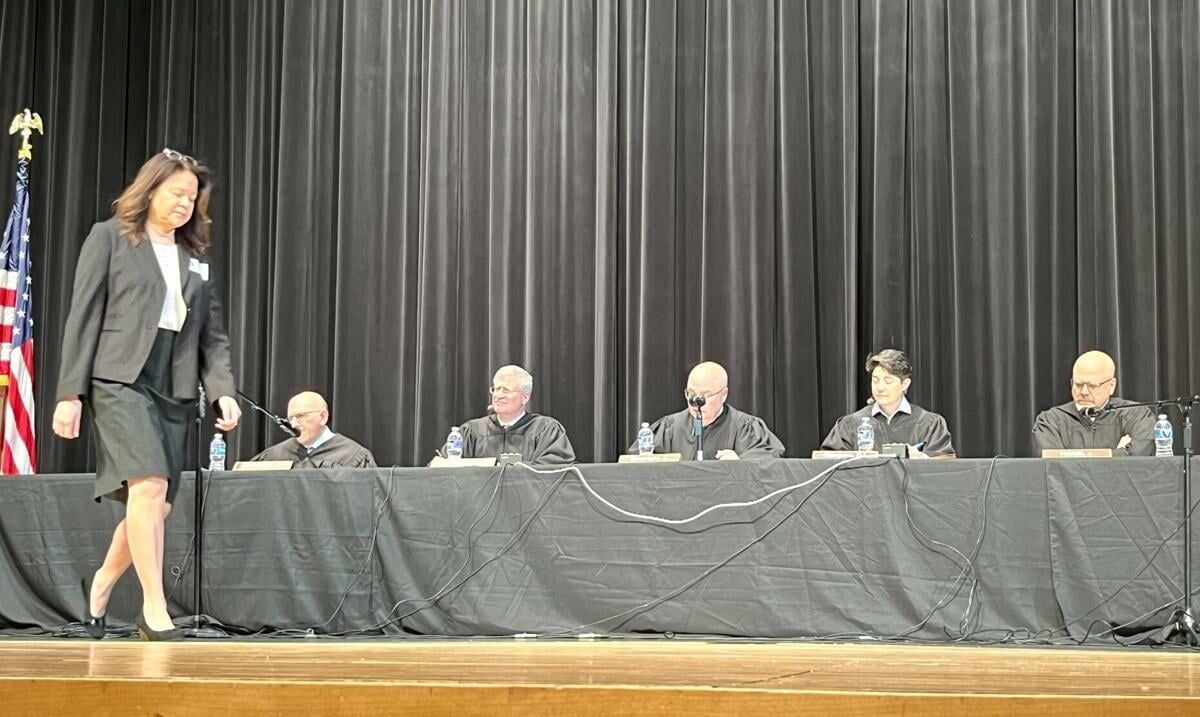
The Colorado Supreme Court, in an extraordinary move, could not reach agreement on Monday about whether a child’s legal representative has the authority to file a motion to terminate parental rights in a child welfare proceeding.
The 3-3 vote was a product of Justice Melissa Hart’s announced departure from the court in mid-December. She cited family and personal health reasons following an extended and unusual leave of absence. Her vacancy will be filled in February.
The lack of an opinion from an evenly divided court does have precedent, as the court’s database contains multiple occasions throughout its history where one of its seven members did not participate and the remaining justices could not reach a majority. However, the most recent instances last arose in a pair of appeals in 2019.
In the current child neglect proceeding in Morgan County, the underlying facts and filings were sealed from public view. The legal question, however, was whether a counsel for youth — a client-directed attorney for older children created under 2022 legislation — may move to terminate a parent’s legal relationship with their child.
Last June, the Supreme Court concluded in People in the Interest of R.M.P. that only the government can pursue a child neglect case, and a child’s legal representative may not continue to litigate a matter once the county has decided to drop the allegations. Recently, the state’s Court of Appeals extended that logic to rule that the legal representative may not appeal a judge’s decision declining to terminate parental rights if the government has not also moved to appeal.
Judge Katharine E. Lum disagreed with that view, believing that a child’s counsel for youth or related “guardian ad litem” representative was not limited to merely tagging along with the government.
“R.M.P. does not say that a GAL cannot prosecute a motion to terminate parental rights or appeal the denial of a termination motion, and I can find no prior case supporting either principle,” she wrote.
The Colorado Office of the Child’s Representative and the National Association of Counsel for Children wrote to the Supreme Court, arguing that Colorado lawmakers have deemed children “full parties” with “legally protected interests.” Therefore, they should be able to litigate termination through their legal counsel independently of county departments of human services.
Holding otherwise “would effectively make this class of children reliant on the department to pursue adoption as a permanency option,” they wrote. “And allowing the department to essentially hold the only key to the gate of adoption for any child in a dependency case fails to honor children’s independent interests.”
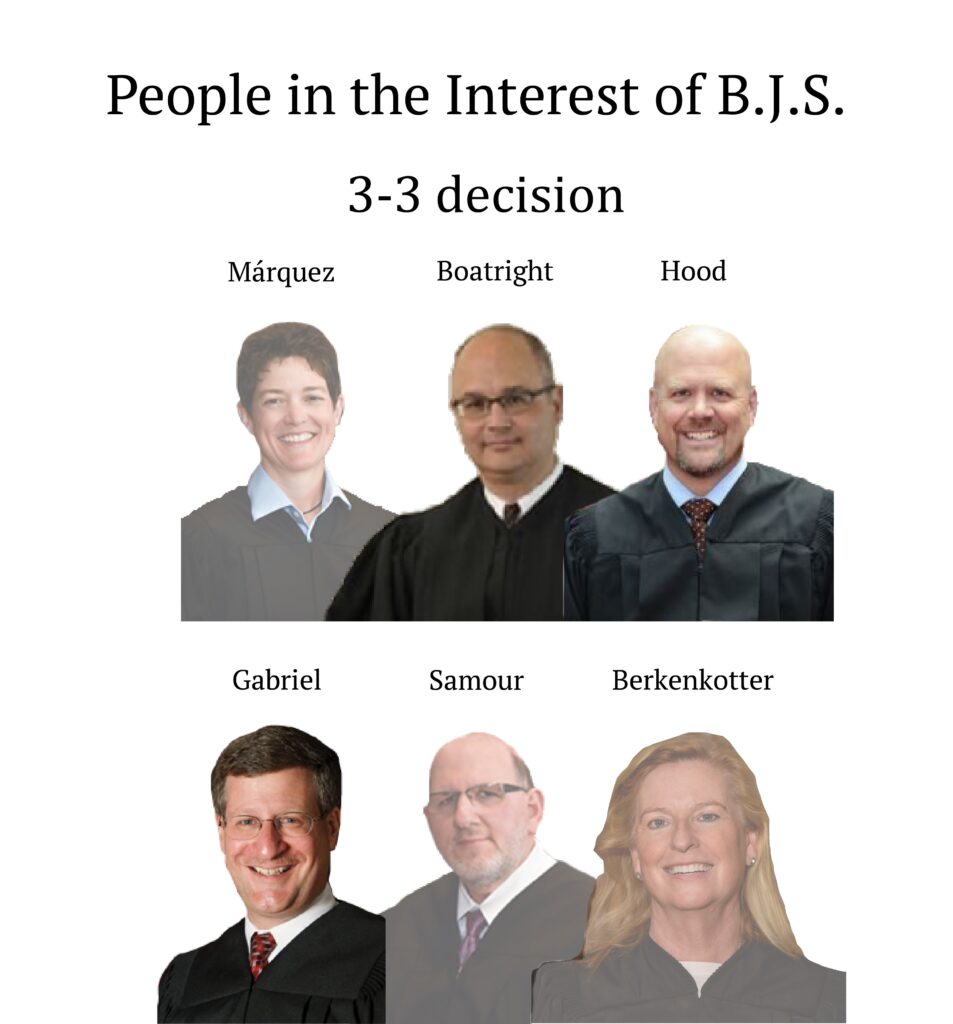
In its brief Jan. 12 order, the court indicated that Chief Justice Monica M. Márquez and Justices Carlos A. Samour Jr. and Maria E. Berkenkotter would have sided with the mother who argued her child’s counsel for youth could not file a termination motion. Justices Brian D. Boatright, William W. Hood III and Richard L. Gabriel would have turned aside that challenge.
The case is People in the Interest of B.J.S.


Federal judge dismisses developer’s challenge to Denver affordable housing ordinances
Michael Karlik
michael.karlik@coloradopolitics.com
Updated 3 hours ago
A federal judge dismissed a homebuilder’s constitutional challenge on Tuesday to a pair of Denver ordinances that impose obligations on developers related to the affordable housing demands created by new construction. Two related companies, redT Homes and redT Capital Partners,...

10th Circuit distances itself from prior decision making it easier to toss prisoner lawsuits
Michael Karlik
michael.karlik@coloradopolitics.com
Updated 12 hours ago
The Denver-based federal appeals court distanced itself on Wednesday from its own recent decision that made it easier for prison officials to end civil lawsuits by transferring incarcerated plaintiffs between facilities. A three-judge panel of the U.S. Court of Appeals...

Appeals court overturns Douglas County vehicular homicide conviction due to faulty jury instructions
Michael Karlik
michael.karlik@coloradopolitics.com
Updated 1 day ago
Colorado’s second-highest court overturned a defendant’s vehicular homicide conviction and 12-year prison sentence on Thursday after determining a Douglas County judge omitted key language from the jury instructions that could have resulted in a different outcome. James Paul McDonald was...

Federal judge dismisses malicious prosecution claim against former Denver prosecutor
Michael Karlik
michael.karlik@coloradopolitics.com
Updated 7 hours ago
A federal judge concluded on Monday that a former Denver prosecutor could not be sued for allegedly causing the arrests of two plaintiffs after they failed to appear for trial on the scheduled date, even though the trial had been...

Judicial discipline commission reports increased transparency, increased submissions
Michael Karlik
michael.karlik@coloradopolitics.com
Updated 3 days ago
The Colorado Commission on Judicial Discipline received 473 misconduct complaints about judges in 2025, which was nearly 29% higher than in 2024 and substantially greater than any time in the past decade. However, only 31 complaints were referred to the commission...

Colorado Gov. Jared Polis ignites fierce debate after raising clemency questions in Tina Peters case
Marianne Goodland
marianne.goodland@coloradopolitics.com
Updated 2 days ago
Gov. Jared Polis ignited a political firestorm Tuesday night after weighing in on the prison sentences of two former Colorado officials — a Democrat and a Republican — convicted of attempting to influence a public servant. The comments quickly fueled...

Colorado Supreme Court signals intervention in dispute over treatment for trans children
Michael Karlik
michael.karlik@coloradopolitics.com
Updated 3 days ago
The Colorado Supreme Court ordered Children’s Hospital Colorado on Tuesday to explain why it should not direct the organization to resume providing certain types of services to transgender children in compliance with the state’s non-discrimination law. Last month, a Denver...

Judge nixes latest policy requiring 7 days’ notice for Congress members to visit ICE facilities
Michael Kunzelman
michael.kunzelman@associatedpress.com
Updated 3 days ago
WASHINGTON (AP) — A federal judge agreed on Monday to temporarily suspend the latest version of a Trump administration policy that requires members of Congress to provide a week’s notice before they can visit immigration detention facilities. U.S. District Judge...
Judge nixes latest policy requiring 7 days’ notice for Congress members to visit ICE facilities
Michael Kunzelman
michael.kunzelman@associatedpress.com
Updated 3 days ago
WASHINGTON • A federal judge agreed on Monday to temporarily suspend the latest version of a Trump administration policy that requires members of Congress to provide a week’s notice before they can visit immigration detention facilities. U.S. District Judge Jia...

Colorado Supreme Court clarifies restraining order violations can always support burglary charge
Michael Karlik
michael.karlik@coloradopolitics.com
Updated 2 days ago
The Colorado Supreme Court’s majority ruled on Monday that a violation of a restraining order can also serve as a basis for finding a defendant guilty of burglary. Under state law, a person commits second-degree burglary by unlawfully entering or...
PREV
PREVIOUS

State Supreme Court oral arguments, discipline case resolved | COURT CRAWL
Welcome to Court Crawl, Colorado Politics’ roundup of news from the third branch of government. The state Supreme Court will hear oral arguments this week, plus disciplinary authorities resolved the misconduct case against a San Miguel County judge. At the Supreme Court • The Colorado Supreme Court has four cases on its docket this Wednesday. They […]

Colorado Democratic vacancy committee selects Lori Goldstein for HD 29
A Democratic vacancy committee on Sunday chose Lori Goldstein, president of the Adams 12 Board of Education, to serve the final year of Rep. Shannon Bird’s term. Bird, a Democrat who would have been term-limited this year, resigned her seat on Jan. 5 to run for Congress in District 8 full-time. Goldstein, who had already […]