

Helping close Colorado school children’s literacy gaps | OPINION

By Ellen Gelman
Imagine being a high school student sitting in a room where everyone around you seems to understand texts that to you feel like a foreign language. Imagine knowing you’re smart, knowing you have ideas worth sharing, but feeling locked out because the words on the page won’t cooperate.
That was Eddy’s daily reality: when he walked into my high school classroom last fall, he was reading at roughly a third-grade level. Like many students in his shoes, he learned to hide it well. He stayed quiet, looked down during read-alouds and nodded politely when I asked if he understood something. He built survival strategies, not because he lacked ability, but because he was never properly taught how to read.
My Reading Academy class exists for students like Eddy. It’s a place where we slow down, strip literacy back to the essentials and rebuild the foundation piece by piece. We use structured literacy rooted in the science of reading — phonics, decoding, fluency practice, vocabulary routines and daily opportunities to read and discuss texts that grow in complexity. It is patient, intentional instruction many older students like Eddy missed the first time around.
Eddy was hesitant at first, not used to adults giving him space to relearn something he quietly struggled with for years. He expected to feel behind, but quickly realized that in this class, everyone started somewhere and everyone belonged.
Small steps came first: sounding out long words without guessing, reading a paragraph without freezing, finally understanding why vowels behaved the way they did. Those wins built Eddy’s confidence and showed him he wasn’t broken; he had simply never been given the tools. Eddy began participating, reading aloud, asking questions, and even encouraging classmates. I’ll never forget the day he read a full page without hesitation. When he finished, he looked up and said, “I’ve never been able to do that.” Eddy’s story is why so many educators, including Teach Plus Colorado Policy Fellows, have urged our state leaders to take a closer look at how policies like Colorado’s READ Act can support students beyond the early grades. Students don’t stop needing explicit, structured reading instruction just because they get older.
That’s the moment I wish every policymaker and school leader could witness. And it’s the moment when we should commit to doing everything we can so Eddy and others like him can do just that: read. Here are a few ways we can make this happen:
Invest in structured literacy.
In my classroom, there are aha moments every day when my students finally learn in ways that are explicit, systematic and responsive to how the brain learns to read. Many of my students arrive in high school years behind in reading. When I use routines grounded in phonics, morphology, fluency, and comprehension, students like Eddy begin to decode with confidence, make meaning from complex texts, and see themselves as readers for the first time. Structured literacy is the foundation that allows students to access every other subject and opportunity in school.
Give teachers the training they need.
Effective structured literacy does not happen by accident. It requires deep, ongoing professional learning. In my own practice, targeted training has allowed me to analyze student data, diagnose specific reading gaps, and intentionally design lessons that meet students where they are. Teachers want to do right by their students, but without sustained training in evidence-based reading instruction, we are asked to solve a complex problem with limited tools. Investing in teacher training is an investment in instructional quality, student growth and long-term academic equity.
Give students the time and space to rebuild the skills they missed.
Students cannot catch up on years of unfinished learning in short intervention blocks or test-prep cycles. In my classroom, growth happens because students are given protected time to practice foundational skills without shame or pressure. When we slow down, provide repetition and honor progress over perfection, students rebuild not only their reading abilities but also their confidence. True literacy recovery requires schedules, staffing, and policies that recognize learning to read as a developmental process. It’s one that deserves time, patience and intentional support at every grade level.
Eddy’s growth didn’t stay invisible for long. When we ran midyear assessments, his progress was undeniable. He was reading more fluently, accurately and with a level of comprehension we had not seen before. And then, by spring, the leaps became almost unbelievable: Eddy was reading on a twelfth-grade level. A student who had entered my classroom performing like an elementary reader was now reading at the level expected of a graduating senior.
This June, Eddy will graduate high school reading on grade level for the first time in his life. When he walks across that stage, he won’t just be receiving a diploma. He’ll be carrying proof of something far more important: older students can catch up. If we invest in structured literacy, give teachers the training they need and give students the time and space to rebuild the skills they missed, literacy gaps can close for Eddy and all Colorado students like him.
Ellen Gelman is a high school literacy interventionist and 10th grade lead at Rocky Mountain Prep SMART in Denver. She is a 2025-2026 Teach Plus Colorado Charter Policy Fellow.

Q&A with Mike Pence | Former vice president says GOP’s populist turn from conservatism isn’t permanent
Ernest Luning
ernest.luning@coloradopolitics.com
Updated 3 hours ago
Former Vice President Mike Pence says he’s concerned that the Republican Party has taken a populist turn away from bedrock conservative principles during President Donald Trump’s second term, but he believes the party will return to its roots when Trump...

Republican Victor Marx taps George Markert as his lieutenant governor pick in Colorado’s gubernatorial race
Ernest Luning
ernest.luning@coloradopolitics.com
Updated 36 minutes ago
Colorado Republican gubernatorial nominee Victor Marx named George Markert, a retired Marine colonel, as his running mate for lieutenant governor Friday morning, saying the former U.S. Senate candidate will bring “exceptional character, proven leadership and a lifetime of serving others”...
Pueblo mayor, council concoct Trumpian Texas Two-Step | Dennis Maes
Dennis Maes
dennis-maes@coloradopolitics.com
Updated 1 day ago
Several weeks ago, an article was published positing Pueblo Mayor Heather Graham is a disciple of the calamitous Donald Trump school of governance — specifically as it related to questionable ethical practices and the misuse of public funds. Recently, Graham...
Colorado can’t afford to turn its back on proven public safety technology | GUEST COLUMN
Colorado Politics
colorado-politics@coloradopolitics.com
Updated 1 day ago
By Samuel G. Michael I recently saw a report that said Colorado is leading the way in artificial intelligence adoption for businesses. Across our state, more business owners and employees than ever before use AI for their everyday functions —...

Colorado lawmakers start crafting strategy to manage $200 million in federal rural health funds
Marissa Ventrelli
marissa.ventrelli@coloradopolitics.com
Updated 1 day ago
Members of the Colorado legislature’s new Commission on Medicaid raised concerns Wednesday about the federal Rural Health Transformation Program created under H.R. 1. The bipartisan, bicameral commission, created in the last legislative session to guide implementation of Medicaid changes under...

Democrat Jessica Killin’s internal poll shows dead heat with U.S. Rep. Jeff Crank in Colorado’s 5th CD
Ernest Luning
ernest.luning@coloradopolitics.com
Updated 23 hours ago
Jessica Killin, the Democratic nominee in Colorado’s 5th Congressional District, is in a statistical tie with Republican U.S. Rep. Jeff Crank, according to an internal poll released this week by Killin’s campaign. The poll of likely general election voters, conducted...

Colorado’s 72-hour social media warrant law takes effect Aug. 12
Marissa Ventrelli
marissa.ventrelli@coloradopolitics.com
Updated 1 day ago
A law requiring social media platforms to respond to search warrants within 72 hours goes into effect on Aug. 12. Senate Bill 011 also requires platforms to create a staffed hotline for Colorado law enforcement agencies to contact regarding pending...
As education conflicts abound across Colorado, who puts the kids first? | Paula Noonan
Paula Noonan
paula-noonan@coloradopolitics.com
Updated 2 days ago
Elected school boards and the Colorado Department of Education (CDE) have hit the headlines with fired superintendents, superintendent resignations, failures of oversight, and misdirected dollars. Cherry Creek School District’s superintendent was fired. Jefferson County Schools’ superintendent found a less stressful...
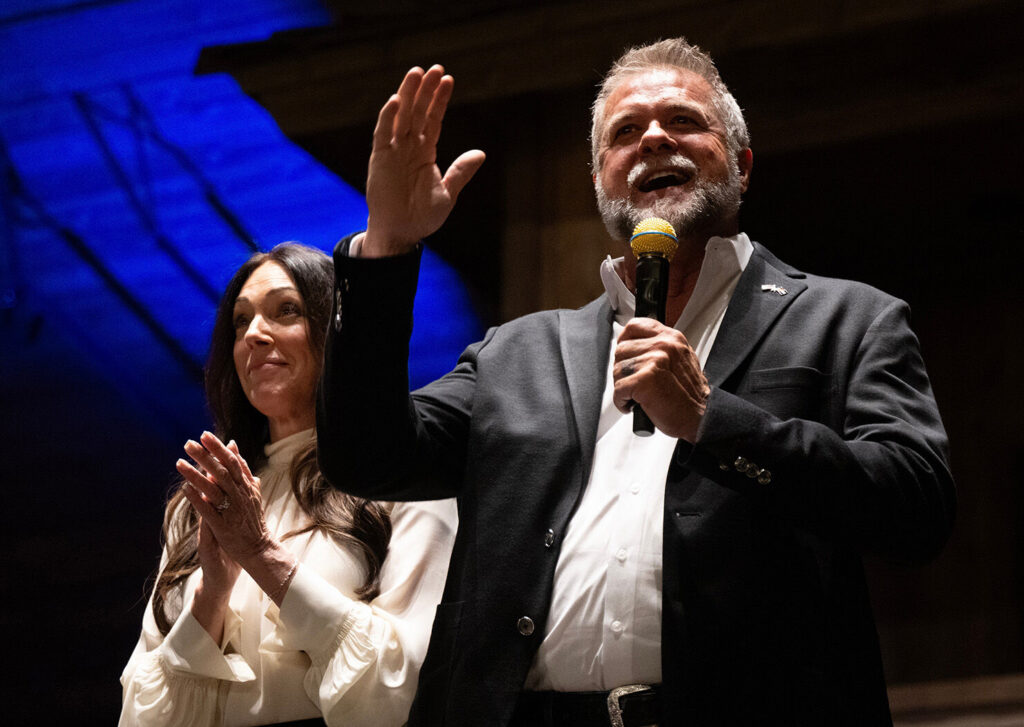
Victor Marx says he’ll only debate Phil Weiser once in Colorado governor’s race — without a moderator
Ernest Luning
ernest.luning@coloradopolitics.com
Updated 1 day ago
Colorado Republican gubernatorial nominee Victor Marx said on Tuesday that he will participate in only one debate with Attorney General Phil Weiser before the November election — and he challenged the Democratic nominee to hold the event without a moderator....

Clock is ticking on Colorado’s new AI rules | PODIUM
Colorado Politics
colorado-politics@coloradopolitics.com
Updated 2 days ago
By Aashis Luitel On Jan. 1, organizations using covered automated systems must begin complying with Senate Bill 26-189, Colorado’s new Automated Decision-Making Technology Act. They can identify those systems and start building the processes the statute clearly requires. What they...
PREV
PREVIOUS

Former Colorado wildlife director heads to Wyoming
Jeff Davis, the former director of Colorado Parks and Wildlife who oversaw the introduction of wolves in Colorado, is headed to Wyoming, where he will take on a new job as deputy director for that state’s game and fish agency. The Polis administration replaced Davis as head of Colorado Parks and Wildlife after Washington’s wildlife […]
Colorado chose politics over public safety and now our communities pay the price | PODIUM
By Chris Richardson and Max Brooks This week, federal authorities arrested Jose Barrera-Bolanos in Denver. He is an illegal immigrant who had already been convicted of sexually assaulting a child. That fact alone should stop every parent, grandparent and lawmaker in Colorado in their tracks. This was not a minor offense. This was not a […]