

Colorado lawmakers hear from chief justice about security needs, new judges
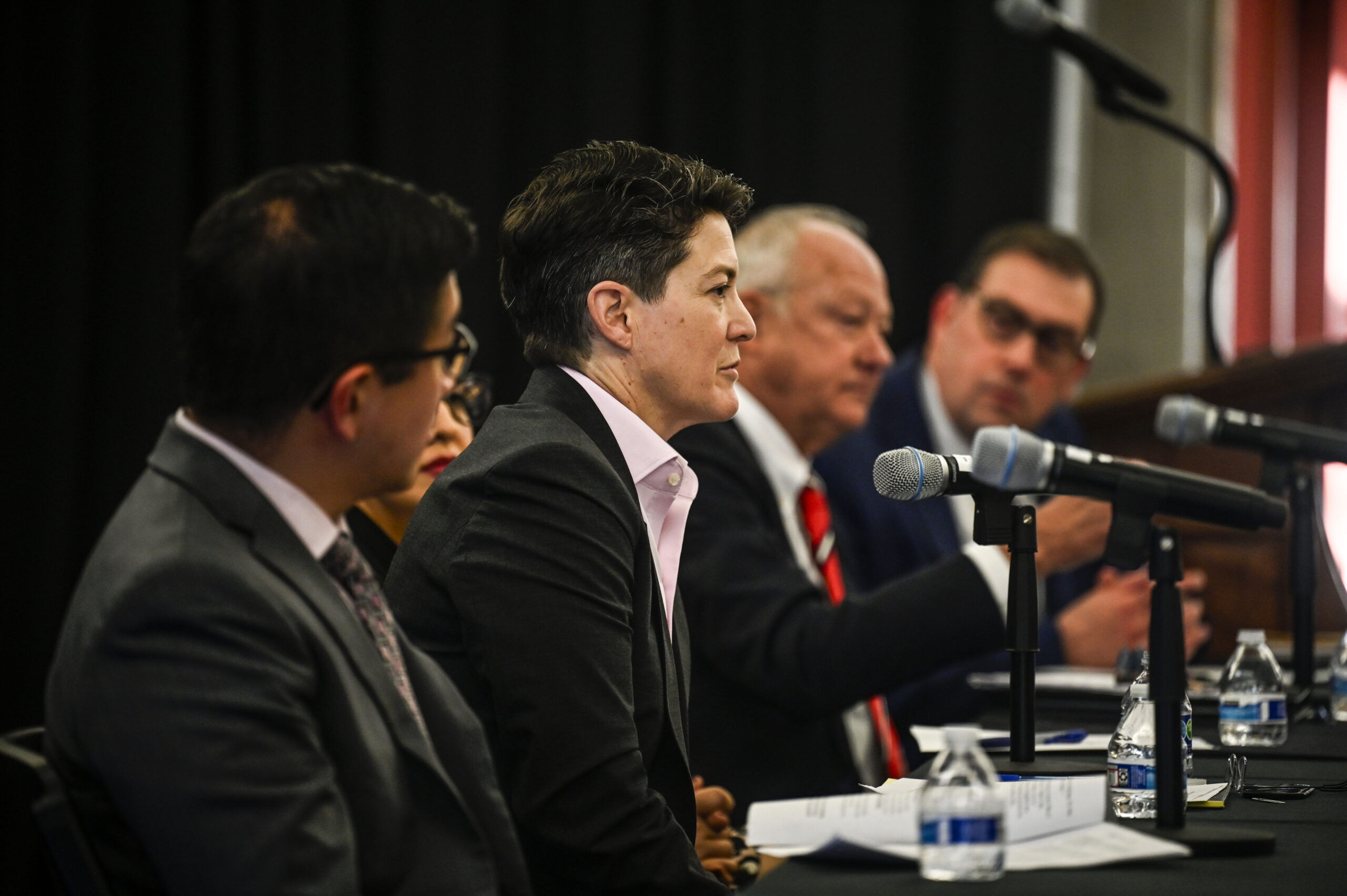
Chief Justice Monica M. Márquez asked members of the legislature’s Joint Budget Committee on Tuesday to stay the course and fund the 10 new trial judgeships that Colorado lawmakers approved last year, and also explained her vision for enhancing judicial branch security.
Responding to questions generated by committee members after a hearing last month on the $845 million budget request for courts and probation, Márquez cautioned against delaying the establishment of new judgeships in the upcoming fiscal year. Adding 29 new judgeships was the Judicial Department’s top legislative priority in 2025, based on workload studies that showed a need for dozens more trial and appellate judges. However, due to budget constraints, the General Assembly ultimately created 15 new seats over two years.
“All of these jurisdictions have been working closely with counties to build out courtroom space, to acquire additional needed space to accommodate new judgeships,” Márquez said, adding that delaying the new positions to save money would “jeopardize these important county relationships.”
She added that, in light of the roughly $1 billion budget deficits the state faced last year and this year, the judicial branch would avoid waiting to bring forward large requests for new judges until the need is urgent.
“Going forward, we are restructuring our budget so that we can provide information every year to this committee about our ongoing need,” said Márquez, “and then ideally be able to submit smaller, more targeted, and yet more frequent requests to keep up with that need.”
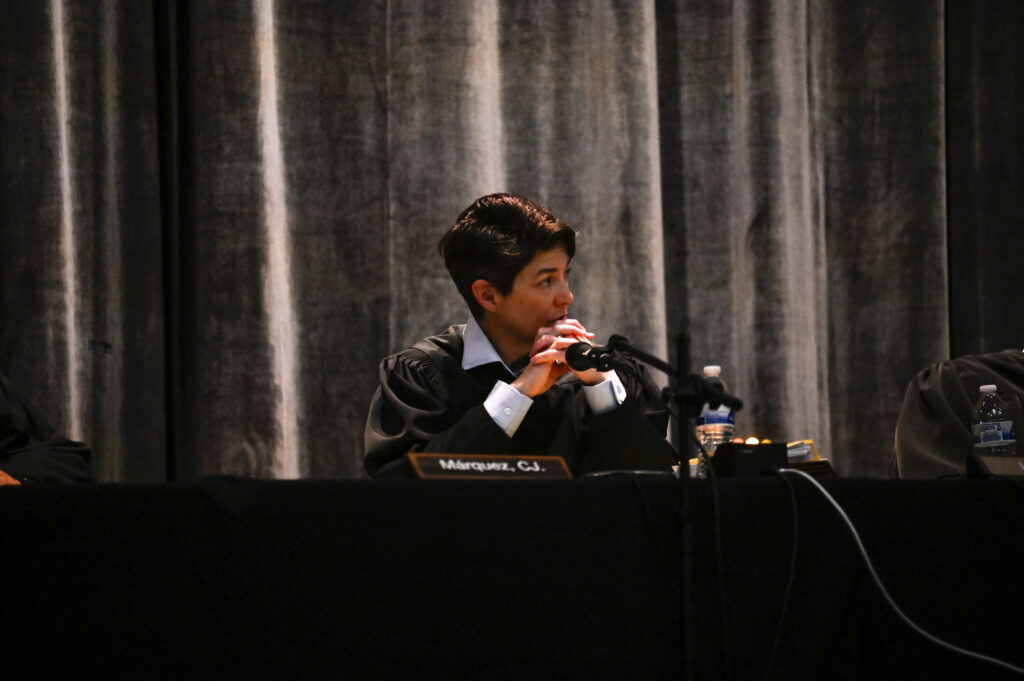
Márquez also dedicated time before the committee and in written materials submitted in advance to explain why she is seeking funding for a full-time employee to work with a task force addressing physical security for court and probation facilities. The branch has already spoken with its counterpart in Maryland, which enacted changes to judicial security after a disgruntled litigant murdered a trial judge in 2023.
Security “came up in literally every single district visit that we had,” said Márquez, referring to trips she took over the past year to all 23 of Colorado’s judicial districts. “I also want to be clear that it’s not just our judges. What surprised me about these visits around the state is that these challenges are being experienced as well by our court and probation staff. All across our state, I saw aging court facilities and, frankly, in some instances, glaring security vulnerabilities.”
She described an incident from December in Arapahoe County in which the family member of a victim physically attacked a 69-year-old defense attorney at the courthouse. Márquez added that “the very same day,” a defendant “jumped across the bench and came very close to attacking one of our judicial officers.” Colorado Politics could not verify the timing, but the district attorney’s office confirmed there was an attempted attack on a district judge in July.
“I agree with what you are saying. It’s just maybe your approach,” responded Sen. Barb Kirkmeyer, R-Brighton, adding that she believed each chief judge should create their own task force to address security due to wide variation between courthouses.
“What I’m hoping to accomplish with this task force is to create some statewide uniformity,” said Márquez. While Kirkmeyer’s home of Weld County has provided a good model for state-local cooperation, “that is not true across the state.”
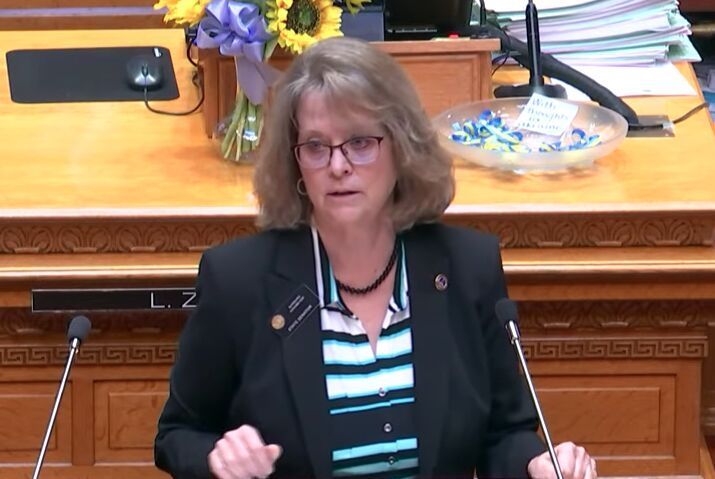
Rep. Rick Taggart, R-Grand Junction, suggested Márquez’s request might be too modest given the problem.
“I’m just having a hard time understanding how one person can coordinate with a task force with 64 counties and 23 judicial districts. Are we asking too much of one person?” he wondered.
“It’s a whole lot more doable with one person who is actually dedicated full time to that role than bits and snatches of extra time from people who have other job responsibilities,” replied Márquez.
In response to lawmakers’ questions about whether it is a state or county responsibility to fund courthouse furnishings, Márquez said the law was “somewhat gray.” But she argued that there was a valid reason for the state to bear the costs.
“Certain counties have actually chipped in to these efforts, but not every county is able or willing,” she explained. “The furnishings component being offered by the state is important leverage in working with the counties in order to arrive at mutually beneficial build-outs, courtroom space build-outs.”
State Court Administrator Steven Vasconcellos, who also appeared at the hearing, said that mid-to-late 2025 saw fewer disruptions to virtual court proceedings by malicious actors. However, around New Year’s Day, there was a “rash of disruptions” in Denver, El Paso County and Douglas County. The department finalized a contract with a vendor last month for new software that provides more advanced controls over security and virtual courtroom management.
Replying to a question from Kirkmeyer, Vasconcellos said he was not prepared to discuss how the Judicial Department might avoid an increase in its budget from the state’s general fund in 2026.
“I didn’t ask you to cut funding,” said Kirkmeyer. “But at least there needs to be no general fund growth from the current fiscal year’s budget to next year’s budget.”
“I have a very strong conviction that the judicial branch is a co-equal branch, and you all need to be funded in a way that you can perform your obligations,” countered Sen. Judy Amabile, D-Boulder. “That’s really fundamental. So, I’m not sure that we all share (Kirkmeyer’s) point of view.”

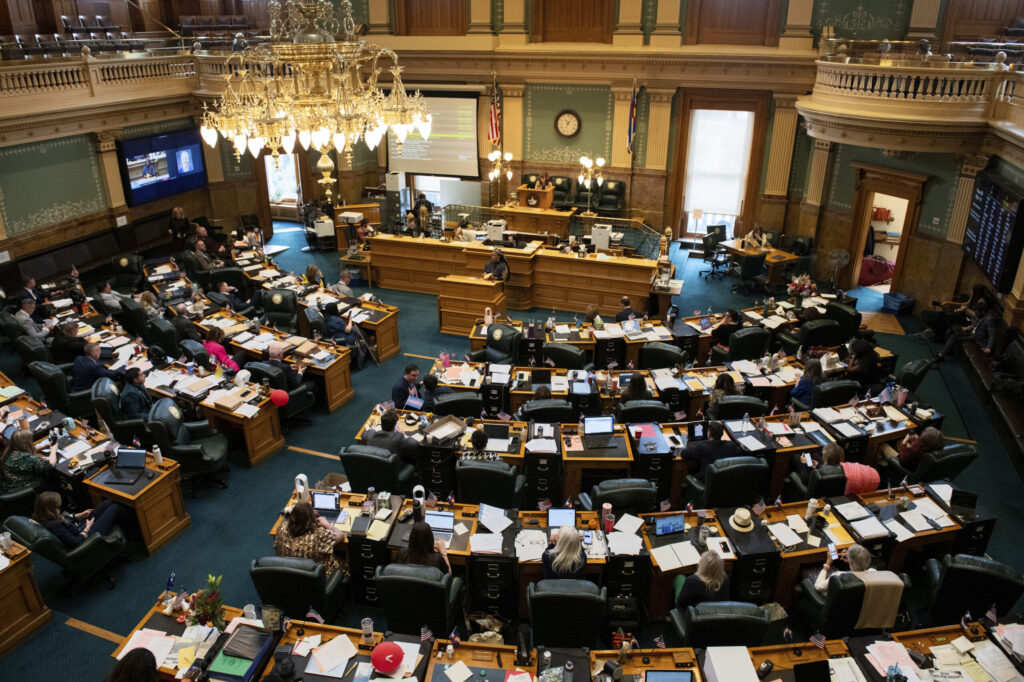
As lawmakers return, federal pressure and fiscal stress could shape Colorado’s 2026 session
Marissa Ventrelli
marissa.ventrelli@coloradopolitics.com
Updated 1 hour ago
The eight months since lawmakers wrapped up the 2025 legislative session have been anything but quiet. Federal funding cuts, a flurry of presidential executive orders, an election year fast approaching, and a projected $1.2 billion budget shortfall are all converging,...
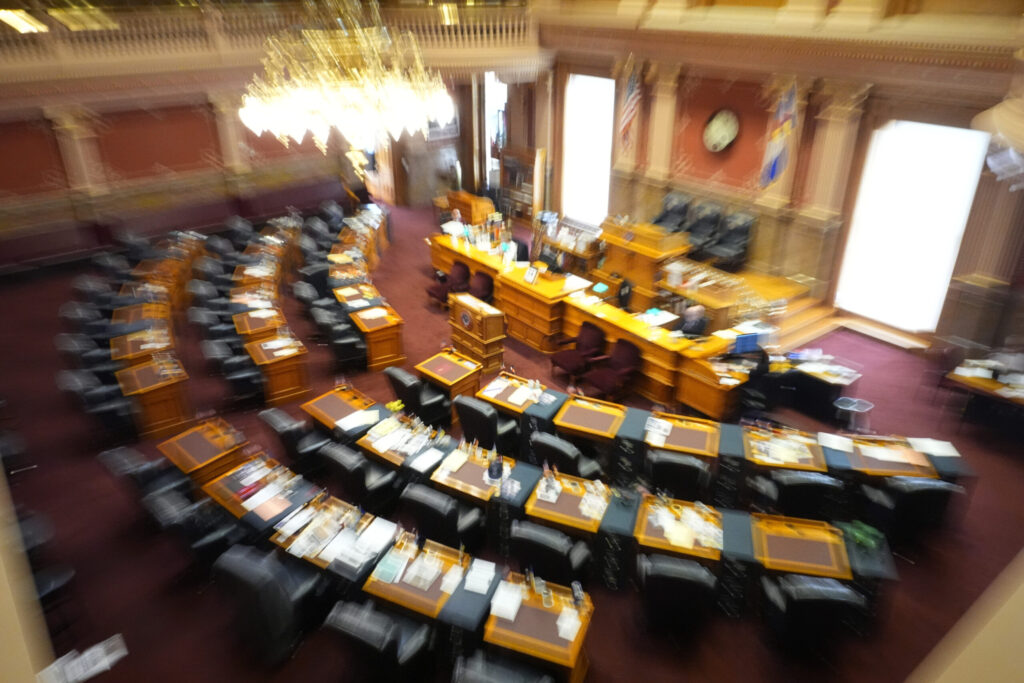
Senate Democrats announce committee assignments for 2026 session
Marissa Ventrelli
marissa.ventrelli@coloradopolitics.com
Updated 7 hours ago
Democratic Senate Majority Leader Robert Rodriguez, D-Denver, announced committee assignments for the 2026 legislative session on Wednesday. “Committees are crucial to the legislative process – they’re where we deliberate, hear from the public, and fine-tune policies so that they can...

Lawmakers, advocates seek reforms after cases expose gaps in Colorado’s competency system
Marissa Ventrelli
marissa.ventrelli@coloradopolitics.com
Updated 4 hours ago
After a series of high-profile crimes throughout the state last spring and summer exposed gaps in Colorado’s legal system for individuals declared incompetent to stand trial, lawmakers and an advocacy organization are pushing for changes this year. Extensive media coverage...

Urban vs. rural, labor vs. business: Battles are brewing ahead of the 2026 Colorado legislative session
Marissa Ventrelli
marissa.ventrelli@coloradopolitics.com
Updated 4 hours ago
Grab your popcorn — it’s going to be an interesting 2026 legislative session in Colorado. There’s not much you can count on these days, but if you’ve been around the state Capitol long enough, you’ve probably seen your fair share...

Former Colorado wildlife director heads to Wyoming
Marianne Goodland
marianne.goodland@coloradopolitics.com
Updated 2 days ago
Jeff Davis, the former director of Colorado Parks and Wildlife who oversaw the introduction of wolves in Colorado, is headed to Wyoming, where he will take on a new job as deputy director for that state’s game and fish agency....
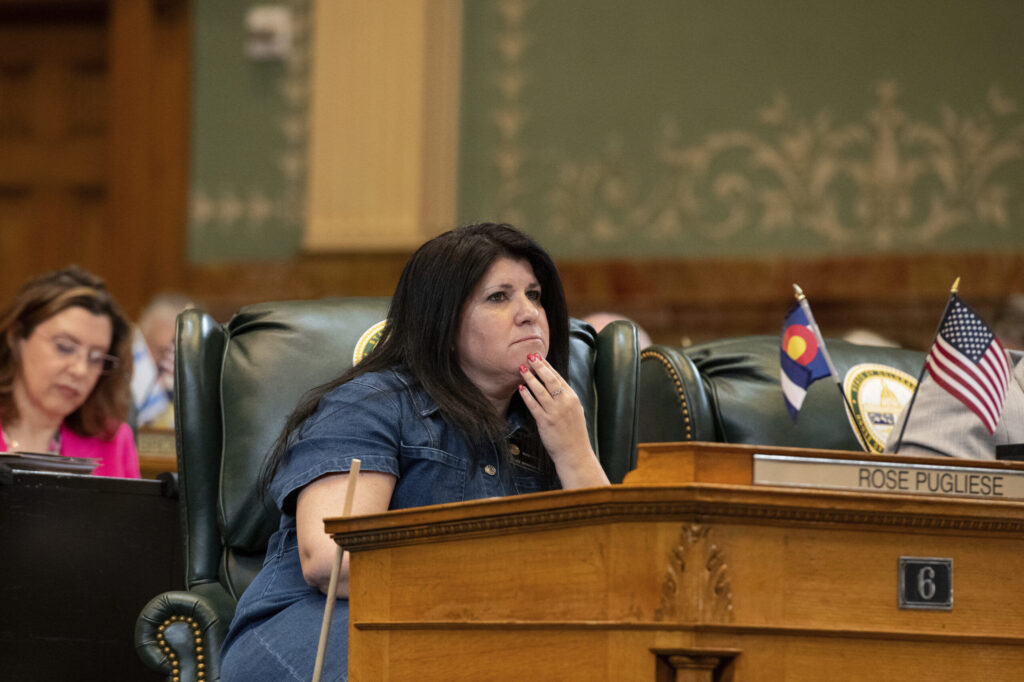
Former Rep. Rose Pugliese vies for Mesa County Treasurer
Marianne Goodland
marianne.goodland@coloradopolitics.com
Updated 1 day ago
Former Republican Leader Rose Pugliese has jumped into the 2026 primary for Mesa County Treasurer. Pugliese moved to Grand Junction after resigning from the Colorado House in September, citing a “collapse of integrity” within the Colorado House. She previously served...
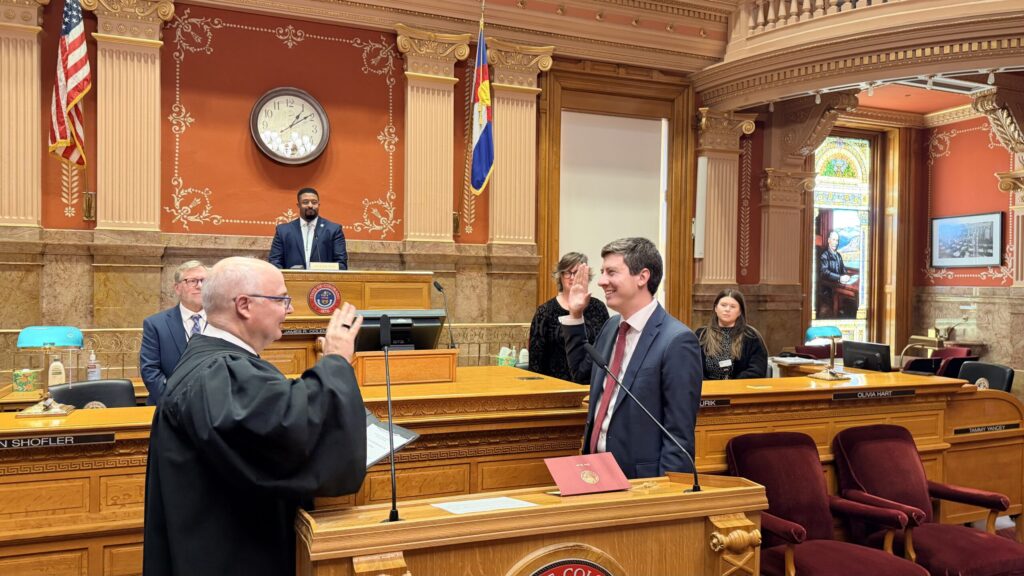
Primary challenges surge as Colorado lawmakers head into 2026 election cycle
Marianne Goodland
marianne.goodland@coloradopolitics.com
Updated 1 day ago
As the 2026 election cycle begins, an unusually large number of Colorado lawmakers — many appointed through the vacancy process — are facing primary challenges that reflect deepening divisions within both major parties. And it isn’t only open seats that...
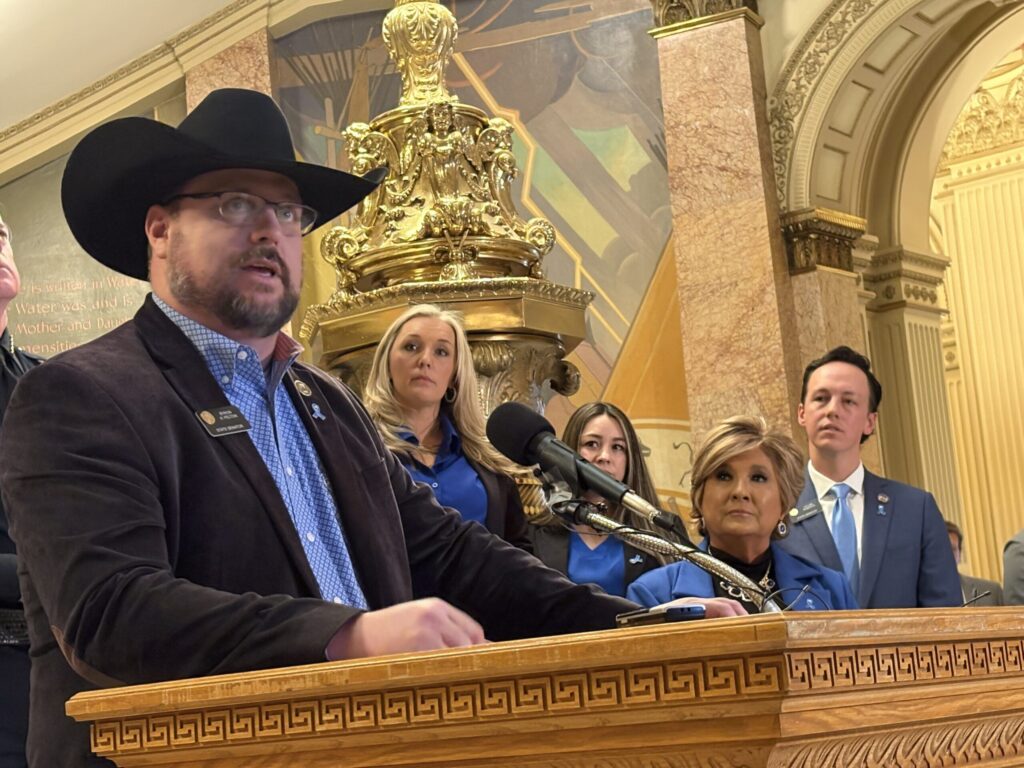
Colorado legislators eye ramping up penalties for child trafficking
Marianne Goodland
marianne.goodland@coloradopolitics.com
Updated 3 days ago
Colorado legislators on Monday announced a proposal to ramp up the penalties for human trafficking of children. The proposal, which received the backing of Democratic and Republican leaders in the House, will address one of the many problems when dealing...
Colorado Republican Mark Baisley exits gubernatorial race, launches U.S. Senate campaign
Ernest Luning
ernest.luning@coloradopolitics.com
Updated 24 hours ago
Republican state Sen. Mark Baisley on Monday withdrew from the Colorado gubernatorial race and announced his candidacy for the U.S. Senate seat held by Democrat John Hickenlooper. His departure leaves 20 Republicans running for the office held by term-limited Democratic...
Ben Nighthorse Campbell was a Colorado original | Vince Bzdek
Vince Bzdek
vince.bzdek@gazette.com
Updated 4 days ago
One day in 1982, Ben Nighthorse Campbell walked into a political caucus in Colorado to kill time after thunderstorms grounded his flight. He ended up volunteering to run for office that day and wound up serving two terms as a...
PREV
PREVIOUS
Douglas County commissioners ponder revisiting ‘home rule’ proposal after last year's failure
The future of Douglas County chasing “home rule” status may not be in the hands of commissioners, but instead by residents who are considering placing the issue back on the ballot, according to one commissioner. Last March, Douglas County commissioners proposed to become a home rule county. The three Republican commissioners asserted that home rule […]

Jared Polis calls Minnesota ICE shooting 'deeply disturbing,' wants full investigation
Colorado Gov. Jared Polis on Wednesday characterized a fatal shooting involving federal immigration agents in Minnesota that took the life of a mother from Colorado as “deeply disturbing” and called for a full investigation. The shooting, captured on video in a snowy Minneapolis neighborhood, took the life of 37-year-old Renee Nicole Good, who The Denver […]