

Appeals court orders new child abuse trial due to improper evidence of prior mistreatment
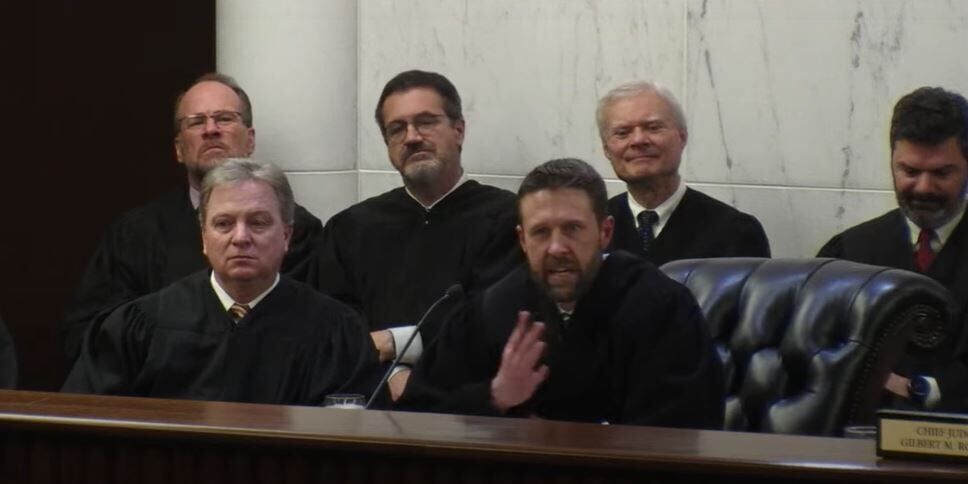
Colorado’s second-highest court overturned a Montezuma County defendant’s child abuse conviction last month, concluding evidence of prior mistreatment was too dissimilar to the alleged conduct that formed the basis of the criminal charges.
Garland Kay Malcolm received a 32-year prison sentence after jurors convicted her in 2023 for the severe injuries to a 6-year-old boy in her household. The prosecution acknowledged the evidence was circumstantial, with no clear explanation for how Malcolm inflicted the injuries. However, the jury heard about several earlier incidents of alleged abuse, which the prosecutor called “cruel” and “sadistic.”
In a Dec. 24 decision, a three-judge Court of Appeals panel determined most of that evidence was actually inadmissible. There are limitations on prosecutors’ use of other, uncharged misconduct at trial, and the evidence may not simply establish that the defendant has “a bad character.” But based on the dissimilarity, the panel rejected the prosecution’s argument that the allegations of Malcolm’s earlier abuse helped to prove the victim’s injuries were not accidental.
“Of course, we do not know what happened in this case, and the prosecution presented no theory other than that Malcolm caused the injuries. But we know enough to know that several of the prior acts,” wrote Judge Karl L. Schock, “have nothing to do with what happened here. Those acts — none of which involved physical injury — could show only that Malcolm was a bad parent who mistreated her children.”
Case: People v. Malcolm
Decided: December 24, 2025
Jurisdiction: Montezuma County
Ruling: 3-0
Judges: Karl L. Schock (author)
Elizabeth L. Harris
Sueanna P. Johnson
Jurors heard that sometime between 5-6 a.m. on a January morning, the victim left his bedroom in Malcolm’s house. Although there were security cameras installed, it was unclear what had happened before Malcolm called 911 shortly after 6. The victim sustained a severe brain injury, bruising on his lower body and a skull fracture.
Prosecutors charged Malcolm with child abuse resulting in serious bodily injury. Before the trial, the prosecution announced its intent to introduce evidence of other alleged acts of abuse, according to the children in Malcolm’s household. They described Malcolm harshly punishing them and the victim for misbehavior.
The prosecution argued the uncharged acts of abuse showed a common motive: that Malcolm repeatedly punished the victim for sneaking food out of the kitchen. The evidence would also demonstrate the victim’s injuries were not accidental.
Chief Judge Todd Jay Plewe allowed the jury to hear the children’s statements. He instructed jurors they could only consider the information to decide whether Malcolm had a motive to abuse the victim and whether his injuries were not accidental.
“Specifically, you may not use this evidence to conclude that because the defendant may have committed the other acts, she must also have committed the acts charged in this case,” the instruction continued.
On appeal, the appellate panel considered the dual purposes of the evidence separately. As for illustrating a potential motive, Schock acknowledged the children made two sets of statements related to Malcolm allegedly imposing consequences for sneaking food. Those statements were permitted.
However, most of the other accounts of punishment were unrelated to the prosecution’s alleged motive.
“And to the extent they merely showed a disciplinary motive more generally,” wrote Schock, “that relevance depended on the inference that because Malcolm had harshly disciplined her children in the past, she was an abusive parent who likely got angry and abused her child again.”
As for whether the children’s descriptions proved the victim’s injuries were non-accidental, the incidents of alleged abuse needed to be “roughly similar.” The problem, wrote Schock, was that the punishments Malcolm allegedly imposed were far less serious than the debilitating injuries she was accused of inflicting on the victim.
“As a practical matter, it may be true that any past instance of child abuse makes it more likely that the defendant abused a child on a different occasion,” wrote Schock. But “the fact that Malcolm spanked her children and engaged in other forms of abuse not causing injury does not make it more probable that she knowingly or recklessly did something so serious as to cause the child’s severe injuries in this case.”
Because of the circumstantial nature of the case, the Court of Appeals panel believed the improperly admitted evidence likely affected the jury’s verdict. Among other things, the prosecutor told jurors that it was “not hard to see” how the “cruel” and “sometimes sadistic punishments” Malcolm inflicted resulted in the victim’s debilitating injuries.
The panel ordered a new trial. Schock added that the prosecutor did not commit misconduct in arguing Malcolm’s past actions made it likely that she injured the victim, as Plewe’s order opened the door to that commentary.
The case is People v. Malcolm.


Colorado justices, lawyers speak with rural students through outreach program
Michael Karlik
michael.karlik@coloradopolitics.com
Updated 14 hours ago
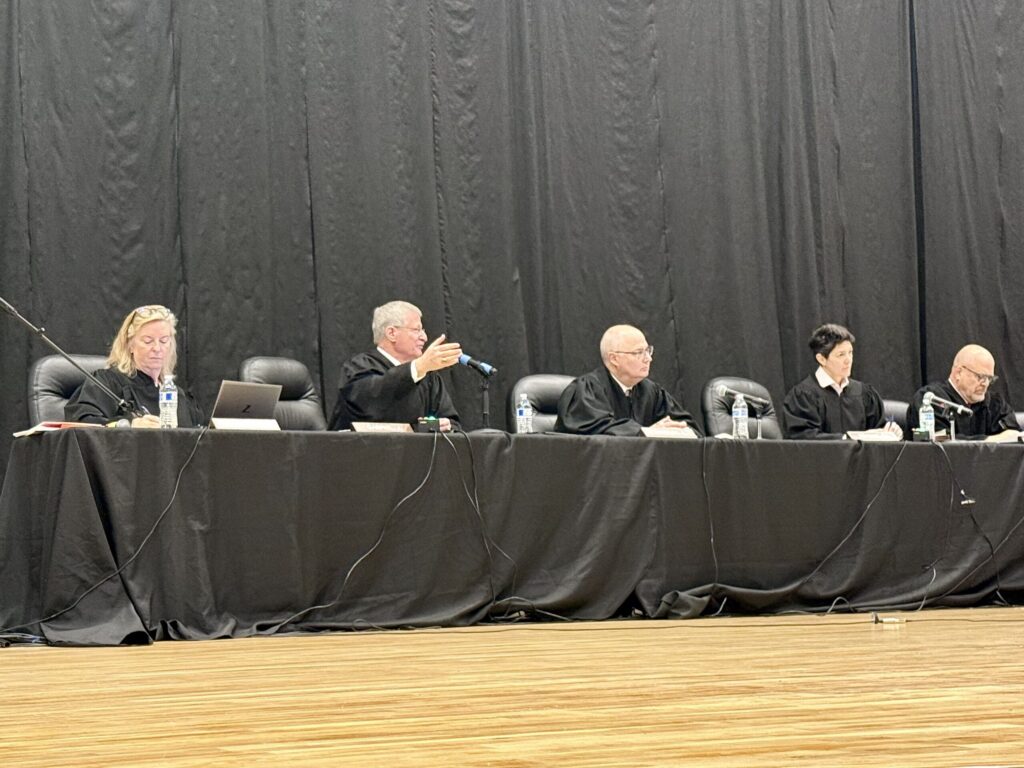
Members of the Colorado Supreme Court appeared before students from eight rural schools on Thursday to hear a pair of cases, field questions, and mark the first time the state’s newest justice participated in the long-running program. “I had such...
Colorado justices skeptical of snowboarder’s bid to revive injury lawsuit after signing new waiver
Michael Karlik
michael.karlik@coloradopolitics.com
Updated 13 hours ago
The Colorado Supreme Court seemed to agree on Thursday that a plaintiff is not entitled to continue his snowboarding injury lawsuit because he purchased another pass in the middle of litigation that released all past legal claims. “It says you’re...
Colorado Supreme Court appears OK with revised ‘reasonable doubt’ instruction
Michael Karlik
michael.karlik@coloradopolitics.com
Updated 18 hours ago
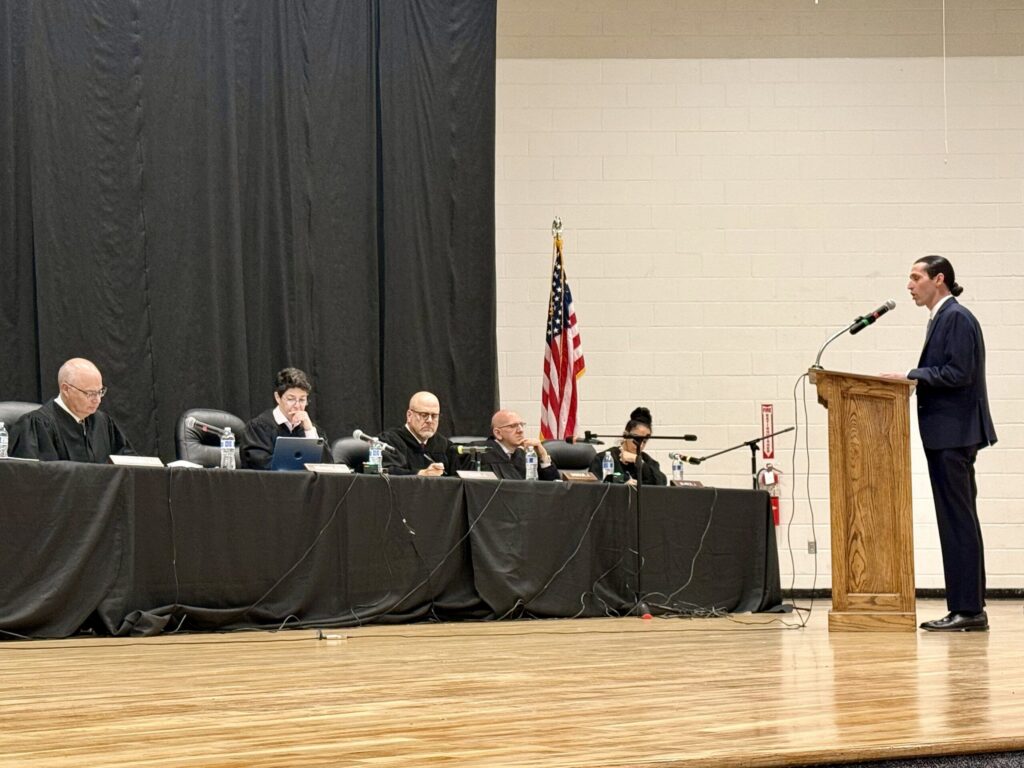
The Colorado Supreme Court appeared largely comfortable on Thursday with the recently revised definition of “reasonable doubt” that is now part of the template jury instructions for criminal cases. To date, multiple Court of Appeals decisions have endorsed the constitutionality...
Colorado Supreme Court concerned about police overreach in interrogations
Michael Karlik
michael.karlik@coloradopolitics.com
Updated 18 hours ago
Some members of the Colorado Supreme Court appeared hesitant on Tuesday to endorse the ability of police to interrogate a suspect after they have obtained a court order authorizing only the collection of physical evidence. Under Colorado’s criminal rules, law...
Colorado Supreme Court considers new requirement for leaving-the-scene convictions
Michael Karlik
michael.karlik@coloradopolitics.com
Updated 3 days ago
In 2006, the Colorado Supreme Court ruled that leaving the scene of an accident resulting in serious injury is a “strict liability” offense, meaning a person is guilty solely through their conduct, without the need for prosecutors to prove the...
Colorado Supreme Court weighs transgender services case involving Children’s Hospital and federal threats
Michael Karlik
michael.karlik@coloradopolitics.com
Updated 9 hours ago
Some members of the Colorado Supreme Court expressed discomfort on Tuesday with having to decide whether to order Children’s Hospital Colorado to resume providing certain services to transgender children, which could trigger a “death sentence” if the federal government imposes...
Colorado justices weigh constitutionality of unique disclosure requirement for ballot measures
Michael Karlik
michael.karlik@coloradopolitics.com
Updated 4 days ago
Members of the Colorado Supreme Court considered on Tuesday whether a unique feature of the state’s campaign finance system categorically violates the First Amendment by requiring the disclosure of a ballot measure committee’s legal representative on advertisements. No on EE...

Colorado justices block injured plaintiff from suing, despite alleged concealment by Manitou Springs
Michael Karlik
michael.karlik@coloradopolitics.com
Updated 4 days ago
The Colorado Supreme Court ruled on Monday that a woman injured on a Manitou Springs sidewalk could not sue the allegedly responsible entity, the city of Colorado Springs, even though she did not learn until too late of an agreement...
Divided Colorado Supreme Court opens door to experts’ views on children’s truthfulness
Michael Karlik
michael.karlik@coloradopolitics.com
Updated 3 days ago
The Colorado Supreme Court ruled on Monday that experts may, in certain situations, tell jurors whether child witnesses exhibited signs of being coached by adults, without running afoul of the general prohibition on witnesses testifying about the truthfulness of other...

State Supreme Court to hold oral arguments, federal judges find fault with bond hearings | COURT CRAWL
Michael Karlik
michael.karlik@coloradopolitics.com
Updated 4 days ago
Welcome to Court Crawl, Colorado Politics’ roundup of news from the third branch of government. The state Supreme Court will resume hearing oral arguments tomorrow, plus some federal judges are raising the alarm about immigration judges’ handling of bond hearings....
PREV
PREVIOUS

Trump freezes child care funding for Colorado, 3 other states
Colorado was swept up in a $10 billion federal child care funding freeze announced on Monday by the Trump administration, a move state officials said they learned about through media reports. The Trump administration said it would freeze child care funding for four states, including Colorado, citing reports of widespread fraud at child care centers […]

Primary challenges surge as Colorado lawmakers head into 2026 election cycle
As the 2026 election cycle begins, an unusually large number of Colorado lawmakers — many appointed through the vacancy process — are facing primary challenges that reflect deepening divisions within both major parties. At least 14 current lawmakers, almost all in the House, are facing primary challenges from within their own parties. Six are lawmakers […]