

Q&A with the Durango Chamber of Commerce | Pressure mounts for new and existing businesses | FISCAL ROCKIES

| Editor’s Note: Once among the nation’s fastest-growing economies, Colorado today confronts mounting challenges that threaten its momentum. This series reveals how a state once defined by prosperity is navigating economic cliffs and ridges. We explore the impact that increased regulations, tariffs, shifting tax policies, the high cost of living and widening urban–rural divides have on businesses, workers, and communities. The series also highlights the push to leverage Colorado’s outdoor economy — one of its most valuable assets — for renewed growth, while working to attract industries like quantum and aerospace. |

As part of a series examining the state’s economic policies, Durango Chamber of Commerce CEO Jeff Dupont answered questions about the impact of state policies on the local economy, the challenges emerging and how businesses are adapting to federal changes.
Colorado Politics: Can you reflect on the last decade in terms of the Colorado economy and business health in your region?
Jeff Dupont: Over the past decade, Southwest Colorado has maintained strong entrepreneurial activity and a resilient tourism sector, diversifying into outdoor recreation, light manufacturing, professional services, and tech-enabled firms. The regional economy has continued to expand despite persistent challenges, including rising housing and insurance costs, limited workforce availability, and fragile supply chains. The COVID-19 pandemic intensified these pressures — pushing younger workers out due to affordability issues while attracting remote professionals and retirees, whose migration to Durango further strained housing availability and shifted demographics toward an aging population no longer in the workforce. The region’s remote geography has always posed challenges, from transportation access and supply logistics to broadband connectivity, creating higher costs and slower expansion for growing companies. Combined with increasing regulatory burdens, these factors continue to hinder small business development. Still, Southwest Colorado remains an attractive place to start a company, even as many businesses may eventually outgrow the region’s limited infrastructure, workforce pool, and distribution capacity.
CP: Colorado is ranked sixth as the most regulated state in the nation. How does that affect existing, new, and prospective businesses in your region?
Dupont: Colorado’s standing among the most regulated states continues to create pressure for both existing and emerging businesses. Established companies face rising compliance costs and additional administrative layers, as new legislative and regulatory measures are introduced each year. Startups, meanwhile, encounter longer timelines and greater uncertainty as overlapping permitting and reporting requirements accumulate – often forcing them to adjust their scope or delay investment to manage risk. In recent years, the pace of state-level policy changes has added to the strain, especially when combined with local permitting processes that vary widely by community. The result is a system that can feel unpredictable for small businesses and prospective relocations alike. Many entrepreneurs’ value
Colorado’s exceptional quality of life and workforce, but express concern that the cumulative impact of evolving legislation and agency rulemaking creates headwinds. Balancing regulatory intent with business predictability remains a key challenge, particularly in rural regions where the capacity to navigate complex compliance systems is limited.
CP: Are businesses in your region seeing the trickle-down effects of the Trump administration tariffs?
Dupont: Yes. Many of our manufacturers, contractors, retailers, and hospitality operators source equipment, materials, or goods with components from abroad. Tariff volatility has raised input costs and added planning uncertainty; quotes now expire faster, and inventory decisions carry more risk. In our remote area, freight distances magnify these effects. Business owners can adapt to stable costs. However, unpredictability makes capital budgeting and pricing far harder.
CP: How would you rate the performance in terms of the economy and business support from Gov. Jared Polis and, in recent years, the Democratic-led legislature?
Dupont: From a ground-level business perspective, it’s a mixed picture. We appreciate the state’s investments in entrepreneurship, workforce training, rural broadband, and housing — those efforts directly strengthen competitiveness and create opportunity. At the same time, the volume and pace of new regulations and mandates, however well-intended, continue to create added burdens for small and mid-sized firms.
Businesses would benefit from greater predictability, streamlined implementation, and earlier, practical engagement with business owners before new rules go live. It’s also important to recognize that what works for Denver and the Front Range doesn’t always translate well to rural regions. Southwest Colorado’s geography, workforce dynamics and industry mix differ significantly from urban centers, and one-size-fits-all regulations can create unintended consequences. Policies that account for regional differences and local capacity would help ensure that statewide economic strategies support businesses of all sizes — no matter where they’re located.
CP: What are some of the biggest issues businesses in your region are facing?
Dupont:
• Housing affordability for employees; lack of attainable rentals
• Broadband & technology access — lack of connectivity and digital infrastructure in more remote areas
• Childcare access and cost, driving reduced labor force participation
• Workforce pipelines for technical jobs
• Compliance and regulatory complexity and growing requirements (leave, reporting, environmental, wage/benefit rules) without in-house HR/legal
• Rising Insurance costs (healthcare, liability, property/wildfire)
• Supply chain volatility and freight costs
CP: How is the Colorado cost of living impacting businesses regarding workforce, housing and other issues?
Dupont: High and rising living costs are now a primary business constraint. Employers must offer higher wages or non-wage benefits (stipends, flexible schedules, partial remote) to recruit and retain staff. Housing scarcity lengthens commutes and increases turnover. Childcare access remains a choke point for labor force participation. Some firms have reduced hours or services simply because they can’t meet demand.
CP: Describe the Colorado economy in your region pre-COVID, during COVID and post-COVID. What issues still linger? What has improved?
Dupont:
• Pre-COVID: Healthy tourism and steady small-business formation; chronic but manageable hiring challenges; housing affordability
• During COVID: Extreme conditions for hospitality/retail; PPP (Paycheck Protection Program) and EIDL (Economic Injury Disaster Loans) helped many; rapid adoption of e-commerce and curbside models; supply chains destabilized
• Post-COVID: Demand rebounded strongly and new business creation remained solid. Lingering issues are workforce shortages, childcare availability, housing/insurance costs (compressing margins for employers), increased regulatory burdens, elevated input and freight costs and ongoing supply variability.
• What’s improved: digital capabilities (except in rural areas, broadband still lags), process efficiency, and regional collaboration across employers, educators and local governments
Read more from the Fiscal Rockies series:
Q&A: Colorado Chamber of Commerce CEO sees warning signs for state economy, despite strengths
Can you afford to live in Denver?
After years of leading the nation, Colorado’s economy shows signs of cooling
Q&A with Denver Metro Chamber of Commerce | ‘Getting harder, more expensive to do business’ in Colorado
Regulatory layers turn cost of doing business in Colorado into ‘death by a thousand cuts’
Site selectors praise Colorado workforce — but flag regulatory hurdles
‘Evolving’ regulatory landscape among Colorado cities is pricey, problematic, small businesses say
Q&A with the Colorado Springs Chamber & Economic Development Corporation | Struggling with workforce shortages, high cost, regulatory uncertainty
Once a step ahead, Colorado’s economy cools, burdened by rising costs and regulations


A graduated tax plan could undercut Colorado’s business competitiveness, analysis warns
Marissa Ventrelli
marissa.ventrelli@coloradopolitics.com
Updated 14 hours ago
A proposal to move Colorado to a graduated income tax — taxing individuals and businesses at different rates based on their earnings — could generate more than $2 billion in its first year, but it may also weaken the state’s...

Central City Flower Girls: A treasured tradition marks its 94th year | NONPROFIT REGISTER
Joanne Davidson Special to Colorado Politics
joanne-davidson-special-to-colorado-politics@coloradopolitics.com
Updated 20 hours ago
CENTRAL CITY OPERA Central City News: The 94th presentation of the Central City Flower Girls got off to its usual booming start, thanks to a perfectly timed dynamite blast that reverberated from an undisclosed location within earshot of the Teller House Garden. The window-rattling boom may startle those unfamiliar with the time-honored tradition, but it generates knowing...

Colorado State Shooting Association files constitutional challenge to firearms dealer law
Marissa Ventrelli
marissa.ventrelli@coloradopolitics.com
Updated 1 day ago
A firearms group has filed a lawsuit challenging a recently signed law expanding regulations for firearms dealers in Colorado. House Bill 26-1126 clarifies that firearms dealers must hold both a federal and state license to operate. The bill also allows the...

Debutante Cotillion celebrates a rich past, exciting futures | NONPROFIT REGISTER
Joanne Davidson Special to Colorado Politics
joanne-davidson-special-to-colorado-politics@coloradopolitics.com
Updated 4 days ago
OWL CLUB OF DENVER Denver News: For the past several months, the Owl Club of Denver has filled its social media platforms with salutes to, and testimony from, the women who, following their presentation at the club’s annual Debutante Cotillion, have gone on to excel, achieve and...

58th Le Bal de Ballet gave its honorees an evening in Wonderland | NONPROFIT REGISTER
Joanne Davidson Special to Colorado Politics
joanne-davidson-special-to-colorado-politics@coloradopolitics.com
Updated 5 days ago
DENVER BALLET GUILD Denver News: In its 58th year, Le Bal de Ballet honored 58 college-bound teens: 35 debutantes and 23 Young Men of Distinction, all of whom have graduated high school with top grades and impressive achievements in sports, campus life and community service. They were...
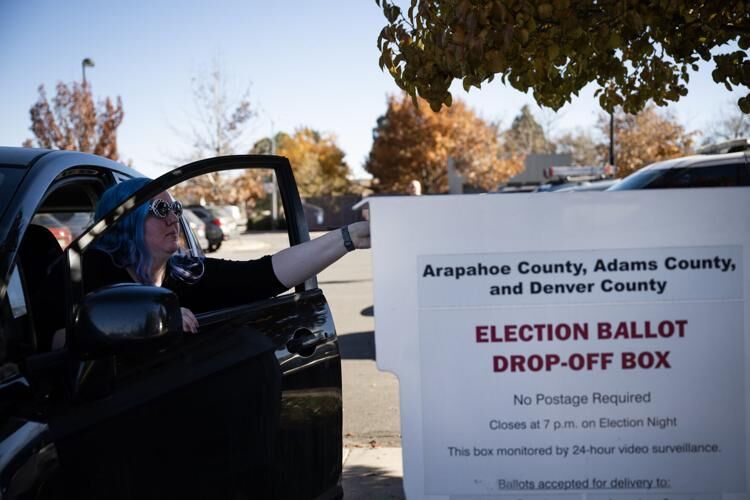
Flat or graduated income tax? Colorado groups push dueling measures for November election
Marissa Ventrelli
marissa.ventrelli@coloradopolitics.com
Updated 4 days ago
Colorado voters could face two opposing income-tax measures on the November ballot, with the dueling campaigns seeking to advance proposals that would take the state in sharply different fiscal directions. One initiative seeks to replace Colorado’s flat income tax with...

Colorado governor signs bill requiring pollution controls, cost reporting for extended coal operations
Scott Weiser
scott.weiser@gazette.com
Updated 5 days ago
Gov. Jared Polis signed into law a bill in reaction to orders from the U.S. Department of Energy to keep older coal units online. The federal government’s instructions applied to Craig Unit 1 in Colorado, one of five coal units...
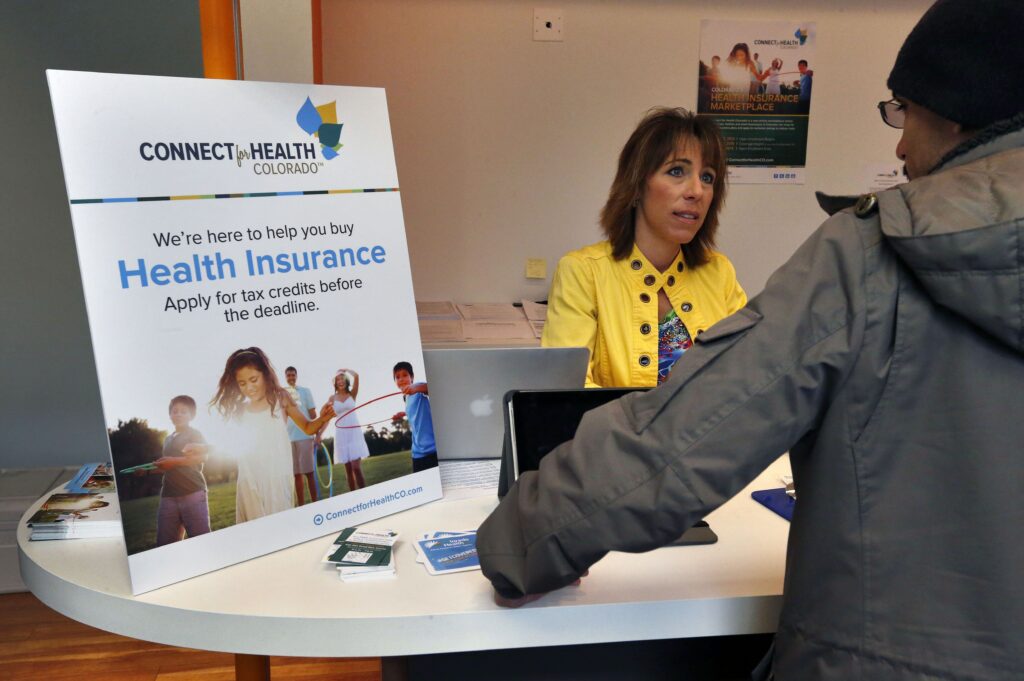
Cigna to pull out of individual health market, affecting thousands in Colorado
Marianne Goodland
marianne.goodland@coloradopolitics.com
Updated 1 week ago
Another firm is withdrawing from the individual health insurance market, including for Colorado, effective Jan. 1, 2027. The move by Cigna Healthcare is part of the company’s overall plan to withdraw entirely from the Affordable Care Act market. It will...

Museum’s spring fundraiser lived up to its name | NONPROFIT REGISTER
Joanne Davidson Special to Colorado Politics
joanne-davidson-special-to-colorado-politics@coloradopolitics.com
Updated 1 week ago
DENVER ART MUSEUM Denver News: One simple word – Delight — served as both the name and the vibe for the Denver Art Museum’s spring fundraiser. The June 5 indoor/outdoor bash was chaired by Christopher K.M. Leach, president of Contract Furnishings, and Chad Skrbina, president of Mad...

Historic site’s foundation names new executive director | NONPROFIT REGISTER
Joanne Davidson Special to Colorado Politics
joanne-davidson-special-to-colorado-politics@coloradopolitics.com
Updated 1 week ago
CHEROKEE RANCH & CASTLE FOUNDATION Sedalia News: Greg Vigil has been appointed executive director of the Cherokee Ranch & Castle Foundation, succeeding James-Allan Holmes. Vigil has served as interim executive director for the past several months, following the departure of Holmes, who...
PREV
PREVIOUS

Q&A with the Greater Pueblo Chamber of Commerce | A resilient growth in manufacturing | FISCAL ROCKIES
Editor’s Note: Once among the nation’s fastest-growing economies, Colorado today confronts mounting challenges that threaten its momentum. This series reveals how a state once defined by prosperity is navigating economic cliffs and ridges. We explore the impact that increased regulations, tariffs, shifting tax policies, the high cost of living and widening urban–rural divides have on businesses, […]

Colorado’s fees, regulations outpace tax advantages | FISCAL ROCKIES
Editor’s Note: Once among the nation’s fastest-growing economies, Colorado today confronts mounting challenges that threaten its momentum. This series reveals how a state once defined by prosperity is navigating economic cliffs and ridges. We explore the impact that increased regulations, tariffs, shifting tax policies, the high cost of living and widening urban–rural divides have on businesses, […]