

From potatoes to rockets, Colorado’s unique industries lead the way | FISCAL ROCKIES

| Editor’s Note: Once among the nation’s fastest-growing economies, Colorado today confronts mounting challenges that threaten its momentum. This series reveals how a state once defined by prosperity is navigating economic cliffs and ridges. We explore the impact that increased regulations, tariffs, shifting tax policies, the high cost of living and widening urban–rural divides have on businesses, workers, and communities. The series also highlights the push to leverage Colorado’s outdoor economy — one of its most valuable assets — for renewed growth, while working to attract industries like quantum and aerospace. |

National economic forces may be shaping many aspects of the Colorado economy, but what ultimately defines the state’s success are the industries that take root here – and flourish because of its location.
From aerospace campuses along the Front Range to potato fields carved out of the high desert in the San Luis Valley to cultural gatherings, Colorado’s most distinctive industries are built on geography, talent and a culture of problem-solving, according to business leaders, advocates and experts.
With a wave of rural innovation, an economy emerges that is not only resilient but also uniquely Colorado, they said.
Across the state, companies are doing work that ranges from designing missile defense systems to rethinking how food is grown, and athletes are fueled – often all within the same borders.

EVERYTHING BUT LAUNCHING ROCKETS
When the Glenn L. Martin Company first established operations in Colorado, it did so largely because others in the industry had already made the move.
During the Cold War, the threat of Soviet submarine-launched missiles put U.S. coastlines on high alert, prompting military leaders to shift key airborne defense installations inland. Colorado was selected for major institutions, such as the North American Aerospace Defense Command, or NORAD, and the U.S. Air Force Academy.
The Martin Company – now Lockheed Martin after decades of mergers and acquisitions – followed that shift, positioning itself close to its military customers, said Joe Rice, the company’s director of state and local government relations.
“If they’re designing defenses and deterrent systems, you want to be near the military headquarters,” Rice said.
Nearly 70 years later, Lockheed Martin is one of several major defense contractors with a significant presence along Colorado’s Front Range. Its Littleton division alone makes the company one of the state’s largest employers, with more than 11,000 workers and over $4 billion in annual sales. It also consistently ranks among Colorado’s top places to work.
These strengths help explain why Colorado has the highest percentage of residents employed in aerospace of any state, Rice noted.
“The support we get from state and local officials for the aerospace industry is very good,” he said. “There’s talent here, and this is a place people want to live.”
In addition to its proximity to key military installations, Rice pointed to the region’s strong universities and extensive manufacturing capabilities as crucial to the industry’s success.
Those resources – combined with robust state and local backing – have enabled Lockheed Martin to keep much of its aerospace work in Colorado despite the company’s national and global reach.
“We do everything in Colorado in aerospace right now – except launch rockets,” Rice said.

BEHIND ONLY IDAHO
While most of Colorado’s agricultural economy is based on the Eastern Plains, the San Luis Valley is home to one of the nation’s largest potato-growing industries.
Behind only Idaho, the valley produces the second most fresh potatoes of any region in the United States, with farmers growing 16 billion pounds annually, over 70% of the state’s total potato output.
There are several perks of growing potatoes in an arid climate like southwest Colorado, said Tara Artho and Jessica Bradshaw of the Colorado Potato Administrative Committee.
“We’re a desert, we’re very dry, so we have very, very low pest and disease pressures here,” Bradshaw said. “We’re not disease-free, we’re not pest-free, but it’s definitely a lower priority than most other growing areas, and I think that gives us a real advantage when we’re putting potatoes into storage.”
Bradshaw added that the region only reaches mid-80 degree temperatures – even at the height of summer – and that the heat required to keep the stored potatoes warm during the winter is far cheaper than any air conditioning that would be necessary during the summer if the area were warmer.
Compared with other vegetables, potatoes require less water to grow, making even drought-stricken landscapes in the Southwest suitable for farming them.
“One drop of water on a potato will produce more calories than it will on any other crop,” Bradshaw said. “Potatoes do take a lot of water based on what our average rainfall is, but when you look at the return on investment of what you’re getting from a potato and that drop of water compared to barley or alfalfa, it kind of makes its case for itself.”
Additionally, a rotation with malting barley grown to brew Coors Beer has made potatoes an essential crop in the region.
“The potatoes like the nitrogen and the nutrients that the barley leaves behind, and then the barely really likes to grow with fewer nutrients,” Bradshaw said. “If farmers are in the rotation of barely and potatoes, it’s a good mix and then they have potentially two cash crops every year.”
Colorado’s potatoes had a production value of over $217 million in 2024, the fourth highest producing crop in the state by dollars after corn, alfalfa and wheat, according to the U.S. Department of Agriculture.
While that amount was down from $270 million in 2023 and $379 million in 2022, it was mainly due to a decline in crop prices, even as the total amount of potatoes produced was the highest since 2020.

FARMING MEETS TECH
Sarah Hinkley and her brother, Jaron, grew up on a farm just west of the Kansas border. When their grandparents got sick in 2014, they decided to move back home to La Junta.
Before returning, Jaron had been recruited by a startup to develop drone technology to measure the volume of stockpiles and rock quarries, Hinkley said. That experience came home with him, and soon enough, the two put it to use.
“When we moved back home to La Junta, there was no drone technology company in the region, so we introduced it,” Hinkley said. “We were doing that all over the state, and then our farmers said, ‘The maps are great but we don’t have any labor to go and solve the problems.'”
Colorado ranked 29th in the U.S. in hired farm labor in 2022, behind states such as New York, Kentucky, and Pennsylvania, according to the U.S. Department of Agriculture. Neighboring agricultural powerhouses, Texas and California, ranked first and second, respectively. One reason for Colorado’s low ranking is that its hourly H-2A wage is lower than those in Kansas, Nebraska, and California.
Hinkley emphasized, “It’s not about removing jobs; it’s about filling gaps where labor can’t be found. Farmers needed real solutions – someone or something to get out in the field and solve the problems. That’s what we did.”
Their solution is the Autonomous Nano Tractor, or the ANT, a four-wheeled robot that uses GPS and programmed software to automate routine tasks such as weeding and planting – work that is often difficult for farmers to manage due to limited time or manpower.
The ANT comes equipped with various tools that are inexpensive and easily replaceable, Hinkley said. Early prototypes were made with 3-D printers and duct tape, and while the finished product is now more polished, the hardware remains simple enough to repair in the field.
That simplicity has helped Barn Owl, the company the Hinkleys founded, remain financially sustainable.
Despite raising only about $3 million to develop the ANT, the company expects to be cash-flow positive within a year. Its close partnerships with customers have also helped the technology spread quickly across Colorado’s Eastern Plains.
Most ANTs are leased to farmers for $15,000 annually, rather than being sold outright. At the end of each lease, Barn Owl upgrades the machines and replaces worn parts before leasing them again.
“This model reduces risk,” Hinkley said. “If we upgrade the equipment in the off-season, farmers still get the latest version, and the cost stays roughly the same.”
All ANT development, manufacturing, and assembly happen in Colorado. Hinkley noted that support from Colorado State University and the state’s Office of Economic Development and International Trade were instrumental in both the company’s early stages and current growth.
“There’s a hidden ecosystem of ag-tech innovation in Colorado,” Hinkley said. “Many kids have ideas and opportunities just waiting to be explored. In rural communities, farm kids learn early on that you either invent something or figure it out.”
REACHING HIGH-PERFORMANCE ATHLETES
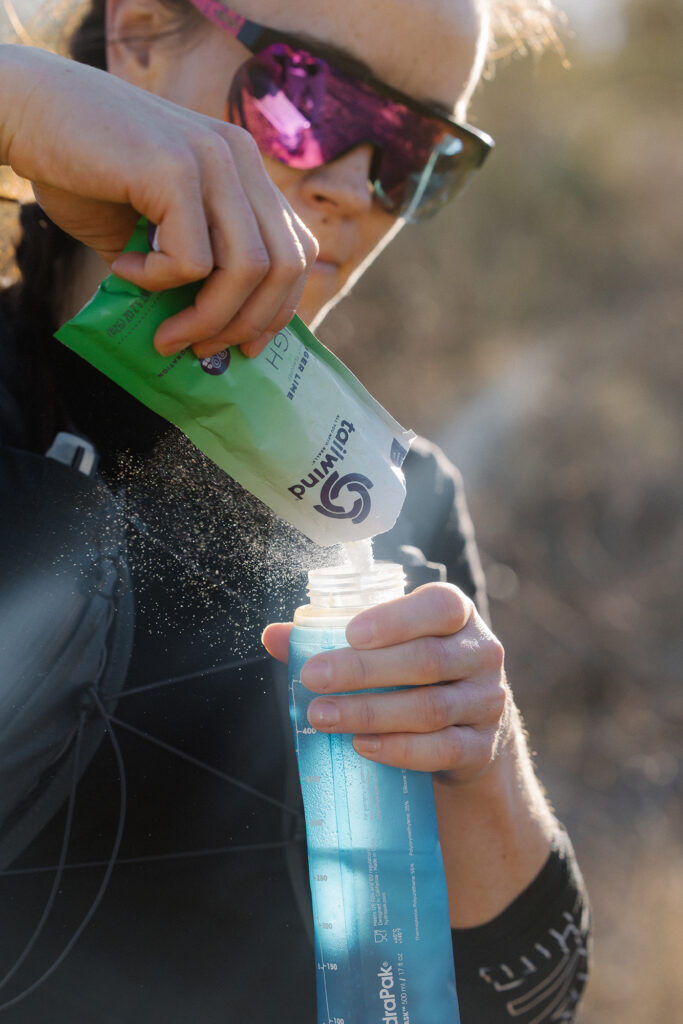
Jeff Vierling began by handing out sandwich baggies of nondescript white powder to members of his Durango bike-and-beer group. Now, his company, Tailwind Nutrition, is shipping worldwide.
Not to be confused with anything illegal, the substance was Vierling’s own creation: when mixed with water, it produced a mid-activity fuel for an elite athlete that tasted good and was easy for the stomach to absorb.
“I was just trying to find a better solution for myself,” Vierling said, referencing a story about how he had thrown up his breakfast after competing in the Leadville 100 MTB. “I tried all the products on the market and was like, ‘Gosh, I’m just not finding something that really works well for me or this kind of training.'”
After conducting bioscience research, Vierling – who has a background in tech but grew up in a medical household – purchased initial ingredients online and set up a lab in his kitchen, experimenting with flavors and textures to find a balance that even the most prolific endurance athletes could tolerate.
“Something that tastes great on the couch usually doesn’t taste great after six hours and when it’s hot,” Vierling said. “I was really trying to simplify it, and what we created was a drink that had everything in it. The ease of mixing, the rinsing, the simplicity, those are all things that I had in mind really from an athlete standpoint.”
After developing a mixture he considered suitable, Vierling shared it with others he knew who were participating in the Leadville 100, one of the world’s most famous ultra-races. Before long, several other endurance athletes began using it for fuel.
But what really turned Vierling’s hobby into a business was when a local mountain bike shop, Mountain Bike Specialists, allowed him to set up a stand for the Iron Horse Bicycle Classic. This race happens in Durango every Memorial Day Weekend.
“People were buying it, I mean, like thousands of people, to the point where my wife and I looked at each other and were like, ‘One of us has to stay here and the other one’s got to go home and make more,'” Vierling said. “The owner of the store didn’t need to do that, but he took a chance on somebody in the community and help them get started.”
Everything snowballed from there. In the over 10 years since its inception, the company has partnered with a slew of professional athletes, added a 15,000-square-foot manufacturing facility in Durango, added a marketing team and expanded its shipping to over 40 countries.
All the while, Vierling said, the company has maintained its local roots.
“We’re outdoors people, and as a company that’s who we are, that’s our culture, there’s no better place to have a business like this than in Colorado,” Vierling said. “It is very cool to see people all over the world using our product and on the back of that is ‘made in Colorado.'”

SUNDANCE COMES TO BOULDER
In 2025, with the help of the state legislature, Colorado entered the film industry, luring the Sundance Film Festival away from Utah.
The renowned film festival will relocate to Boulder, starting in 2027, after being in Park City, Utah, for more than 40 years. Sundance is expected to be a significant boon to Colorado’s economy – typically held in January and closely tied to the ski industry – as the festival contributed more than $130 million in economic impact and created more than 1,700 jobs in 2024, according to the organization.
In March, Colorado Film Commissioner Donald Zuckerman said Sundance will put Colorado squarely on the international film map.
To secure the festival, the Colorado Economic Development Commission approved a $1.5 million incentive in June.
Eve Liberman, the executive director of the Office of Economic Development and International Trade, said winning the Sundance Film Festival is a significant accomplishment for Colorado, especially internationally.
“We help to support tourism as a main driver of our economy,” she told Colorado Politics. “There’s about 94 million visitors coming to Colorado each year. Many of them are international visitors. So, we continue to meet one of our wildly important goals, which is to increase the amount of international visitors to Colorado through some of our marketing, through our engagements with business, our global business development team, and through efforts such as the Sundance Film Festival, which we know will attract international visitors.”
Thelma Grimes and Bernadette Berdychowski contributed to this report.
Read more from the Fiscal Rockies series:
Q&A: Colorado Chamber of Commerce CEO sees warning signs for state economy, despite strengths
Can you afford to live in Denver?
After years of leading the nation, Colorado’s economy shows signs of cooling
Q&A with Denver Metro Chamber of Commerce | ‘Getting harder, more expensive to do business’ in Colorado
Regulatory layers turn cost of doing business in Colorado into ‘death by a thousand cuts’
Site selectors praise Colorado workforce — but flag regulatory hurdles
‘Evolving’ regulatory landscape among Colorado cities is pricey, problematic, small businesses say
Q&A with the Colorado Springs Chamber & Economic Development Corporation | Struggling with workforce shortages, high cost, regulatory uncertainty
Once a step ahead, Colorado’s economy cools, burdened by rising costs and regulations

More than 20 Colorado counties receive grants to improve land record-keeping systems
Maren Prince
maren.prince@denvergazette.com
Updated 15 hours ago
More than 20 Colorado counties received a total of $2.5 million to improve their land record-keeping systems, according to a Monday news release. The State’s Electronic Recording Technology Board awarded 22 counties with grants ranging from $5,000 to $350,000, according...

Colorado House passes ‘kidfluencer’ bill requiring trusts, removal rights for children
Marissa Ventrelli
marissa.ventrelli@coloradopolitics.com
Updated 42 minutes ago
A bill that seeks to provide “kidfluencers” compensation for their work on their parents’ social media accounts passed the Colorado House on Monday, with both Democrats and Republicans voting in favor of the legislation. House Bill 1058, sponsored by Reps....

Applications open for Social Impact Artist Award | NONPROFIT REGISTER
Joanne Davidson Special to Colorado Politics
joanne-davidson-special-to-colorado-politics@coloradopolitics.com
Updated 5 days ago
BONFILS-STANTON FOUNDATION Denver News: Applications are now being accepted for the Bonfils-Stanton Foundation’s 2026 Social Impact Artist Award. Now in its second year, the award will go to two Denver-based artists or artist collectives, each of whom will receive $50,000 — a $35,000...

Greeley voters halt landmark development project
Hap Fry, Special to The Gazette
hap-fry@gazette.com
Updated 5 days ago
GREELEY – The landscape-altering Cascadia development project has been put on ice, according to unofficial results of a city referendum on the project Tuesday. The proposed development would have included an 8,600-seat multiuse arena and ice center that would be home to the Colorado Eagles,...
Protecting satellites in space, on the ground a priority for Colorado companies
Alexander Edwards
alexander-edwards@coloradopolitics.com
Updated 6 days ago
As the Department of Defense moves toward utilizing more commercial partnerships, building a resilient space-based commercial field is contingent on several factors, according to industry leaders at the annual Warfare Symposium in Aurora. The symposium features businesses of all sizes...

Bipartisan opposition sinks eviction bill in Colorado
Marissa Ventrelli
marissa.ventrelli@coloradopolitics.com
Updated 7 days ago
Two Democrats sided with Republicans on a legislative panel to reject a proposal that would have made several changes to eviction filings and proceedings, including requiring judges to suppress court records. Sponsored by Rep. Junie Joseph, D-Boulder, House Bill 1047...

Gala-goers usher in the lunar Year of the Fire Horse in grand style | NONPROFIT REGISTER
Joanne Davidson Special to Colorado Politics
joanne-davidson-special-to-colorado-politics@coloradopolitics.com
Updated 5 days ago
NATHAN YIP FOUNDATION Greenwood Village News: If predictions for the lunar Year of the Fire Horse hold true, 2026 will be a time of intense energy filled with big changes, fresh starts, and new opportunities, so long as one maintains a steady hand and a sense of clear direction to avoid whatever chaos may result. At...

Democratic lawmakers propose changes to landlord-tenant laws in Colorado | Bills in Brief
Marissa Ventrelli
marissa.ventrelli@coloradopolitics.com
Updated 1 week ago
Colorado lawmakers introduce hundreds of bills each year. Bills in brief cuts through the noise by explaining which proposals matter, what’s at stake, and how decisions at the Capitol could affect everyday life across the state. House Bill 1013, sponsored by Reps....
Colorado lawmakers mull competing bills on data centers
Scott Weiser
scott.weiser@gazette.com
Updated 1 week ago
A Colorado coalition of data center developers and operators is urging lawmakers to pass a proposal that offers tax breaks to attract large facilities, while calling a competing bill a major obstacle to new investment. Meanwhile, proponents of the latter...

U.S. Supreme Court to hear bid by oil companies to toss climate suits in Boulder case
Reuters
reuters@gazette.com
Updated 1 week ago
WASHINGTON • The U.S. Supreme Court has agreed to hear a bid by ExxonMobil and Suncor Energy to scuttle a lawsuit brought by officials in Boulder that seeks to hold the oil companies liable for allegedly helping to fuel climate...
PREV
PREVIOUS

Colorado’s fees, regulations outpace tax advantages | FISCAL ROCKIES
Editor’s Note: Once among the nation’s fastest-growing economies, Colorado today confronts mounting challenges that threaten its momentum. This series reveals how a state once defined by prosperity is navigating economic cliffs and ridges. We explore the impact that increased regulations, tariffs, shifting tax policies, the high cost of living and widening urban–rural divides have on businesses, […]

A $5 billion ski industry confronts a cold front in global tourism | FISCAL ROCKIES
Editor’s Note: Once among the nation’s fastest-growing economies, Colorado today confronts mounting challenges that threaten its momentum. This series reveals how a state once defined by prosperity is navigating economic cliffs and ridges. We explore the impact that increased regulations, tariffs, shifting tax policies, the high cost of living and widening urban–rural divides have on businesses, […]