

While senators stall, Colorado farmers continue to sweat federal shutdowns | GABEL

As the piles grow at the sugar beet processing plants around the region, growers are facing looming deadlines complicated by federal shutdowns.
Colorado Sen. Byron Pelton said a number of growers — as well as other commodity producers who face the same issues — have reached out unable to meet their loan deadlines due to the closures of federal offices preventing them from paying their loans and receiving payment for the year’s crop.
“They’re concerned they’re not going to get paid from the CCC, which in turn pays the FSA office, which in turn pays the sugar beet growers,” Pelton said. “I talked to Jerry Sonnenberg, and he said the offices are ready to pay, but there’s no money allocated from the CCC and that’s not going to happen until the shutdown is over.”
Sonnenberg is the state executive director of the Farm Service Agency. This not only affects this year’s crop, but next year’s as well, with loans for next crop’s seed also hanging in limbo. Pelton said he reached out to U.S. Sen. John Hickenlooper, asking him to vote to open the government.
“I asked him to do that, and told him we can have the conversation about illegal immigrants receiving federally funded health care later,” he said. “We can get this all fixed later if that’s what they need, but right now we need this damn thing to be open.”
Hickenlooper’s staff said they received confirmation U.S. Department of Agriculture Secretary Brooke Rollins and the administration are reopening county offices with limited staff trying to get disaster funding as well as other program funding authorized to producers. However, he was unwilling to vote to open the government.
The state’s sugar beet growers are only one of the commodities sweating the ongoing federal shutdown. Without Farm Service Agency offices open, the growers are unable to be paid for this year’s crop, pay their loans, or set up their loans for next year which will allow them to purchase seed.
The piles of sugar beets are growing in northeastern Colorado at places like the Western Sugar plant in Fort Morgan, and the trucks and rumbling from field to pile. Diesel is being burned, and trucking tabs are getting longer but without the ability to be paid for their crop, the trickle-down effect is becoming more of a waterboarding situation. Sugar beet growers are certainly not the only Americans affected by the government shutdown, but harvest doesn’t wait for bureaucrats either.
Known as white gold, sugar beets are not the behemoth they once were economically, but in towns like mine, they’re important. Most beets grown in northeastern Colorado are processed at Western Sugar plants in Fort Morgan, or Scottsbluff, Nebraska. There are also receiving stations sprinkled across northeastern Colorado, the panhandle of Nebraska, and southeast Wyoming. There are also a significant number of beets grown around the Billings, Montana, area and the Great Western plants for those growers are in Lovell, Wyoming, and Billings.
David Blach, who is a Yuma County grower and member owner of Western Sugar, said processing has gone smoothly thus far which will reduce the amount of time the beets are stored on the ground and, in turn, will reduce the losses. With most beets comprised of 15% to 20% sugar, the pulp pressed to release that sugar is shredded and used by local cattle feeders in rations. It’s a byproduct that pays dividends to feeders in terms of gains and is a relatively inexpensive and readily available feedstuff in the region.
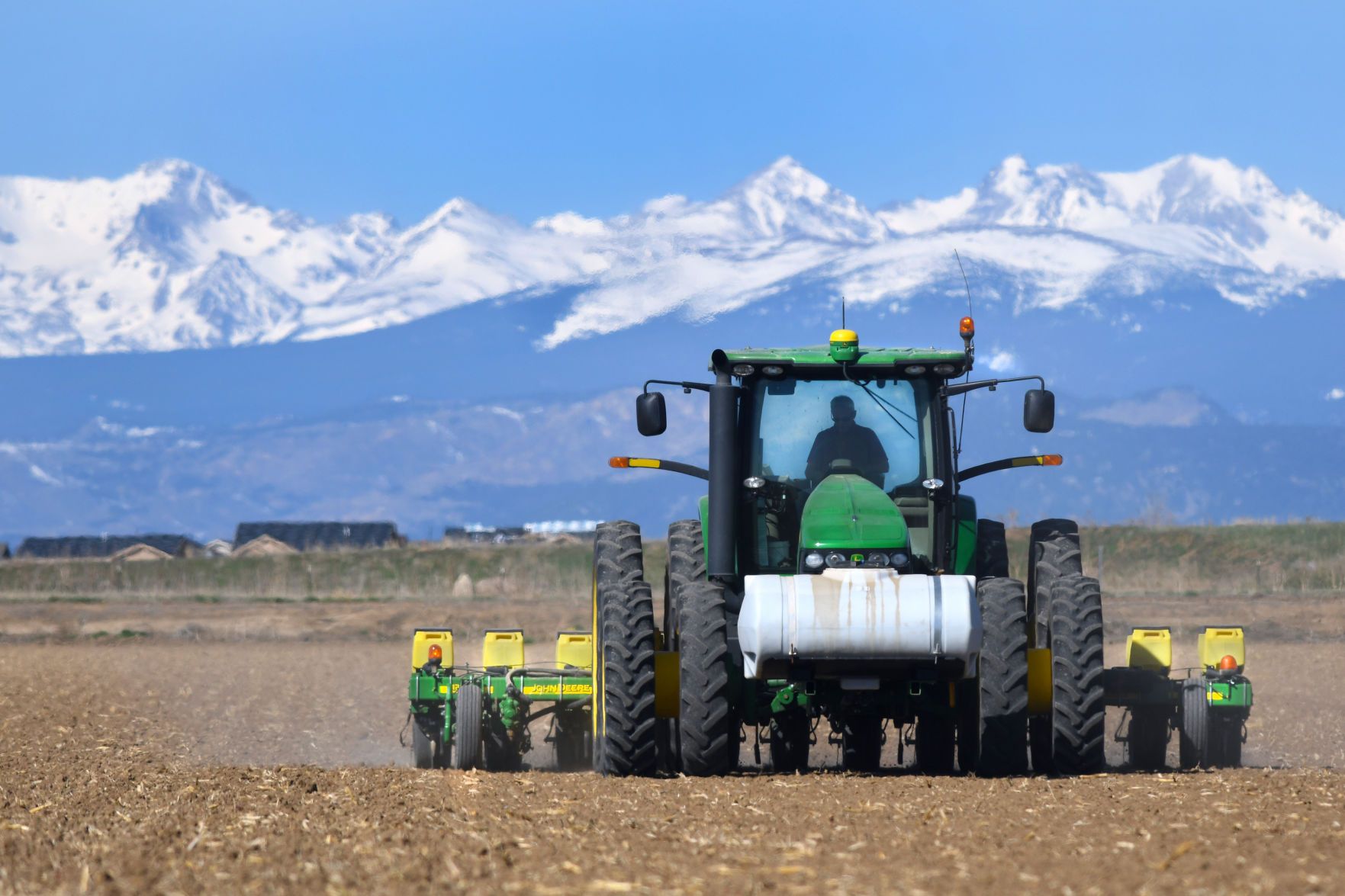
Blach said the federal closure carries short-term and long-term problems, though the long-term issues are hard to define yet. He said the local FSA office is open with half-staff during the busiest time of the agriculture production year. This not only places a heavy load on the shoulders of the staff working, but it does so with no promise of receiving pay.
Many beet growers — and other commodity growers, too — have loans through the Commodity Credit Corporation for operating expenses. Those funds are not available and there’s no word on how long the delays will be. Until the last payment on the old crop and the first payment on the new crop come in, it leaves growers in limbo. There are also a tremendous number of bills from the growing season and harvest that are due, from trucking to labor to seed and fuel. There’s no doubt the effects will be felt through the businesses that depend upon growers.
Just as President Donald Trump’s comments about importing Argentine beef couldn’t have come at a worse time, this shut down, too, comes at the busiest time for those in agriculture production.
Rachel Gabel writes about agriculture and rural issues. She is assistant editor of The Fence Post Magazine, the region’s preeminent agriculture publication.

Gong-Show Griswold’s latest data dump a disaster | George Brauchler
George Brauchler
george-brauchler@gazette.com
Updated 10 hours ago
Last week, Colorado Secretary of State Jena Griswold’s office discovered they exposed for weeks the addresses of more than 130,000 “confidential voters” — including victims of sexual assault, domestic violence — and her political opponent in the attorney general’s race,...
Colorado’s education paradigm déja-vu | Paula Noonan
Paula Noonan
paula-noonan@coloradopolitics.com
Updated 10 hours ago
Déja-vu for 10 years. In 2015-2016, state standardized testing was fully integrated into teacher performance evaluation. The tests comprised 50% of teacher “performance.” The idea was to follow the General Electric “rank-and-yank” human resources model. At GE, the model went...
Wildlife commissioner pushes for tougher penalties after hunter accidentally kills Colorado wolf
Marianne Goodland
marianne.goodland@coloradopolitics.com
Updated 14 hours ago
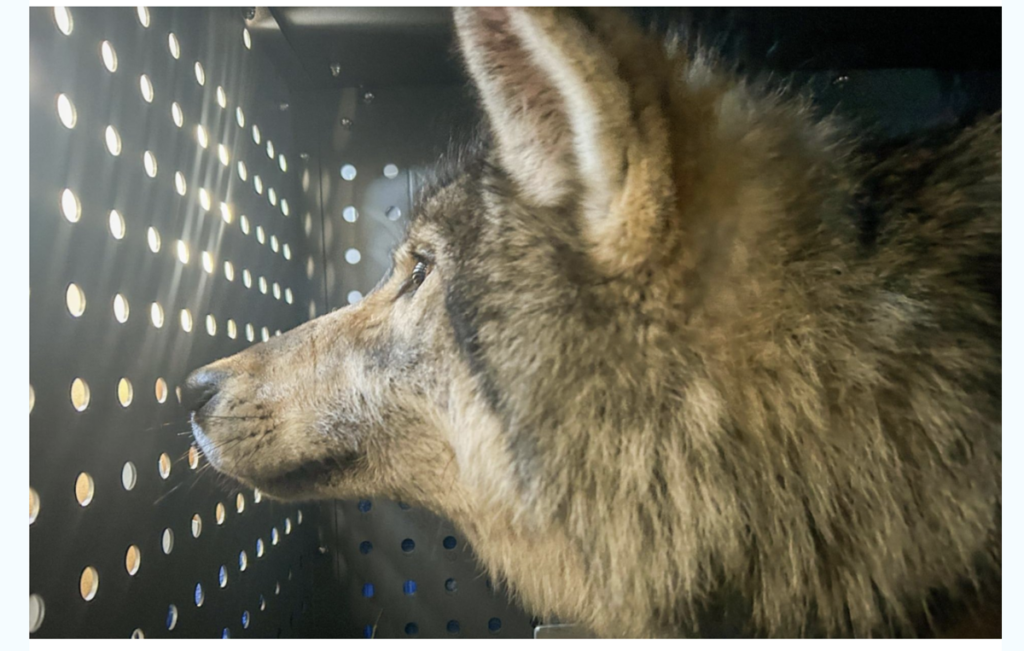
Colorado wildlife officials on Wednesday revisited the agency’s handling of violations involving protected species, prompting renewed debate over whether current penalties are sufficient. Colorado Parks and Wildlife Commissioner Rebecca Niemiec on Wednesday urged the agency to impose stronger penalties —...

Colorado’s Parks and Wildlife chair’s decision to limit public comments sparks backlash from fellow commissioners
Marianne Goodland
marianne.goodland@coloradopolitics.com
Updated 15 hours ago
Last week, the chairman of Colorado’s wildlife commission unilaterally decided to limit public comments, complaining, in particular, that elected officials often “grandstand” at meetings and noting that the election season is well underway. This week, the commission overturned its chair’s...

Colorado enacts new penalties for violent crimes and updates race categories on state forms
Marissa Ventrelli
marissa.ventrelli@coloradopolitics.com
Updated 18 hours ago
A trio of new laws, two regarding increased penalties for violent crimes and one establishing new requirements for government-issued forms, go into effect on Sept. 1. Here’s a breakdown of what they do. The bill: Senate Bill 25-050 What it...
Don’t trade away our TABOR refunds | PODIUM
Barb Kirkmeyer
barb-kirkmeyer@gazette.com
Updated 1 day ago
Here we go again — tax-and-spend politicians going in the wrong direction. Colorado families are being asked to believe a familiar lie: the only way to fund education is to let politicians keep more of your money — forever. Proposition...
House adopts Republican U.S. Rep. Jeff Crank’s resolution condemning socialism, mostly along party lines
Ernest Luning
ernest.luning@coloradopolitics.com
Updated 18 hours ago
The U.S. House on Tuesday approved a resolution sponsored by U.S. Rep. Jeff Crank to condemn socialism in a largely party-line vote that the Colorado Republican characterized as a chance for lawmakers to “stand firm” against an ideology making inroads...

Capped or graduated income tax rate? Colorado voters to decide
Marianne Goodland
marianne.goodland@coloradopolitics.com
Updated 18 hours ago
The proposal to create income tax tiers — which would replace Colorado’s flat rate — has been certified for the November general election ballot, setting the stage for a major showdown between two competing forces seeking to define the parameters of...
The 21 seats Mike Johnson says will decide the House majority
The Washington Examiner
the-washington-examiner@coloradopolitics.com
Updated 2 days ago
Speaker Mike Johnson, R-La., is eyeing 21 seats that will determine the House majority in the November midterm elections, including Colorado’s Congressional District 8. Johnson pointed to the nonpartisan Cook Political Report’s 21 toss-up seats, before rattling off a list...

Trump’s ‘BBB’ casts aside rural Colorado healthcare | Hal Bidlack
Hal Bidlack
hal-bidlack@coloradopolitics.com
Updated 2 days ago
Well, as I often do, let me start by yet again telling you what I am not going to be writing about (Editor: sigh…). I’m not going to talk about President Donald Trump’s most recent (of many, many) attacks on...
PREV
PREVIOUS

Why do out-of-state donors have more power than in-state voters? | Vince Bzdek
Why is Michael Bloomberg, the former presidential candidate, three-term New York mayor and founder of the financial info firm that bears his name, spending millions on Colorado elections? The short answer: because he can. The liberal New Yorker has donated $2.7 million to support Denver’s flavored tobacco ban, Referendum 301, to be decided on Tuesday. Two […]

Has the danger of AI already arrived? | HUDSON
I can’t escape a suspicion the terminology adopted to characterize large-language-model (LLM) software as “artificial intelligence” is premised on a misleading presumption human brains and “deep learning” algorithms have something in common. This seems highly unlikely. We are wholly unable to discern how human thought functions in a gelatinous nerve bundle the size of a […]