

Will Weiser-Bennet battle test Colorado Dems’ take on open primaries? | HUDSON
Writing in the New York Times several months ago, columnist David Wallace-Wells ruminated on whether our two major political parties are likely to survive much longer. Although there are a number of academics in political science who have proffered the same query recently, perhaps Pete Buttigieg’s observation, “I think that both parties should examine their chances of survival,” is the most surprising. Donald Trump proved in 2016 the Republican Party had become a hollow husk swiftly captured by a boorish barbarian. I recently attended the Denver Democratic Party’s county assembly at Thomas Jefferson High School. Attendance struggled to break 200 over four hours, and without proxies would have failed to achieve a quorum.
In 1984, with Gary Hart pursuing his initial “dark-horse” presidential campaign, the Denver County Assembly drew 2,200 credentialed delegates to Currigan Hall. Admittedly, 2025 is not a presidential election year, but there will be a contested primary between two party heavyweights in next year’s governor’s race. Each candidate made an appearance, yet neither bothered to staff a welcome table or paper the hall with campaign literature. The 90% decline in attendance during the past 40 years speaks to the declining strength of party organizations at every level. Some of this decay can be attributed to an anti-elitist and anti-establishment attitude toward virtually every pillar of democratic governance, reflected in the majority of Colorado voters now registered as unaffiliated voters.
External pressures on our election process have arrived both through the courts and well-intentioned “good government” initiatives. The Supreme Court decision which opened campaign financing to anonymous, dark-money committees has only reinforced the election clout of the wealthy and huge corporations. Ralph Nader was accusing Republicans and Democrats of not providing a “dime’s worth of difference” long before the Citizens United decision that determined money underwrites political speech, which is a guaranteed constitutional right, and therefore, for campaign purposes, corporations are regarded as fully protected persons. Kent Thiry, chief executive of the kidney dialysis giant DaVita, moved his company to Denver decades ago. His aspirations to serve as governor of the state ran aground when neither of our political parties seemed inclined to seek him out as its candidate.
Thiry then allied himself with groups calling for reform of Colorado’s election rules. The first step was to open primaries to unaffiliated voters, who can choose to return a party ballot of their choosing. The most compelling argument on behalf of this change is the notion unaffiliated voters will moderate the internal selection process in both parties, where fringe voters on the right and left previously exercised outsized influence. Whether this has, in fact, been the actual result is hard to say. Candidates now must campaign for support from self-anointed, “independent voters,” with few hints about whom they may sway. But, for Colorado Republicans, who have been on an uninterrupted losing streak ever since this change occurred, there’s understandable resentment they have been burdened with candidates they don’t want.
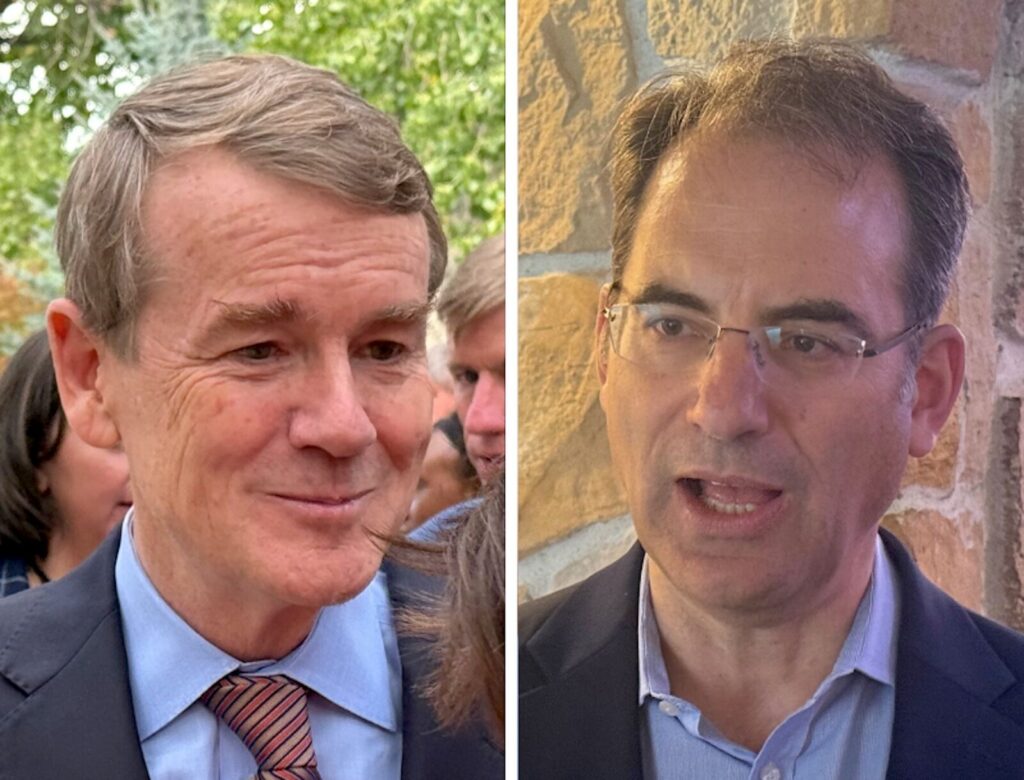
There is a demanding and onerous process for exempting a party’s nomination process out from under these new rules and thereby allowing the closure of its primary following a super-majority approval among statewide delegates. There is reason to suspect, of course, the bloody internecine squabbles among Republicans are a more likely culprit in their recent dismal election performance than the invasion of their nomination process by unaffiliated intruders. Whatever the influence of open primaries may be, it’s easier to ignore their consequences when your candidates are winning, which has been the case for Colorado Democrats. The primary contest between Attorney General Phil Weiser and U.S. Sen. Michael Bennet could cause a significant number of Democrats to rethink the wisdom of open primaries.
Both candidates are well liked, but participants attending Democratic meetings across the state are showing an apparent preference for Weiser. Democrats don’t dislike Bennet and appreciate his 16 years’ service in the Senate, but that’s occurred in Washington while Weiser has attentively cultivated Colorado contacts during the past eight years. Either man would place the state in competent hands, so most Democrats can accept a victory on the part of Weiser or Bennet. But, if it becomes apparent, as seems likely, Bennet has to focus on generating support among unaffiliated voters, it will leave a sour taste on a lot of palates. Both men are raising heaps of money for this contest, but the $500,000 donation dropped by part-time Coloradan Michael Bloomberg signals the greater fundraising reach available to the senator. It is the reason most experienced campaign hands expect Bennet to emerge as the winner. Neither Weiser nor his supporters are likely to surrender easily.
A similar contest may be developing in the 4th Congressional District where Trisha Calvarese has launched her second campaign against U.S. Rep. Lauren Boebert together with retired Naval Reserve Rear Admiral Eileen Laubacher. Having lost in 2024, Calvarese has a network of supporters and a campaign team that launches a jeremiad attacking Boebert every day of the week. The only indication of life from the Laubacher campaign is a regular dunning of Democrats for campaign contributions. Trisha is a former congressional staffer, while
Laubacher boasts the kind of biography Washington consultants search for in a candidate — a Naval Academy graduate, active-duty service in war zones and foreign service experience. Only returning to Colorado last year, she will have to introduce herself to every voter, including many Democrats with a soft spot for Trisha. There is a prevailing conviction Boebert simply can’t be beaten. There was a similar opinion in 2008 when Marilyn Musgrave, who represented the 4th C D. for three terms, was defeated by Betsy Markey of Fort Collins. She, in turn, only served a two-year stint before Republicans ousted her in favor of Cory Gardner, who would go on to serve a term in the Senate. The district is redder today than it was then, but even Republicans might wish to end their embarrassment. If deposed, the winning Democrat should only count on a single term in Washington.
Thiry and his allies spent $6 million attempting to persuade Colorado voters to further “reform” their elections in 2016 by instituting ”jungle” primaries, much like California, where the four candidates securing the most votes would run off against each other with the eventual winner selected through “ranked-choice voting” tabulations. They failed badly. Don’t hold your breath for another run at this proposal, which seems designed to cull only the wealthiest candidates for the runoff, finishing off existing parties once and for all. It appears more likely affiliated partisan voters might seek to repeal open primaries first — fancy that, Democrats and Republicans marching arm-in-arm.
Miller Hudson is a public affairs consultant and a former Colorado legislator.


Gov. Polis celebrates Colorado’s first‑place education ranking from U.S. News
Marianne Goodland
marianne.goodland@coloradopolitics.com
Updated 13 minutes ago
Colorado has something to celebrate this week, in addition to its sesquicentennial (150th) birthday on Saturday. U.S. News & World Report on Tuesday gave Colorado its top ranking for education efforts from pre-K to postsecondary. Gov. Jared Polis celebrated the...
Independent gubernatorial candidate Greg Lopez, a former GOP congressman, qualifies for Colorado ballot
Ernest Luning
ernest.luning@coloradopolitics.com
Updated 24 minutes ago
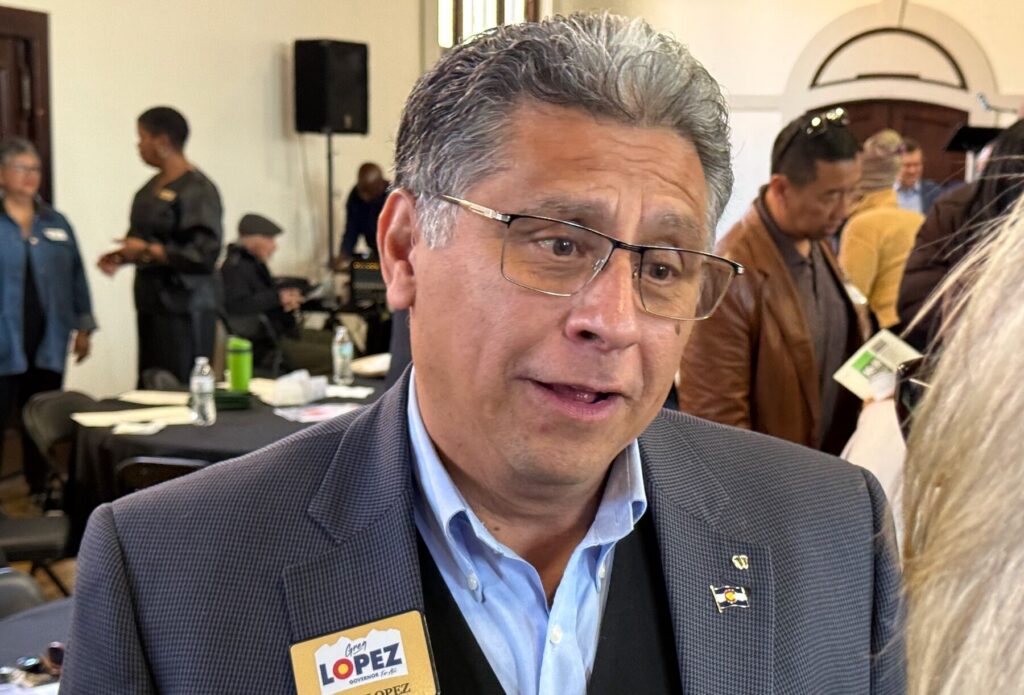
Unaffiliated gubernatorial candidate Greg Lopez, a former Republican congressman from Elizabeth who left the GOP to run as an independent, has qualified for the ballot by submitting enough petition signatures, the Colorado Secretary of State’s Office said Tuesday. He’ll face...
Meghan Shay on recovery, responsibility and second chances | The OpEdge Podcast
Tony Olivero
tony.olivero@gazette.com
Updated 4 hours ago
Step Denver and Step Springs CEO Meghan Shay joins The OpEdge to explore addiction recovery, homelessness, and the role of accountability in lasting change. Shay tells host and investigative columnist Jimmy Sengenberger why she believes recovery is built on personal...
The outrages mount | Hal Bidlack
Hal Bidlack
hal-bidlack@coloradopolitics.com
Updated 7 hours ago
My kindly and forgiving editors understand that, from time to time, I can’t help myself from leaping atop my rickety soapbox to vent. And, like many other political commentators have already done, I could easily fill this entire missive with...
Rural Colorado deserves a tax holiday | GUEST COLUMN
Eric Mulder
jstooksberry@gmail.com
Updated 18 hours ago
Spend enough time in Colorado’s Eastern Plains, the San Luis Valley, or the Western Slope, and you’ll see boarded-up storefronts, schools consolidating classrooms, and small rural communities stretching every dollar to keep basic services afloat. Once the backbone of Colorado’s...
Colorado board permits state to appeal injunction against arthritis drug price cap
Marissa Ventrelli
marissa.ventrelli@coloradopolitics.com
Updated 6 hours ago
A Colorado board voted Friday to allow the Attorney General’s Office to fight an injunction against a price cap on a drug that treats arthritis. A U.S. district court judge had granted the company Amgen a preliminary injunction, temporarily blocking...

Colorado schools receive $24 million for free meals program
Marissa Ventrelli
marissa.ventrelli@coloradopolitics.com
Updated 14 minutes ago
The Colorado Department of Education is providing Colorado schools with nearly $24 million in grant funding to implement a free lunch program. Approved by voters in 2022, the Healthy School Meals for All provides free breakfast and lunch to all...
‘Be prepared to march in the streets’ | Miller Hudson
Miller Hudson
miller-hudson@coloradopolitics.com
Updated 4 days ago
It was early in 1974 when I first met Tim Wirth as he announced his candidacy for Congress, challenging Republican incumbent Don Brotzman. Although I had only resided in Colorado two years, I was drafted to serve as a Democratic...

Colorado districts prepare for school year amid mental health cuts. But will less cellphone distractions help?
Marissa Ventrelli
marissa.ventrelli@coloradopolitics.com
Updated 4 days ago
The signs of a new school year are everywhere — buses in the shop, teachers unpacking boxes, families ticking through supply lists — but behind the familiar rituals, Colorado districts are preparing for a year defined less by routine than...
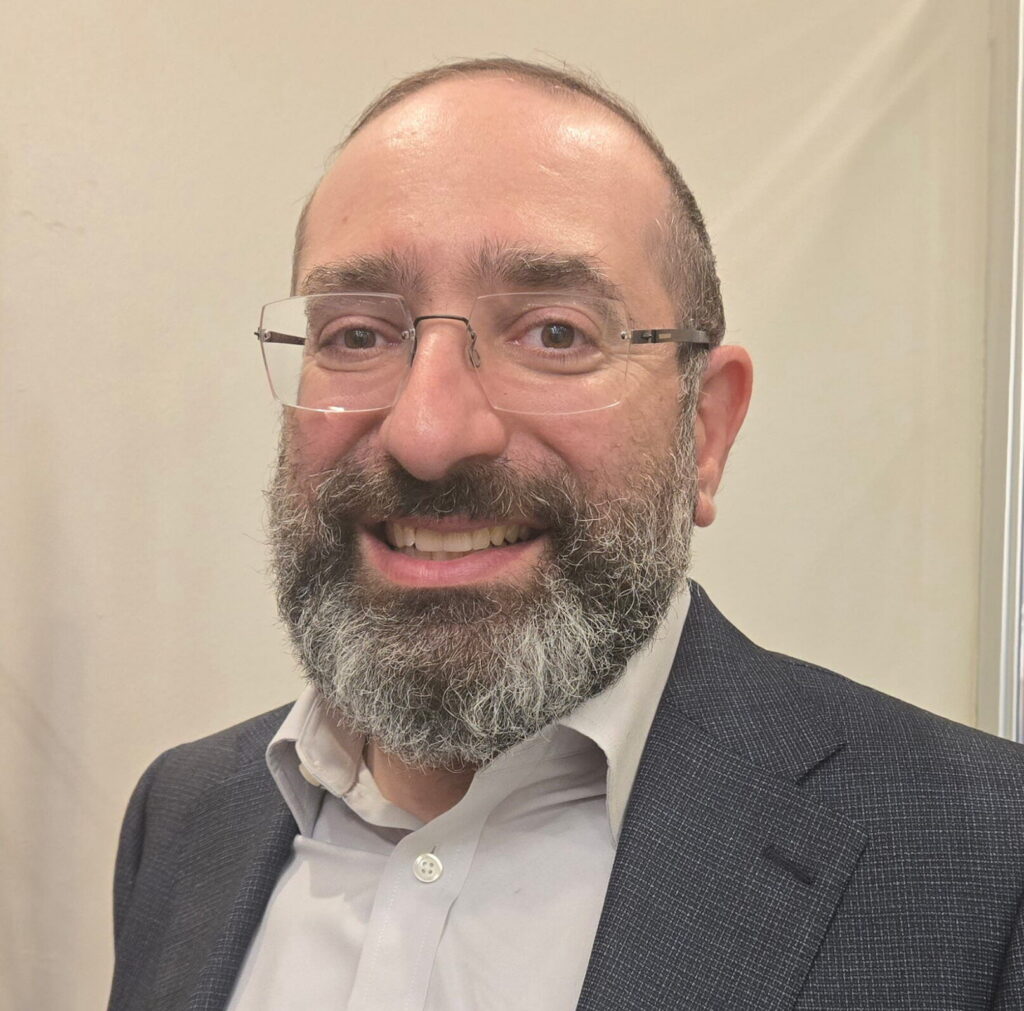
Surprise candidate Shimon Blau cleared to face off against Melat Kiros in November
Ernest Luning
ernest.luning@coloradopolitics.com
Updated 4 days ago
Unaffiliated congressional candidate Shimon Blau, a Denver doctor, has qualified by petition for the general election in Colorado’s 1st District, where Democrat Melat Kiros defeated 15-term U.S. Rep. Diana DeGette in last month’s primary, the Colorado Secretary of State’s Office...
PREV
PREVIOUS

Importing beef is not the solution | GABEL
Last week, I wrote, “As usual, cattle producers are waiting on the other shoe drop and trying to read the tea leaves and make the right moves.” The shoe dropped. President Donald Trump made comments on social media and in the news about bringing in Argentine beef to lower beef prices for consumers. That comment […]

Colorado: Health insurance premiums set to double in 2026
Health insurance rates for middle-income Coloradans who buy their own coverage are set to double in 2026, according to the state’s insurance division. The statewide net average premium increase will hit 101%, the Colorado Division of Insurance said on Monday, adding that likely will mean that 75,000 Coloradans won’t be able to afford health insurance […]