

Colorado justices decline to expand judges’ authority to second-guess medical malpractice awards
The Colorado Supreme Court rejected a hospital’s argument on Monday that judges have broad authority to recalculate a jury’s monetary award to plaintiffs injured by medical malpractice.
Under state law, damages in medical malpractice lawsuits are generally capped at $1 million as part of a 1988 policy change intended to curb the costs of medicine and ensure continued availability of health care. There is a safety valve, however, permitting trial judges to override the cap if there is “good cause” to believe the limitation is unfair.
But the law provides no explicit roadmap about what judges are supposed to do once they override the cap to arrive at an ultimate dollar figure. Previously, the state’s Court of Appeals decided judges do not always have to accept the jury’s amount, but they may uphold the award in full if it is not “grossly and manifestly excessive.”
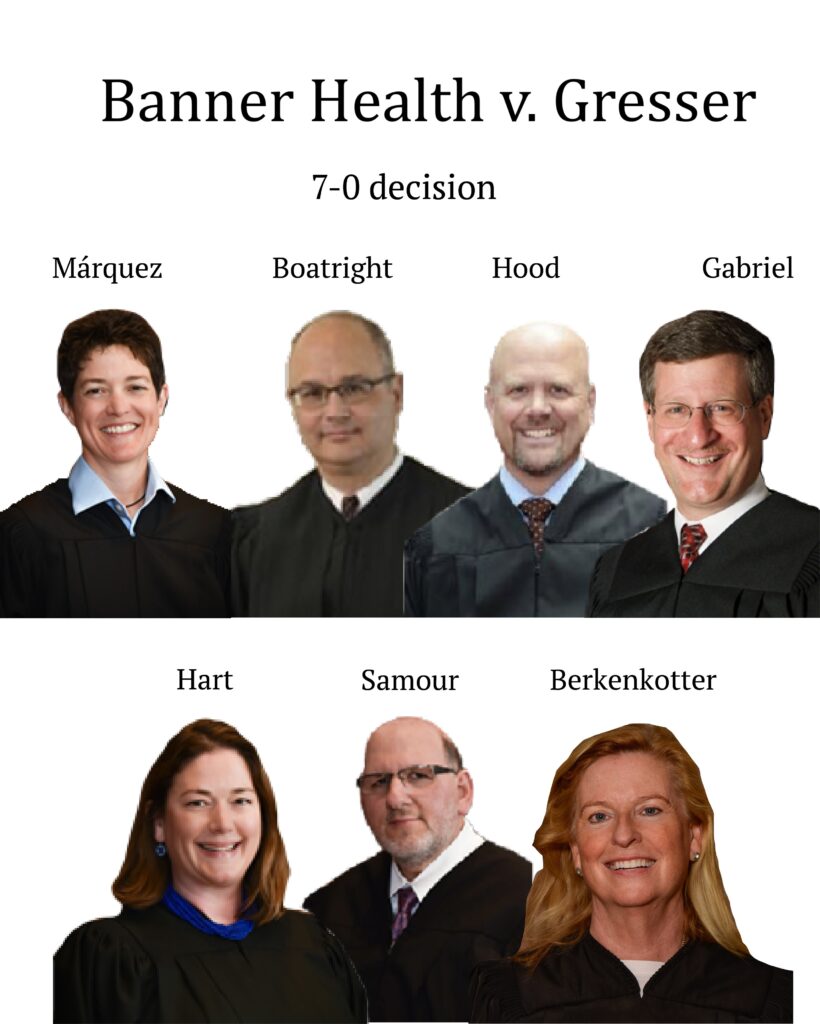
In an Oct. 20 opinion, the Supreme Court agreed with that assessment.
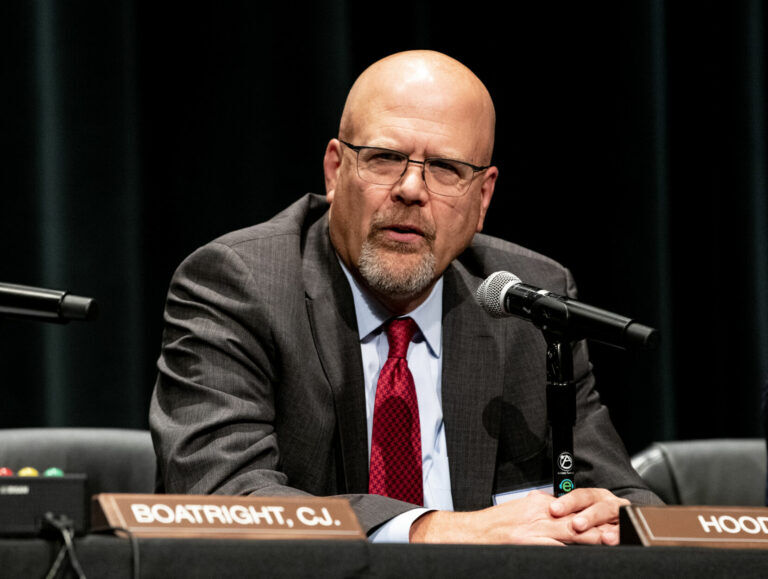
Once a judge “opens the gate and authorizes a damage award beyond the cap, we believe the legislature intended for the jury to retain its common-law authority to determine the appropriate amount of damages,” wrote Justice William W. Hood III.
Chance and Erin Gresser brought a medical negligence claim against Banner Health, alleging staff delayed treatment for their newborn daughter’s infection and caused extensive, lifelong injuries. After a 2022 trial, a Weld County jury awarded the Gressers $27.6 million, largely for their daughter’s past and future medical costs. With interest, the total award was $39.8 million.
District Court Judge Todd Taylor concluded the long-lasting injuries, the need for Erin Gresser to provide care around the clock and the costs of medical treatment amounted to good cause to override the $1 million cap. In his view, the decision was binary: A judge can either impose the cap or override it and accept the jury’s full award. Taylor concluded “substantial evidence” supported the dollar figure the jury chose.
A three-judge Court of Appeals panel disagreed slightly with Taylor. The panel rejected the idea that judges are obligated to simply accept the jury’s calculation if they override the cap. Instead, they can adjust the jury’s award if it is “grossly and manifestly excessive.” Because Taylor ultimately found the evidence justified the amount, the Court of Appeals upheld the award.
Banner Health appealed to the Supreme Court, arguing juries’ full awards will always be upheld under that standard. The hospital and the outside groups supporting it argued lawmakers had effectively replaced jury verdicts with the $1 million cap, and “additional damages” above that threshold should be reviewed for fairness — including fairness to defendants.
During oral arguments, Justice Maria E. Berkenkotter wondered if that logic meant trial judges could possibly increase a jury’s award to the plaintiff in the name of fairness. Justice Carlos A. Samour Jr. was unsure why there should effectively be a second, mini-trial to recalculate the damages.
“What’s the point of having the jury sit through a trial, determine damages and then if the cap gets exceeded, basically say, ‘The court’s gonna do whatever the court’s gonna do?'” he asked.
The Supreme Court ultimately agreed judges should not be reviewing a jury’s award for fairness. Instead, they can apply their longstanding power to check egregious verdicts, as the Court of Appeals recognized.
The justices concluded the lower courts correctly upheld the jury’s award to the Gressers.
The case is Banner Health v. Gresser et al.

Trump’s judicial nominee orders bond in wave of cases after 10th Circuit rejects government’s position
Michael Karlik
michael.karlik@coloradopolitics.com
Updated 11 hours ago
Within 24 hours of the Denver-based federal appeals court rejecting the government’s expansive view of its immigration detention authority, the lone judge in Colorado to embrace that view ordered bond hearings for detainees in at least 20 cases. U.S. District...
10th Circuit agrees Colorado satisfied jury award after intercepting money for restitution
Michael Karlik
michael.karlik@coloradopolitics.com
Updated 12 hours ago
The Denver-based federal appeals court agreed last week that Colorado satisfied its obligations by not paying a man directly for violating his rights, but rather crediting the jury’s multimillion-dollar award toward the crime victim restitution he still owed in his...
Colorado justices ponder whether insurer should save company from asbestos suits
Michael Karlik
michael.karlik@coloradopolitics.com
Updated 18 hours ago
Some members of the Colorado Supreme Court appeared skeptical last week that an insurance policy that reaches beyond the limits and coverage of a company’s other policies must “step down into the shoes” of those policies after they become insolvent....
Colorado justices weigh ‘extreme’ proposals for civil jury trial requests
Michael Karlik
michael.karlik@coloradopolitics.com
Updated 2 days ago
Members of the Colorado Supreme Court grappled last week with two vastly different proposals for evaluating when it is appropriate for a civil litigant to ask for a jury trial, as opposed to a bench trial before a judge. The...
Colorado justices weigh ‘extreme’ proposals for civil jury trial requests
Michael Karlik
michael.karlik@coloradopolitics.com
Updated 1 day ago
Members of the Colorado Supreme Court grappled last week with two vastly different proposals for evaluating when it is appropriate for a civil litigant to ask for a jury trial, as opposed to a bench trial before a judge. The...
10th Circuit reverses perjury conviction, warns prosecutors to watch their questioning
Michael Karlik
michael.karlik@coloradopolitics.com
Updated 1 day ago
The Denver-based federal appeals court reversed a defendant’s perjury conviction last week, warning prosecutors that it is better to follow up on imprecise or unclear answers than to criminally charge a witness for their response. A jury convicted Lori Milliron...
10th Circuit rebuffs government, rules against shift to mandatory immigration detention
Michael Karlik
michael.karlik@coloradopolitics.com
Updated 2 days ago
The Denver-based federal appeals court ruled on Tuesday against the government’s broad assertion of authority to keep people in immigration custody without the opportunity to demonstrate their suitability for release on bond. Although the regional appeals courts have reached different...

Appeals court revives tenants’ lawsuit over landlords’ illegal fee demands
Michael Karlik
michael.karlik@coloradopolitics.com
Updated 2 days ago
Colorado’s second-highest court revived a proposed class-action lawsuit against landlords and other entities last month, concluding that state law did not permit the practice of demanding that tenants pay attorney fees in certain eviction proceedings. In 2021, lawmakers enacted a...

Appeals court reverses Jeffco assault convictions due to omitted jury instruction
Michael Karlik
michael.karlik@coloradopolitics.com
Updated 2 days ago
Colorado’s second-highest court agreed last month that a Jefferson County defendant’s assault convictions could not stand because his jury should have been allowed to consider whether he used force against a bar patron to defend his girlfriend from inappropriate touching....
Colorado Supreme Court tosses man’s lawsuit over daughter’s traffic death
Michael Karlik
michael.karlik@coloradopolitics.com
Updated 2 days ago
The Colorado Supreme Court applied a confusing matrix of conditions and deadlines in state law to conclude on Monday that a man waited too long to sue after his daughter was rendered unconscious and later died from a vehicle accident....
PREV
PREVIOUS

Accusations of racism ripple through Denver school leadership
“Racist” has become a go-to accusation by Denver Public Schools leaders and those who attend board meetings. A White woman asking a Black heckler to stop? “Racist.” A White board member proposing guardrails on the board of education hiring outside counsel when the district has in-house Black counsel? “Racist.” Another White board member accused of […]

Judge orders noncitizen released from immigration detention, finds government misapplied law
A federal judge concluded the government was likely wrong to detain a noncitizen without the chance for a release hearing, and ordered him to be let out of immigration custody on Friday. At the same time, U.S. District Court Judge Regina M. Rodriguez declined to green-light Nestor Esai Mendoza Gutierrez’s request to turn his lawsuit […]