

Policy leaders fan foundational flames of Colorado’s public ed blaze | NOONAN
Smoke gets in your eyes when our leaders blow wildfire blasts to deflect from unhappy truths. Our public education foundations are ablaze, and too many of our public education policy leaders are fanning the flames. School board elections are some of the most important in our democracy. This timing offers an opportunity to put out the fires burning our schoolhouses down.
Denver Public Schools’ board usually gets the most attention from media. Our top political leaders have storied associations with DPS. Michael Bennet ran DPS as superintendent before becoming a U.S. senator. John Hickenlooper, former Denver mayor, governor, and now U.S. senator, put together wide-ranging laissez-faire legislation “freeing” charter schools to do pretty much what they please as far as curriculum, compensation, due process, etc.
Denver’s current mayor, Michael Johnston, wrote the legislation that now hamstrings district schools across the state. Former Denver mayors Federico Pena and Wellington Webb present “school choice” for charter and innovation schools as a panacea. Our current governor, Jared Polis, goes all-in on public school accountability, except as it relates to charters and their mostly undemocratic governance practices and financial opacity. He’s done harm by not taking on the TABOR knot.
These men promote the principles of Educate Denver and Denver Families for Public Schools, propagandistic purveyors of anti-public-school nonsense. Their non-stop criticism pervades our state’s current discourse as to how the vast majority of our children will experience their schooling.
With these great men leading the charge, what could possibly go wrong? Denver Families for Public Schools, with pro-choice and pro-charter Pat Donvan as avatar for the great men, is bringing hundreds of thousands of dollars to the DPS election in support of four candidates. They’re running for the at-large position and for seats in the northeast, central and southwest districts.
At the recent debate sponsored by Educate Denver, Chalkbeat and Denver’s local CBS station, Alex Magana, a long-time DPS administrator running for the at-large seat, made this astonishing statement: “Kids begin school at the same starting point.” He then questioned why DPS minority students have lower academic achievement CMAS scores than their white peers.
Educate Denver and Denver Families for Public Schools are apparently basing their critiques of public education, particularly related to the achievement gap, on Magano’s utterly incorrect and demonstrably false premise. Students do not enter school at the same starting point. That’s the crux of the education challenge.
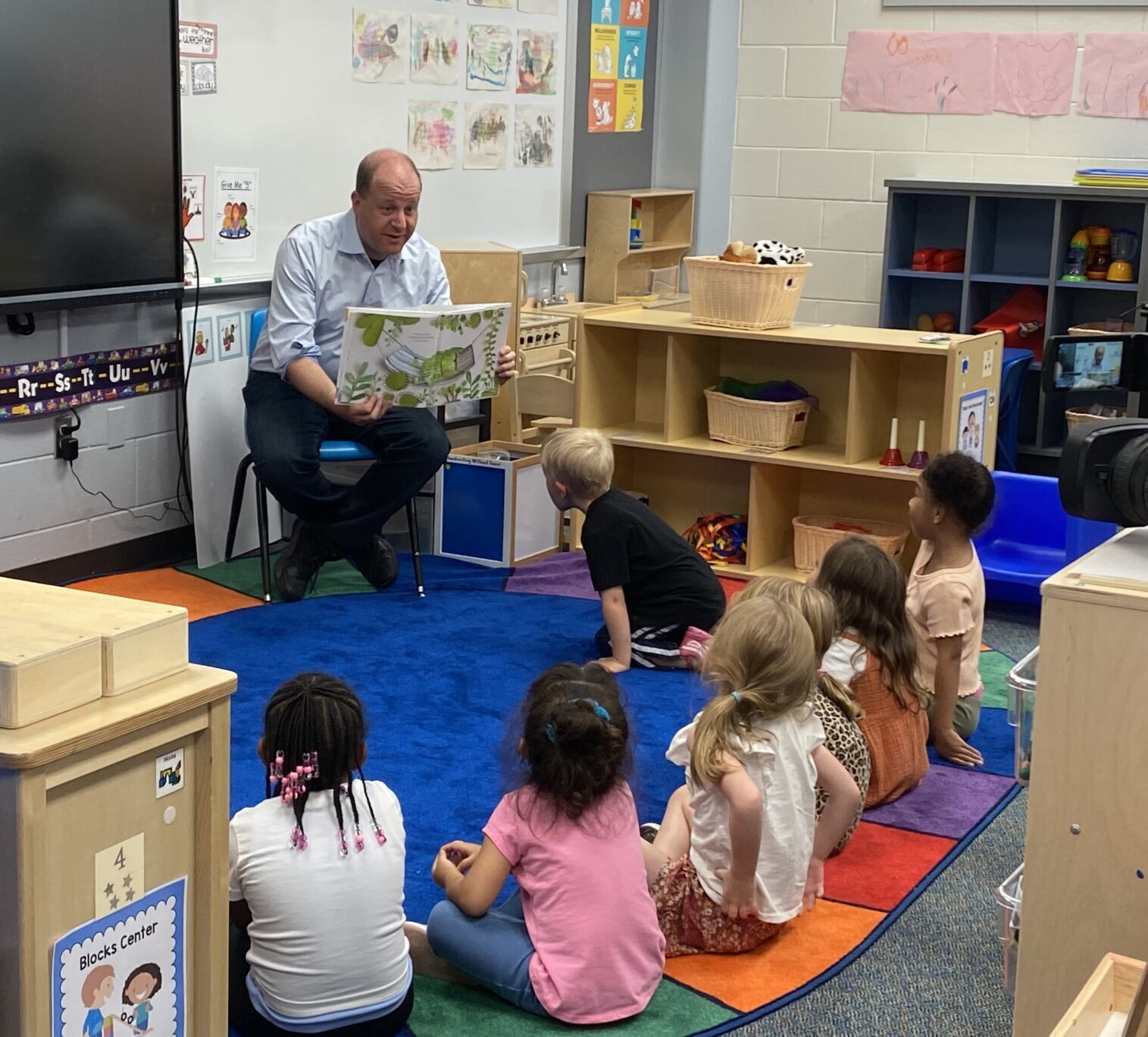
As a leader of Kepner Beacon Middle School, an innovation “choice” school within the DPS system with its 90% minority and 89% low-income student populations, Magano should have the answer to his achievement gap question. Kepner Beacon Middle School crossed the “green” “meets performance” line by less than a point in 2025 at a 53.3 rating. But at all grades, only 18.3% of students met English language standards and only 10.4% met math standards. Those data points are not promising.
Every school in Denver in the “improvement” or lower category has large majorities of low-income and minority students. Most are in the 80% or above low-income population categories. These students clearly do not begin their education at the same starting point as more affluent white children.
This fact plays out across school districts. Take suburban districts like Cherry Creek and Jefferson County. In Jeffco, the average low-income student status of their children in “improvement” category schools is 63%. In Cherry Creek, it’s 62.8% for low-income children. Harrison School District has a student population similar to DPS. Of its 11 schools in “improvement” status out of 27 total schools, 10 have a low-income student population at 72% or more.
Caron Blanke, an Educate Denver and Denver Families candidate running for the central Denver board spot, claimed Denver’s charter schools performed better than its district schools. She further asserted charter schools are “public” schools. Let’s clarify.
Rocky Mountain Prep’s board with chair Pat Donovan of Denver Families, recently terminated its chief executive. In 2024, 10 of RMP’s 11 schools were in the “green” or “performance” category. This year, four schools are in the “improvement” category. One school dropped 21 points off the previous year’s performance, and another dropped 18 points. That data has all sorts of implications for the value of CMAS testing, quality of charter schools, and rationale for school “choice.”
Donovan is also on the board of KIPP schools in DPS and the League of Charter Schools. Of six KIPP schools, four are in the “improvement” category. Three of “improvement” KIPP schools exceed 80% of children in low-income status. These schools benefit from closures of DPS district schools. That’s an effect of school “choice.” Parents with children from closed DPS schools get to “choose” their children into “improvement” category charter schools that claim they are “better” than neighborhood schools. That’s how the word “false” gets attached to “choice.”
Are charters really public schools? Only based on their funding with taxpayer dollars and their CDE performance rating. Otherwise, they operate without public oversight.
Let the smoke clear, voters, to fill in your ballots with your eyes wide open.
Paula Noonan owns Colorado Capitol Watch, the state’s premier legislature tracking platform.

Too many stories, too little space | Hal Bidlack
Hal Bidlack
hal-bidlack@coloradopolitics.com
Updated 8 hours ago
Well, this week’s column presents a problem: there are far too many things in Colorado Politics of interest, and I want to write about them all. But given my kindly editor is unlikely to let me expand my column to...

Wolf killed would have kept preying on livestock, Colorado agency says
Marissa Ventrelli
marissa.ventrelli@coloradopolitics.com
Updated 9 hours ago
A gray wolf killed on June 12 in Routt County would have “likely continued” its pattern of chronic depredation had it not been removed, according to a report issued by Colorado’s wildlife agency. The uncollared wolf was responsible for killing...

What makes a ‘real American’ after all? | Miller Hudson
Miller Hudson
miller-hudson@coloradopolitics.com
Updated 3 days ago
I presume in each generation of a family there’s a member who assumes the role of heredity tracker. In mine it’s been my father, also Miller, followed by my twin brother, Richard. We still possess copies of correspondence returned to my...

7 years in, Colorado Springs Democratic socialists say they’re making inroads
DEBBIE KELLEY
debbie-kelley@coloradopolitics.com
Updated 2 days ago
If further proof is needed that the political arena in Colorado Springs isn’t like matchups in Denver, the Democratic Socialists of America is a case in point, say some people involved with the local chapter of the nationwide organization. It’s...
The Weiser-Bennet primary election political geography | Cronin & Loevy
Tom Cronin Bob Loevy
tom-cronin-bob-loevy@coloradopolitics.com
Updated 3 days ago
Regional analysis of the vote in the recent Democratic Party primary election for governor of Colorado shows primary election winner Phil Weiser sweeping the Denver metropolitan area with 59.4% of the vote. Weiser’s losing opponent, U.S. Sen. Michael Bennet, garnered...

What Colorado could look like in a year under a Gov. Phil Weiser | Jon Caldara
Jon Caldara
jon-caldara@coloradopolitics.com
Updated 4 days ago
Why is it that Victor Marx is going to become a superb governor? Because he’s the self-proclaimed world’s fastest at disarming someone holding a gun to his head. Seriously, watch the videos. It’s pretty impressive. How could I not vote...
Half of Americans don’t know what the 250th anniversary celebrates | Vince Bzdek
Vince Bzdek
vince.bzdek@gazette.com
Updated 3 days ago
Do you want the good news or the bad news, America? Let’s start with the bad: Nearly half of all Americans don’t know what America’s 250th anniversary commemorates (namely, the adoption of the Declaration of Independence), according to a new...

Turnout surges and winning margins stretch as final returns post in Colorado’s 2026 primary
Ernest Luning
ernest.luning@coloradopolitics.com
Updated 2 days ago
County clerks finished posting unofficial results in Colorado’s primary election on Friday, drawing a line under a series of nominating contests that witnessed upsets, surprises and outright shockers by the time the votes were tallied. While the outcome changed in...

Gov. Polis outlines vision for Colorado’s higher ed, workforce development
Marissa Ventrelli
marissa.ventrelli@coloradopolitics.com
Updated 3 days ago
Gov. Jared Polis spoke with the Colorado Commission for Higher Education on Friday about his vision for the future of the state’s higher education and workforce training programs, telling the commission that the state needs to do a better job...

Polis tobacco stance is a win for the addiction-for-profit industry | GUEST COLUMN
Colorado Politics
colorado-politics@coloradopolitics.com
Updated 4 days ago
By Eric Anderson Give Gov. Jared Polis points for sticking to his guns. Despite a healthy heaping of criticism, Polis has refused to back down from his surprising 2024 tweet expressing excitement for the selection of Robert F. Kennedy Jr....
PREV
PREVIOUS

Polis administration touts local cities' 'compliance' with housing laws
The Polis administration is taking a victory lap this week on local government compliance with housing laws passed by the General Assembly in the past two years, although the highest level among the metrics is only 60% compliant. In another metric, there are more localities that are non-compliant than those that are. The majority are […]
Colorado Springs State Rep. Rebecca Keltie won't seek re-election in 2026
Colorado Springs Republican Rep. Rebecca Keltie announced Wednesday she will not run for a second term in 2026. Keltie was first elected to House District 16, which covers northeastern Colorado Springs, in 2024. Keltie cited “deeply personal, professional and medical circumstances” for her decision. To her constituents, Keltie said serving them has been one of […]