

Federal judge finds fire chief violated due process rights of ex-employee in Boulder-Weld district

A federal judge concluded last week that the chief of a fire protection district spanning Boulder and Weld counties violated the constitutional rights of an employee by terminating him through a process that lacked sufficient procedural protections.
However, U.S. District Court Chief Judge Philip A. Brimmer also determined plaintiff Benjamin Carter could not prevail on the claims that his firing amounted to retaliation for his First Amendment-protected speech or union membership.
Because Brimmer found a constitutional violation, he directed Carter and the Niwot-based Mountain View Fire Protection District to submit additional arguments about what should happen next.
“The briefs should address what entitlement, if any, Mr. Carter has to either reinstatement or a renewed termination proceeding, as well as what damages he is entitled to,” Brimmer wrote in a Sept. 30 order.
The events that triggered Carter’s termination began on Jan. 30, 2023. At the time, Carter was the newly elected president of the union. Although he was not on duty that day, he went to the station to handle gear for new employees. A supplier was making a delivery and mentioned he received a request to remove the American flag from a specific new hire’s protective equipment.

Although multiple people noted in statements that the gear did not have the American flag on it to begin with, Carter reportedly became upset and raised the issue to a captain. The captain and Carter called Gina Daly, who worked in human resources, and she confirmed she had asked the vendor to remove the flag.
Specifically, the new employee requested a religious accommodation as a Jehovah’s Witness, and Chief David Beebe approved it. Recollections varied about whether Daly asked for confidentiality before or after Carter left the room.
Carter, who was under the impression he could speak with others about the issue, discussed the religious accommodation with approximately 14 other employees. A battalion chief wrote on Feb. 6 that an employee raised the issue of a new hire “who does not want to wear the flag and sounded like a piece of work.”
“I asked where they heard this information and they stated Lieutenant Carter was telling everybody at shift change,” the battalion chief wrote. After he explained the nature of the religious accommodation, the employees present “stated they understood, and it appeared there were no further issues after my explanation.”
Leadership met on Feb. 6 and decided to investigate Carter’s conduct. The district then placed Carter on administrative leave. Deputy Chief Jeff Webb spent the month of February investigating and concluded Carter should be charged with insubordination, disseminating confidential information, conducting himself disrespectfully and failing to report his time worked.
“These conversations (about the religious accommodation) resulted in creating an atmosphere of discord among staff. The atmosphere is such that it will need to be repaired before the employee joins us on Monday, as we must avoid a hostile work environment,” Webb wrote.
Carter responded that he received no instruction to keep the information confidential and that he was not an “intentionally rude” employee.
“This transformation from a well-regarded, commended firefighter into a monster that apparently completely blows off direct instructions from HR, viciously goes around and smears a person I have never even met, commits fraud on the department, and bullies the female staff,” he wrote, “suspiciously coincides with my recent ascension into the position of elected Union President.”

Carter met with Webb and Beebe, the chief, but Beebe terminated Carter in a March 21 letter. He wrote that none of the grounds for termination were “remotely tied to” Carter’s role with the union. He noted that Carter had received training about keeping certain employee information confidential.
Pursuant to the employee handbook, Carter could appeal to Beebe if there was new information. Carter’s attorneys submitted an appeal, but Beebe denied it on the grounds that it did not contain new information.
Carter then sued, alleging the termination process did not give him an opportunity to be represented by counsel, to review the evidence, to confront his accusers or to meaningfully challenge Beebe’s decision after the fact. He also argued the firing was a result of his speech and union activity.
Both sides moved to end some or all of Carter’s claims in their favor without a trial. In evaluating Carter’s claim that the district retaliated against him for his speech, Brimmer concluded that Carter’s conversations about the flag request were not protected by the First Amendment due to the more limited speech rights afforded to public employees.
“The Court finds that, because Mr. Carter’s speech occurred while at work, regarded an issue related to his work, and took place among people within his chain of command, the January 30th conversations constituted official speech,” Brimmer wrote. “Moreover, the Court finds that the presence or absence of a flag on a uniform and the religious beliefs of a given firefighter are not matters of public interest to the community for any social, political, or other reason.”
However, he agreed with Carter that the necessary procedural safeguards were not in place during the disciplinary process.
“At the point he was terminated, Mr. Carter had been given the names of only five of the 25-30 witnesses interviewed by Deputy Chief Webb. Thus, his ability to perform his own investigation of the charges was constrained,” wrote Brimmer. He cited, as an example, the conflicting statements about whether Carter was ever told to keep the new hire’s request confidential.
Moreover, Carter had almost no opportunity to challenge his termination after Beebe’s decision.
“The Court finds that it was clearly established that the totality of process that Chief Beebe afforded to Mr. Carter in connection with his termination violated Mr. Carter’s constitutional rights,” Brimmer concluded.
The case is Carter v. Mountain View Fire Protection District et al.

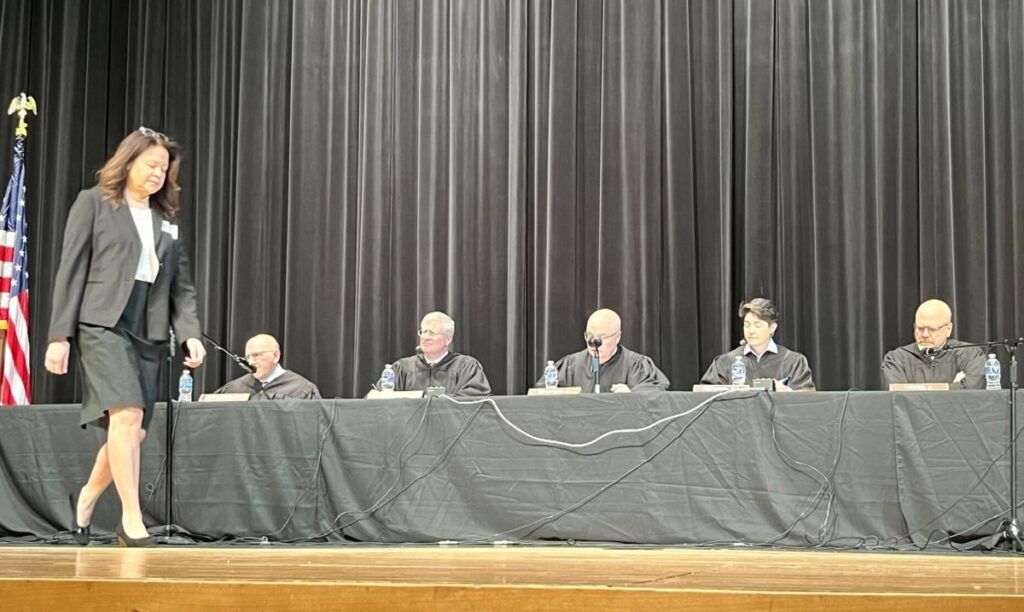
Colorado justices accept appeals on Netflix taxation, children pursuing neglect cases
Michael Karlik
michael.karlik@coloradopolitics.com
Updated 14 hours ago
The Colorado Supreme Court announced on Monday that it will decide whether Netflix subscriptions are subject to the state’s sales tax as “tangible personal property.” At least three of the court’s seven members must agree to hear an appeal. The...

Denver judge denies Gov. Polis request to dismiss ICE-related records case
Marianne Goodland
marianne.goodland@coloradopolitics.com
Updated 17 hours ago
A year after blocking the release of state records to federal immigration agents, a Denver judge has now denied Gov. Jared Polis’ effort to end the lawsuit at the center of the dispute. The lawsuit filed against the governor in...
10th Circuit grants rare all-judges’ review of Colorado banking regulation
Michael Karlik
michael.karlik@coloradopolitics.com
Updated 18 hours ago
The Denver-based federal appeals court announced on Thursday that it will hold a rare all-judges review of a recent decision that permits Colorado to require out-of-state banks to abide by the state’s maximum interest rates when they lend to in-state...
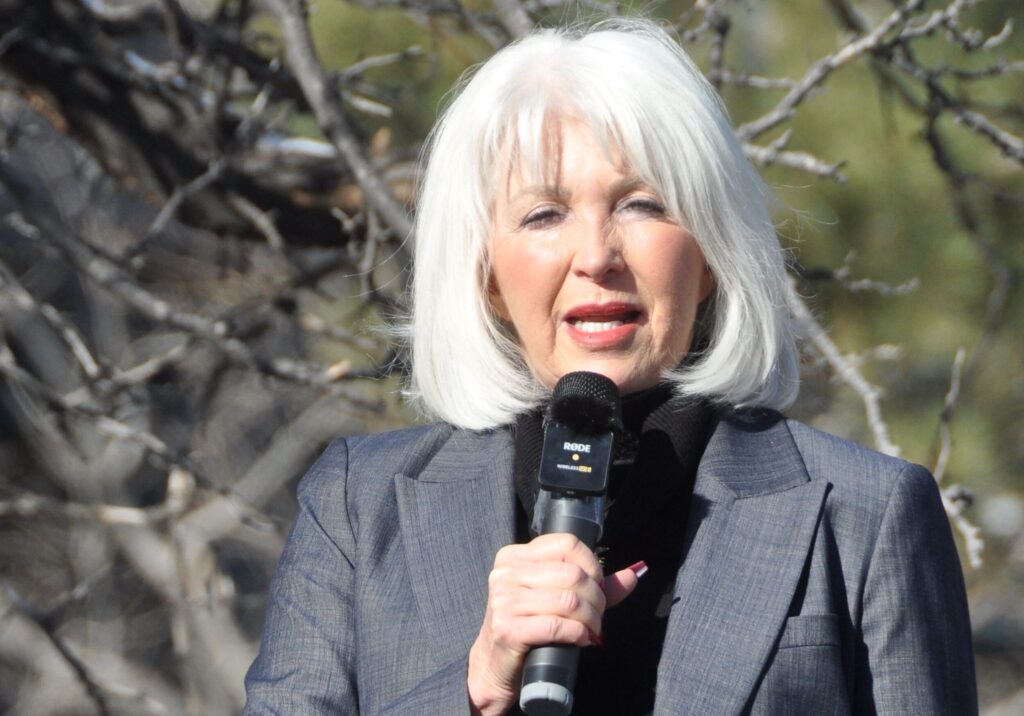
Colorado appeals court orders new sentencing for Tina Peters, upholds convictions
Michael Karlik
michael.karlik@coloradopolitics.com
Updated 13 hours ago
Colorado’s second-highest court determined on Thursday that a trial judge improperly sentenced former Mesa County clerk Tina Peters based upon her exercise of protected speech, while at the same time upholding her convictions. The three-judge Court of Appeals panel also...
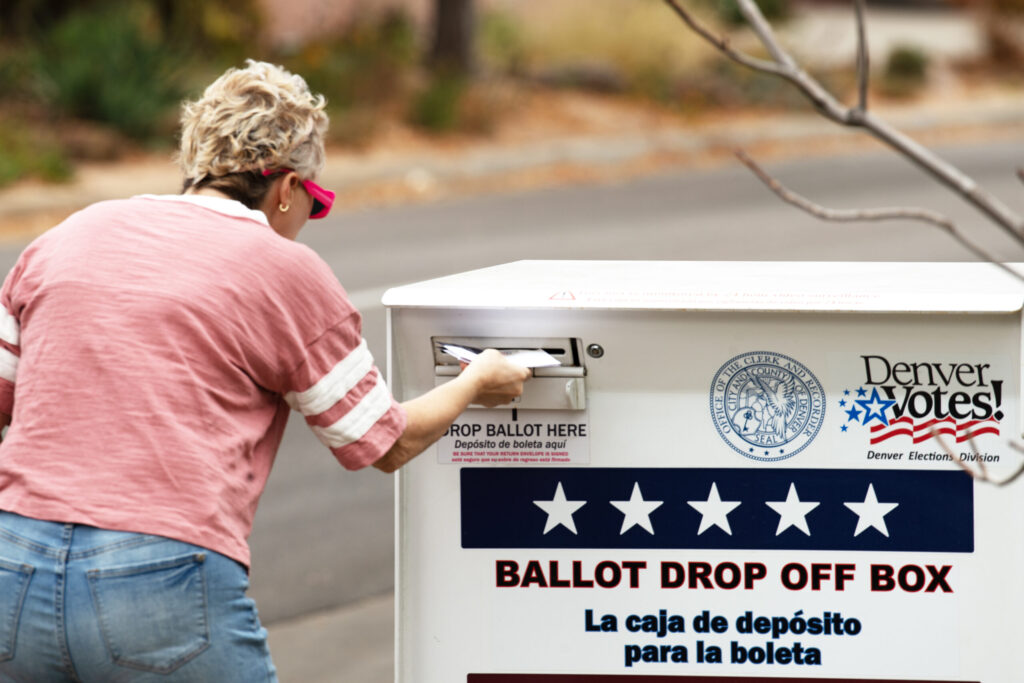
Judge rules that Colorado law makes it too hard for parties to bar unaffiliated voters from primaries
Ernest Luning
ernest.luning@coloradopolitics.com
Updated 20 hours ago
A federal judge ruled in favor of the Colorado Republican Party late Tuesday, saying that a portion of the state law that allows unaffiliated voters to cast ballots in party primaries is unconstitutional because it imposes an unrealistic burden on...
10th Circuit upholds regulator’s methodology for Tri-State exit fees
Michael Karlik
michael.karlik@coloradopolitics.com
Updated 20 hours ago
The Denver-based federal appeals court upheld a regulatory agency’s methodology for calculating the fee owed by entities seeking to withdraw from Tri-State Generation and Transmission Association last week. Tri-State is a Westminster-based cooperative that provides and transmits electricity to member...
Federal judge proposes sanctions against Mike Lindell’s lawyers for continued fake citations
Michael Karlik
michael.karlik@coloradopolitics.com
Updated 2 days ago
A federal judge is once again pursuing sanctions against lawyers for MyPillow CEO Mike Lindell for continuing to cite to court cases that do not exist, likely based on the faulty output of artificial intelligence tools. Last year, a jury...

Susan Blanco signals views on role of appellate courts in first opinion as Colorado justice
Michael Karlik
michael.karlik@coloradopolitics.com
Updated 2 days ago
Justice Susan Blanco’s first solo opinion as a new member of the Colorado Supreme Court made clear her view of the guardrails that keep the state’s highest court tethered to the issues it is asked to decide. On Monday, the...

Colorado leaders weigh next steps after Supreme Court rejects state ban on ‘conversion therapy’
Marissa Ventrelli
marissa.ventrelli@coloradopolitics.com
Updated 3 days ago
Colorado leaders said they are weighing next steps after the U.S. Supreme Court on Tuesday rejected the state’s ban on “conversion therapy” for children, as critics and supporters cheered or lambasted the ruling. The court’s near-unanimous decision called the Colorado...
Federal judge dismisses U.S. government lawsuit against Colorado, Denver’s ‘sanctuary’ laws
Michael Karlik
michael.karlik@coloradopolitics.com
Updated 2 days ago
A federal judge dismissed the U.S. government’s lawsuit against Colorado and Denver on Tuesday, which alleged that various local policies impermissibly infringed on federal immigration enforcement. U.S. District Court Judge Gordon P. Gallagher followed the lead of judges in Illinois...
PREV
PREVIOUS

Jefferson County Sheriff partners with Rep. Duran for bill on street racing
The Jefferson County Sheriff’s Office partnered with House Majority Leader Monica Duran to support new legislation to “crack down” on street racing in the state. The bill will be introduced in the 2026 legislative session of the Colorado General Assembly and will look create stronger penalties regarding illegal street racing, stunt driving and street takeovers, […]

Xcel appeals to state on billion-dollar energy project denied in El Paso County
Colorado’s largest utilities provider has asked the state to overrule local decisions on the $1.7 billion Colorado Power Pathway project, which was denied permits this year in El Paso and Elbert counties. Xcel is asking the Colorado Public Utilities Commission to consider overruling local decisions on the 550-mile powerline project in the name of public […]