

Colorado justices ponder ‘gotcha’ for defendant after messy process impacted mental health evidence
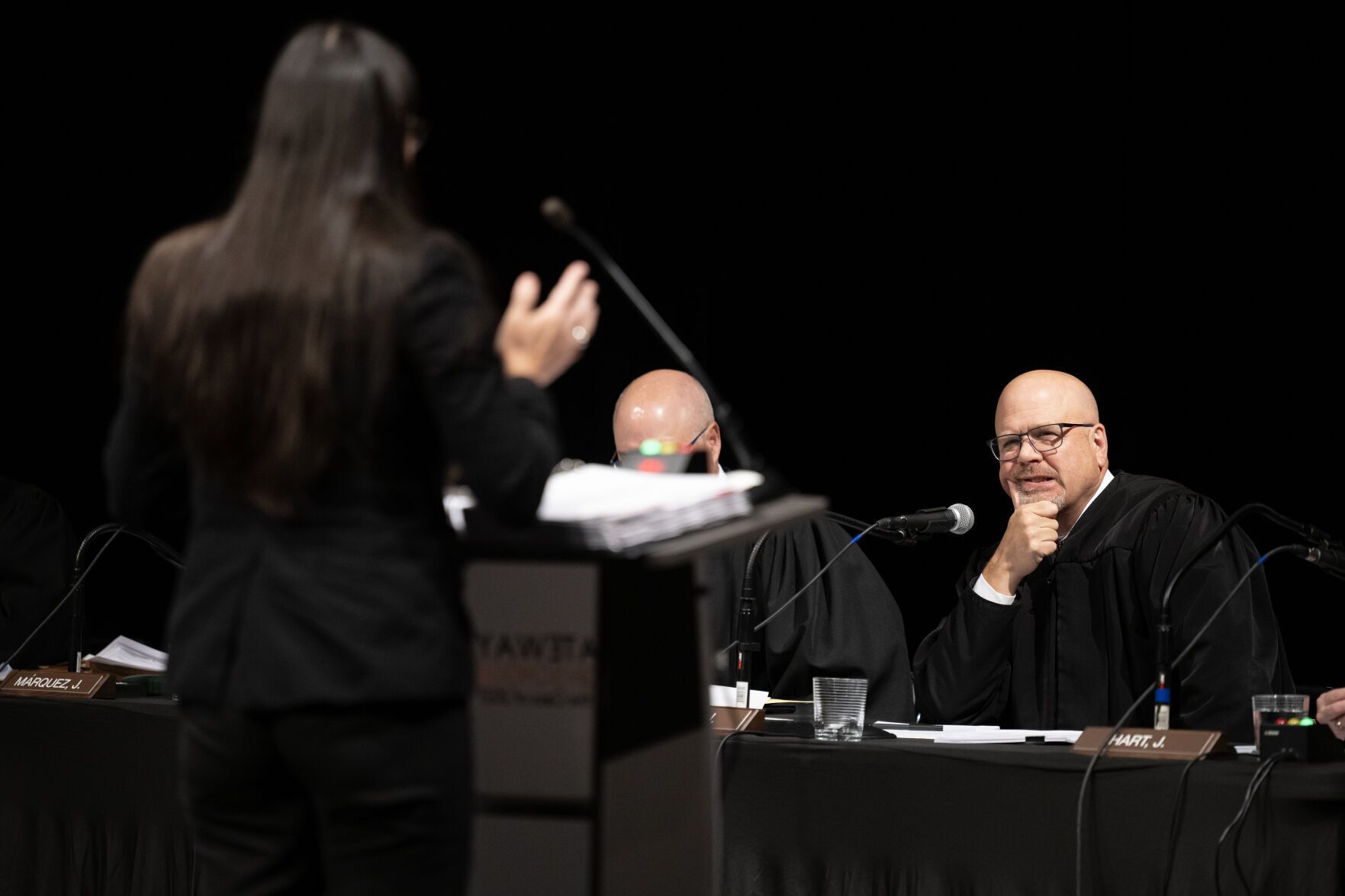
Some members of the Colorado Supreme Court were uncomfortable last week with letting a defendant’s murder conviction stand after a series of missteps resulted in a trial judge blocking jurors from hearing an expert’s assessment of the defendant’s mental health.
Although the details were complicated, the legal issue was more streamlined: State law requires defendants who are not pursuing an insanity defense, but who still intend to introduce expert evidence of their mental condition, to give notice and undergo a court-ordered examination. A Lake County judge found defendant Maria Laida Day did not cooperate with her examiner and barred the defense’s evidence. But the Court of Appeals believed the state’s delays and Day’s mental illness were the source of any noncooperation, which could not be held against Day.
So, was it proper or improper to exclude the expert’s opinions of Day from trial?
In addressing that question during the Nov. 18 oral arguments, multiple justices noted the state’s mental hospital bore responsibility for never fully complying with multiple court orders to evaluate Day.
“You seem to be implicitly saying it was the defendant’s responsibility to make, what, a third request for a mental evaluation?” asked Justice William W. Hood III.
“There’s some mistakes that happen along the way,” responded Senior Assistant Attorney General Frank R. Lawson. “There’s lack of beds. There’s a lot of complication with a new statutory requirement regarding the video recording —”
“All of which is not the defendant’s problem, right?” interrupted Hood. “I mean, it’s unfortunate. But that’s not the defendant’s issue.”
In 2015, Day ran over her boyfriend, John Martinez, in Leadville. She left the scene in her vehicle and Martinez later died of his injuries. After a lengthy delay for mental health issues and after the first trial ended in a mistrial, jurors found Day guilty of second-degree murder and other offenses in 2020.
Between the first and second trials, the prosecution sought to bar the testimony of the defense’s expert witness, a doctor who opined Day’s mental illness might have accounted for Day’s behavior and affected her judgment on the day of the hit-and-run. District Court Judge Catherine J. Cheroutes blocked the evidence, reasoning Day failed to cooperate with a state-provided mental health evaluation as a precondition.
However, a three-judge Court of Appeals panel concluded most of the expert’s opinions should have been allowed at Day’s second trial. Judge Terry Fox noted Day’s noncooperation with the state mental hospital was actually attributable to lengthy delays, mental deterioration in jail that affected her competency to proceed and the facility’s failure to follow the trial judge’s orders.
“While the record reveals that the court and the parties used their best efforts to have an evaluation done,” she wrote, “we cannot hold (the Colorado Mental Health Hospital in Pueblo’s) failure to complete the evaluation against Day.”
The government appealed to the Supreme Court, maintaining the mental health evidence was properly omitted because, fundamentally, Day never completed the court-ordered exam required by law.
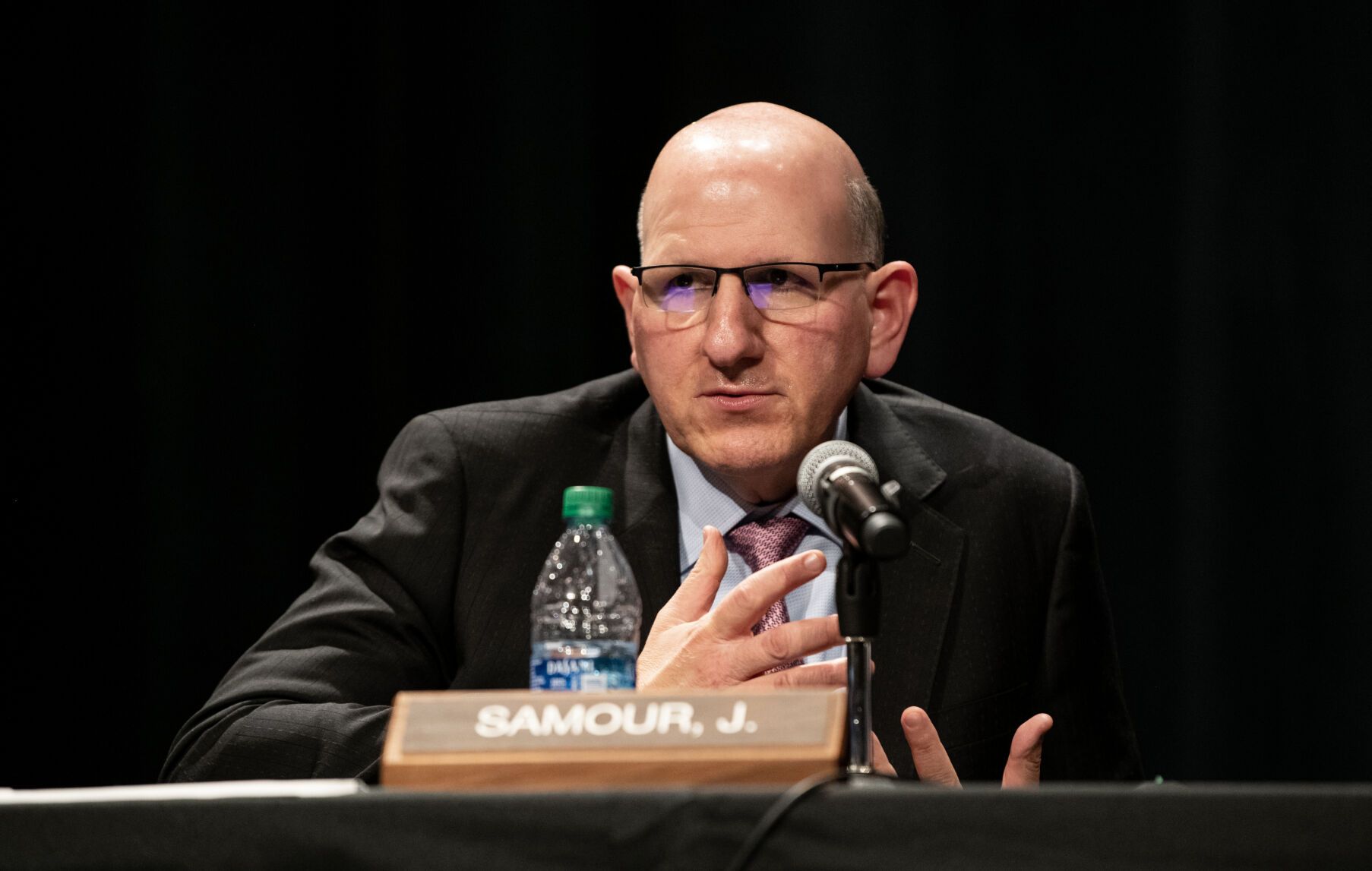
“It seems to me this statute sort of assumes that by the time the person is undergoing a mental condition examination, they’re competent,” said Justice Carlos A. Samour Jr., adding that was not the case with Day. “I have a concern about that … when it appears that she was incompetent at that time. Do we hold her noncooperation against her?”
Lawson argued that if a defendant does not or cannot cooperate with the court-ordered evaluation, then it falls upon the defense to renew its request for an exam when the defendant regains competency.
“This feels like a ‘gotcha,’ though, Mr. Lawson,” said Hood. “They’ve done two written requests and you’re saying despite practically taking out a billboard that the defense wanted a mental condition evaluation … they should have done it a third time.”
“Nobody liked the way this turned out,” Lawson acknowledged.
Public defender Andrew C. Heher, meanwhile, argued the evidence of Day’s noncooperation was overblown, and also relied on her refusal to take her medication. He said it is “not an unusual circumstance” for someone to stop taking psychotropic medications due to their serious side effects.
“What if she had been found competent, but still refusing to cooperate?” asked Samour. “Different outcome?”
Potentially, yes, said Heher.
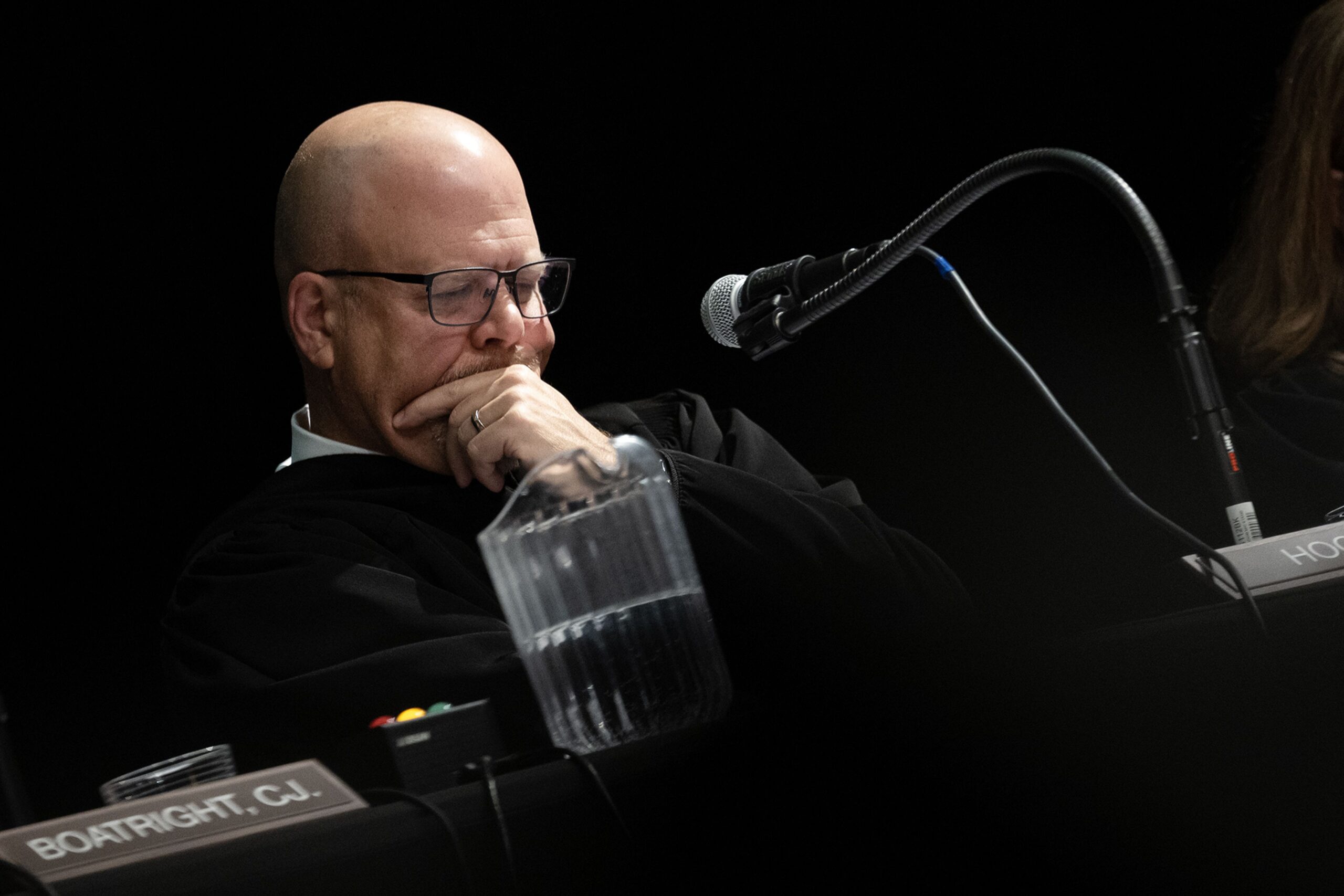
Hood observed that the prosecution relied heavily on Day’s emotionless demeanor after the hit-and-run to prove she knowingly killed Martinez. The blocked expert evidence could have placed her behavior in context for jurors.
“There seems to be fundamental unfairness,” said Hood, “not to give this defendant an opportunity to put on some evidence of her history of major psychotic illness.”
Justice Melissa Hart did not attend the arguments. She has been on a leave of absence since late October for “family and personal health reasons.“
The case is People v. Day.

Colorado Springs mother Deborah Nicholls’ murder conviction overturned
Nick Smith
nick-smith@coloradopolitics.com
Updated 6 hours ago
A Colorado Springs mother convicted in 2008 of murdering her three children in a house fire might get a new trial after a judge ruled that prosecutors withheld key evidence that could have impacted the jury’s verdict. Deborah Nicholls, whose...
Colorado court overturns illegal $7,000 restitution order
Michael Karlik
michael.karlik@coloradopolitics.com
Updated 6 hours ago
Colorado’s second-highest court overturned a Weld County defendant’s obligation to pay more than $7,000 in crime victim restitution on Thursday because a trial judge failed to issue a legally compliant restitution order at the time of sentencing. In Colorado, as...
Appeals court orders second look at Denver Water’s immunity for cyclist’s injury
Michael Karlik
michael.karlik@coloradopolitics.com
Updated 6 hours ago
Colorado’s second-highest court ordered another look at a bicyclist’s negligence lawsuit against Denver Water on Thursday, concluding that a trial judge needed to evaluate the utility’s potential immunity using the state Supreme Court’s new guidance. Joseph A. “Joey” Scott alleged...
Labels, duration not definitive proof of ‘intimate relationship,’ Colorado court rules in domestic violence case
Michael Karlik
michael.karlik@coloradopolitics.com
Updated 6 hours ago
Colorado’s second-highest court clarified on Thursday that the length of a couple’s relationship and the labels they attach to it are not conclusive evidence of whether it is an “intimate relationship” that can give rise to a domestic violence prosecution....

Colorado AG urges Supreme Court to let Boulder climate lawsuit proceed
Marissa Ventrelli
marissa.ventrelli@coloradopolitics.com
Updated 9 hours ago
Colorado Attorney General Phil Weiser has filed a court brief with the U.S. Supreme Court in a lawsuit brought by Boulder city officials seeking to hold oil companies liable for their environmental impact. The case began in 2018, when the...
10th Circuit says landowner cannot sue ex-Routt County judge for statements in decision
Michael Karlik
michael.karlik@coloradopolitics.com
Updated 1 day ago
A Routt County landowner cannot sue a former judge for his allegedly inaccurate statements in a case where the landowner was not a party, the Denver-based federal appeals court decided on Wednesday. Anne Fitzsimmons, who lives in Germany, owns a...
Defendant’s competency in question in El Paso County case involving slain Army police officer
Nick Smith
nick-smith@coloradopolitics.com
Updated 17 hours ago
It will be another 60 days before a 4th Judicial District court determines if a man charged in the shooting death of an Army police officer is competent to proceed in his case. Judge Erin Sokol granted a request Wednesday...
Parole, appeals deadlines and restitution: Colorado justices accept cases
Michael Karlik
michael.karlik@coloradopolitics.com
Updated 2 days ago
The Colorado Supreme Court announced on Monday that it will determine how a defendant’s parole-eligibility date should be calculated in instances where a new trial results in a sentence being imposed retroactively to the date of the original, since-overturned sentence....
Federal judge rejects DOJ bid to force Colorado to hand over voter information
Marissa Ventrelli
marissa.ventrelli@coloradopolitics.com
Updated 1 day ago
A U.S. district court judge has dismissed a lawsuit filed by the U.S. Department of Justice against Colorado Secretary of State Jena Griswold for refusing to provide the agency with personal voter information. Last December, the DOJ’s Civil Rights Division asked...
3 Colorado judges receive unfavorable retention recommendation as one performance commission violates rules
Michael Karlik
michael.karlik@coloradopolitics.com
Updated 3 days ago
Of the 123 Colorado judges standing for retention on the November ballot, citizen-led performance commissions found that three did not meet the required performance standards. However, in an unprecedented move, the commission charged with evaluating Supreme Court and Court of...
PREV
PREVIOUS

DougCo Sheriff's Office cancels contract with alert network after security breach
Thousands of Coloradans may have had their information leaked due to a security breach on CodeRED — a emergency notification system used by various metro agencies. CodeRED by Crisis24, a company based in Maryland, sent a letter to users on Friday stating that the system was part of a “targeted attack by an organized cybercriminal […]

Denver court rules strip club entertainers are employees
A Denver District Court ruled last week that strip club entertainers are employees and have protections under the City’s wage and employment laws. The ruling upholds a hearing officer’s earlier determinations involving an investigation by the office of City Auditor Timothy O’Brien into multiple Denver strip clubs, according to a statement released by his office […]