

Denver wants to buy old Goodyear to build affordable housing in heart of downtown
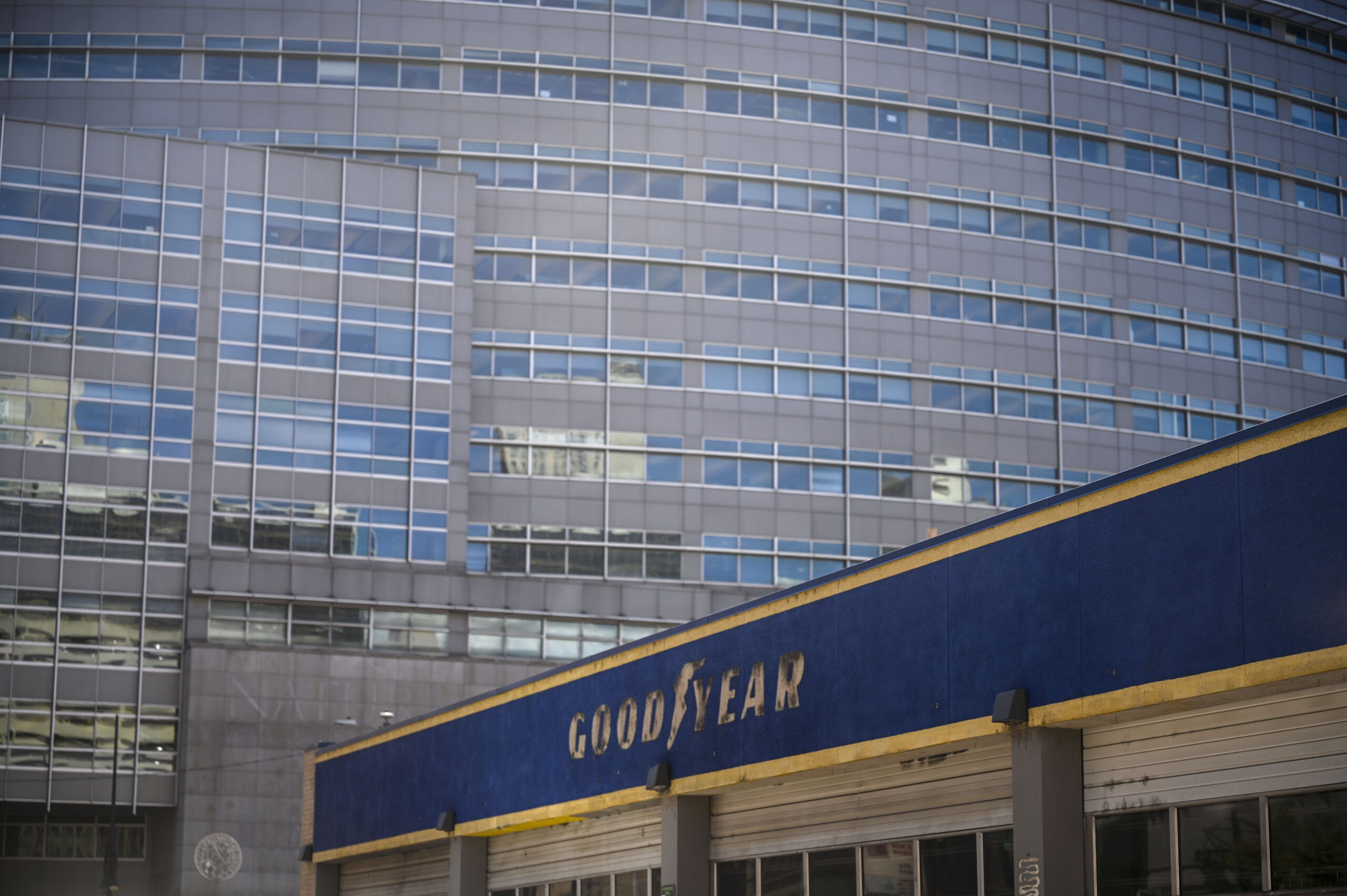
The City and County of Denver is working to close on a deal with the property owners of the former Goodyear auto repair shop in downtown worth $2.5 million.
Denver’s finance department asked City Council’s finance and business committee Tuesday to approve $2,525,000 from contingency funding in the Capital Improvement Fund to buy two parcels at 1460 and 1480 Tremont Place.
The 12,500-square-foot plot near the Denver Pavilions and the Webb Municipal Building is home to a former Goodyear. Denver plans to tear down the building and find a developer to build new affordable housing in a part of downtown that hasn’t seen new units built since before the pandemic, according to a city presentation.
“The building really is a nonissue for us. We’re looking at the land,” Lisa Lumley, the city’s director of real estate, told committee members.
Once the sale closes, the city would set up a request for proposals to find a developer to build the project. Denver is considering several options for the future of the property such as selling the land to a developer or leasing it.
It would be the first-of-its-kind affordable housing owned by the city in the heart of downtown, Lumley said.
“We are talking about true affordable housing, not just a development with market affordable,” Lumley added.

Concerns over using Denver’s emergency fund during budgetary woes
Committee members unanimously passed the measure to go in front of City Council on Oct. 20 for final approval – but several councilmembers expressed concern the sale isn’t the best use of funds typically reserved for emergencies amidst the city’s current financial crisis.
Contingency funding through Denver’s Capital Improvement Fund is primarily used by the city to cover emergency and unplanned infrastructure costs — and sometimes real estate purchases.
Denver officials usually leave the savings fund untouched for the first half of the year to have on hold for emergencies and see what else the rest of the year may bring, said Jackson Brockway, a city associate budget analyst. But in the later half of the year, as city officials have a better idea of what the rest of the year entails, will start to look at what the fund can be used for.
In some years, the city doesn’t use the fund at all, he added.
The contingency fund helped partially fund the city’s deal to buy the Denver Post building located a block away from the former Goodyear.
The finance department said the purchase meets the requirements of contingency funding that allows it to be used for a “change in work program initiated or approved by the Mayor’s Office.”
“We have in the past found these real estate opportunities can be hard to project or predict in an upcoming budget cycle,” Brockway said. “And that’s why this was recommended as a funding source.”
The 2025 contingency fund had $7.4 million and the city hadn’t used any of it this year, he added, though it could be rolled over for future use.
Councilmembers Diana Romero Campbell and Shontel Lewis said they were weary about approving the funding before Mayor Mike Johnston’s $1 billion bond proposal goes to voters in November.
If voters don’t approve the bond, Campbell said projects such as recreation center upgrades and pedestrian crossing improvements at the Highline Canal Trail will likely stall and there’s a list of city projects that will be in need of funding.
“I’m just really challenged from the source of this funding and a little confused as to why it wouldn’t be coming out of HOST (Department of Housing Stability),” Campbell said.
Lumley explained that HOST could be used as a funding tool along with the newly-expanded Downtown Development Authority after the land is purchased.
Councilmember Lewis said that the sale “doesn’t seem like an emergency use” in context of the city’s struggles.
Lewis asked if the city could hold off on the purchase until after the election on the bond issue and Lumley explained the sellers would likely not agree to it. The land is owned by an out-of-state family and several entities registered as GSZ LLC, Great Falls Family Limited Partnership LLLP, Tremont Lewin Properties LLC and Ruth Ann West.
They have “personal reasons” for wanting the sale to go through quickly, she explained.
“I have a deadline that, if this doesn’t move forward, they have told me that they may go ahead and just walk,” Lumley said.

Sans seniors, what does Colorado’s uninterested early turnout say about our disengaged electorate? | Paula Noonan
Paula Noonan
paula-noonan@coloradopolitics.com
Updated 12 hours ago
This primary election is poorly attended. Evidence is in the numbers. About 10% of active registered voters are deciding this year’s primaries with seven days to go. If that number triples by June 30, only 30% of voters will decide...

Who gets to decide Colorado’s economic future? | GUEST COLUMN
Colorado Politics
colorado-politics@coloradopolitics.com
Updated 12 hours ago
By Sarah Blackhurst Colorado’s prosperity depends on industries that grow our food, build our future and power our homes. But today, these sectors face an invisible threat from 5,000 miles away: the European Union’s Corporate Sustainability Due Diligence Directive (CS3D)....
Homeless recruits of ‘The Program’ say they were told to sign NDAs amid investigations in Colorado
David Migoya
david.migoya@gazette.com
Updated 13 hours ago
Several formerly homeless people — each drawn into an Aurora-based enterprise known as “The Program” that promised free housing and cash in return for letting a home-health business administer prescriptions they were given — said they were pressed into signing...
Homeless recruits of ‘The Program’ say they were told to sign NDAs amid investigations in Colorado
David Migoya
david.migoya@gazette.com
Updated 13 hours ago
Several formerly homeless people — each drawn into an Aurora-based enterprise known as “The Program” that promised free housing and cash in return for letting a home-health business administer prescriptions they were given — said they were pressed into signing...
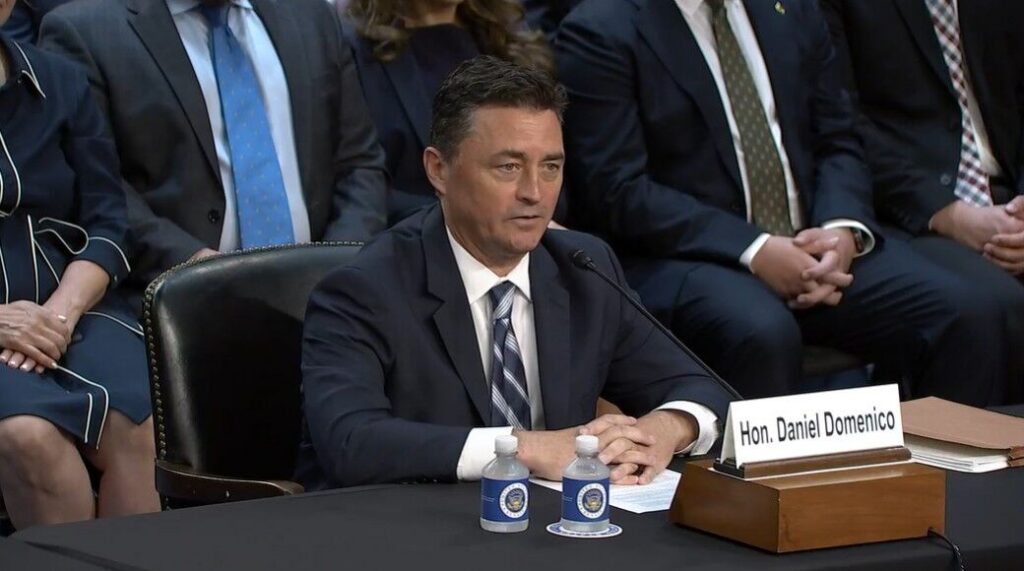
Trump’s 10th Circuit nominee declines to name 2020 election winner, defends immigration decisions
Michael Karlik
michael.karlik@coloradopolitics.com
Updated 12 hours ago
President Donald Trump’s nominee to the Denver-based federal appeals court declined to say who won the 2020 presidential election during his appearance before the U.S. Senate Judiciary Committee on Wednesday, and defended his recent rulings in immigration detention cases. U.S....
Colorado repeals attorney immigration attestation law after one year
Nico Brambila
nico.brambila@denvergazette.com
Updated 11 hours ago
One year and 12 days. That’s how long a Colorado law requiring attorneys to certify they would not use court data for federal immigration enforcement remained on the books before lawmakers repealed it. Gov. Jared Polis signed the initial legislation,...
Colorado’s ‘right to natural gas’ measure submits signatures to qualify for November ballot
Marissa Ventrelli
marissa.ventrelli@coloradopolitics.com
Updated 14 hours ago
A natural-gas rights initiative backed by Advance Colorado is likely headed to the November ballot, triggering a parallel campaign by environmental groups seeking to impose new liabilities on oil and gas operators. Petitions for Initiative No. 177 were turned in...

Economists: Colorado budget improves slightly, but deficits still loom
Marianne Goodland
marianne.goodland@coloradopolitics.com
Updated 15 hours ago
State economists reported a stronger-than-expected bump in general fund revenue driven largely by higher individual income tax collections, yet warned that Colorado remains on track to begin the next fiscal year with a sizable shortfall. State economists upgraded “significantly” the...

Colorado law allowing lawsuits against ‘conversion therapy’ providers takes effect July 1
Marissa Ventrelli
marissa.ventrelli@coloradopolitics.com
Updated 15 hours ago
With a new law taking effect July 1, Colorado is creating a legal pathway for people to sue licensed providers of “conversion therapy,” even as debate over the practice’s constitutionality continues in the wake of a recent U.S. Supreme Court...

Colorado justices expand ability for civil defendants to avoid participating, win after trial
Michael Karlik
michael.karlik@coloradopolitics.com
Updated 7 hours ago
The Colorado Supreme Court decided on Tuesday that a civil defendant, whose non-participation in the case meant that he legally admitted to the sexual assault allegations against him, could nonetheless prevail after he showed up to testify at trial. A...