

Special Session Day 1 recap: A high-profile resignation, heated debates and fast-tracked bills
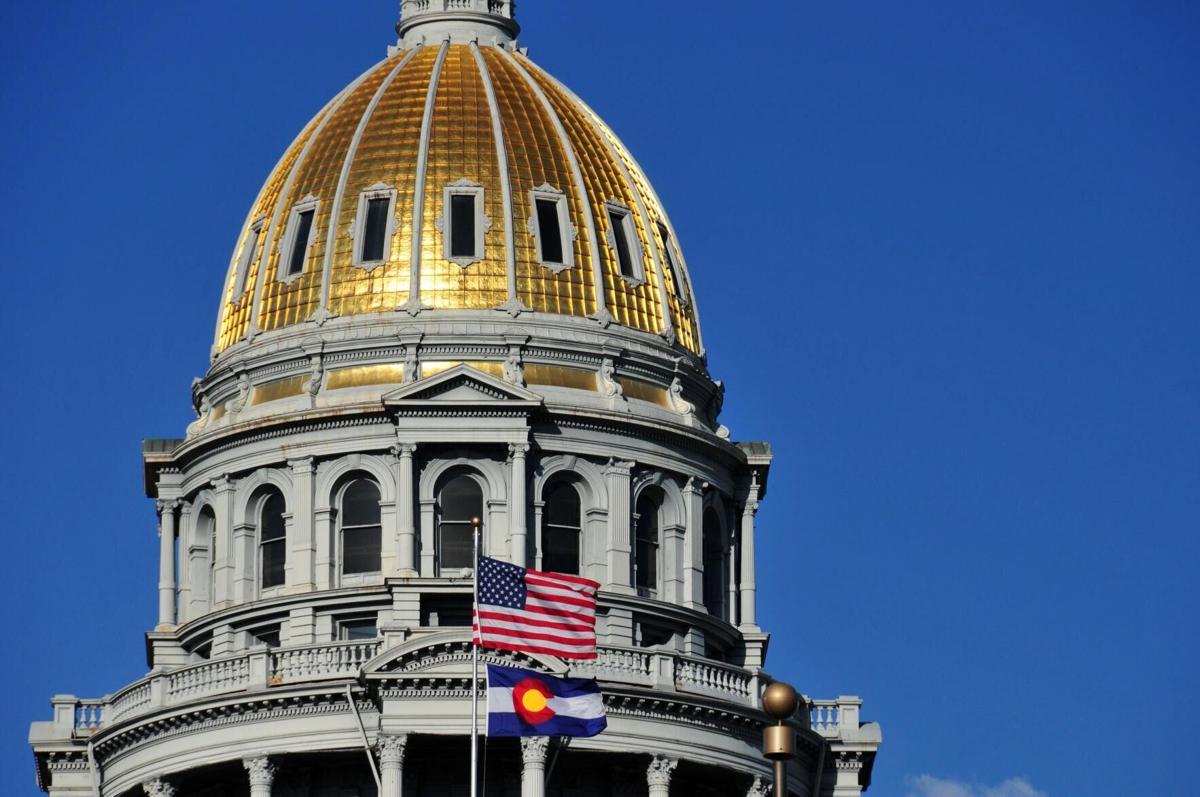
The Gazette file
Day 1 recap
The Colorado General Assembly started Thursday with 33 bills and two concurrent resolutions that would go to voters.
The first day ended with just 13 bills left, five in the Senate and eight in the House.
The Senate put four of its five bills through to a second reading debate Thursday night, meaning today all they have to do is vote on those bills and send them to the House.
House committees worked late into the evening, with no bills being debated on the floor of the whole chamber.
Besides special session business, Rep. Ryan Armagost, R-Berthoud, the House’s Assistant Minority Leader, resigned rather than face a resolution of censure from House Democrats. Armagost took a photo of a Democratic colleague in April and then circulated it among his Republican colleagues on a Signal chat. The photo drew crude comments from some House Republicans and later made it to a conservative social media account. Rep. Yara Zokaie, D-Fort Collins, said she got death threats against herself and her children as a result.
Senate
Senate Bill 1, sponsored by Sen. Judy Amabile, D-Boulder and Senate President James Coleman, D-Denver, modifies the governor’s authority when declaring the state has a revenue shortfall. Under the bill, the governor would be required to submit a state spending reduction plan to the Joint Budget Committee and to meet with them as soon as is practicable. The bill won a 3-2 party-line vote from the Senate State, Veterans and Military Affairs Committee and preliminary approval from the full Senate, both on Thursday. It awaits a final vote from the Senate on Friday and then heads to the House.
Senate Bill 2, sponsored by Sen. Jeff Bridges, D-Greenwood Village, is intended to pay for Planned Parenthood services canceled by in the federal budget. Under the measure, the Department of Health Care Policy and Financing would use state funds to reimburse entities that provide covered services that are prohibited from receiving reimbursement from the federal Centers for Medicare and Medicaid Services. The bill would be retroactive to July 1. The bill won a party-line 6-3 vote from the Senate Health and Human Services Committee and was given preliminary approval from the Senate Thursday evening. It is awaiting a final vote in the Senate and then heads to the House.
Senate Bill 3 is a change to the ballot measure in November on the Healthy Meals for All program. Initially approved by voters through Proposition FF in 2022, Healthy Meals for All has run in the red from the beginning. The General Assembly’s Blue Book set the annual spending at $100 million per year, paid for by higher taxes on Coloradans with income above $300,000 per year.
Lawmakers in the 2025 session approved a ballot measure that would allow the state to retain all revenues collected from those taxes, instead of capping those revenues at the Blue Book estimate. SB 3 would allow any remaining funds to be diverted to the Supplemental Nutrition Assistance Program, or SNAP.
Senate Bill 4 is the artificial intelligence bill sponsored by Senate Majority Leader Sen. Robert Rodriguez, which cleared the Senate Business Affairs and Labor Committee on Thursday and is awaiting a hearing from the Senate Appropriations Committee. Assuming it passes, it will go through second reading debate on Friday.
Senate Bill 5 would take $264,000 in general funds from the state’s wolf reintroduction program and route it to the Health Insurance Affordability Enterprise, to help cover subsidies for health insurance in 2026. That’s due to the end of premium tax credits in H.R. 1, which is partly responsible for higher health insurance premiums of up to 38% on the Western Slope.
The bill initially stated that Colorado Parks and Wildlife would not be able to introduce any more wolves in the current fiscal year, but that wasn’t popular with the governor or the Senate State, Veterans and Military Affairs Committee. The committee amended the bill at the behest of the governor to ban CPW from using general fund dollars to bring in more wolves. However, that does not prohibit CPW from using gifts or donations. Sen. Tom Sullivan, D-Centennial, commented during the hearing that the governor and wealthy friends would cover those costs.
The bill won a 4-1 vote from the committee, cleared the Senate Appropriations Committee unanimously, and won preliminary approval from the Senate on Thursday evening. It now awaits a final vote from the Senate before heading to the House for debate.
House
House Bill 1001 was referred to the full House for debate on Friday. The measure advanced out of committee in a 7-3 vote. Introduced by Democratic Reps. Emily Sirota and Sens. Nick Hinrichsen and Lisa Cutter, HB-1001 continues indefinitely the existing requirements that an amount equal to the federal qualified business income deduction allowed under section 199A of the federal “Internal Revenue Code of 1986” must be added by certain taxpayers to their federal taxable income to determine state taxable income.
House Bill 1002, Current law lists certain foreign jurisdictions in which a C corporation is presumptively incorporated to avoid state corporate income tax and allows a C corporation to rebut that presumption by proving, to the satisfaction of the executive director of the Department of Revenue, that it is incorporated in the listed foreign jurisdiction for reasons that meet the economic substance doctrine described in the federal internal revenue code. This bill permits the executive director to determine, without proof from the C corporation, whether the corporation is incorporated in a foreign jurisdiction. The bill was introduced by Democratic Reps. Yara Zokaie and Bob Marshall and Sen. Matt Ball. It moves on with a vote of 7-4.
House Bill 1003 repeals the reduced insurance premium tax rate for insurance companies that qualify as having a regional home office in Colorado as of calendar year 2026, and moves on to the House for debate.
House Bill 1004, Sales of Tax Credits, would allow businesses to purchase future tax credits at a discount, providing immediate revenue for the state. The bill, introduced by Reps. Rebekah Stewart and Sean Camacho, and Sens. Janice Marchman and Marc Snyder advances with a vote of 7-4.
House Bill 1005, a bill that eliminates the state sales tax vendor fee beginning Jan. 1, 2026, and makes changes to the allocation of sales tax revenue to the Highway Development Grant Fund, moved out of committee yesterday and on to debate Friday with a vote of 7-3.
House Bill 1006, a bill to improve the affordability of health care, would loan $100 million from the Unclaimed Property Trust Fund to the Health Insurance Affordability Enterprise Cash Fund. It moves on to the Committee on Appropriations.
House Bill 1008 requires the use of artificial intelligence systems to comply with the “Colorado Consumer Protection Act.” This would allow the Attorney General to bring a claim against a developer or deployer that uses an AI system that violates consumer protection laws. This requires consumers to be notified any time they are using artificial intelligence. Reps. William Lindstedt, Michael Carter, Judy Amabile and Lisa Frizell introduced the measure. The bill moves on to the Appropriations Committee with a vote of 8-5.
House Bill 1016, introduced by Joint Budget Committee members Rep. Rick Taggart and Sen. Barbara Kirkmeyer, aims the governor’s spending powers. The two Republicans seek to change procedures for the governor to reduce spending when there is a reduction in revenue, and require the governor to cut spending on interim revenue estimates and to notify and consult with the JBC when implementing plans. The bill is still awaiting its first hearing.


Republican Victor Marx taps George Markert as his lieutenant governor pick in Colorado’s gubernatorial race
Ernest Luning
ernest.luning@coloradopolitics.com
Updated 5 hours ago
Colorado Republican gubernatorial nominee Victor Marx named George Markert, a retired Marine colonel, as his running mate for lieutenant governor Friday morning, saying the former U.S. Senate candidate will bring “exceptional character, proven leadership and a lifetime of serving others”...
Pueblo mayor, council concoct Trumpian Texas Two-Step | Dennis Maes
Dennis Maes
dennis-maes@coloradopolitics.com
Updated 20 hours ago
Several weeks ago, an article was published positing Pueblo Mayor Heather Graham is a disciple of the calamitous Donald Trump school of governance — specifically as it related to questionable ethical practices and the misuse of public funds. Recently, Graham...

Colorado can’t afford to turn its back on proven public safety technology | GUEST COLUMN
Colorado Politics
colorado-politics@coloradopolitics.com
Updated 20 hours ago
By Samuel G. Michael I recently saw a report that said Colorado is leading the way in artificial intelligence adoption for businesses. Across our state, more business owners and employees than ever before use AI for their everyday functions —...
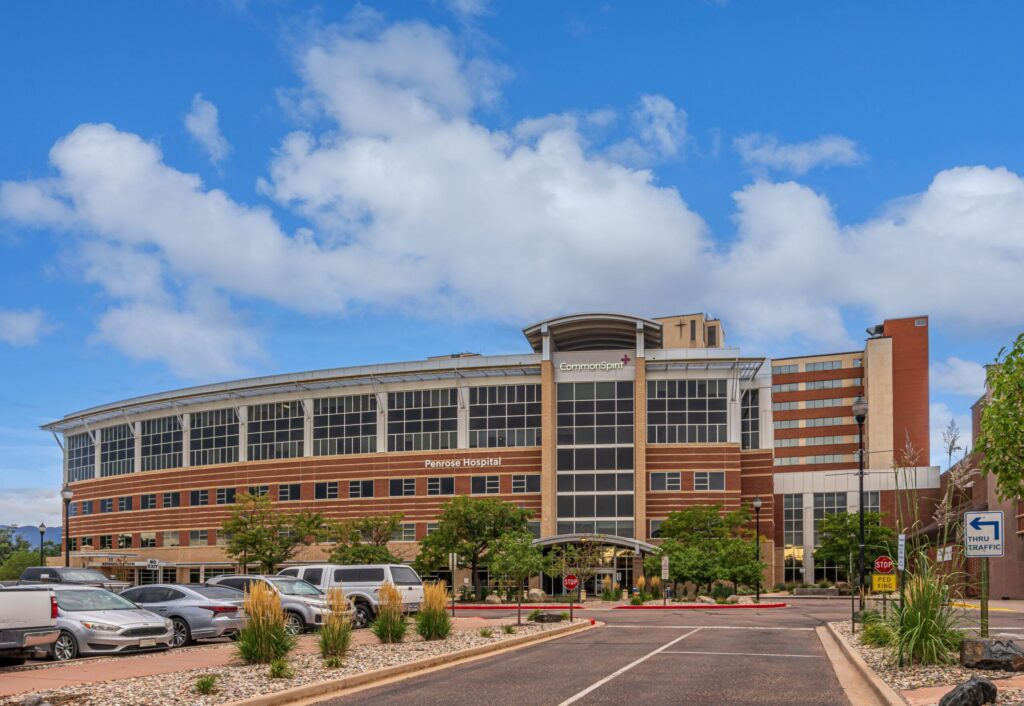
Colorado lawmakers start crafting strategy to manage $200 million in federal rural health funds
Marissa Ventrelli
marissa.ventrelli@coloradopolitics.com
Updated 22 hours ago
Members of the Colorado legislature’s new Commission on Medicaid raised concerns Wednesday about the federal Rural Health Transformation Program created under H.R. 1. The bipartisan, bicameral commission, created in the last legislative session to guide implementation of Medicaid changes under...

Democrat Jessica Killin’s internal poll shows dead heat with U.S. Rep. Jeff Crank in Colorado’s 5th CD
Ernest Luning
ernest.luning@coloradopolitics.com
Updated 19 hours ago
Jessica Killin, the Democratic nominee in Colorado’s 5th Congressional District, is in a statistical tie with Republican U.S. Rep. Jeff Crank, according to an internal poll released this week by Killin’s campaign. The poll of likely general election voters, conducted...

Colorado’s 72-hour social media warrant law takes effect Aug. 12
Marissa Ventrelli
marissa.ventrelli@coloradopolitics.com
Updated 1 day ago
A law requiring social media platforms to respond to search warrants within 72 hours goes into effect on Aug. 12. Senate Bill 011 also requires platforms to create a staffed hotline for Colorado law enforcement agencies to contact regarding pending...
As education conflicts abound across Colorado, who puts the kids first? | Paula Noonan
Paula Noonan
paula-noonan@coloradopolitics.com
Updated 2 days ago
Elected school boards and the Colorado Department of Education (CDE) have hit the headlines with fired superintendents, superintendent resignations, failures of oversight, and misdirected dollars. Cherry Creek School District’s superintendent was fired. Jefferson County Schools’ superintendent found a less stressful...

Victor Marx says he’ll only debate Phil Weiser once in Colorado governor’s race — without a moderator
Ernest Luning
ernest.luning@coloradopolitics.com
Updated 23 hours ago
Colorado Republican gubernatorial nominee Victor Marx said on Tuesday that he will participate in only one debate with Attorney General Phil Weiser before the November election — and he challenged the Democratic nominee to hold the event without a moderator....

Clock is ticking on Colorado’s new AI rules | PODIUM
Colorado Politics
colorado-politics@coloradopolitics.com
Updated 2 days ago
By Aashis Luitel On Jan. 1, organizations using covered automated systems must begin complying with Senate Bill 26-189, Colorado’s new Automated Decision-Making Technology Act. They can identify those systems and start building the processes the statute clearly requires. What they...
Atop taxes, here’s how much each Colorado resident pays in fees
Marissa Ventrelli
marissa.ventrelli@coloradopolitics.com
Updated 3 days ago
Each Colorado resident paid nearly $5,000 in state-sanctioned fees last year, according to a report by a policy think tank. The report, which analyzed how fees have affected Colorado’s economy, found that fee revenue has more than tripled since 2008...
PREV
PREVIOUS

Colorado test scores show academic performance return to pre-pandemic levels
Statewide test scores released Thursday show Colorado students have returned to, or surpassed, pre-pandemic levels for all subjects and grades — with two exceptions: fourth-grade English, and English and math in eighth grade. But not in Denver. Students in Denver Public Schools trail the statewide recovery. The Colorado Measures of Academic Success (CMAS) — the […]

Denver police crime lab triples number of cases under review in CBI scandal
The Denver Police Department’s crime lab has now significantly expanded its review of DNA testing previously done by the Colorado Bureau of Investigation’s troubled forensic lab, bringing the total to more than 1,300 past sexual assault cases in the area. That is more than triple the CBI cases the city’s crime lab said in April […]