

Swing your arm and cover your ears? | BIDLACK
Through the years when I was teaching American Government and the Constitution at the Air Force Academy, I observed cadets tended to be in one of two mindsets. There were those, a majority in fact, who had what I called “engineering minds,” for whom problems should be defined and the “correct” answer derived from the situation they were presented with.
The other type of mind I called the “fuzzy studies mind.” That comes from cadets labeling courses in things like political science, English, history and such as “fuzzy studies.” I wasn’t offended, in fact, I take pride in teaching fuzzy studies, as they require an ability to see beyond a single answer to a world of possibilities.
There were those rare cadets who were comfortable in either the “exact answer” world or the fuzzy world, but they were not common.
I suspect there is comfort to be found in subjects with exact and correct answers. Now, to the engineering and math faculty members out there, I know there are theoretical studies in your areas too, but I’m talking about what we teach at the undergraduate level. In physics, Force = Mass X Acceleration precisely, and is not a matter of opinion. What who is right or wrong on a question of, say, free speech, essentially never has a single “correct” answer.
I was reminded of the cadet way of thinking recently as I read an article in Colorado Politics that discussed Golden’s new ban on amplified music from street musicians. Yes, that’s how my mind works.
It seems in Golden there have been complaints, albeit by anonymous business owners, about the music coming from the many musicians in that tourist town, being, well, just too darn loud.
Washington Avenue in Golden, which until recently was filled with music, has been oddly quiet in recent days. The artists making the music have apparently packed up and headed for greener pastures, in this case the newly reinvigorated 16th Street Mall, where local officials have apparently welcomed them with open ears. They didn’t turn down their amplifiers, they just left town.
Take a moment to read the article so you have all the details, but were I back teaching at the Academy I would have approached the issue as an interesting example of how rights in conflict with each other can create thought-provoking ideas about the First Amendment.
The famous jurist Oliver Wendell Holmes Jr. is credited with first stating, as an explanation of what the First Amendment was all about, that your right to swing your arm ends where my nose begins. History is not clear on whether Holmes invented the phrase, as others have been credited with it as well, but it makes a lot of sense.
Simply put, your right to free expression is pretty absolute, until you interfere with someone else’s fundamental rights. The most common example in not yelling “fire” in a crowded theater or engaging in false commercial speech (“the New Ford gets 4,567 miles per gallon!”).
So, let’s think about the Golden rule (sorry, Editor, I couldn’t stop myself from making that joke at least once) regarding music volume. There previously was a city ordinance in place that restricted the volume of music street performers could create at 65 decibels. That’s roughly the volume of a dishwasher or conversations in a restaurant or office. Not super quiet nor super loud but pretty quiet for competing street musicians.
Some store owners apparently complained the folks enforcing the ordinance, with their decibel meters, would have musicians turn the volume down, only to see them crank it back up after the city official moved on. There is no evidence they turned it up to 11 (Editor: subtle joke).
And because of this pattern, the Golden City Council unanimously approved a ban on any amplified music on Golden’s streets. Acoustic instruments are fine, but nothing can be amplified. And the new ordinance worked, in that the streets of Golden are free from amplified music,
But the musicians didn’t just turn off their amplifiers. Rather, they decamped to Denver and the 16th Street Mall, where they were welcomed, amplifiers and all. You need a permit, but permits are free and grant you an 8-foot radius of space. There are no limits on decibels.
And so, in this case, the solution to the “swing your arm” issue appears to be to move said arms to a new place, with less sensitive noses. I can’t help wondering if the good people of the Golden City Council might be regretting their rather absolutist rule.
During the various military assignments I had in D.C., I crossed paths with street musicians many times each day. Most exits of the Metro subway found people playing for money, as well as on many street corners. Some of the music I liked, and some I didn’t. And when I didn’t, I walked away. I moved, so to speak, my nose, out of range.
Now, I certainly can understand if a storekeeper found a loud group of musicians near his or her front door, playing loudly enough to keep people scurrying past rather than into the store, but I suspect there are ways of dealing with the issue. Oh, and I can’t help but wonder about the current situation when, to my absolute horror, a certain failed felon ordered federal troops on to the streets of the nation’s capital, but that’s an entirely different essay for another time.
Oh, and a tad off subject, way back in 2007, one of the most celebrated violin virtuosos did an experiment. He grabbed his Stradivarius violin and headed to a subway station in Washington D.C. Hidden cameras recorded his world-class skill but hardly anyone stopped to listen. Some did and were transfixed.
Now, that’s not really a fair test, in that people entering or leaving a subway’s station are on their way somewhere, but it is an interesting test. No one appears, at least, to have been offended. You can watch the performance here.
Clearly, subway violinists and street musicians are not a major crisis in any city. But it is interesting to see how differently Golden and Denver responded to the artists performing their music for the public. Some of the musicians indicated they would return to Golden if the rules changed, but others are now committed to Denver.
We live in a world of constantly swinging arms and mobile noses. Some collisions are inevitable but how we choose to react to such collisions is up to us. The thinking in Golden was more along the lines of my “engineering-minded” cadets, who saw 65 decibels as being a precise, easily measured, and appropriate limit, while Denver, more “fuzzy study-minded” is more content with no single precise level of music being correct.
I think Denver got this one right. Time will tell. Stay tuned (Ed: another music joke?)
Hal Bidlack is a retired professor of political science and a retired Air Force lieutenant colonel who taught more than 17 years at the U.S. Air Force Academy in Colorado Springs.

Like Hart, sky-high political prospects of Swalwell given ‘The Monkey Business’ | Miller Hudson
Miller Hudson
miller-hudson@coloradopolitics.com
Updated 1 day ago
Eric Swalwell’s promising political career has likely reached an ignominious terminus. The man who aspired to the presidency in 2020 was plotting another route to that destination. Having entered California’s 2026 jungle primary for the governor’s office in Sacramento, he...

State clean-energy edicts trump local concerns, interests in Elbert County | Rachel Gabel
Rachel Gabel
rachel-gabel@coloradopolitics.com
Updated 1 day ago
A commission appointed by one man, the state’s governor, overruled the decision of a board of county commissioners elected by stakeholders across Elbert County. The Colorado Public Utilities Commission (PUC) overturned the county’s rejection of land use permits to Xcel...

Such hubris never before seen in Colorado | Jon Caldara
Jon Caldara
jon-caldara@coloradopolitics.com
Updated 3 days ago
The great 19th-century historian Lord Acton said it best: “Power tends to corrupt, and absolute power corrupts absolutely.” Acton was building on the teachings of his mentor, Homer Simpson, who put it more plainly: “The more power you have, the...
Mountain Lion/Pheasant Green Chile a hit! | Capitol M | Week of April 25, 2026
Marianne Goodland
marianne.goodland@coloradopolitics.com
Updated 1 day ago
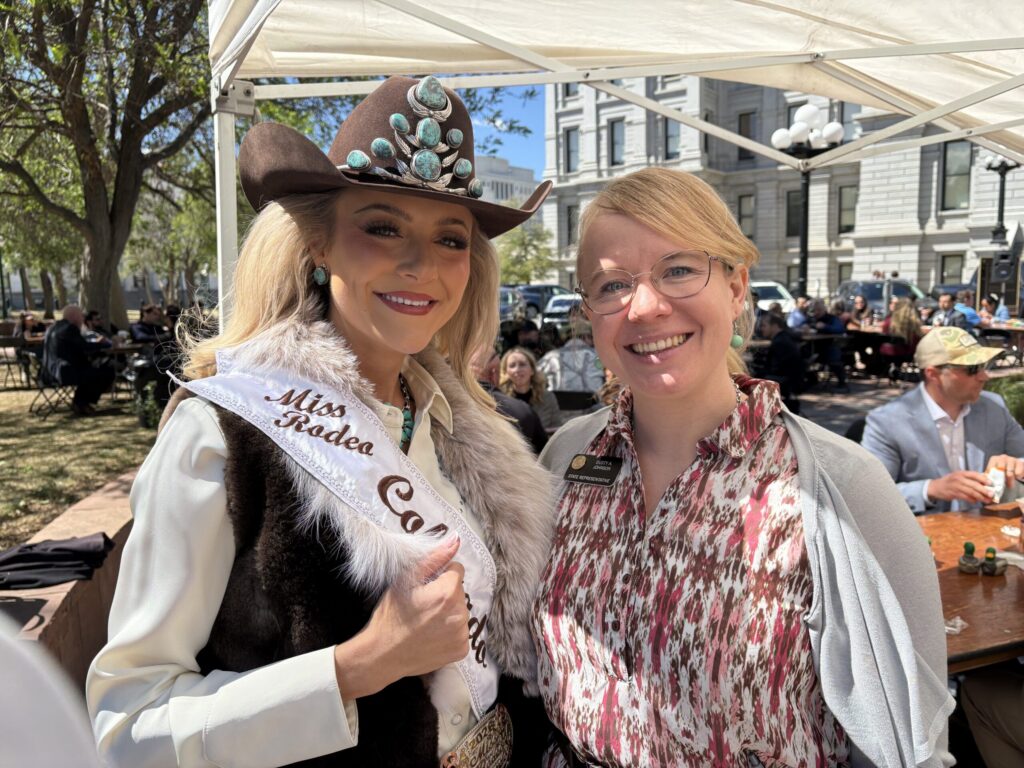
The lighter side of the state Capitol, although if you were eating at the barbecue Thursday, you are probably not any “lighter.” With the arrival of spring comes outdoor barbecues at the state Capitol, and the most unusual is the...

Passenger train service from Denver to Fort Collins? | Cronin and Loevy
Tom Cronin Bob Loevy
tom-cronin-bob-loevy@coloradopolitics.com
Updated 1 day ago
A “Joint Service” plan is being developed that would bring passenger rail service from Denver north to Fort Collins by 2029. The passenger trains would be paid for with existing funds from the Denver Regional Transportation District (RTD) and other...
The applicability of Hungary’s election to our politics | SONDERMANN
By Eric Sondermann
by-eric-sondermann@coloradopolitics.com
Updated 6 days ago
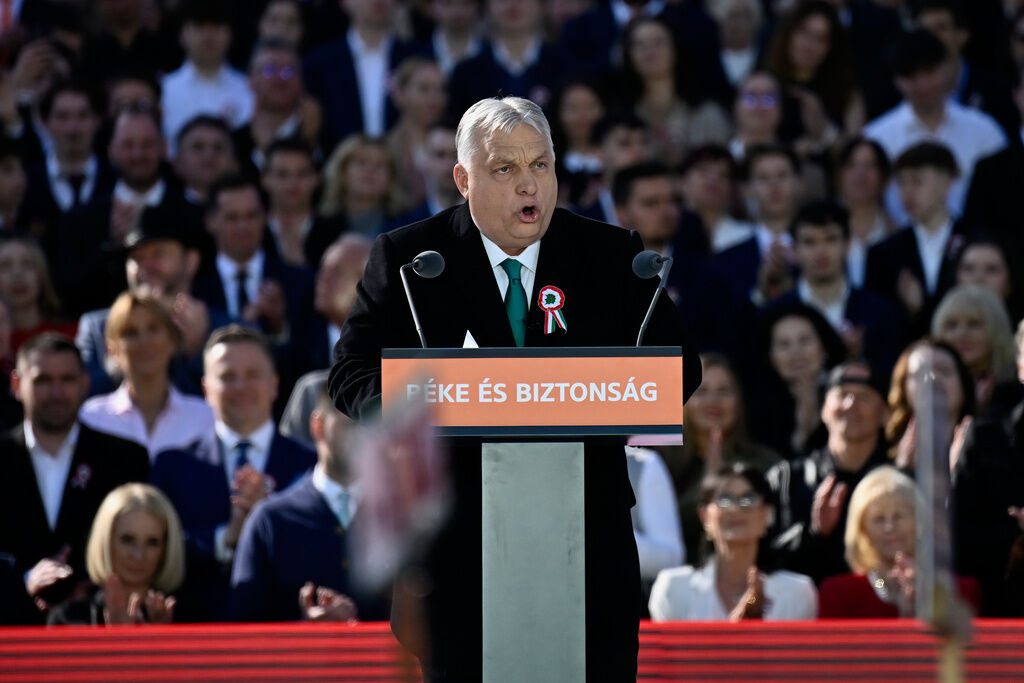
American conservatives, largely synonymous these days with MAGA save for a few lonely voices of courage and dissent, have plenty to lament. Their domination of the political landscape is waning. Various special elections hither and yon have presented bright, flashing...
Is integration the best way to mitigate Colorado education’s achievement, opportunity gaps? | Paula Noonan
Paula Noonan
paula-noonan@coloradopolitics.com
Updated 4 days ago
Colorado Senate President James Coleman and state Rep. Jennifer Bacon have introduced a bill, Senate Bill 26-170, to form an education task force, for the umpteenth time, to identify and expand “effective public schools.” Their goal, for the umpteenth time,...
Every life has equal value; Colorado must reject House Bill 26-1281 | OPINION
Colorado Politics
colorado-politics@coloradopolitics.com
Updated 4 days ago
By Emily Tofte Nestaval In Colorado, we have long held a simple, but absolute truth: every human life has equal value under the law. It is a principle that grounds our legal system, supports victims and their families, and reinforces...

Proposed data-based marketing bill would hurt small Colorado businesses | OPINION
Colorado Politics
colorado-politics@coloradopolitics.com
Updated 4 days ago
By Angel Johnson Six years ago, while I was serving in the military, I launched an e-commerce business selling inclusive, motivational activewear that empowers people of every shape and size throughout their fitness journeys. We offer high-performance, confidence-boosting products in...
Drug-induced abortions open a can of worms on campus | PODIUM
Colorado Politics
colorado-politics@coloradopolitics.com
Updated 5 days ago
By Tom Perille Why mandate drug-induced abortion access at Colorado’s colleges and universities? At a time of unprecedented Colorado state budget challenges, you would think state legislators would be laser focused on creating and funding those programs where there is...
PREV
PREVIOUS

Gov. Jared Polis loves AI to death | CALDARA
Disclosure: Gov. Jared Polis wrote much of this column. The epitaph on Jared Polis’ gubernatorial gravestone will simply read, “He knew better, but would not stand up to his own party.” For seven years, our hyper-progressive legislature has sent him one industry-killing bill after another. And he kept signing them, even when he knows they […]
Hypocritical air-quality-control standards put rural Colorado last | OPINION
By John Justman and Don Coram As former rural lawmakers, we’re no strangers to the state trying to squeeze us into the same box as the Front Range. But Colorado’s latest regulations take things to a new level: not only are they completely unworkable for our communities, but the rules also reveal a hypocritical double-standard […]