

Federal judge ‘troubled’ by unknown location ICE intended to transfer detained man
A federal judge stated on Monday he was “troubled” by allegations that U.S. Immigration and Customs Enforcement was planning to transfer a man in custody outside of Colorado to an unknown location.
Two years ago, Dennis Arostegui-Maldonado won a favorable ruling in his immigration case from the Denver-based federal appeals court. Subsequently, he received an order protecting him from deportation to his countries of citizenship under the under the Convention Against Torture.
But in seeking a temporary restraining order last week, Arostegui-Maldonado’s lawyers alleged ICE was planning to move him out of the Aurora detention facility. Days later, U.S. District Court Senior Judge William J. Martínez directed the government to keep Arostegui-Maldonado in Colorado, citing his own lack of knowledge about where ICE intended to take Arostegui-Maldonado.
“Notwithstanding that it appears ICE has, for the time being, suspended its efforts to transfer Maldonado, the Court is troubled by the unknown question as to where ICE was intending to transfer Maldonado,” Martínez wrote in a July 21 order, adding that it would be unclear if he would retain jurisdiction over the case in the event of a transfer.
“In light of this uncertainty,” he continued, “the Court determines it is necessary to enjoin Maldonado’s transfer out of the District of Colorado until such time as the Court can hold a hearing.”
U.S. District Court Judge William J. Martínez
Courtesy photo
Martínez’s comments mirror concerns nationally about people who are unable to be located after ICE takes them into custody. In March, the ACLU of New Mexico filed a complaint with the U.S. Department of Homeland Security calling for an investigation into 48 unnamed residents “forcibly disappeared” after a week-long operation. The Miami Herald reported in April that a Texas man’s whereabouts were unknown for more than 40 days until the government disclosed it had removed him to El Salvador.
Recently, other judges in Colorado have indicated their worries about ICE removals of detainees before they can have their cases heard by a judge. The same day as Martínez’s order, U.S. District Court Judge Daniel D. Domenico ordered the government to respond to allegations ICE had moved a man to Wyoming in violation of a temporary restraining order.
In May, U.S. District Court Judge Charlotte N. Sweeney, in barring the government from removing alleged “alien enemies” pursuant to a presidential proclamation, referenced the “tremendous risk of extreme physical harm” detainees may suffer in the event the government removes them to El Salvador’s abusive CECOT prison.

FILE - In this photo provided by El Salvador's presidential press office, a prison guard transfers deportees from the U.S., alleged to be Venezuelan gang members, to the Terrorism Confinement Center in Tecoluca, El Salvador, March 16, 2025. (El Salvador presidential press office via AP, File)
HOGP

Because of the federal rules governing immigration cases, the vast majority of Arostegui-Maldonado’s proceedings is shielded from public view. However, Martínez’s temporary restraining order and the prior decision from the U.S. Court of Appeals for the 10th Circuit gave a fuller picture of Arostegui-Maldonado’s circumstances.
Arostegui-Maldonado testified in his immigration proceedings that Costa Rican police officers kidnapped him at gunpoint and took him to an isolated location. They beat him and sexually assaulted him, demanding he sell drugs on their behalf. They also threatened to kill him if he made a report, and they gained access to his family’s contact information. Finally, the officers transported him to jail and held him for 24 hours without any criminal charge.
An immigration judge found him credible, but ultimately denied protection from deportation. Specifically, the judge decided Arostegui-Maldonado had not shown the police who tortured him were acting as government agents at the time.
The 10th Circuit found the judge’s interpretation “defies logic and the law.” This May, Arostegui-Maldonado obtained an order protecting him from deportation to Costa Rica and El Salvador.
However, on July 18 his lawyers learned ICE intended to move him. Allegedly, the government told Arostegui-Maldonado’s attorneys it would not transfer him, but did not rule out the possibility for the future. Arostegui-Maldonado stated ICE had halted their process of transferring him for now.
Martínez, in response, temporarily blocked the removal while scheduling a hearing for a longer-term injunction on Aug. 1.
“The Court emphasizes that there appears at this time to be no prejudice to the government by temporarily maintaining the status quo,” he wrote.
The case is Arostegui-Maldonado v. Baltazar.

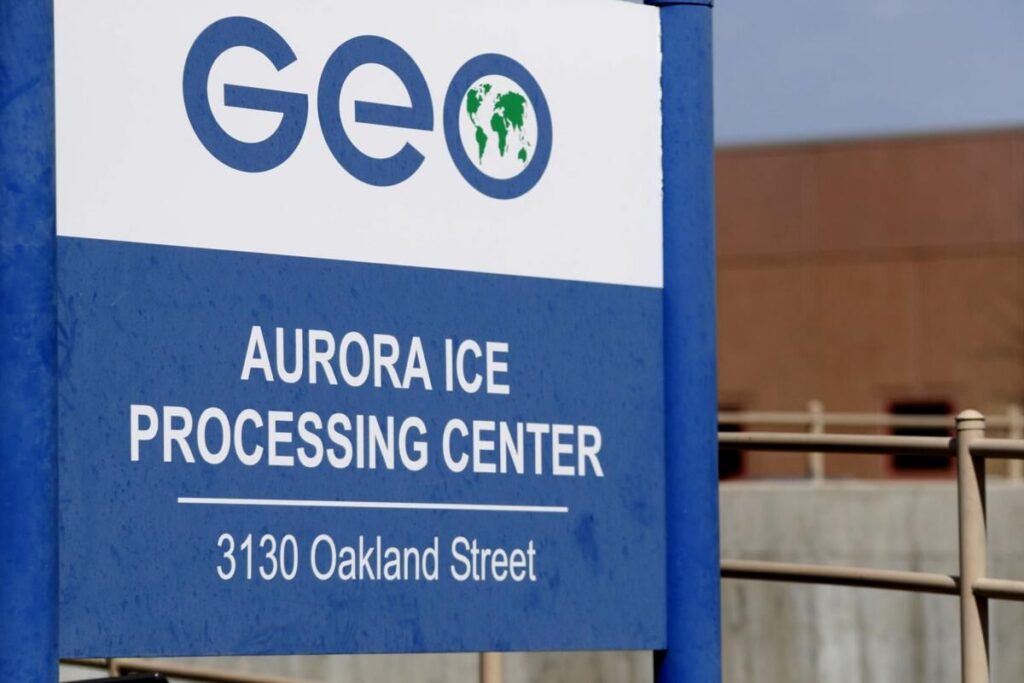
Judge grants partial injunction to GEO in fight against state health inspection law
Kyla Pearce
kyla.pearce@gazette.com
Updated 11 hours ago
A judge ruled Thursday that The GEO Group does not have to follow parts of a new state law requiring more frequent health and safety inspections at the U.S. Immigration and Customs Enforcement processing center in Aurora. Under the order...

Parker man faces 20 years to life for serial sexual assaults
Nicholas Fogleman
nicholas.fogleman@denvergazette.com
Updated 14 hours ago
A 25-year-old Parker man who sexually assaulted three women in 2025 pleaded guilty Wednesday and will serve 20 years to life in prison. Javier Rodriguez-Andrade pleaded guilty to charges stemming from three sexual assaults involving women ages 19 to 24. ...
Divided appeals court upholds warrantless DNA collection in Colorado cold case, cautions of government overreach
Michael Karlik
michael.karlik@coloradopolitics.com
Updated 12 hours ago
Colorado’s second-highest court upheld the warrantless collection of a suspect’s DNA from a discarded soda can as constitutional on Thursday, while warning about potential abuse of DNA privacy in the absence of further guardrails. By 2-1, a three-judge Court of...
Man charged in Northglenn homicide of wife
Matt Kyle
matt.kyle@denvergazette.com
Updated 14 hours ago
A man has been formally charged with murder and burglary relating to a homicide last week in Northglenn. Alexei Munive-Rodriguez, 48, was arrested Sunday after he was at large following the homicide, which occurred Friday. Police were dispatched around 10:30...

10th Circuit grants immunity to officers for fatal Manitou Springs shooting
Michael Karlik
michael.karlik@coloradopolitics.com
Updated 16 hours ago
The Denver-based federal appeals court ruled on Wednesday that responding officers from Manitou Springs and El Paso County cannot be held constitutionally liable for shooting and killing a man after a 20-minute standoff. Wilford Deweese allegedly pulled out a gun...
10th Circuit rejects invitation for full-court review of tax-avoidance case
Michael Karlik
michael.karlik@coloradopolitics.com
Updated 1 day ago
The Denver-based federal appeals court declined to reconsider the standards for holding entities liable for their tax-avoidance schemes, with a majority of judges voting against full-court review on Monday. In April, a three-judge panel of the U.S. Court of Appeals...

Colorado judge blasts state forensics lab in dismissing child sex case
Jenny Deam
jenny.deam@gazette.com
Updated 1 day ago
In a potentially widely consequential action, a Weld County district judge dismissed a child sexual assault case, citing the ongoing scandal at the Colorado Bureau of Investigation’s forensic lab that “has left a dark mark on the history of Colorado...
10th Circuit sympathetic to Colorado consumer protection law governing interest rates
Michael Karlik
michael.karlik@coloradopolitics.com
Updated 3 days ago
Members of the Denver-based federal appeals court appeared sympathetic on Tuesday to Colorado’s assertion that it can lawfully require certain out-of-state banks to abide by the state’s own ceilings on interest rates when they lend to consumers in Colorado. The...

Colorado justices to decide insurance companies’ obligation to disclose relevant policies
Michael Karlik
michael.karlik@coloradopolitics.com
Updated 2 days ago
The Colorado Supreme Court announced on Monday that it will decide whether an insurance company violated state law by withholding an at-fault driver’s policy for nearly a year when there was no dispute that the policy was not in effect...

Judicial performance evaluations released, Montezuma County judge disciplined | COURT CRAWL
Michael Karlik
michael.karlik@coloradopolitics.com
Updated 3 days ago
Welcome to Court Crawl, Colorado Politics’ roundup of news from the third branch of government. Colorado’s citizen-led judicial performance commissions released their voter narratives for the judges standing for retention in November, plus a disciplinary panel imposed consequences on a...