

Stop the bleeding from the legislature’s anti-opportunity agenda | PODIUM
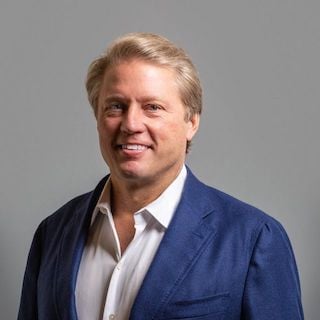
Kent Thiry

Colorado’s state legislature passed more than 330 new laws and resolutions this year, on the heels of two consecutive years exceeding 500. And despite some commendable wins, it’s fair to question the economic benefits of all that legislating.
Achieving the social services, educational quality, and sense of community we all aspire to requires economic prosperity. And that demands growth-friendly policy designed to enable not only businesses, but people to move up the economic ladder.
Lawmakers must look in the mirror and ask some basic questions. Did the bills that passed make Colorado more attractive to employers and employees? Are we more competitive or economically empowered? Are we increasing the economic mobility of residents in our state?
The answers are uncomfortably easy: No. In fact, the evidence suggests that, thanks largely to left-wing progressives, Colorado is rapidly regulating itself out of business, and the opportunities for employee prosperity are suffering as a result. The trend would be exacerbated if not for the veto pen and thoughtfulness of Gov. Jared Polis.
Stay up to speed: Sign up for daily opinion in your inbox Monday-Friday
Less than a decade ago, Colorado regularly ranked among the top states in the nation in which to do business. Our reality has changed quickly, as we trend downward on the national economic scale in rough proportion to the upward trend in regulations. Job, wage and GDP growth rankings have all shrunk in recent years, while the costs of living and doing business in Colorado surge.
Colorado’s unemployment rate is higher than the national average and ranks among the highest (sixth) in the country. The state’s labor force participation has declined to its lowest point in nearly three years. Meanwhile, job growth in Colorado remains sluggish and has consistently trailed the national pace for more than a year now.
As recently as 2018, the state’s economy ranked among the top 10 in the nation and Colorado ranked fifth in the CNBC rankings of Best States for Business. By 2023, our economy ranked 32nd and Colorado’s cost of doing business was among the worst, ranking 38th. Clearly, we’re headed in the wrong direction. But the wounds are largely self-inflicted.
Colorado shared the same challenges of COVID-era disruptions as other states, but our lagging recovery can be significantly attributed to two factors: a lack of workers with the needed skills, and the mounting effect of regulations. The state’s shortage of housing availability and affordability also weighs heavily, due in part to government over-regulation and zoning. As liberal New York Times columnist Ezra Klein and Atlantic staff writer Derek Thompson rightly point out in their latest book, “Abundance”, our continued housing crisis — along with rising homelessness, gentrification and Colorado’s swelling commuter traffic — can be traced directly to the anti-growth attitudes embodied by strict zoning laws and low building permits.
Is it any wonder it’s difficult to compete when 71% of Colorado Chamber members say the local business climate and costs are more burdensome than in other states where they do business? Three-quarters believe in-migration has slowed due to the high cost of living and housing made worse by state regulations. The struggle to find enough workers has reached the tipping point.
As challenging as workforce issues are, nearly half (48%) of businesses surveyed by the Colorado Chamber say the burden of “legislation and regulations creating mandates and costs” is the biggest challenge they face. And just when it seemed impossible for lawmakers to attach another anchor to the Good Ship Colorado, they passed in 2024 — and failed to amend or repeal this year — a stunning new job killer: the AI Regulatory Restrictions bill.
I eagerly await the explanation from lawmakers who supported the bill when tens of thousands of our younger generation ask why Colorado has so few AI jobs compared to other states. The painful truth is simple: Colorado now proudly leads the nation in AI restrictions and legal liabilities.
This isn’t just a tech company problem; it’s a problem for every company. AI is permeating all industries, and this job killer bill creates widespread liabilities and obligations for every company and every use, even for tasks like sorting resumes. Since any differentiated harm from AI promises to be insignificant in comparison to the harmful effects of thousands of under-employed or unemployed young Coloradans, we will keep asking our elected officials to answer that question until they fix it.
If Colorado hopes to return to its pre-pandemic economic standing, lawmakers must be willing to consider reasonable compromises while working toward policies that promote competitiveness, innovation and affordability. This is not just about being business friendly, it is about being individual opportunity friendly.
Rather than creating additional hurdles to achieving such goals, legislators must shift their focus toward establishing incentives for employees and businesses alike. Instead of channeling efforts toward vexing policies like a bill that threatened to drive Uber out of the state (vetoed), passing unworkable AI laws (as mentioned above, in need of a rewrite), and other prosperity-hindering legislation, consider the many ways to address both the cost of living and the cost of doing business in Colorado.
The bottom line is there is much more work to be done, beginning with addressing the unfinished business legislation of AI rules, zoning and similar anti-opportunity regulations through sensible compromise that enhance Colorado’s competitiveness on day one of the 2026 session.
Though lawmakers have gone too far for too long, it’s not impossible to stop the bleeding and recover. We’re still Colorado after all, and we can expect to have between 300 to 500 new opportunities to legislate some economic benefits for our residents next year.
Kent Thiry retired as chief executive of DaVita in 2019 and now puts his energy and the resources of the Thiry-O’Leary Foundation into three primary pursuits: economic mobility and education for low-income students; democracy renewal; and conservation.

Blue states should avoid disasters | Hal Bidlack
Hal Bidlack
hal-bidlack@coloradopolitics.com
Updated 9 hours ago
Back when I was teaching political science at the U.S. Air Force Academy (and amazingly to me, a week from this column’s publication will mark 20 years since my retirement from active duty. Where the heck did that time go?)...

Right-to-hunt ballot measure’s a cruel, anti-wildlife solution to a nonexistent problem | GUEST COLUMN
Colorado Politics
colorado-politics@coloradopolitics.com
Updated 9 hours ago
By Eric Washburn I love to hunt. Every year I try to hunt big game in Colorado and waterfowl in Louisiana. This year, I applied for five Colorado big game licenses — elk, deer, pronghorn, moose and bighorn sheep. I...

Jena Griswold’s record: corruption, incompetence | Dick Wadhams
Dick Wadhams
dick-wadhams@coloradopolitics.com
Updated 3 days ago
There is no statewide elected official going back decades who is as breathtakingly corrupt and incompetent as Secretary of State Jena Griswold, who is now running for attorney general of all things. And compliant ruling Democrats know it. Their silence...

Kiros exudes why Colorado’s political times are a-changin’ at annual Denver Dems gala | Miller Hudson
Miller Hudson
miller-hudson@coloradopolitics.com
Updated 3 days ago
Among Colorado’s few remaining bipartisan rituals are county and state party dinners. I was particularly intrigued by last week’s Denver Democratic Party’s 2026 Annual Gala, a “New Deal for a New Era.” Their glossy program featured an artist’s Technicolor rendering...

Livestock grazing regulations need flexible updates | Rachel Gabel
Rachel Gabel
rachel-gabel@coloradopolitics.com
Updated 3 days ago
The Bureau of Land Management last updated their livestock grazing regulations the year I graduated from high school. I am 49. Assessing rangeland health can’t be done once and not revisited. This year is a prime example that managers must...

Taxpayers donate to tax increase campaign | Jon Caldara
Jon Caldara
jon-caldara@coloradopolitics.com
Updated 4 days ago
Give the man his due. President Donald Trump has undeniable talents. Colorado politicians are learning. Chief among The Don’s skills is taking the self-serving, ethically dubious behavior of previous politicians and putting it on steroids. Or, to borrow from the...

A summertime all-you-can-eat political buffet | SONDERMANN
Eric Sondermann
eric-sondermann@coloradopolitics.com
Updated 6 days ago
We find ourselves in the doldrums of August with a complete dearth of political news. Yeah, right. These days, that train never stops moving. It is a 24/7/365 express amplified by 24/7/365 media. Let me respond with one of my...
State money diversion scheme the unsurprising downfall of ERBOCES scam | Paula Noonan
Paula Noonan
paula-noonan@coloradopolitics.com
Updated 5 days ago
Falcon School District 49, aka El Paso County School District 49, has finally cut bait, thrown the fishing pole into the lake and sunk the canoe. The longtime enabler of the Education Reenvisioned BOCES’ (ERBOCES) schemes to fund private Christian...

Steve Schuck on the ‘magic’ of school choice | The OpEdge Podcast
Tony Olivero
tony.olivero@gazette.com
Updated 6 days ago
Parents Challenge co-founder and longtime school choice advocate Steve Schuck joins The OpEdge to discuss expanding educational opportunities and ensuring parents are in charge of their kids’ education. Schuck tells investigative columnist and host Jimmy Sengenberger why he believes Colorado...

Do lobbyists add value to policymaking? | PODIUM
Colorado Politics
colorado-politics@coloradopolitics.com
Updated 6 days ago
By Corky Kyle I was recently asked a straightforward question: are lobbyists a valuable component in the development of public policy? After more than four decades working with the Colorado General Assembly, state agencies, local governments, associations and businesses, my...