

Animal rights activists pushing for statewide ban on wildlife fur sales
Updated 6/19/25with additional information on the CPW furbearer working group.
While Denver voters overwhelmingly rejected efforts to ban fur sales last November, animal rights activists are trying another tactic – a statewide ban on wildlife fur sales.
The Center for Biological Diversity submitted a petition for rulemaking to the Colorado Parks and Wildlife Commission this week, which would ban the commercial sale of wildlife fur.
The petition submitted on Monday notes that the request covers only the for-profit sale of furbearer parts, including hides, pelts, skins, claws, and similar items, with limited exemptions, and does not impose any restrictions on the hunting or trapping of furbearers.
However, the petition could interfere with ongoing efforts by Colorado Parks and Wildlife to address the issue. The agency has convened a working group on changes to fur regulation, which has just begun meeting and includes representatives from both animal rights activists and the agricultural industry.
In a statement, the Center said, “In contrast to the protections given to the state’s other wildlife, the wildlife agency currently allows the for-profit sale of furs from all species classified as ‘furbearers,’ which can be trapped, killed, and sold in unlimited numbers. This includes beavers, ringtails, red foxes, pine martens and bobcats, as well as swift foxes, an imperiled species of special concern in the state.”
Samantha Miller, the center’s senior carnivore campaigner, founder of the Colorado Wildlife Alliance, and who submitted the petition, said, “It’s time for Colorado to close the book on commercial wildlife markets. Auctioning off piles of pelts from native animals is a relic of an era that drove iconic species, like beavers and bison, to the brink. We’re asking Colorado to align with the core principles of the North American Model of Wildlife Conservation (NAM) that it otherwise upholds. Our state needs to modernize wildlife management to confront today’s biodiversity crisis.”
Miller was also the campaign manager for Proposition 127, which would have banned hunting of mountain lions, bobcats, and lynx. Voters soundly rejected the initiative by nearly 10 percentage points in November.
The petition, however, appears to take issue with the North American model, stating “A core tenet of the NAM is the elimination of commercial markets for wildlife, which helped restore many species through habitat protection and science-based regulations. However, the NAM, with its origins in the 19th century, included exemptions for the sale of furbearer parts, rooted in the historical assumption that regulated fur trapping would be sustainable. Today, that assumption must be re-evaluated.”
In March, CPW Director Jeff Davis announced that he would convene a working group to review furbearer regulations, with action on those regulations expected in early 2026. That came in the wake of the failures of Denver’s Ordinance 308 and Proposition 127.
“It’s not good due process when there’s a working group in the process of addressing fur-bearing regulations,” and which includes stakeholders on both sides who are attempting to engage in a transparent process, said Dan Gates of Coloradans for Responsible Wildlife Management. Then comes a citizens’ petition that tries to create division between those stakeholders, Gates added.
He noted the working group held its first meeting this week, and with the assistance of a third-party mediator, is expected to meet for the next three to four months.
“This petition spits in the face of due process and science-based wildlife management,” he added.
Travis Duncan, a spokesman for CPW, told Colorado Politics the stakeholder engagement process will conclude by October 2025, and the third-party facilitator will provide CPW with a final written report. CPW staff will review and evaluate recommendations following the conclusion of this stakeholder process in November/December 2025. Any recommended changes are tentatively scheduled to be considered by the Commission in early 2026, Duncan said.
The agency would not identify who is involved in the working group, stating that will come at the end of the process.
It’s the second year in a row that animal rights activists have taken aim at a ban on the sale of fur.
Last November, Denver voters rejected Ordinance 308, which would ban fur sales within Denver city limits, by 15 percentage points. The ordinance did not identify any specific animals whose fur could not be sold.
The arguments against 308 and a ban on fur included comments from Murphy Robinson, a former deputy mayor of Denver and a current CPW commissioner who was speaking on his own behalf and not representing the commission.
He wrote in an opinion piece for the Colorado Sun last October that the Denver ordinance was an overreach. “This ordinance would also directly impact cultural events like the Denver March Powwow and the Indian Market & Southwest Art Fest, where vendors sell authentic Native American products, many incorporating fur. These gatherings are not just markets; they are celebrations of heritage and identity for tribes across the country. The ban would make it nearly impossible for many of these vendors to participate, threatening the financial sustainability of these beloved events and stripping them of their authenticity,” he wrote.
Colorado Politics Must-Reads:


Trump announces 50% tariffs on Canadian cars, auto parts, and steel
Naomi Lim
naomi-lim@coloradopolitics.com
Updated 2 minutes ago
President Donald Trump escalated the trade war with Canada after talks collapsed last week, announcing Monday that the United States would impose 50% tariffs on cars, trucks, automotive components, and steel starting Jan. 1, 2027. “Canada has been ripping off...

Trump opens ‘economic D-Day’ offensive against Iran as war nears six-month mark
Christian Datoc
christian-datoc@coloradopolitics.com
Updated 6 minutes ago
President Donald Trump is seeking to increase the financial pressure on Iran with new secondary sanctions on nations and foreign actors propping up the regime’s economy as the war between the United States and Tehran nears the six-month mark. Treasury...

Iran puts out propaganda video tracking Barron Trump’s location, offering $10 million for his assassination
Timothy Nerozzi
timothy-nerozzi@coloradopolitics.com
Updated 29 minutes ago
The Islamic Revolutionary Guard Corps is putting a hit out on President Donald Trump’s son, Barron Trump, with an inflammatory video claiming to track his location. State-run television in Iran is broadcasting a propaganda video claiming to show the locations...

Nevada sues Trump administration over Colorado River cuts
Marianne Goodland
marianne.goodland@coloradopolitics.com
Updated 1 hour ago
The state of Nevada on Monday filed a lawsuit against the Trump administration and Interior Secretary Doug Burgum, seeking to block the Colorado River management plan. On Friday, Burgum released a “record of decision” that would reduce water allocations to...

Healthcare Freefall: Longer drives, fewer options for maternity care in Colorado
Thelma Grimes
thelma.grimes@coloradopolitics.com
Updated 3 hours ago
Editor’s Note: Colorado’s healthcare system is entering a period of accelerating instability — a “tsunami,” as multiple leaders describe it — driven by collapsing hospital finances, shrinking Medicaid reimbursements, disappearing services and a political fight over who is responsible for...
Polis officially requests federal disaster declaration for Colorado wildfires and floods
9News
9news@coloradopolitics.com
Updated 4 hours ago
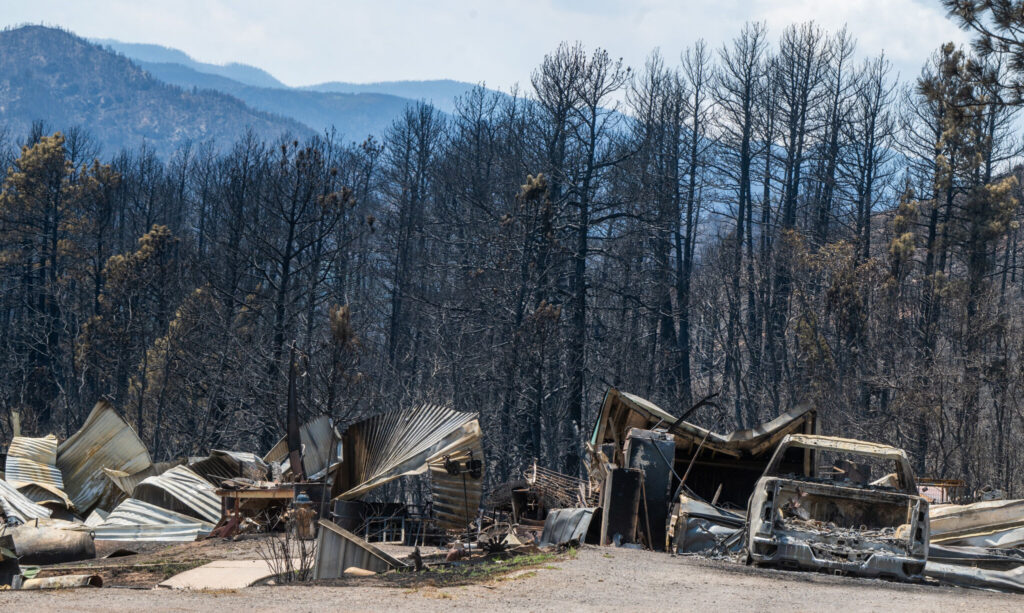
Gov. Jared Polis has requested a Major Disaster Declaration to aid recovery from the Aspen Acres and Gold Mountain fires and subsequent flooding in the burn scars. COLORADO, USA — On Sunday, Gov. Jared Polis officially requested a Major Disaster Declaration from...

US strikes another boat in eastern Pacific, killing two, Pentagon says
The Associated Press
the-associated-press@coloradopolitics.com
Updated 3 hours ago
U.S. forces have struck another vessel in the eastern Pacific, killing two people the Pentagon says were trafficking drugs. The U.S. Southern Command announced the strike in a social media post early Monday. The death toll from the Trump administration’s...

Fishing closures are becoming routine as record heat warms rivers in the US West | OUT WEST ROUNDUP
Ernest Luning
ernest.luning@coloradopolitics.com
Updated 3 days ago
MONTANA Fishing restricted as rivers warm LIVINGSTON — Trout need cool water to survive, but record heat this summer has driven water temperatures to lethal levels for fish. Wildlife officials are banning fishing during certain hours on rivers and streams...
Colorado measure redirects sales tax revenue from sporting goods, equipment to conservation programs
The Denver Gazette
the-denver-gazette@coloradopolitics.com
Updated 4 hours ago
A proposal to redirect sales tax revenues from sporting goods and equipment toward wildfire and conservation programs will appear on the ballot this November, election officials in Colorado confirmed. The measure, if approved by voters, would reduce the amount available...
Firefighters’ deaths prompt debate over 100% suppression wildfire strategy
Rachael Wright, Special to Colorado Politics
rachael.wright@coloradopolitics.com
Updated 18 hours ago
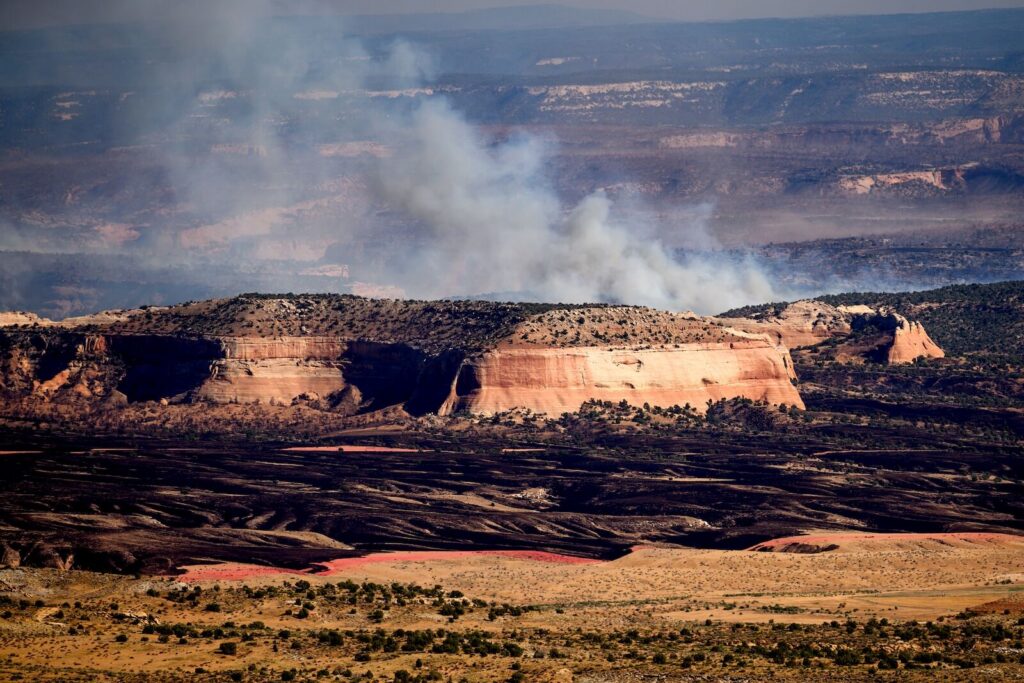
On July 22, 2026, the chief of the U.S. Forest Service testified before a House Agriculture subcommittee that his agency pursues a “full suppression” strategy to contain all fires while they are still small, rather than allowing them to burn...