

Colorado candidates compete for elusive campaign records as 2026 cycle gets under way | TRAIL MIX
As another election cycle kicks into gear, Colorado politicians are getting a fresh chance to etch their names in the state’s constantly changing record books.
Like color commentators scrambling to keep the chatter going during a playoff series, political reporters can be counted on to have at hand an array of facts that might not have much bearing on the contests they’re covering — but can add important context and help sort out who’s ahead, even if it’s only in a ranking that’s loosely related to the upcoming vote.
Or at least they can score well on trivia night when the topics feature a round devoted to Colorado’s candidates and elections.
Already, even there’s still a long 17 months to go until Election Day 2026, campaigns are trumpeting their record-setting achievements — and gleefully noting when they’ve surpassed a rivals’ recently set records.
In early April, brand-new Democratic attorney general candidate Jena Griswold, the term-limited secretary of state, revealed that she’d raised more in the day after declaring her campaign than any previous state-level candidate in Colorado, tallying more than $185,000 in contributions in her campaign’s first 24 hours.
Her record didn’t stand for long, however. Just over five weeks later, first-time candidate David Seligman, a Democrat also running for attorney general, toppled Griswold’s fundraising pace in his inaugural day in the race, reporting more than $250,000 in receipts.
First-day fundraising, to be sure, is a somewhat obscure record compared to more commonly touted campaign finance high-points, in part because it relies on the candidates keeping track and releasing their totals, since they won’t have to file reports until after the conclusion of the quarter.
Many of the state’s other fundraising records are easier to compare, since they belong to one man — Democrat Adam Frisch, who demolished previous records last cycle, when he charged through the 2023 off-year, swamping the Republican incumbent he nearly beat in 2022, Republican U.S. Rep. Lauren Boebert.
Billing himself as the Democrat who came within fewer than 600 votes of unseating Boebert, a MAGA celebrity and one of the most nationally visible Colorado politicians in decades, Frisch racked up record after record on the way to what he thought would be a rematch.
Boebert, however, decided she’d had enough and moved across the state to run in another, more favorable district at the end of 2023, leaving Frisch with a whole lot of money and what turned out to be a less polarizing Republican opponent in first-timer Jeff Hurd, who won election in 2024 by about 5 points.
Before Boebert’s switch, Frisch set up and knocked down virtually every state congressional fundraising record, raising progressively more in each off-year quarter — and more for the entire cycle — than any Colorado candidate for the House of Representatives ever had before.
Less than six months into the 2026 cycle, Frisch has held on to the initial record he set two years ago, when the Democrat raised almost $1.75 million in the first off-year quarter, which turned out to be nearly $1 million more than Boebert brought in that quarter.
This year, Democratic congressional candidate Manny Rutinel, a state lawmaker, burst out of the gate in January after announcing his challenge to Republican U.S. Rep. Gabe Evans, who ranks as one of the most vulnerable House incumbents in the country. Rutinel brought in $400,000 in his campaign’s first 24 hours — setting what appears to be a state record for congressional candidates — and topped $500,000 by the time 48 hours had elapsed, raising more in a couple of days than House candidates typically post in an entire off year.
But by the end of the quarter, Rutinel’s fast start wasn’t enough to propel him past Frisch’s $1.75 million first-quarter benchmark, with just over $1.1 million in contributions for the three-month period.
Frisch’s off-year total fundraising record of $11.6 million, too, has a good chance of standing, though there are plenty of House candidates aiming to surpass it this year.
On the Senate side, Democrat John Hickenlooper, the state’s junior senator, holds the record for fundraising across an entire cycle with $44.2 million raised in 2020, on his way to unseating Republican Cory Gardner in one of the most competitive races in the country that year. Hickenlooper is up for reelection next year but so far doesn’t have any GOP opponents.
The next-highest Senate fundraising total belongs to Gardner, who raised more than $28 million in 2020, followed by the $22 million that Democrat Michael Bennet raised to win a third term in the 2022 cycle. After that comes the $20.5 million that incumbent Democrat Mark Udall raised in 2016 before losing his reelection bid to Gardner, who brought in just over $12 million that cycle.
There are, of course, a few provisos to keep in mind when assessing the various distinctions, since the underlying factors they’re measured against tend to keep moving in only one direction, predictably setting a new and higher baseline every election cycle.
Every two years, campaigns grow more expensive, reflecting both inflation and the state’s increasing population. That’s why nearly all the Colorado fundraising records belong to candidates who have run in the last few elections — and why many of those records are fragile heading into a new cycle.
For similar reasons, one would expect a steady rise in the number of ballots cast from one presidential election to the next — and one midterm to the next, since turnout is reliably lower than when the White House is on the line.
But that isn’t what’s happened for the past couple of presidential and midterm cycles in Colorado, even though the number of active registered voters in the state has climbed steadily from year to year.
It turns out, more voters cast ballots in Colorado’s 2020 presidential race between Donald Trump and Joe Biden than voted in last year’s match between Trump and Kamala Harris, though the drop-off wasn’t much. The same relationship held between the 2018 midterms, when Democrats swept every statewide race for the first time in almost 100 years, and the 2022 edition, when every Democrat running statewide won reelection.
Biden is the candidate who’s won the most votes in a Colorado election, amassing 1.8 million votes in 2020 to Trump’s 1.36 million. Last year, Harris carried the state with just over 1.7 million votes, while Trump held close to his previous total, at 1.37 million votes.
Hickenlooper is the Coloradan who has bragging rights for the most votes received in a single election, boasting more than 1.73 million votes in his 2020 win over Gardner, whose 1.42 million votes puts the Republican in second place in that category.
Next comes Democrat Jared Polis, who got more than 1.4 million votes when he won his second term as governor in 2022, followed by Bennet, who is running for governor next year, close on Polis’ heels the same year with over 1.39 million votes on the way to a third term.
In the congressional field, Democrat Democrat Diana DeGette, serving her 15th term, holds the title for most votes in a single election, with more than 331,000 received in 2020, followed by fourth-term Democrat Joe Neguse, the House assistant minority leader, who got more than 316,000 votes in 2020.
Michael Bennet's run for Colorado governor sparks a quieter race, for his Senate seat | TRAIL MIX
'Don't f--- with moms': Brittany Pettersen pushes proxy voting for new parents in US House | TRAIL MIX
Ken Salazar returns to Colorado, issues call to embrace diversity, celebrate inclusion | TRAIL MIX
Colorado Politics Must-Reads:

Colorado, like America, past due for generational change in politics | Miller Hudson
Miller Hudson
miller-hudson@coloradopolitics.com
Updated 17 hours ago
I was 27 before I ever voted for president. At 19, in 1964, the Constitution had not yet been amended establishing 18-year-old voting eligibility. In 1968, I was serving overseas with the U.S. Navy at a time when there was...

Farmers and ranchers win on NIETC cancellation | Rachel Gabel
Rachel Gabel
rachel-gabel@coloradopolitics.com
Updated 16 hours ago
The Department of Energy rolled into Lamar last week and Office of Electricity Assistant Secretary Katie Jereza stood in her neat, green suit in front of a room filled with farmers, ranchers and landowners. The crowd was filled with straw...
Lake Mead hits historic low water level as Colorado River struggles | OUT WEST ROUNDUP
The Associated Press
the-associated-press@coloradopolitics.com
Updated 5 days ago
NEVADA Lake Mead hits new low BOULDER CITY — Lake Mead, the largest reservoir in the United States, has plummeted to its lowest water level since it was filled some 90 years ago, another sign of the crisis plaguing the...

Going after the wrong butts | Jon Caldara
Jon Caldara
jon-caldara@coloradopolitics.com
Updated 4 days ago
Mayor Mike Johnston proclaimed, “It is past time Big Tobacco cleaned up the big mess it’s created.” Yep. Denver is suing tobacco companies for the cigarette butts littering the city. Because Denver’s Big Mess couldn’t possibly be the fault of...
Colorado Politics Calendar Aug. 17-23
Rachael Wright, Special to Colorado Politics
rachael.wright@coloradopolitics.com
Updated 5 days ago
CoPo’s weekly political calendar will help you find political and public-policy events throughout Colorado. It includes candidate and issue campaign events, public policy meetings, court hearings, state and local party conventions, assemblies, debates, rallies, parades, speaking engagements, traveling dignitary appearances,...
Democrats and their big roll of the dice | SONDERMANN
Eric Sondermann
eric-sondermann@coloradopolitics.com
Updated 5 days ago
For Republicans on the ballot this fall, the hand they are forced to play is rather set. Even if so many of them had not so meekly submitted to President Donald Trump’s agenda, they would still be largely tethered to...
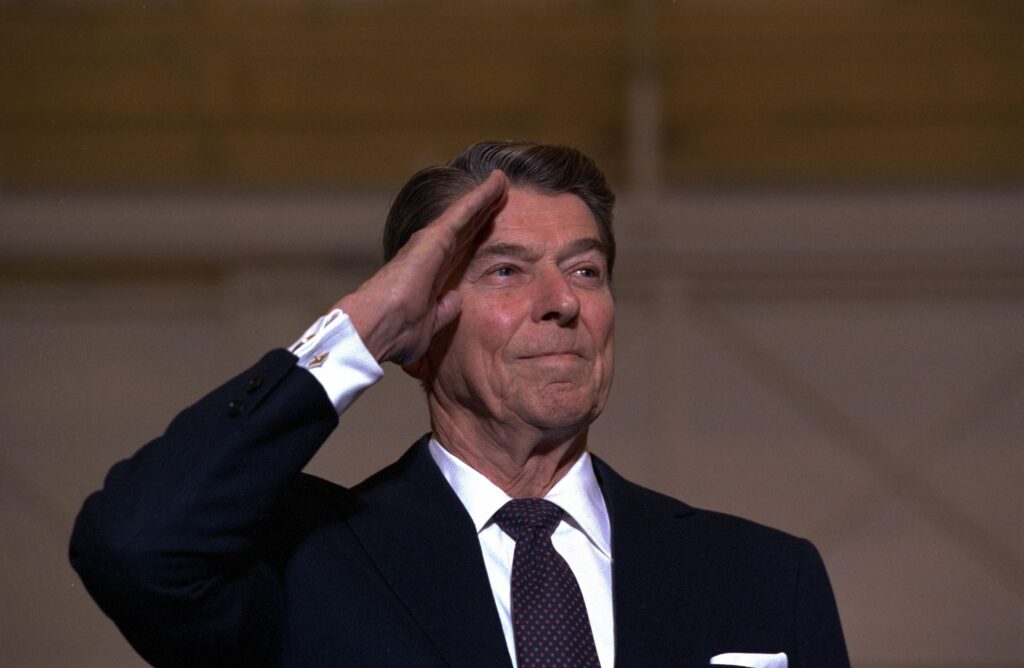
Reagan’s PATCO Showdown ignited Colorado labor backlash | A LOOK BACK
Rachael Wright, Special to Colorado Politics
rachael.wright@coloradopolitics.com
Updated 4 days ago
Forty-five years ago this week: “It’s the old Nixon reaction as far as I’m concerned. He thinks he’s the Great God Almighty and can do no wrong … in the eyes of the public,” said Zelda Bransted, spokesman of the...
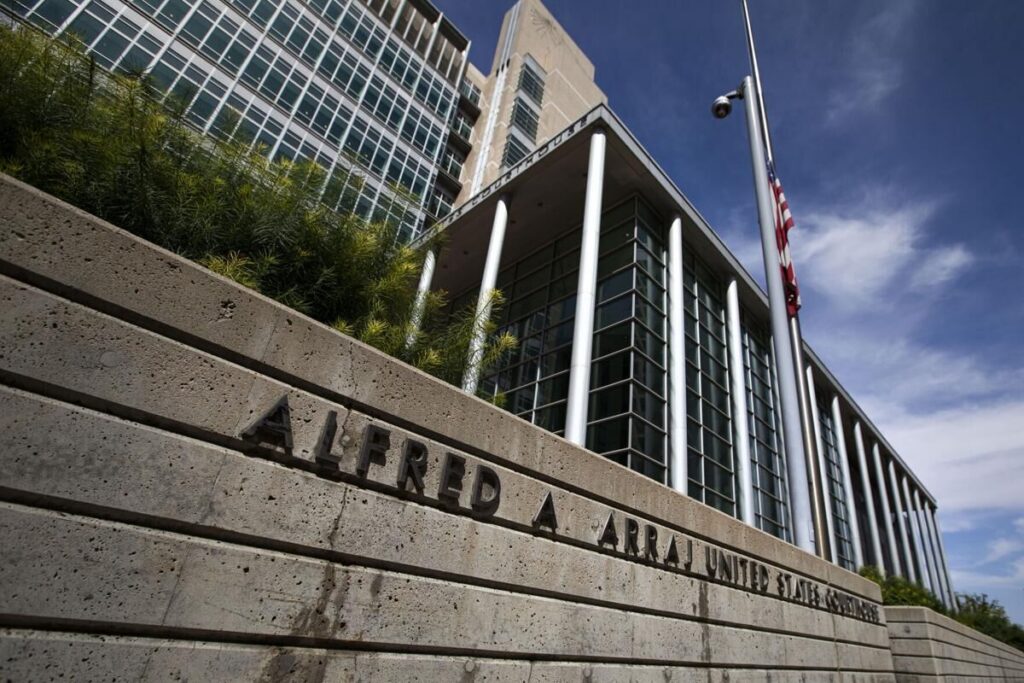
Federal judge green-lights excessive force, retaliation claims for trial against Fort Collins officers
Michael Karlik
michael.karlik@coloradopolitics.com
Updated 1 day ago
A federal judge green-lit a jury trial last week against multiple Fort Collins police officers on claims that they used excessive force on one man who was standing unarmed in his underwear, and retaliated against another man for exercising his...
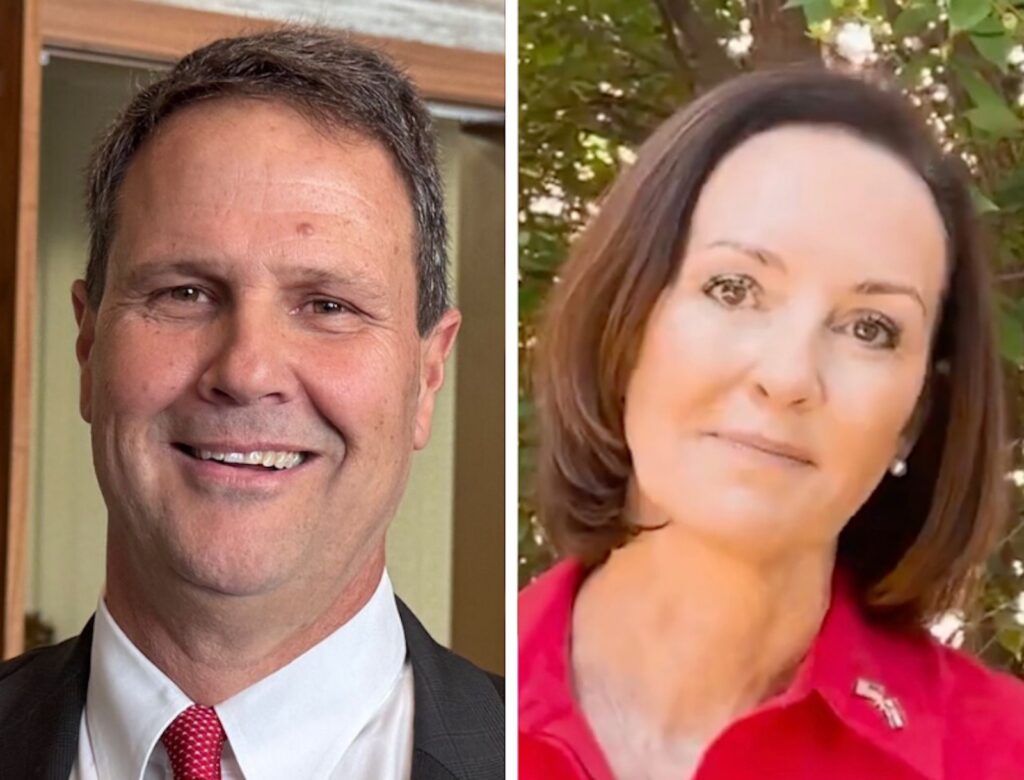
Jeff Crank, Jessica Killin set to face off in 2 debates in Colorado’s 5th Congressional District
Ernest Luning
ernest.luning@coloradopolitics.com
Updated 3 days ago
Republican U.S. Rep. Jeff Crank and Jessica Killin, his Democratic challenger, have agreed to debate twice in the weeks leading up to the general election in Colorado’s 5th Congressional District, their campaigns have said. Crank is seeking a second term...
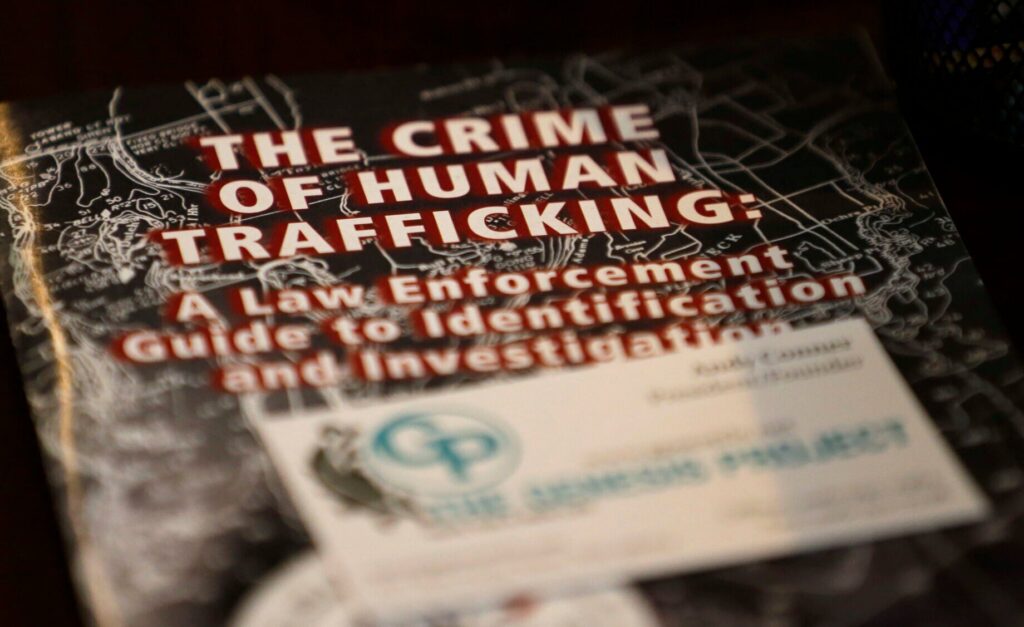
CSI study reviews impacts of Colorado’s mandatory sex‑trafficking sentencing measure
Marissa Ventrelli
marissa.ventrelli@coloradopolitics.com
Updated 18 hours ago
A new report by the think-tank Common Sense Institute examines what could happen if Colorado voters approve Initiative No. 108, which establishes mandatory life sentences for offenders convicted of sexual trafficking of a minor. The measure is backed by Protect...