

Hatch Act memo causes problems for two county sheriff candidates | A LOOK BACK
Thirty-Five Years Ago This Week: “The local officer or employee whose principal employment is … financed in whole or part by federal money cannot be a candidate for public elective office in a partisan election,” wrote county attorney Lyle Decant in a memo to Mesa County commissioners.
According to Decant’s interpretation, two Republican candidates for Mesa County Sheriff would be ineligible to run: Sheriff investigator Reicke Claussen and Deputy District Attorney Rick Wagner who were paid in part with federal funds.
“I’m concerned both as a lawyer and as head of the Republican Party in Mesa County,” said Carroll Multz. “I have read the opinion and have serious reservations about the conclusion Mr. Denchant reached. In order to run they would have to resign their job or take a leave of absence or withdraw their candidacy. Such an interpretation of the Hatch Act would discourage people … with recent hands-on experience in a particular office from running.”
The executive director of the County Sheriff’s Association, John Hammerzell, said the issue rarely crops up in elections now because so few departments received federal funding.
“Eleven counties in the state are participating in a drug interdiction program with $30,000 in federal funds attached,” Hammerzell said. “But each department gets very little of that money. Some of the money has been used to pay employee overtime for work on drugs cases.”
Since its passage in 1939, the Hatch Act had gone through several changes, but its purpose remained the same — to ensure that federal employees were free from political coercion, able to to administer federal programs in a non-partisan manner and that employees were advanced based on merit and not by political affiliation.
Fifteen Years Ago: Former Lieutenant Gov. Jane Norton made a controversial decision to forgo the traditional caucus-assembly method and decided instead to petition onto the ballot for the U.S. Senate race.
“Jane Norton was with me at the state convention in 2002, 2004 and 2006 and I have every confidence she would perform admirably at the state convention this year,” said former Gov. Bill Owens. “But each election is different, and clearly Michael Bennet’s decision to petition on has changed the game. This is a smart move that gives Republicans the best shot at victory in November.”
Former U.S. Senator Hank Brown and Republican National Committeeman Mark Hillman expressed their support for Norton.
“Jane Norton had my full support from the beginning, and that support continues today and on into November,” said Brown.
But a fly found its way into the ointment in the form of longtime Republican campaign consultant Walt Klein, who was working for Weld County District Attorney Ken Buck’s senatorial campaign – a Norton challenger in the primary election.
Klein told The Colorado Statesman he didn’t believe the public explanation that Norton was trying top keep up with Sen. Michael Bennet, who announced that he would be soliciting petition signatures in addition to going through the state assembly.
“Bennet made her do it?” Klein said. “I may be dumb but not stupid. It’s an insult. Then again if you’re a big shot, I suppose, they think they can write the rules of the game.”
Klein said that the behavior of other candidates wouldn’t change the Buck campaign strategy.
“In the weeks leading up to the caucuses Ken was connecting very well with supporters,” Klein said. “Norton has been on a months-long downward spiral. It shows that if a candidate cannot connect with the voters, it doesn’t matter how much money they have.”
Rachael Wright is the author of several novels including The Twins of Strathnaver, with degrees in Political Science and History from Colorado Mesa University, and is a contributing writer to Colorado Politics, the Colorado Springs Gazette and the Denver Gazette.
Colorado Politics Must-Reads:

Parole, appeals deadlines and restitution: Colorado justices accept cases
Michael Karlik
michael.karlik@coloradopolitics.com
Updated 11 hours ago
The Colorado Supreme Court announced on Monday that it will determine how a defendant’s parole-eligibility date should be calculated in instances where a new trial results in a sentence being imposed retroactively to the date of the original, since-overturned sentence....
Federal judge rejects DOJ bid to force Colorado to hand over voter information
Marissa Ventrelli
marissa.ventrelli@coloradopolitics.com
Updated 16 hours ago
A U.S. district court judge has dismissed a lawsuit filed by the U.S. Department of Justice against Colorado Secretary of State Jena Griswold for refusing to provide the agency with personal voter information. Last December, the DOJ’s Civil Rights Division asked...
Democratic states warn Supreme Court that Trump mail ballot order would cause chaos ahead of midterm elections
Jack Birle
jack-birle@coloradopolitics.com
Updated 18 hours ago
A coalition of Democrat-led states warned the Supreme Court this week that lifting a block on President Donald Trump’s mail-voting executive order would cause “extreme” changes as states prepare to send out ballots for the midterm elections. The group of...

Trump’s lopsided losing record on ICE mandatory detention masks a closer legal fight
Kaelan Deese
kaelan-deese@coloradopolitics.com
Updated 19 hours ago
The Trump administration’s 6-2 losing record in appeals courts over its mandatory immigration detention policy looks like an overwhelming streak of losses. However, a closer examination of the judges behind those decisions suggests the policy may be less legally doomed...
3 Colorado judges receive unfavorable retention recommendation as one performance commission violates rules
Michael Karlik
michael.karlik@coloradopolitics.com
Updated 20 hours ago
Of the 123 Colorado judges standing for retention on the November ballot, citizen-led performance commissions found that three did not meet the required performance standards. However, in an unprecedented move, the commission charged with evaluating Supreme Court and Court of...
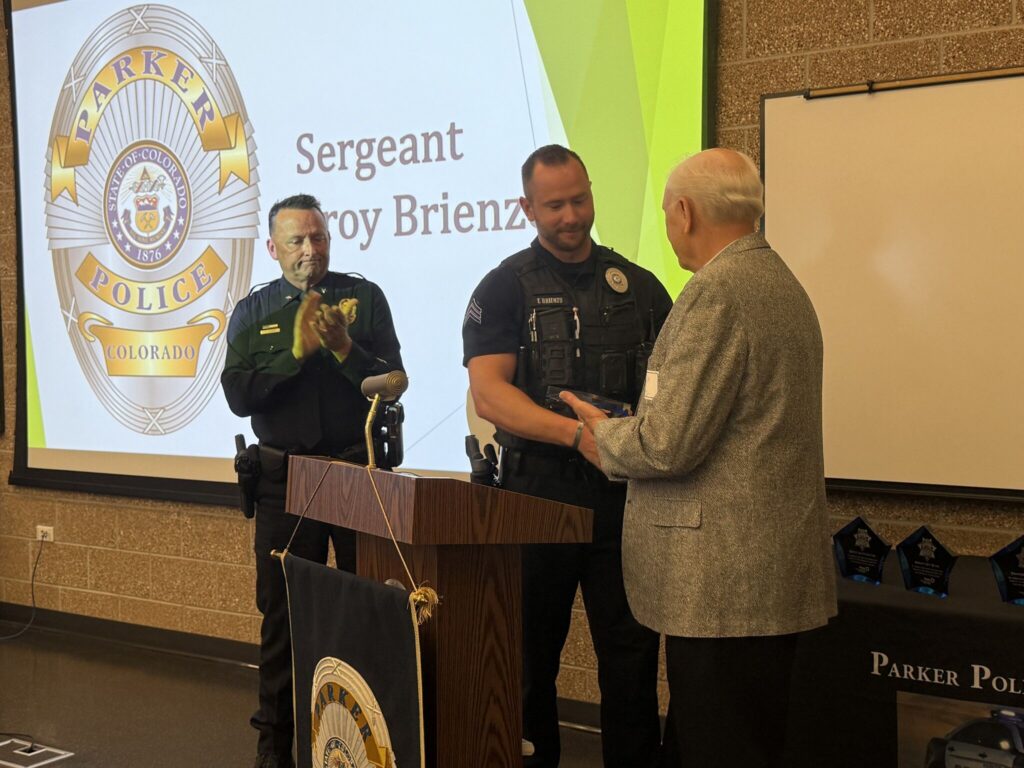
Former Parker police sergeant pleads guilty to unlawful sexual conduct, misconduct charge
Nicholas Fogleman
nicholas.fogleman@denvergazette.com
Updated 20 hours ago
Former Parker Police Department Sgt. Troy Brienzo pleaded guilty Monday to a felony charge of unlawful sexual conduct by a police officer and first-degree official misconduct in Douglas County District Court. Brienzo entered the guilty pleas before Judge Ryan Stuart,...

U.S. News names Saint Joseph best hospital in Colorado, ending University of Colorado Hospital’s 13-year streak
Nico Brambila
nico.brambila@denvergazette.com
Updated 21 hours ago
University of Colorado Hospital is no longer Colorado’s top-ranked hospital for the first time in more than a decade, with Intermountain Health Saint Joseph Hospital taking the No. 1 spot in U.S. News & World Report’s latest rankings. Located on...

Appeals filed to send Project Taurus decision to the Colorado Springs City Council
Brennen Kauffman
brennen-kauffman@coloradopolitics.com
Updated 20 hours ago
At least one appeal has been filed over the proposed large-scale data center in Colorado Springs, sending the final decision to the Colorado Springs City Council. The filing seeks to overturn the Planning Commission’s decision on July 23 to deny...

Denver City Council keeps 2 a.m. nightlife cutoff, approves $18 million for George Floyd protest claims
Deborah Grigsby
deborah.smith@denvergazette.com
Updated 21 hours ago
Nightlife establishments will not get a two-hour operating extension after the Denver City Council passed an amended version of a bill that keeps the current 2 a.m. closing time. As originally proposed, venues would have been able to keep music,...

Group submits signatures for proposed Colorado graduated income tax
Marianne Goodland
marianne.goodland@coloradopolitics.com
Updated 19 hours ago
The measure, which eliminates Colorado’s flat tax, is expected to raise $2 billion in new revenue The proposal to amend the Colorado constitution to change the state’s flat rate into a graduated income tax came in under the wire Monday,...