

Federal judge IDs flaw with Tina Peters’ request for release
A federal judge on Monday warned former Mesa County clerk Tina Peters that her request to be released while she appeals her 2024 criminal convictions appears to be brought improperly and may be subject to dismissal.
Jurors convicted Peters for her role in a security breach of her office’s voting equipment. She is currently serving a nine-year sentence of incarceration. While the state’s Court of Appeals reviews her conviction, Peters has filed a federal petition for “habeas corpus,” a legal tool used to challenge one’s confinement. Specifically, Peters is seeking to be released on bond while her appeal moves forward in state court.
In a May 5 order, Chief U.S. Magistrate Judge Scott T. Varholak identified a problem with the petition. Peters alleged the state courts improperly denied her motion for bond, citing a violation of her First Amendment speech rights, her right to due process and her alleged immunity from carrying out duties required by federal elections law.
Federal courts cannot grant habeas petitions, wrote Varholak, unless the petitioner has “fairly presented” her issues to the state courts. While Peters did raise her First Amendment claim to the Court of Appeals when seeking bond, Varholak believed she did not present her other arguments for consideration.
“Thus, the Application contains both unexhausted and exhausted claims, which renders it a ‘mixed petition,'” wrote Varholak. And “this Court may not adjudicate an application containing both exhausted and unexhausted claims.”
He presented several options to Peters, such as proceeding in federal court only on her claim of a free speech violation or dropping her petition and refiling it after one year.
Varholak gave Peters 30 days to respond to his order.
In doing so, Varholak sidestepped an issue that eclipsed Peters’ original request for relief.
In March, the U.S. Department of Justice unexpectedly inserted itself into the case, filing a statement of interest to claim it was reviewing whether Peters’ prosecution was “oriented more toward inflicting political pain than toward pursuing actual justice or legitimate governmental objectives.”
The Colorado Attorney General’s Office, which is litigating opposite Peters, asked Varholak to discard the statement entirely, or at least strike the portion alleging political motivations. The office argued it was unprecedented for the Justice Department to claim an interest in a state criminal defendant’s habeas case, and characterized the filing as an act of intimidation on behalf of an ally to President Donald Trump.
Varholak asked the parties to research whether he, as a magistrate judge who is neither nominated by the president nor confirmed by the U.S. Senate, even had the authority to strike the government’s filing. Last week, he received their responses, which were inconclusive.
In noting that Peters’ petition is not viable in its current form, Varholak turned down Colorado’s request to discard the Justice Department’s statement, writing that the attorney general’s office may raise the issue again if the case moves forward.
Around the same time as Varholak’s order, Trump posted on social media that he is “hereby directing the Department of Justice to take all necessary action to help secure the release of this ‘hostage,'” referring to Peters.
The case is Peters v. Feyen et al.

10th Circuit sympathetic to Colorado consumer protection law governing interest rates
Michael Karlik
michael.karlik@coloradopolitics.com
Updated 18 hours ago
Members of the Denver-based federal appeals court appeared sympathetic on Tuesday to Colorado’s assertion that it can lawfully require certain out-of-state banks to abide by the state’s own ceilings on interest rates when they lend to consumers in Colorado. The...
Colorado justices to decide insurance companies’ obligation to disclose relevant policies
Michael Karlik
michael.karlik@coloradopolitics.com
Updated 4 hours ago
The Colorado Supreme Court announced on Monday that it will decide whether an insurance company violated state law by withholding an at-fault driver’s policy for nearly a year when there was no dispute that the policy was not in effect...

Judicial performance evaluations released, Montezuma County judge disciplined | COURT CRAWL
Michael Karlik
michael.karlik@coloradopolitics.com
Updated 2 days ago
Welcome to Court Crawl, Colorado Politics’ roundup of news from the third branch of government. Colorado’s citizen-led judicial performance commissions released their voter narratives for the judges standing for retention in November, plus a disciplinary panel imposed consequences on a...

DA justifies CSPD officers in fatally shooting man at McDonald’s
Cleo Westin
cleo-westin@coloradopolitics.com
Updated 20 hours ago
The deadly shooting of a man by Colorado Springs police officers at a McDonald’s was ruled justified by the 4th Judicial District Attorney’s Office on Monday, the office announced in a news release. The ruling determined officers Daniel White, Mitchell...
Federal judge holds off on dismissing formerly bankrupt medical contractor from Jeffco jail death lawsuit
Michael Karlik
michael.karlik@coloradopolitics.com
Updated 16 hours ago
A federal judge declined on Monday to dismiss the formerly bankrupt medical contractor from a lawsuit over a detainee’s death in Jefferson County jail, but indicated she would do so if the plaintiffs’ attorneys go through the process to ensure...
Castle Rock caregiver sentenced after stealing more than $110,000 in jewelry from family
Nicholas Fogleman
nicholas.fogleman@denvergazette.com
Updated 22 hours ago
A judge sentenced a Castle Rock caregiver to 90 days in jail after she pleaded guilty to stealing more than $110,000 worth of jewelry from the family of a disabled son under her care. Elsa Montejo-Fuentes, 32, had worked for...
Federal judge green-lights excessive force, retaliation claims for trial against Fort Collins officers
Michael Karlik
michael.karlik@coloradopolitics.com
Updated 4 days ago
A federal judge green-lit a jury trial last week against multiple Fort Collins police officers on claims that they used excessive force on one man who was standing unarmed in his underwear, and retaliated against another man for exercising his...
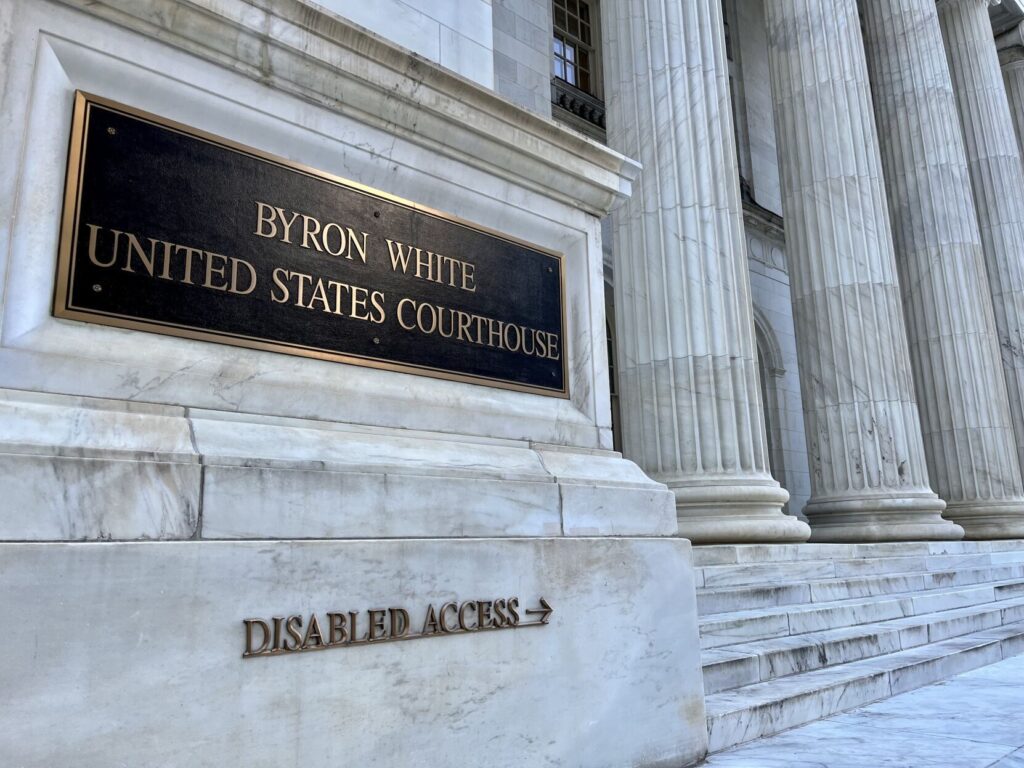
10th Circuit revives wage violation lawsuit against Papa John’s operator
Michael Karlik
michael.karlik@coloradopolitics.com
Updated 5 days ago
The Denver-based federal appeals court on Tuesday reinstated a former Papa John’s delivery driver’s lawsuit alleging violations of federal and state wage law. Steve Mighell worked for one month at a Denver Papa John’s location in summer 2023. He alleged...
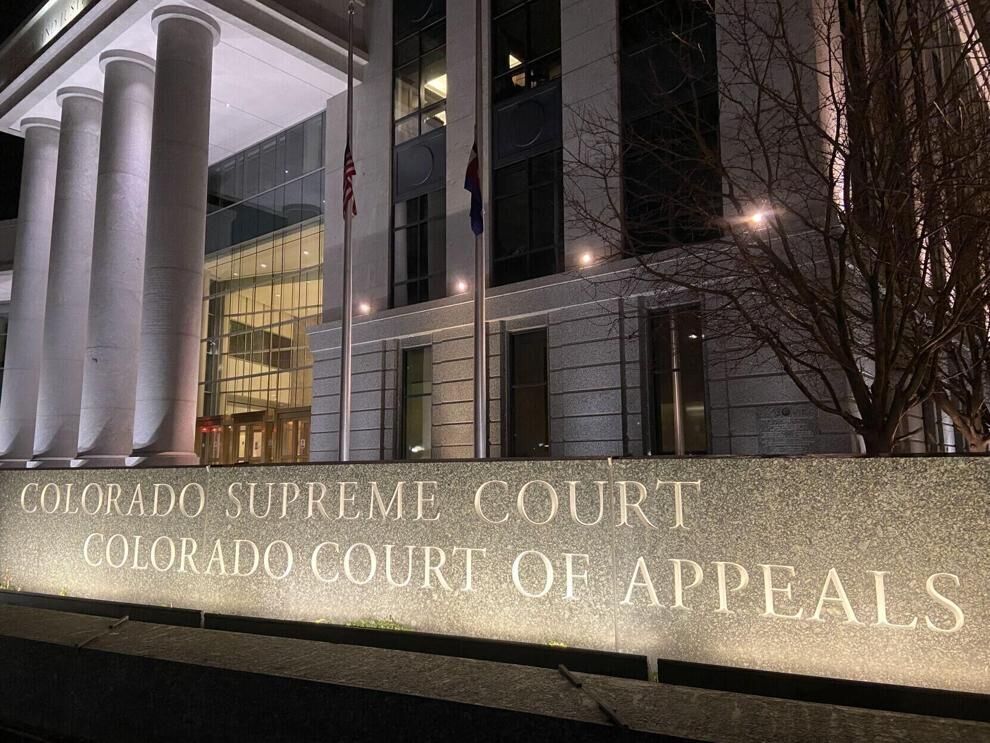
Colorado appeals judge’s delays in releasing opinions noted by performance commission
Michael Karlik
michael.karlik@coloradopolitics.com
Updated 4 days ago
The citizen-led performance commission that provides guidance to voters about whether to retain members of Colorado’s second-highest court raised concerns by judges and attorneys that Judge Elizabeth L. Harris sometimes struggles with releasing opinions promptly. Harris, who joined the Court...

Colorado judge explores sanctions against DOJ, ICE for rearresting man 4 days after release on bond
Michael Karlik
michael.karlik@coloradopolitics.com
Updated 5 days ago
A federal judge in Colorado is considering sanctions against the government after immigration agents rearrested a man four days after an immigration judge found him suitable for release on bond. On July 28, U.S. Magistrate Judge N. Reid Neureiter ordered...