

Trump’s First 100 Days | ‘Business as usual’ for this Colorado town, while former rangers worry about park’s future
Brian Chick owns The Christmas Shoppe at E. Elkhorn Avenue in Estes Park, a popular Colorado town that sits at the east entrance of Rocky Mountain National Park, serving as a gateway community into the beloved national destination.
Gateway towns, such as Estes Park, are vital resources to national parks, as they provide accommodations, restaurants, gift stores and other amenities for visitors.
In turn, they rely on thriving parks.
And since January, Estes Park has been “business as usual,” Chick said.
“There are still a lot of businesses opening up, and people are cautiously optimistic,” he said.
Chick shared his experience — he has owned the shop for two years — amid a slew of changes occurring at the federal government after President Donald Trump took office, whose administration hopes to reshape the bureaucracy.
On the one hand, former federal workers, Democrats and others decry those changes as drastic and chaotic, expressing fears about the park system’s ability to deliver good service and its long term viability. Many are worried about the future, with some saying the parks system is already feeling the impact of the cuts.
On the other hand, the Trump administration, Republicans and their allies view his actions as decisive — the antidote, they argued, to a bloated federal bureaucracy that keeps spending taxpayer dollars it doesn’t have.
The impact? It’s hard to know yet.
Rocky Mountain National Park’s busy season is between May and October.
Since the reductions to its workforce happened in the off-season, it’s difficult to know yet how they would affect operations, observers said.
Last May, Rocky Mountain finalized its plan for a timed entry permitting system, which manages visitor access in the summer, according to Rocky Mountain’s website. It requires reservations for anyone entering the park between 9 a.m. and 2 p.m. from May 23 to Oct. 13.
According to national park data, 3.4 million of the park’s 4.2 million visitors in 2024 visited between May and October.
Scott Cundy, which founded Wildland Trekking, a company that has led guided trips in national parks since 2005 and in Rocky Mountain since 2010, said he hasn’t seen physical impacts to Rocky Mountain in Trump’s first 100 days.
But he wondered if the staffing cuts have begun to affect operations. Officials made a mistake in the company’s permitting process this year, divvying out permits to every guiding company but Wildland Trekking by accident and forcing the firm to completely change all of its itineraries, he said.
Park service employees “went out of their way” to help Cundy solve the issue, but the mistake made customer service “a nightmare,” he said.
He doesn’t think that mistake was a coincidence.
“People make mistakes when they’re understaffed,” he said. “I don’t think personally it’s a coincidence that the government comes in with a chopping block and then mistakes like this happen.”
Anecdotally, Estes Park Mayor Gary Hall said he has heard from lodging companies in the town that their pre-bookings for the coming summer are fewer than normal.
But like Chick, the store owner on E. Elkhorn Avenue, the town mayor said he has yet to see any major impacts of the federal reductions on Estes Park.
In fact, he said, the town saw good sales tax numbers in February, one of the first up months for sales taxes in quite a while. He attributed that increase to warm summer-like days.
Still, Hall worries about visitor experience in coming busy seasons with fewer federal workers, which he fears might deter people from visiting parks in the future, with ramifications for his town’s businesses.

Brian Chick now owns the Christmas Shoppe in Estes Park, Colo., alongside his wife, after he pursued a career change after decades in finance. Chick hasn't noticed significant change under the Trump presidency. "I hate to see anyone lose a job," he said. Of talk of recession, he said, "People tend to fly less and drive more when there's fear in the economy so that can help Estes Park."
Tom Hellauer tom.hellauer@denvergazette.com

Interior agency: Cuts are necessary to achieve ‘effectiveness, accountability and cost savings’
On Jan. 20, the Trump administration implemented a hiring freeze, resulting in the National Park Service rescinding more than 2,000 positions across the country as part of its plans to shrink the federal government.
That represents 10% of the park system’s 20,000-strong federal workforce. Some 280,000 people had been hired by the entire federal bureaucracy in the last two years, with most still on probation and easier to fire, according to government data. The total civilian federal workforce stands at 2.3 million.
In the following months, the parks jobs were reinstated, though it’s not immediately clear how many staffers were rehired or ultimately left on their own.
All of that has led to uncertainty, adding to the woes of what many, like Tracy Coppola of the National Parks Conservation Association, have described as a parks system that’s already understaffed and underfunded.
“For years, the park service was underfunded, challenged, a lot of people doing collateral duty and dedicated civil servants doing the most with very little,” Coppola said. “So, we started there before this administration. And then from Day One you see this hiring freeze.”
An April order from the Secretary of the Department of Interior, which oversees the National Park Service, said consolidation within the agency is “necessary” to achieve “effectiveness, accountability and cost savings for the American taxpayer.”
Since the Department of Government Efficiency was created, the Trump administration claimed it has saved $160 billion, almost $994 per taxpayer. The DOGE website includes a leaderboard of agencies that places the interior department at No. 11 out of 22 for the most savings.
Trump — who tasked the Department of Government Efficiency to root out “waste, bloat, and insularity” — has cited government accountability as a core reason for the cuts and reorganization of various federal agencies.
In another executive order extending the hiring freeze in late April, Trump said the American people “deserve a Federal workforce that is high-quality, efficient, dedicated to the public interest and no larger than necessary.”
The order cited the Government Accountability Office as saying it has documented how agencies have not used probationary periods as effectively as they could to remove individuals whose employment does not serve the public interest.
“Agencies have often retained and given tenure to underperforming employees who should have been screened out during their probationary period,” the White House said.
A hiring freeze, followed by terminations
About a week after the hiring freeze in January, park employees got emails offering buyouts to resign. In late February, more than 700 National Park Service employees took that offer.
On Feb. 11, federal agencies were directed to submit reorganization plans and prepare for large-scale layoffs, followed by the Feb. 14 termination of 1,000 probationary employees.
A court order later allowed the National Park Service to reinstate the terminated employees.
Later in February, the administration banned travel over 50 miles and capped government credit card spending at $1.
Estes Park Mayor Gary Hall and former Rocky Mountain National Park Ranger Mikayla Moors estimated that 12 employees at Rocky Mountain were laid off on Valentine’s Day. While they were reinstated, Moors said not all took their jobs back.
Moors herself decided to resign, as did other park employees she knew, she said, citing job uncertainty.
Rocky Mountain National Park officials could not be reached for comment about the exact number of employees laid off since Feb. 14. According to a 2023 report, Rocky Mountain had 253 full-time employees.
Sheridan Steele, the former superintendent of Black Canyon of the Gunnison, said Black Canyon, in combination with Curecanti National Recreation Area and Florissant Fossil Beds — all under the same leadership — has 74 employees.
On Feb. 14, 10 of those employees were laid off, he said, and another three employees took the payout deal.
Prior to the cuts, Black Canyon of the Gunnison had 14 vacancies, positions that were also cut, he said. In total, that makes 27 employees cut from Black Canyon, which is a third of the workforce. He was not sure how many of the 10 laid off employees took their jobs back when offered.
Black Canyon of the Gunnison officials declined to comment on the story.
Steele — formerly a park superintendent who is now part of the Coalition to Protect America’s National Parks, an organization made up of about 4,000 current and former national park employees — said that, typically, when managers are asked to make staff cuts, they have processes to make sure operations are covered as best as possible.
“In this situation, there was no consideration,” he said. “You’re a park manager and suddenly you have 10 fewer employees, and they’re all in place that you would have never cut.”
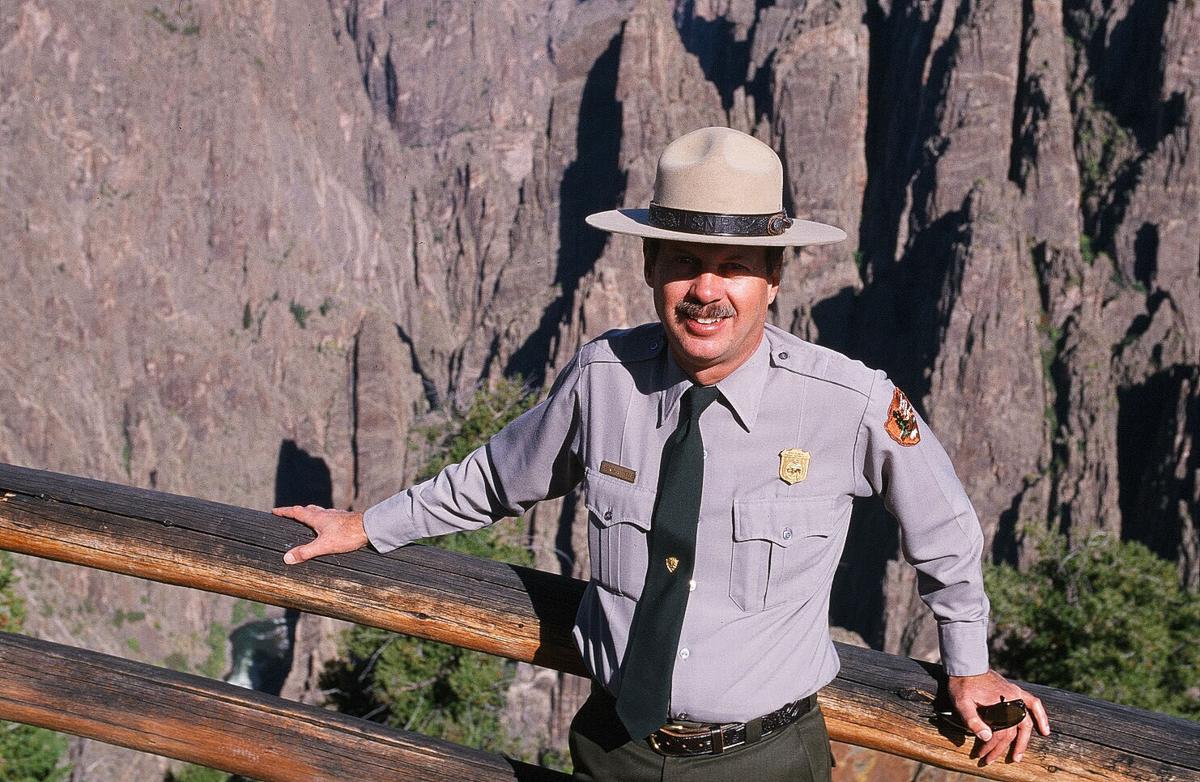
Sheridan Steele poses for a photo as superintendent of Black Canyon of the Gunnison National Park.
Courtesy of Sheridan Steele

A ‘normal’ park experience
Former Rocky Mountain ranger Adam Auerbach expects visitors this summer to have a relatively “normal” park experience.
But the long-term impacts of the cuts worry him, he said, since parks will need to do the same amount of work with fewer staff members. That means employees will be shifted around to do work they weren’t hired to do, such as cleaning restrooms.
Mikayla Moors, another former Rocky Mountain ranger, added that some parks have already seen this happening.
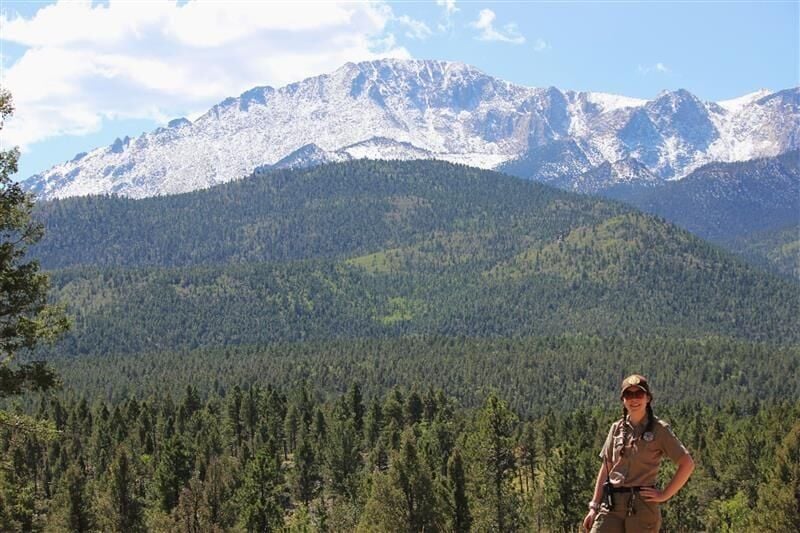
Mikayla Moors poses for a photo with Longs Peak in the background in Rocky Mountain National Park, Colorado.
Courtesy, Mikayla Moors

“There are scientists in Yosemite National Park having to go clean restrooms instead of doing the critical work they’ve been assigned,” Moors said. “The visitors may have a pretty regular experience, but the employees are definitely going to be pushed to the limit in regards to job duties.”
She added that smaller parks, like Florissant Fossil Beds, have had to change visitor center hours to accommodate for the staff cuts.
With talk of recession aplenty, Chick, who owns The Christmas Shoppe, said if it happens, it would likely help, not hurt his business, as people tend to drive more and fly less when the economy contracts.
The main impact of the Trump administration so far on Chick’s business has been tariffs, he said, since some of the items in his store come from China.
He’s not worried about the national park, he said.
“I hate to see anybody ever lose their job, but I think they’ll be just fine with it,” he said. “There are a lot of retired folks here, so there are a lot of volunteers. They’ll be just fine.”

Lake Mead hits historic low water level as Colorado River struggles | OUT WEST ROUNDUP
The Associated Press
the-associated-press@coloradopolitics.com
Updated 4 days ago
NEVADA Lake Mead hits new low BOULDER CITY — Lake Mead, the largest reservoir in the United States, has plummeted to its lowest water level since it was filled some 90 years ago, another sign of the crisis plaguing the...

Democrats and their big roll of the dice | SONDERMANN
Eric Sondermann
eric-sondermann@coloradopolitics.com
Updated 4 days ago
For Republicans on the ballot this fall, the hand they are forced to play is rather set. Even if so many of them had not so meekly submitted to President Donald Trump’s agenda, they would still be largely tethered to...

Reagan’s PATCO Showdown ignited Colorado labor backlash | A LOOK BACK
Rachael Wright, Special to Colorado Politics
rachael.wright@coloradopolitics.com
Updated 4 days ago
Forty-five years ago this week: “It’s the old Nixon reaction as far as I’m concerned. He thinks he’s the Great God Almighty and can do no wrong … in the eyes of the public,” said Zelda Bransted, spokesman of the...
Federal judge green-lights excessive force, retaliation claims for trial against Fort Collins officers
Michael Karlik
michael.karlik@coloradopolitics.com
Updated 1 day ago
A federal judge green-lit a jury trial last week against multiple Fort Collins police officers on claims that they used excessive force on one man who was standing unarmed in his underwear, and retaliated against another man for exercising his...

Jeff Crank, Jessica Killin set to face off in 2 debates in Colorado’s 5th Congressional District
Ernest Luning
ernest.luning@coloradopolitics.com
Updated 2 days ago
Republican U.S. Rep. Jeff Crank and Jessica Killin, his Democratic challenger, have agreed to debate twice in the weeks leading up to the general election in Colorado’s 5th Congressional District, their campaigns have said. Crank is seeking a second term...

CSI study reviews impacts of Colorado’s mandatory sex‑trafficking sentencing measure
Marissa Ventrelli
marissa.ventrelli@coloradopolitics.com
Updated 16 hours ago
A new report by the think-tank Common Sense Institute examines what could happen if Colorado voters approve Initiative No. 108, which establishes mandatory life sentences for offenders convicted of sexual trafficking of a minor. The measure is backed by Protect...

Luigi Mangione pleads guilty in UnitedHealthcare CEO Brian Thompson murder case
Kaelan Deese
kaelan-deese@coloradopolitics.com
Updated 3 days ago
Luigi Mangione pleaded guilty Friday to two federal stalking charges connected to the 2024 killing of UnitedHealthcare CEO Brian Thompson, a major development that could complicate New York prosecutors’ separate murder case against him. Mangione, 28, not only pleaded guilty in Manhattan federal court...

French court blocks Macron’s social media ban for children under 15
Emily Hallas
emily-hallas@coloradopolitics.com
Updated 3 days ago
France’s top court struck down on Friday a law championed by President Emmanuel Macron that would have made it illegal for children to have social media accounts. The law, approved by lawmakers in July, was set to take effect at...

10th Circuit revives wage violation lawsuit against Papa John’s operator
Michael Karlik
michael.karlik@coloradopolitics.com
Updated 2 days ago
The Denver-based federal appeals court on Tuesday reinstated a former Papa John’s delivery driver’s lawsuit alleging violations of federal and state wage law. Steve Mighell worked for one month at a Denver Papa John’s location in summer 2023. He alleged...
Golden fire chief fired days after city manager as city investigates ‘racist incident’
Matt Kyle
matt.kyle@denvergazette.com
Updated 2 days ago
The City of Golden has terminated its fire chief days after terminating the city manager due to a “racist incident” earlier this year at a city fire station. City officials said that in March, a “Snoop on a Stoop” doll,...