

Trump’s Tren de Aragua crackdown highlights illegal immigration agenda in first 100 days
As millions of immigrants fleeing the economic and political chaos in Venezuela used social media to navigate the journey north, Tren de Aragua (TdA) operatives embedded in their ranks and exploited these same platforms — particularly WhatsApp — to coordinate extortion, smuggling and violence.
Venezuela’s economic and political chaos made the rise of an enterprising criminal organization like TdA almost inevitable, according to Ronna Rísquez, a Venezuelan journalist who’s been investigating the gang.
“The heads of the Tren de Aragua identified the massive and forced Venezuelan migration as a goldmine of business opportunities,” Rísquez wrote in her book, “El Tren de Aragua: La banda que revolucionó el crimen organizado en América Latina” (The Tren de Aragua: The gang that revolutionized organized crime in Latin America).
“Therefore, they didn’t hesitate to follow the footsteps of their compatriots who were fleeing the economic and social crisis that left them unemployed and without food,” Rísquez wrote.
According to U.S. authorities, members of the Venezuelan prison gang hid in plain sight by infiltrating and traveling with Venezuelan immigrants headed north. But the gang didn’t remain in the shadows long. Its brutal reputation — magnified by reports the gang had taken over apartment complexes in Aurora — quickly made TdA a public safety issue and political flashpoint. On the campaign trail, then-President Donald Trump cited the gang as evidence of the unhampered flow of illegal immigration and hammered the Biden administration over stricter border enforcement.
Now, 100 days into his second term, Trump has deployed an aggressive crackdown, and made going after TdA a cornerstone of his illegal immigration agenda.
“They’re a savage gang, one of the worst in the world and they’re getting bigger all the time because of our stupidity,” Trump earlier said.
Trump added: “We will send elite squads from ICE (U.S. Immigration and Customs Enforcement) to deport every single gang member.”
In Colorado, law enforcement sources said some two dozen TdA affiliates have been arrested in the Denver metro area.

FILE PHOTO: Screenshots of a video show armed men swarming an apartment unit in Aurora. Councilmember Danielle Jurinsky said the video shows members of Tren de Aragua, a Venezuelan prison gang that officials have admitted is operating in metro Denver.
Courtesy photo, City of Aurora

‘Devastate TdA’s infrastructure’
According to the Pew Research Center, a group based in Washington D.C., an estimated 11 million immigrants were living in the U.S. without lawful authorization in 2022. That figure had been falling since peaking in 2007 at 12.2 million, but began to climb in the years following the COVID-19 pandemic.
For decades, illegal immigration has been America’s intractable challenge. Republicans and Democrats have perennially promised to solve the crisis — and perennially failed. On a few occasions, Congress came close to passing a comprehensive plan, only to fall short.
Those failures have left states and local governments scrambling to confront the crisis.
And in the past two years, it finally exploded in metro Denver.
Against this backdrop, Trump issued a flurry of executive orders aimed at reshaping U.S. immigration policy within hours of being sworn in. He sought to end “birthright citizenship,” expedite deportations and rescind long-standing restrictions on where immigration enforcement actions can take place.
The courts have handed Trump several setbacks by halting — at least temporarily — a number of his executive orders. Last month, for example, the Supreme Court temporarily blocked the Trump administration from deporting a group of Venezuelan immigrants accused of being gang members under rarely invoked presidential powers.
Originally passed in 1798, the Alien Enemies Act gives the president broad wartime authority to detain, relocate or deport non-citizens from countries with which the United States is at war. The act has only been used three times in American history. The federal government held Japanese Americans in internment camps during WWII but not under the Alien Enemies Act.
In Colorado, law enforcement officials said arrests tied to the Venezuelan gang remain in the low double digits — just 10 in Aurora and eight in Denver.
The arrest numbers in Aurora have remained essentially unchanged since before Trump assumed office in January.
Internal communications from the Aurora Police Department, citing federal intelligence reports from 2023, said the gang had “decided to make Denver their headquarters” in the U.S.
While officials counted few gang arrests, federal authorities announced the apprehension of dozens of immigrants in January and February. Local officials with the U.S. Drug Enforcement Agency have been tight lipped about how many are gang members, saying only “quite a number” were suspected to be connected to TdA.
And last week in Colorado Springs, federal authorities detained more than 100 people allegedly staying unlawfully in the U.S. during a raid a “makeshift” nightclub. In a post on X, Attorney General Pam Bondi said the club was “frequented by TdA and MS-13 terrorists.” She didn’t say whether the operation netted any TdA members.
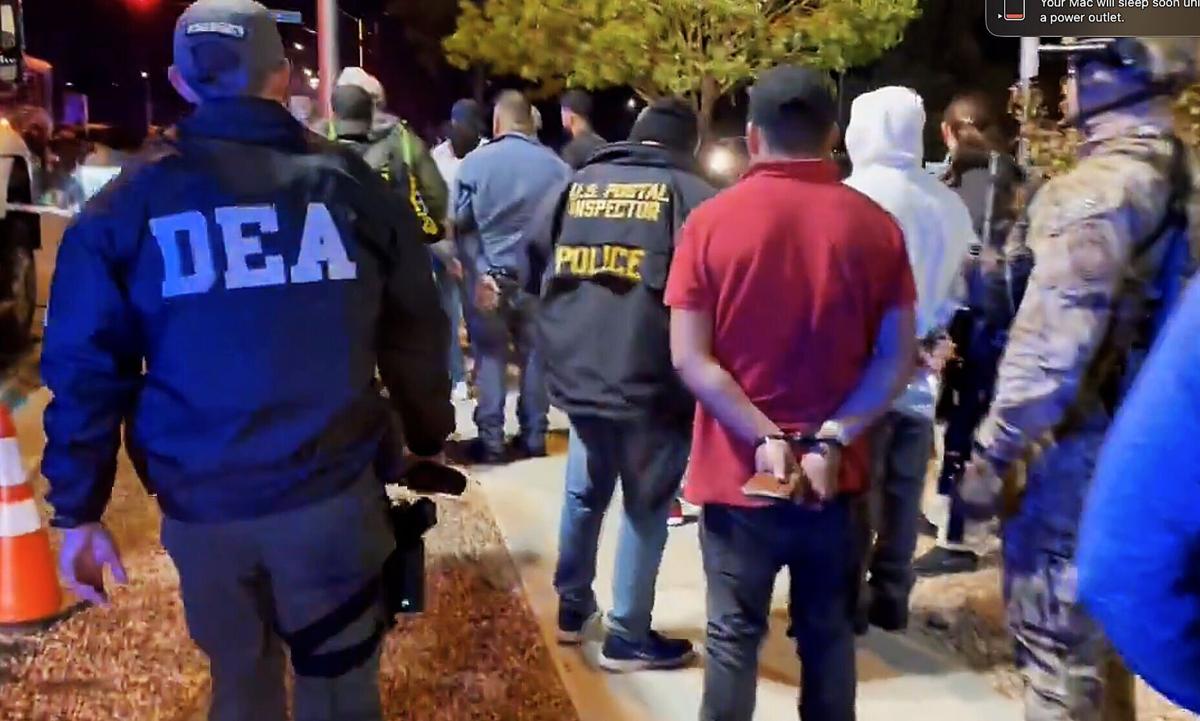
After raiding an underground nightclub in Colorado Springs early Sunday morning, April 27, 2025, about 114 illegal aliens were arrested. Screenshot taken from DEA video

It’s unclear how many TdA gang members have been arrested across the nation. U.S. Department of Homeland Security officials did not respond to a Denver Gazette email inquiring about the number.
A few weeks ago, the U.S. Department of Justice announced charges against 27 people linked to TdA for racketeering, narcotics, sex trafficking and other offenses.
At least one of the defendants, Anderson Zambrano-Pacheco, is accused of being involved in an Aurora kidnapping case in June.
“As alleged, Tren de Aragua is not just a street gang — it is a highly structured terrorist organization that has destroyed American families with brutal violence,” Bondi said in a statement.
Gang members have been linked to a myriad of criminal activities that include human trafficking — specifically of immigrant women and girls — drug trafficking, kidnapping, and money laundering.
Bondi added that the “indictments and arrests span three states and will devastate TdA’s infrastructure” as the agency works to “dismantle and purge this organization from our country.”
‘A good show of force’
The arrest figures in the Denver-metro area may mask a more complex reality, one in which identifying and apprehending TdA gang members requires time, intelligence and luck.
“Gang members and real criminals aren’t the easiest to catch,” said John Fabbricatore, a former ICE field office director.
The numbers may not indicate much, Fabbricatore said.
So far, this fiscal year — which ends Sept. 30 — the Denver ICE office has removed more than 400 immigrants unlawfully living in the U.S., federal data shows. Roughly half were deported because of a criminal conviction.
Those numbers are down significantly from the nearly 1,900 deportations conducted last fiscal year.
The Denver ICE office oversees enforcement in both Colorado and Wyoming.
Historically, the most common conviction arrests for immigrants involved driving under the influence, drug possession, assault or criminal traffic offenses, according to ICE.
Nationally, ICE has deported more than 70,000 immigrants since Oct. 1, the start of this fiscal year. That’s a steep decline from the more than 270,000 deportations carried out in fiscal year 2024 under the Biden administration.
Because ICE’s public dashboard is updated quarterly, it’s unclear how many of the current fiscal year’s deportations occurred after Trump took office.
On Trump’s 100th day in office, ICE officials said authorities arrested “66,463 illegal aliens and removed 65,682 aliens, including criminals who threaten public safety and national security. Three in four arrests were criminal illegal aliens, putting the worst first.”
“The brave men and women of ICE protect our families, friends and neighbors by removing public safety and national security threats from our communities,” ICE Acting Director Todd M. Lyons said in a statement.
Of these, ICE counted 2,288 gang members from TdA, MS-13, 18th Street and others — which equates to 3% of all the arrests nationally.
“I think the numbers they’re putting up so far are a good show of force,” Fabbricatore said.
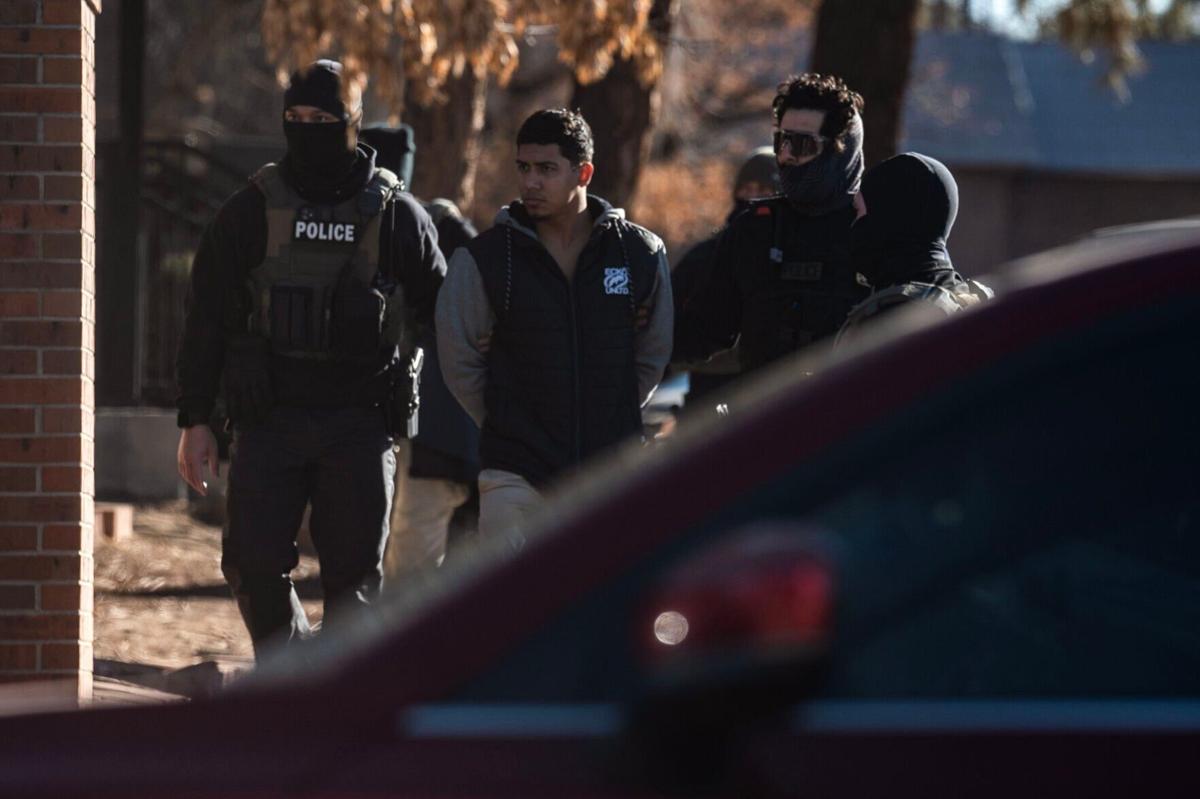
FILE PHOTO: Drug Enforcement Agency agents execute a warrant at Cedar Run Apartments in Denver on Wednesday, Feb. 5, 2025. (Stephen Swofford, Denver Gazette)
Stephen Swofford/ Denver Gazette

ICE does not release state-specific numbers and did not provide, as requested, and releases data by office, an ICE spokesperson said in an email to The Denver Gazette.
At the border, the administration said the daily encounters have plummeted 95% since Trump took office, while crossings of Panama’s Darién Gap is down 99.99%, which the White House concluded to mean the immigrants are “turning back.”
Additionally, the White House said 5,000 unaccompanied children were reunited with a relative or guardian; some 85 miles of new border wall have been planned or under construction; and customs and Coast Guard officers have seized nearly 232,000 pounds of fentanyl and other illicit drugs.
A sanctuary complication
For officers trying to locate TdA members, identifying suspects can be difficult for a variety of reasons.
As federal officials have ramped up arrests, some warned that enforcement strategies may be overly broad. Rísquez and others have criticized the use of tattoos or urban streetwear as proxies for gang affiliation, noting that such superficial criteria risks sweeping up non-gang members in the administration’s dragnet.
Authorities countered that a tattoo, for example, provides a clue and a starting point — but never the only factor considered.
“Tattoos are just one element of a myriad of circumstances law enforcement uses to identify who is in a gang, and what position they are in a gang, and how long and what their actual affiliation is,” the New York Times last month quoted Ryan Brackley, an assistant district attorney in the 18th Judicial District, which serves Arapahoe County in Colorado.
“A tattoo can be very telling. But are we going to base our decisions and law enforcement accusations and associations on a tattoo? Very, very unlikely,” he said.
Aurora Police Chief Todd Chamberlain has noted on multiple occasions that the lack of diplomatic relations with Venezuela hampers investigations, as U.S. agencies cannot verify criminal records, national IDs or aliases with Venezuelan authorities.
And, in jurisdictions with “sanctuary” policies — like many in Colorado — coordination between local law enforcement and federal immigration officials can be limited, potentially complicating efforts to track and detain suspected gang members.
A “sanctuary city” generally refers to a jurisdiction that discourages local law enforcement from reporting an individual’s immigration status to federal authorities. This tension was on full display during a Congressional hearing in March, when Denver Mayor Mike Johnston was called to testify about the city’s response to the influx of immigrants.
U.S. Rep. Jim Jordan, an Ohio Republican, criticized Johnston over the Denver Sheriff’s Department releasing a suspected gang member in February onto the street, rather than into ICE custody, resulting in a chase.
“You all speak about a broken immigration system, and yet here you guys are aiding and abetting in that entire process,” U.S. Rep. Anna Paulina Luna, a Florida Republican, said.
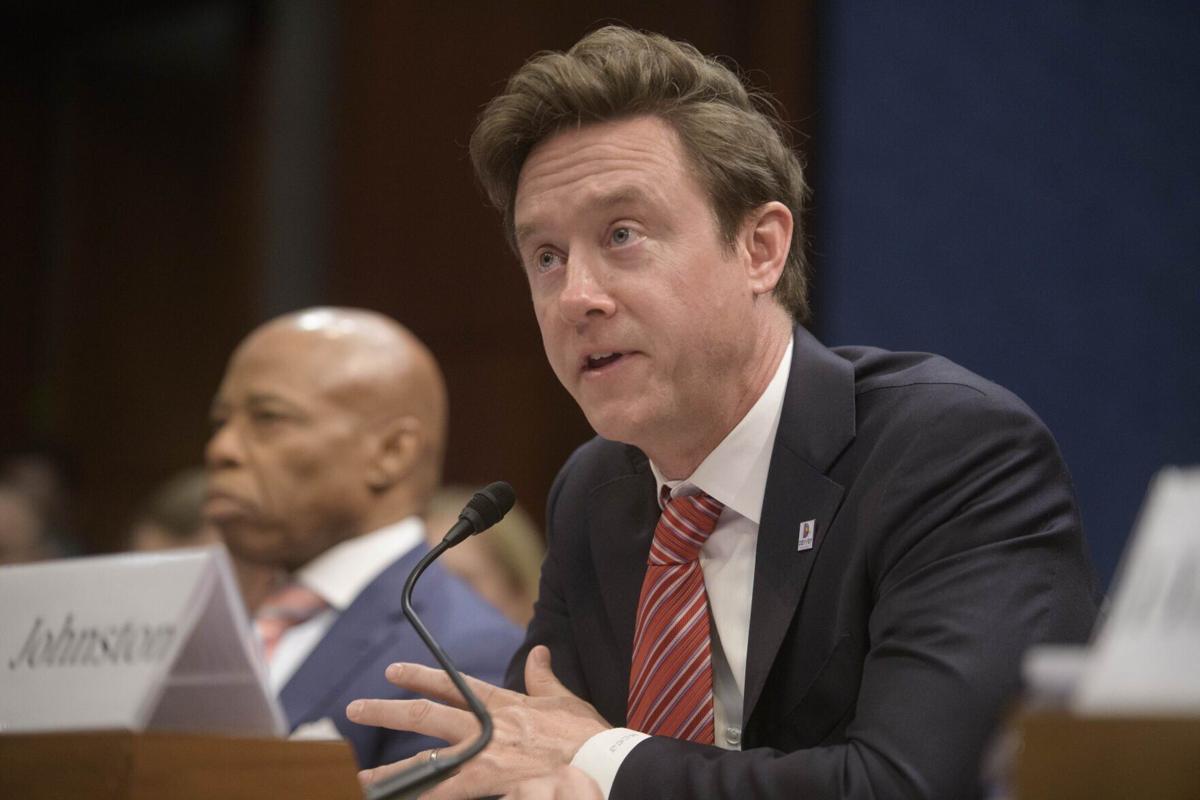
Denver Mayor Mike Johnston responds to questions during a House Committee on Oversight and Government Reform hearing with "sanctuary city" mayors on Capitol Hill, Wednesday, March 5, 2025, in Washington. (AP Photo/Rod Lamkey, Jr.)
Rod Lamkey

‘Fragmented and decentralized’
No one knows with certainty how many TdA gang members are in the United States, illustrating the difficulty law enforcement has had in tracking the gang’s operations.
But last year — according to an internal Oct. 5, 2023 Aurora police bulletin — the FBI reported roughly 400 TdA members in New York alone.
Rísquez estimates the gang has about 5,000 members.
It is not precisely known when the gang first surfaced, but Rísquez’s reporting — based on interviews with former girlfriends of TdA members, doctors, prisoners, politicians and Latin American law enforcement officials — suggested gang members calling themselves “Tren de Aragua” were extorting immigrants as early as 2014, although some reports put the origin date two years earlier.
Through these interviews and conversations with academics familiar with TdA, Rísquez has pieced together the gang’s complex history across the region.
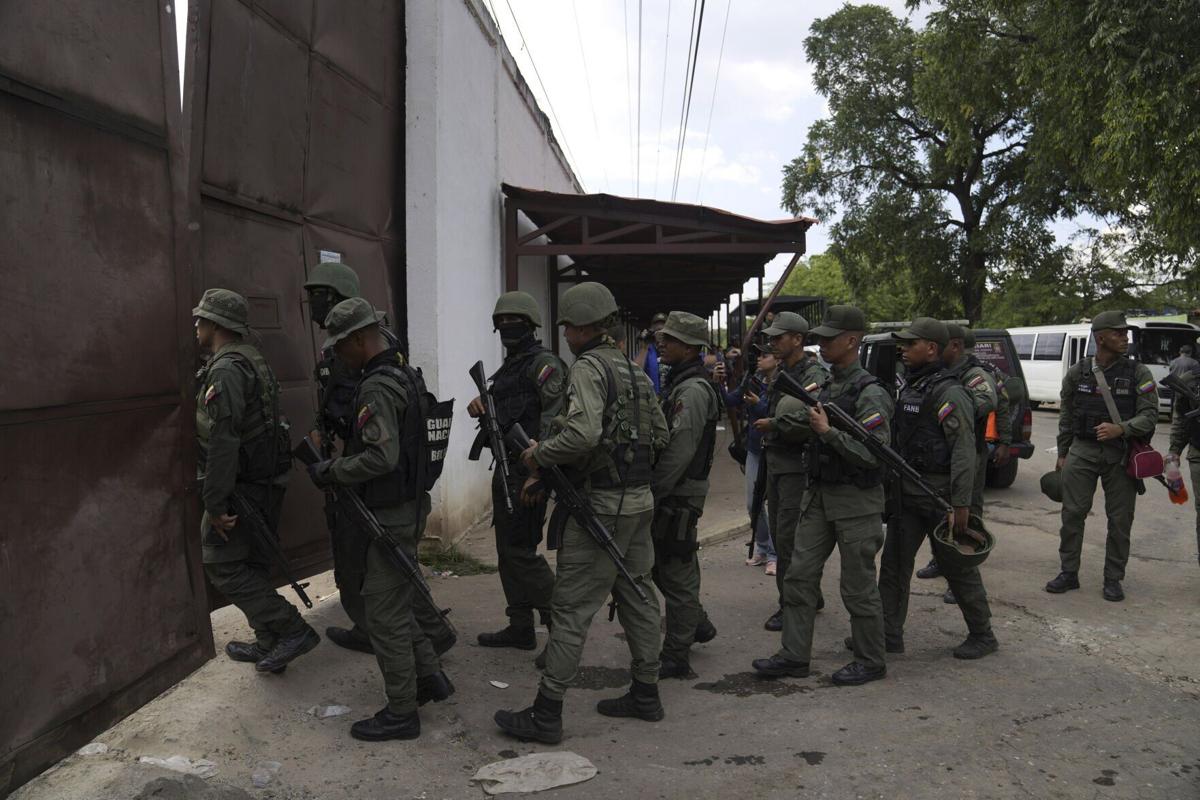
FILE - Soldiers raid the Tocorón Penitentiary Center, where the Tren de Aragua gang originated, in Tocorón, Venezuela, Sept. 20, 2023. (AP Photo/Ariana Cubillos, File)
Ariana Cubillos

Tren de Aragua started as a gang in the Tocorón Prison in the state of Aragua in north-central Venezuela, along the Caribbean coast. In the years since, the gang has morphed into a transnational criminal organization with tentacles in Denver.
Translated as “Train of Aragua,” the gang’s name appears to invoke other Venezuelan megabandas, including Tren del Llano, Tren de Oreinte and Tren del Norte.
Commonly used in Latin American criminology and among journalists, megabanda is a Spanish word that refers to a large, structured criminal organization.
Once they began branching out of Venezuela, TdA started establishing cells, or franchises, in the countries where Venezuelans had settled as refugees, according to Rísquez. But the gang chose to run its operations primarily in border regions — precisely where Venezuelans had to pass.
In these territories, TdA members began extorting migrants, charging them for safe passage, protection, even the right to continue on their journey north.
To better understand how the gang grew powerful enough to control migration routes, it helps to look at where it all began — inside Venezuela’s prison system.
It’s important to note that the Venezuelan prison system is fundamentally different from the United States model. Lacking the capacity to govern its prisons, the Venezuelan government ceded authority to gang leaders in exchange for maintaining order.

As prisoners stand looking out from a cell, Homeland Security Secretary Kristi Noem speaks during a tour of the Terrorist Confinement Center in Tecoluca, El Salvador, Wednesday, March 26, 2025. (AP Photo/Alex Brandon)
Alex Brandon

Nowhere was that dynamic more pronounced than at the Tocorón Prison, where inmates lived not under the watchful eyes of guards — but rather under their own rule.
The prison boasted a nightclub, swimming pool, children’s playground, casino and a kind of “banking” system. The Tocorón “pran” — slang for gang boss or leader — at one time demanded of prisoners the stiffest causa, a quasi-tax paid weekly to access its amenities, which in 2022 was $15 a week.
In September 2023, an army of Venezuelan police and military stormed the Tocorón Prison in a power move to take control of TdA’s operations. The gang’s leadership evaded capture.
“The hierarchy of the gang is a little bit shaken up and more fragmented and decentralized,” said Mike LaSusa, deputy director of content for InSight Crime.
Based in Washington D.C., InSight Crime is a think tank and media organization that monitors organized crime in the Americas.
‘It rained money’
TdA’s footprint has tended to follow immigration routes, informal labor markets and areas with weak law enforcement. Aided by the Venezuelan refugee crisis, the gang has expanded into eight other countries, including Brazil, Columbia, Panama and the United States.
Roughly 8 million Venezuelans have fled the country under President Nicolás Maduro, who has jailed or banned political leaders and used food distribution as a social control tool. Opponents of Madura’s government have been viciously punished.
About 500,000 Venezuelan immigrants are estimated to be living in the United States.

Venezuela's President Nicolás Maduro addresses government supporters during a rally in Caracas, Venezuela, Thursday, Feb. 27, 2025, the day after U.S. President Donald Trump announced the termination of a permit allowing Chevron Corp. to pump and export Venezuelan oil. (AP Photo/Cristian Hernandez)
Luige Del Puerto luige.delpuerto@gazette.com

Over the past two and a half years, Denver has seen more than 40,000 immigrants arrive from South and Central America, particularly Venezuela.
“Venezuela has suffered the largest economic collapse outside of wartime of any country in the world,” said Francisco Rodriguez, a Venezuelan economist and University of Denver professor.
The country has lost more than 70% of its gross domestic product, which is the equivalent of three great depressions, Rodriguez said.
Venezuela’s once booming oil economy once made it the wealthiest country in Latin America and a destination for immigrants drawn to its thriving economy and relative political stability.
But the systematic dismantling of democratic institutions, economic mismanagement, and authoritarian consolidation of power under President Hugo Chávez — continued and deepened under Maduro — hollowed out Venezuela’s institutions in the name of redistributing oil wealth. So, when oil prices collapsed, the only thing left to manage the crisis was the same political machinery that had helped create it.
“It rained money,” said William Neuman, former New York Times bureau chief in Caracas and author of “Things are never so bad they can’t get worse: Inside the Collapse of Venezuela.”
“They spent it, wasted it and stole it. It stopped raining and then people went hungry.”
The collapse of global oil prices in 2014 sent Venezuela into an economic freefall. And the Trump administration’s maximum pressure campaign against Venezuela in the president’s first term worsened the collapse with tightening U.S. sanctions.
“The sanctions didn’t cause the crisis, but they made it worse,” Neuman said.
At first, Venezuelans immigrated to countries in the region, such as Columbia, Peru, Brazil, Chili and Ecuador. But the global economic contraction following the COVID-19 pandemic meant many Venezuelan immigrants lost their jobs in these countries and sought refuge further north.
Another key thing happened that drew Venezuelans to the United States.
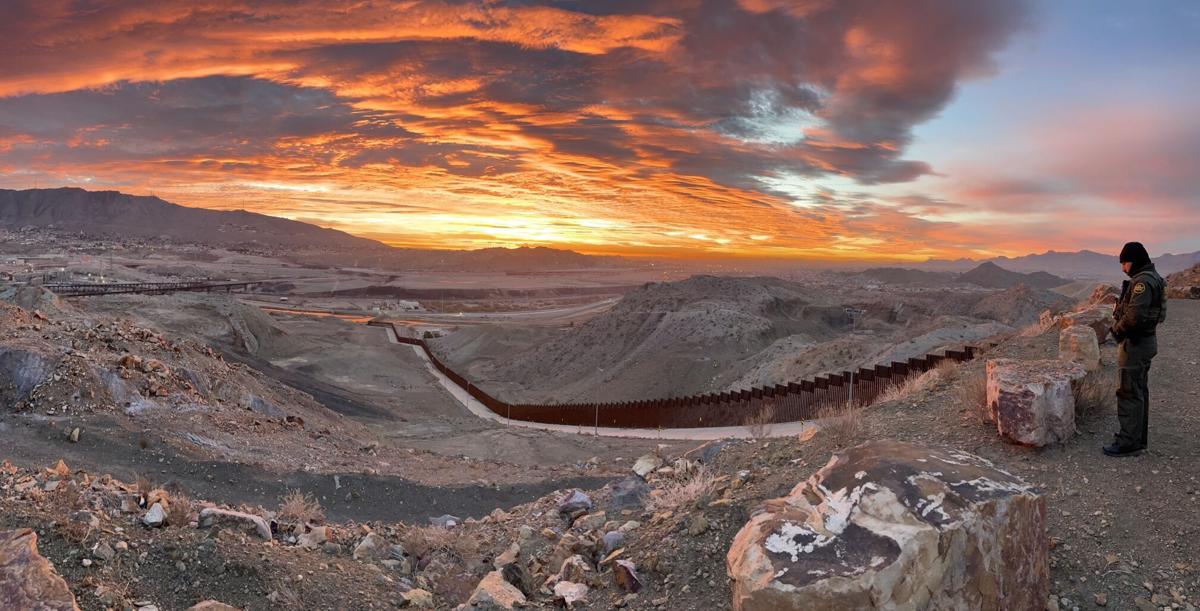
FILE PHOTO: Border Patrol Agent Erik Hernandez looks out over the horizon along the southern border near El Paso, Texas on Feb. 2, 2024.
Nicole C. Brambila nico.brambila@denvergazette.com

With Venezuela’s economy imploding post-2014, millions fled on foot, as traditional routes by plane or boat became too expensive or restricted.
Long considered impassable, the Darién Gap between Colombia and Panama served as a natural barrier to migration. But word of mouth and social media promoted the trek by providing step-by-step instructions, travel tips and paid smugglers for hire.
A roadless stretch of jungle, the Darién Gap is one of the most dangerous immigration routes in the world, marked by steep terrain, dense rainforest and criminal groups that prey on travelers.
“Venezuelans know that if they get into the United States, that it’s very hard for the U.S. to deport them back to Venezuela,” Rodriguez said.
Editor’s Note: This report draws on previous investigations by The Denver Gazette, national media coverage and the work of Venezuelan investigative journalist Ronna Rísquez, author of “El Tren de Aragua: La banda que revolucionó el crimen organizado en América Latina.”

Lake Mead hits historic low water level as Colorado River struggles | OUT WEST ROUNDUP
The Associated Press
the-associated-press@coloradopolitics.com
Updated 4 days ago
NEVADA Lake Mead hits new low BOULDER CITY — Lake Mead, the largest reservoir in the United States, has plummeted to its lowest water level since it was filled some 90 years ago, another sign of the crisis plaguing the...

Democrats and their big roll of the dice | SONDERMANN
Eric Sondermann
eric-sondermann@coloradopolitics.com
Updated 4 days ago
For Republicans on the ballot this fall, the hand they are forced to play is rather set. Even if so many of them had not so meekly submitted to President Donald Trump’s agenda, they would still be largely tethered to...

Reagan’s PATCO Showdown ignited Colorado labor backlash | A LOOK BACK
Rachael Wright, Special to Colorado Politics
rachael.wright@coloradopolitics.com
Updated 4 days ago
Forty-five years ago this week: “It’s the old Nixon reaction as far as I’m concerned. He thinks he’s the Great God Almighty and can do no wrong … in the eyes of the public,” said Zelda Bransted, spokesman of the...
Federal judge green-lights excessive force, retaliation claims for trial against Fort Collins officers
Michael Karlik
michael.karlik@coloradopolitics.com
Updated 1 day ago
A federal judge green-lit a jury trial last week against multiple Fort Collins police officers on claims that they used excessive force on one man who was standing unarmed in his underwear, and retaliated against another man for exercising his...

Jeff Crank, Jessica Killin set to face off in 2 debates in Colorado’s 5th Congressional District
Ernest Luning
ernest.luning@coloradopolitics.com
Updated 2 days ago
Republican U.S. Rep. Jeff Crank and Jessica Killin, his Democratic challenger, have agreed to debate twice in the weeks leading up to the general election in Colorado’s 5th Congressional District, their campaigns have said. Crank is seeking a second term...
CSI study reviews impacts of Colorado’s mandatory sex‑trafficking sentencing measure
Marissa Ventrelli
marissa.ventrelli@coloradopolitics.com
Updated 14 hours ago
A new report by the think-tank Common Sense Institute examines what could happen if Colorado voters approve Initiative No. 108, which establishes mandatory life sentences for offenders convicted of sexual trafficking of a minor. The measure is backed by Protect...

Luigi Mangione pleads guilty in UnitedHealthcare CEO Brian Thompson murder case
Kaelan Deese
kaelan-deese@coloradopolitics.com
Updated 3 days ago
Luigi Mangione pleaded guilty Friday to two federal stalking charges connected to the 2024 killing of UnitedHealthcare CEO Brian Thompson, a major development that could complicate New York prosecutors’ separate murder case against him. Mangione, 28, not only pleaded guilty in Manhattan federal court...

French court blocks Macron’s social media ban for children under 15
Emily Hallas
emily-hallas@coloradopolitics.com
Updated 3 days ago
France’s top court struck down on Friday a law championed by President Emmanuel Macron that would have made it illegal for children to have social media accounts. The law, approved by lawmakers in July, was set to take effect at...
10th Circuit revives wage violation lawsuit against Papa John’s operator
Michael Karlik
michael.karlik@coloradopolitics.com
Updated 2 days ago
The Denver-based federal appeals court on Tuesday reinstated a former Papa John’s delivery driver’s lawsuit alleging violations of federal and state wage law. Steve Mighell worked for one month at a Denver Papa John’s location in summer 2023. He alleged...
Golden fire chief fired days after city manager as city investigates ‘racist incident’
Matt Kyle
matt.kyle@denvergazette.com
Updated 2 days ago
The City of Golden has terminated its fire chief days after terminating the city manager due to a “racist incident” earlier this year at a city fire station. City officials said that in March, a “Snoop on a Stoop” doll,...