

What cortisol and crap tell us about cattle and wolf reintroduction | GABEL
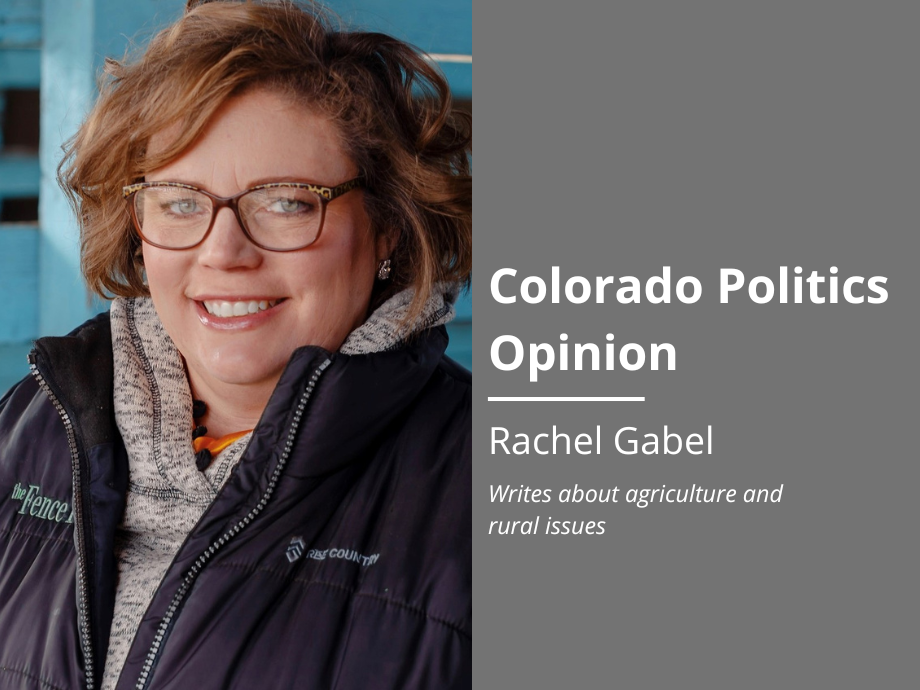
Rachel Gabel

Carnivores, cortisol and crap seem a fitting starting point when seeking to quantify the financial losses to livestock producers by wolves. A Wyoming-based outdoorsman recently compared placing wolves in Colorado to placing a trout in a bathtub, an analogy I just can’t get out of my mind. The same analogy could be used in California, the site of a study that seeks to quantify the indirect losses to livestock producers due to wolf presence. It also illustrates the utter inappropriateness of California as a landscape fitting for wolves.
Dr. Tina Saitone, a University of California Davis professor and cooperative extension specialist in livestock and rangeland economics centered her research on three California wolfpacks to put a number on both direct and indirect losses after the California Department of Fish and Wildlife launched a pilot program to compensate ranchers for wolf-related losses. She said it became quickly apparent there is little research on the costs of indirect losses to livestock producers, especially in states like California and Colorado, where wolves haven’t been present for centuries.
In California, and Colorado for that matter, proponents claim losses due to wolves aren’t a widespread problem. This study begins to build evidence to illustrate the multiple aspects of the issue.
Stay up to speed: Sign up for daily opinion in your inbox Monday-Friday
Saitone said the study took a village. She pitched the study to her husband, Dr. Ken Tate, a UC Davis professor and Cooperative Extension specialist in rangeland sciences. Ben Sacks, director of the Mammalian Ecology and Conservation Unit in the UC Davis Veterinary Genetics Laboratory, joined to analyze wolf scat. Brenda McCowan, a professor of population health and reproduction at UC Davis Veterinary Medicine, examined cortisol levels.
The team found:
- One wolf can cause between $69,000 and $162,000 in direct and indirect losses from lower pregnancy rates in cows and decreased weight gain in calves;
- Total indirect losses are estimated to range from $1.4 million to $3.4 million depending on moderate or severe impacts from wolves across the three packs;
- 72% of wolf scat samples tested during the 2022 and 2023 summer seasons contained cattle DNA; and
- Hair cortisol levels were elevated in cattle that ranged in areas with wolves, indicating an increase in stress.
Saitone said she took a preponderance of evidence approach. Scat samples were gathered during the summers of 2022 and 2023. The samples were taken to the UC Davis veterinary genetics laboratory where Dr. Ben Sacks first determined the scat samples belonged to wolves as a host species. Sacks also genetically assigned the host an identity within the sample population. At that point, the prey was delineated to determine the wolf’s diet. Across the samples, Sacks determined 72% of the wolf scat samples contained cattle DNA.
This is unusual compared to places where wolves have been present for much longer periods of time. California lacks any real native ungulate population so it is cattle that are primarily contributing to the diets of wolves. This evidence will be significant as California cultivates a compensation program for livestock producers.
Before wolf proponents can claim this study doesn’t apply to Colorado given the large ungulate population, the other two portions of the study add to the preponderance puzzle.
California wildlife officials won’t share GPS data on wolves, even with UC Davis researchers, so a series of motion-activated game cameras were installed. Those cameras caught footage of wolves moving within cattle herds, stalking cattle and “dogging” them throughout the night.
The third portion of the study is the most interesting and relates to the stalking events captured on film. Cattle tail switches, which continue to grow, compared to cattle body hair which sheds seasonally are the bottom portion of a cow’s tail. By clipping a portion of the switch prior to turning the cows out to graze for the summer and then collecting that regrowth in the fall, the researchers had a picture of that cow’s stress throughout the summer based on cortisol levels.
The 2022 data is available, and that preliminary data suggests cattle grazing in the presence of wolves have 37% higher cortisol levels than cattle that grazed without wolves. There are innumerable studies pointing to the role of stress in reductions in conception rates and lower body condition scores. This study gives a picture of that stress in a measurable way. Paired with the other data from the study, it helps producers better inform discussion about the real value of indirect losses. And that, dear readers, is no crap.
Rachel Gabel writes about agriculture and rural issues. She is assistant editor of The Fence Post Magazine, the region’s preeminent agriculture publication. Gabel is a daughter of the state’s oil and gas industry and a member of one of the state’s 12,000 cattle-raising families, and she has authored children’s books used in hundreds of classrooms to teach students about agriculture.


Don’t trade away our TABOR refunds | PODIUM
Barb Kirkmeyer
barb-kirkmeyer@gazette.com
Updated 10 hours ago
Here we go again — tax-and-spend politicians going in the wrong direction. Colorado families are being asked to believe a familiar lie: the only way to fund education is to let politicians keep more of your money — forever. Proposition...

Trump’s ‘BBB’ casts aside rural Colorado healthcare | Hal Bidlack
Hal Bidlack
hal-bidlack@coloradopolitics.com
Updated 1 day ago
Well, as I often do, let me start by yet again telling you what I am not going to be writing about (Editor: sigh…). I’m not going to talk about President Donald Trump’s most recent (of many, many) attacks on...

A course correction Canada would concur with | Miller Hudson
Miller Hudson
miller-hudson@coloradopolitics.com
Updated 4 days ago
I’ve always harbored a soft spot for Canada. My father was stationed there twice, once in the 1960s as the Atomic Energy Commission’s American liaison with the Canadian nuclear reactor program in Chalk River, Ontario and again in the 1970s...

Private property rights challenge rural Colorado communities | Rachel Gabel
Rachel Gabel
rachel-gabel@coloradopolitics.com
Updated 4 days ago
If there were ever a topic I believe deeply in, it’s private property rights. If there were ever a topic that leaves me in a moral conundrum more often than not, it’s private property rights. The northern portion of Weld...

Gaylord — you never check in, but still pay | Jon Caldara
Jon Caldara
jon-caldara@coloradopolitics.com
Updated 6 days ago
I go to a lot of conferences, often in beautiful cities I never actually see. Friends hear where I’ve been and ask depressing questions like, “Did you visit the famous museum?” No. I saw Ballroom C, the lobby bar and...

Reflections on Weiser-Lopez, Crank-Killian debates | Tom Cronin
Tom Cronin
tom-cronin@coloradopolitics.com
Updated 4 days ago
Thursday night, The Gazette and KOAA TV hosted two important candidate debates. The first featured incumbent Republican U.S. Rep. Jeff Crank, who is just completing his first term representing El Paso County in Congress, and Jessica Killian, a Democrat who has...

What courageous citizenship really looks like | Vince Bzdek
Vince Bzdek
vince.bzdek@gazette.com
Updated 4 days ago
By Vince Bzdek What exactly is courage? Ernest Hemingway famously called it grace under pressure. Mark Twain wrote that “courage is resistance to fear, mastery of fear — not absence of fear.” C.S. Lewis refined that even more: “Courage is...

The coming election and mischief in the making | SONDERMANN
Eric Sondermann
eric-sondermann@coloradopolitics.com
Updated 7 days ago
America’s tribalism is such these days that we struggle to even agree on the basic rules. Elections have always been hotly contested. As the saying goes, “Politics ain’t beanbag.” The process has long involved elements of nastiness and underhanded conduct....

Colorado’s hunting and fishing traditions rest on science, conservation and a proven heritage | IN RESPONSE
Colorado Politics
colorado-politics@coloradopolitics.com
Updated 5 days ago
By John Howard Eric Washburn’s recent column warns Coloradans the right to hunt and fish amendment is a Trojan horse designed to resurrect “cruel” practices voters have already banned and to elevate killing above every other form of wildlife management....

Why does Colorado limit who can safeguard taxpayer dollars? | GUEST COLUMN
Colorado Politics
colorado-politics@coloradopolitics.com
Updated 5 days ago
By Devin Camacho Recently, PNC Bank announced its purchase of FirstBank Colorado. Not only did Colorado lose a local banking option, but nearly 1,000 people lost jobs, with more job losses coming as the big bank now closes branches too....