

More pain than gain in upending Colorado’s water-access laws | OPINION

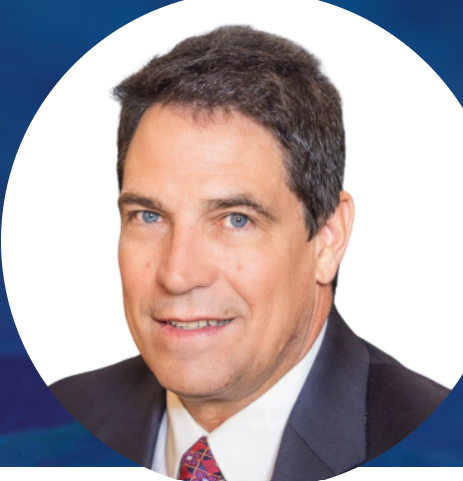
By Greg Walcher and Mike King
Colorado’s long-standing balance between public recreation and private property along rivers is now under renewed pressure. But changing stream access law would impose significant fiscal and legal costs for relatively limited new recreational benefit. The state of Colorado itself may not be able to afford a redrafting of river access laws, and the state’s property owners certainly will not be able to afford it.
Colorado’s rivers and streams are one of the state’s most prized assets, from their scenic beauty to their recreative opportunities for fishing, floating, and rafting. For well over a century, Colorado’s river access laws have struck a balance between private landowners and the public right to access navigable waters.
Recently, however, there has been a chorus of highly publicized voices asking to redraft water access laws in such a way that expand public rights to float or wade waterways crossing private land without landowner permission. Under the discussed changes, all Coloradans would have a right to float or wade on any waterway they choose — regardless of whether it happens to be in someone else’s literal backyard.
Changing these laws would not only be a legal headache. It would be an enormously expensive proposition for landowners, county governments, and the state of Colorado, and one with limited demonstrable value.
Firstly, the loud voices calling for change do not reflect the small impact of a water access law redraft. The number of floatable river miles on private land is relatively small in Colorado.
Over half the state’s river and stream miles happen to be located on private land. However, only 1,375 to 1,700 of these privately-owned river miles are realistically floatable, according to a recent analysis of Colorado waterfront property by the Common Sense Institute. The legal redraft would be inviting massive changes to address less than 3% of private statewide river miles.
The financial headache would be massive for such a small slice of river access. Water access law redraft would impact both property owners and governments.
Property owners themselves will take massive valuation hits if they lose the exclusivity they bought those lands to obtain in the first place. According the CSI study, between 50% and 80% of a river property’s value comes from exclusive access. On Tarryall Creek, a limited private fishing easement reduced river value by 65%. On that same Tarryall property, moving from restricted private access to unrestricted public access reduced river value nearly 75%.
If Colorado properties’ rivers and streams are suddenly made universally public property, thousands of property owners will lose substantially on the devaluation. Aside from the impact on existing Coloradans, this could have far-reaching consequences for future investment in the state. Colorado’s current status quo river access laws, which operate on a case-by-case basis, did not prevent the state from its reputation as an outdoor haven or prevent hundreds of thousands of new residents flocking here during the last 15 years.
New ones might, however, if future river property valuations halve.
This property impact will roll into government finances at both local and state levels, as well.
If those property valuations sink, assessed values of river and stream properties will sink, followed by property tax takings for mountain counties. In an era of statewide budget cutbacks and inflationary pressure, Colorado counties would feel a hit to their property tax base.
The state itself would not be immune to the financial consequences. Colorado’s budget would be putting itself on the hook for takings claims that may total in the tens of billions of dollars — maybe more.
It is not an opportune moment for the state to risk such potential expense. The state itself is staring down the latest in a series of budget holes — this time, a budget hole of $1.5 billion. Whatever takings claims could net, they would not help the larger fiscal situation.
Advocates for expanded access argue that waterways should be broadly available for recreation and that access restrictions can limit outdoor participation. Those concerns are understandable. Colorado’s outdoor economy is a major driver of tourism and quality of life. However, policy changes should weigh those benefits against the substantial legal, fiscal, and property market consequences associated with altering long-settled expectations regarding private land.
Greg Walcher is president of the Natural Resources Group and senior advisor for Dawson and Associates. He is a former executive director of the Colorado Department of Natural Resources and author of, “Smoking Them Out: The Theft of the Environment and How to Take it Back.” Mike King has more than 30 years of experience in natural resource law, policy and regulation in Colorado. After serving for more than six years as an assistant attorney general under Colorado Attorneys General Gale Norton and Ken Salazar, he served as the executive director of the Colorado Department of Natural Resources under Govs. Bill Ritter Jr. and John Hickenlooper.

‘Be prepared to march in the streets’ | Miller Hudson
Miller Hudson
miller-hudson@coloradopolitics.com
Updated 2 days ago
It was early in 1974 when I first met Tim Wirth as he announced his candidacy for Congress, challenging Republican incumbent Don Brotzman. Although I had only resided in Colorado two years, I was drafted to serve as a Democratic...

Colorado districts prepare for school year amid mental health cuts. But will less cellphone distractions help?
Marissa Ventrelli
marissa.ventrelli@coloradopolitics.com
Updated 3 days ago
The signs of a new school year are everywhere — buses in the shop, teachers unpacking boxes, families ticking through supply lists — but behind the familiar rituals, Colorado districts are preparing for a year defined less by routine than...
Surprise candidate Shimon Blau cleared to face off against Melat Kiros in November
Ernest Luning
ernest.luning@coloradopolitics.com
Updated 3 days ago
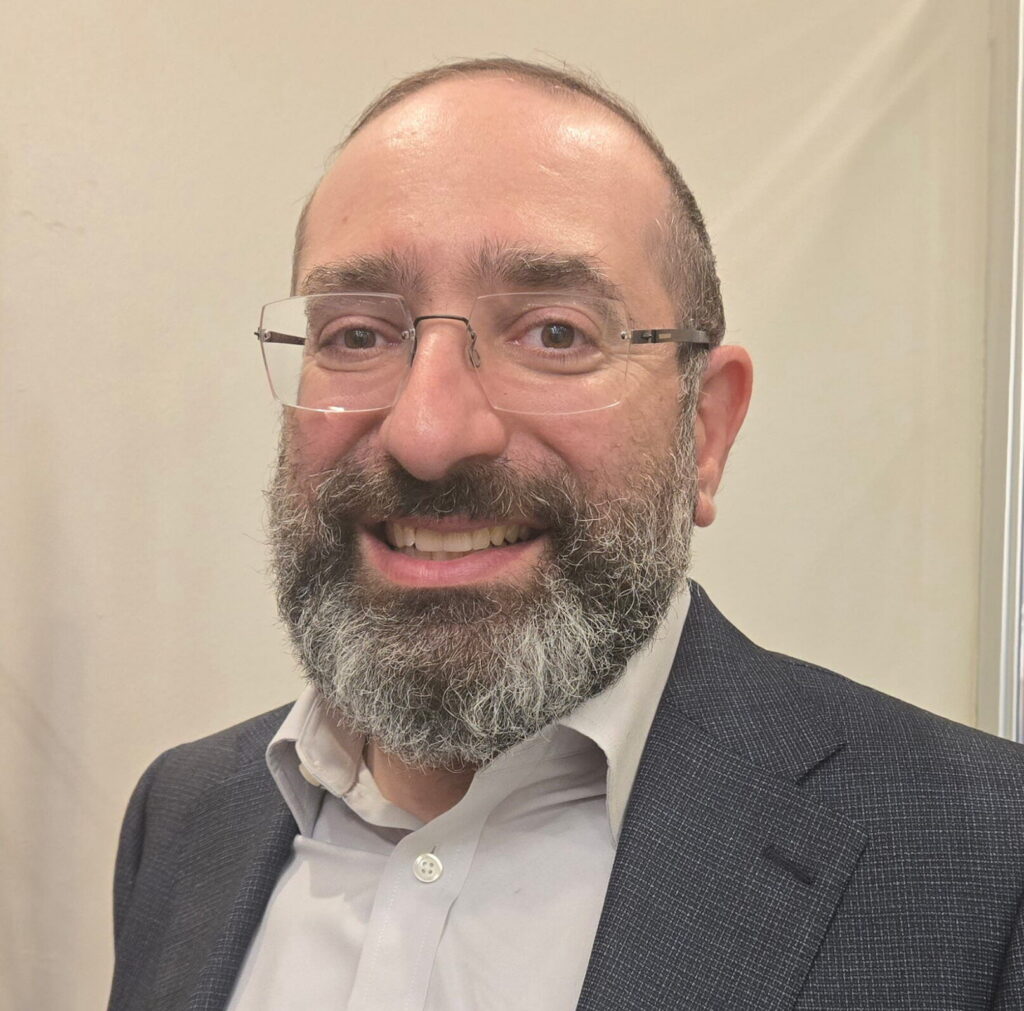
Unaffiliated congressional candidate Shimon Blau, a Denver doctor, has qualified by petition for the general election in Colorado’s 1st District, where Democrat Melat Kiros defeated 15-term U.S. Rep. Diana DeGette in last month’s primary, the Colorado Secretary of State’s Office...

UNC opens College of Osteopathic Medicine
Marissa Ventrelli
marissa.ventrelli@coloradopolitics.com
Updated 3 days ago
The University of Northern Colorado held a grand opening for its new College of Osteopathic Medicine on Friday, with Gov. Jared Polis in attendance to celebrate the culmination of a two-year, $127.5 million project. The project was funded through legislation...

Victor Marx, GOP candidate for governor, faces 100-plus campaign finance complaints
Marianne Goodland
marianne.goodland@coloradopolitics.com
Updated 3 days ago
Victor Marx’s gubernatorial campaign has been hit with more than 140 campaign finance complaints, although most have been consolidated by the state’s election office because they follow similar alleged violations. Marx faces Attorney General Phil Weiser, who won the Democratic...
Primary voters rejected big money in politics | Paula Noonan
Paula Noonan
paula-noonan@coloradopolitics.com
Updated 2 days ago
While we’re in an election campaign lull between now and Labor Day, we have time to consider the impact of $102 million in campaign contributions in the primary. In the general election, more money will fill candidate campaign coffers, and...

DOJ sues Colorado to overturn in‑state tuition for students living in the country illegally
Marianne Goodland
marianne.goodland@coloradopolitics.com
Updated 3 days ago
The U.S. Department of Justice has sued Colorado to dismantle a decade‑old law that grants in‑state tuition to students living illegally in the United States, setting up a high‑stakes clash over immigration policy. In 2013, after more than six tries...
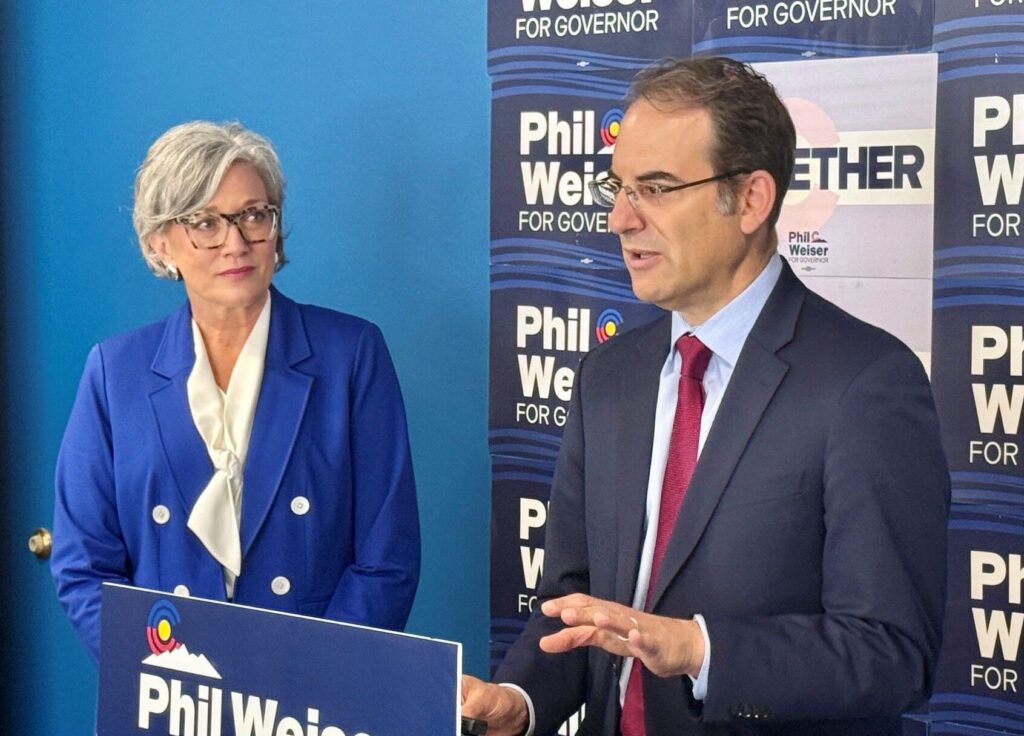
Jefferson County to fill commissioner vacancy after Dahlkemper tapped for lieutenant governor
Matt Kyle
matt.kyle@denvergazette.com
Updated 4 days ago
Democratic gubernatorial nominee Phil Weiser on Wednesday announced that Jefferson County Commissioner Lesley Dahlkemper would be his lieutenant governor, meaning she would be leaving her commissioner seat open should he win the race in November. However, Dahlkemper’s term was already...

New wolf pack confirmed in Eagle County, marking 4th Colorado pack with pups this year
Marissa Ventrelli
marissa.ventrelli@coloradopolitics.com
Updated 4 days ago
A new gray wolf pack has formed in Eagle County, Colorado Parks and Wildlife announced on Wednesday. Known as the Piney Ridge Pack, it is the fourth pack of gray wolves in the state to have produced pups this year....
Colorado’s primary proved in this political climate money doesn’t buy electoral happiness | Paula Noonan
Paula Noonan
paula-noonan@coloradopolitics.com
Updated 4 days ago
To catch you up, campaign committees from this 2026 election cycle already collected and shoveled out a lot of cash: $102.64 million. That’s contributions in all forms — dollars, in kind, loans, etc. — from December 2024 to now. Total...
PREV
PREVIOUS

Guardianship is not a homelessness policy | OPINION
By Amelia McKeon The federal government’s proposal to expand guardianship for homeless veterans is being framed as compassionate. It is anything but. It is a dangerous shift toward using one of the most restrictive legal tools we have as a substitute for real solutions — and it risks turning guardianship into a mechanism for forced […]

The Centennial State's nuclear energy opportunity | OPINION
Colorado was given a clear opportunity earlier this year. On Jan. 28, the U.S. Department of Energy issued a Request for Information (RFI) seeking potential hosts for Nuclear Energy Innovation Campuses — an early-stage process designed to identify states serious about shaping the next generation of energy development. What followed was not hesitation from local […]