

Ready to build next-gen clean-energy infrastructure — data centers included | OPINION


By Nate Bernstein and Jason Wardrip
Colorado has long taken pride in doing things a little differently. We are a state of innovators, entrepreneurs and adventurers, and often lead the nation in new policies and new ideas. For generations, our state has shown economic growth and environmental stewardship can go hand in hand. From protecting the landscapes that define our way of life to building thriving industries that support working families, Coloradans have consistently insisted on finding solutions that strengthen our economy while safeguarding the natural resources and outdoor spaces we all love and depend on.
That commitment to balance is exactly what should guide how we approach the next wave of economic development in our state and the nation — data centers. Our economy is increasingly running on something most of us rarely see. Every time we stream a movie, schedule a telehealth appointment, or work remotely, we rely on a vast digital infrastructure operating behind the scenes. At the center of that infrastructure is data centers.
There is no question data centers are becoming essential to the modern economy. In the United States alone, demand for data center capacity is expected to more than triple by 2030. States across the country are competing aggressively to attract the hundreds of millions in investment and the thousands of jobs and economic development that come with it.
The question for Colorado is not whether data centers will grow. The question is whether Colorado will step forward and direct this growth responsibly and sustainably or watch as other states shape the policies governing this industry that affects us all — and as they reap the benefits. We believe we can create a path forward that allows Colorado to lead and reflects what Coloradans value: a commitment to economic opportunity, strong labor standards and environmental stewardship all at the same time.
A single large data center (100 megawatt) can create thousands of construction jobs during a multi-year build cycle, plus ongoing upgrade work over time. These projects also create significant ripple effects across the economy. Building and operating data centers requires new transmission lines, substations, renewable energy generation and grid modernization, creating thousands of additional construction, operations and supply-chain jobs tied to the broader energy system.
Any bill moving through the legislature must require data centers to be built with strong labor standards. This includes ensuring prevailing wages, creating long-term pipelines for apprenticeship training, and crafting labor protections during construction and ongoing operations. These provisions help ensure the economic benefits of this growing industry support Colorado workers and strengthen pathways into the skilled trades.
The economic benefits of data center development also extend well beyond the facilities themselves. These projects often bring major investments in infrastructure such as roads, broadband networks and energy systems, helping strengthen entire regions. They also generate substantial tax revenue that supports schools, public safety and other essential local services.
At the same time, Colorado’s identity is deeply tied to protecting the natural landscapes and resources that make our state unique. That is why any effort to attract new industry must also uphold our commitment to environmental responsibility. Indeed, many of our union members — including us — enjoy the outdoors, fishing, hunting, hiking, skiing and recreating in this state we love.
We can also require data centers seeking state incentives to meet strict energy-efficiency standards, including certifications such as LEED, Energy Star, or other recognized programs. Colorado can and should require facilities to implement closed-loop cooling systems or technologies that dramatically reduce water use — an especially important safeguard.
Data centers can also play an important role in accelerating our clean-energy transition. They can support the development of new wind, solar and energy storage projects by providing the long-term energy purchases that help finance those investments.
Finally, we must ensure costs are not shifted onto everyday families. Data center development and electricity costs can and should be borne by the data center. Other states have done this and Colorado can as well.
These protections are not obstacles to investment — they are exactly what allow Colorado to lead. By setting high standards, Colorado can demonstrate data centers can grow responsibly while supporting our broader environmental goals.
Coloradans know growth and sustainability do not have to be at odds. Placing extremely burdensome regulations on data centers means the jobs that feed our members, their families and the broader community, get built in neighboring states with few to no standards that will protect the things we care so much about in Colorado. Therefore, striking the right balance means we achieve a win-win-win: a win for working people, a win for our communities, and a win for the climate and outdoors we cherish and rely upon.
That the balance between innovation and stewardship, growth and responsibility is achievable. Our members — electricians, pipefitters, laborers, and trades — have powered Colorado for decades. We are ready to build the next generation of clean energy infrastructure, including data centers.
Nate Bernstein is executive director of Climate Jobs Colorado. Jason Wardrip is business manager for the Colorado Building and Construction Trades Council.


New Colorado laws going into effect cover AI disclosures, medical marijuana access and gambling limits
Marissa Ventrelli
marissa.ventrelli@coloradopolitics.com
Updated 34 minutes ago
More than 100 new Colorado laws take effect Aug. 12, bringing changes to chatbot safety rules, psychedelic research, campus wellness checks and sports betting restrictions. Here is a look at some of those laws set to take effect. The law:...

Colorado background checks surge 195% ahead of new semiautomatic gun law
Marissa Ventrelli
marissa.ventrelli@coloradopolitics.com
Updated 40 minutes ago
The Colorado Bureau of Investigation processed a record number of firearm background checks in July, which the agency attributes to a new state law that went into effect on Aug. 1. In total, CBI performed 59,452 background checks in July...

National House Democrats add Colorado seats held by Lauren Boebert, Jeff Hurd to target list
Ernest Luning
ernest.luning@coloradopolitics.com
Updated 47 minutes ago
The national House Democrats’ campaign arm on Wednesday added the Colorado congressional district held by Republican U.S. Reps. Jeff Hurd and Lauren Boebert to the list of targeted seats the party believes are vulnerable in this year’s midterms. The Democratic...
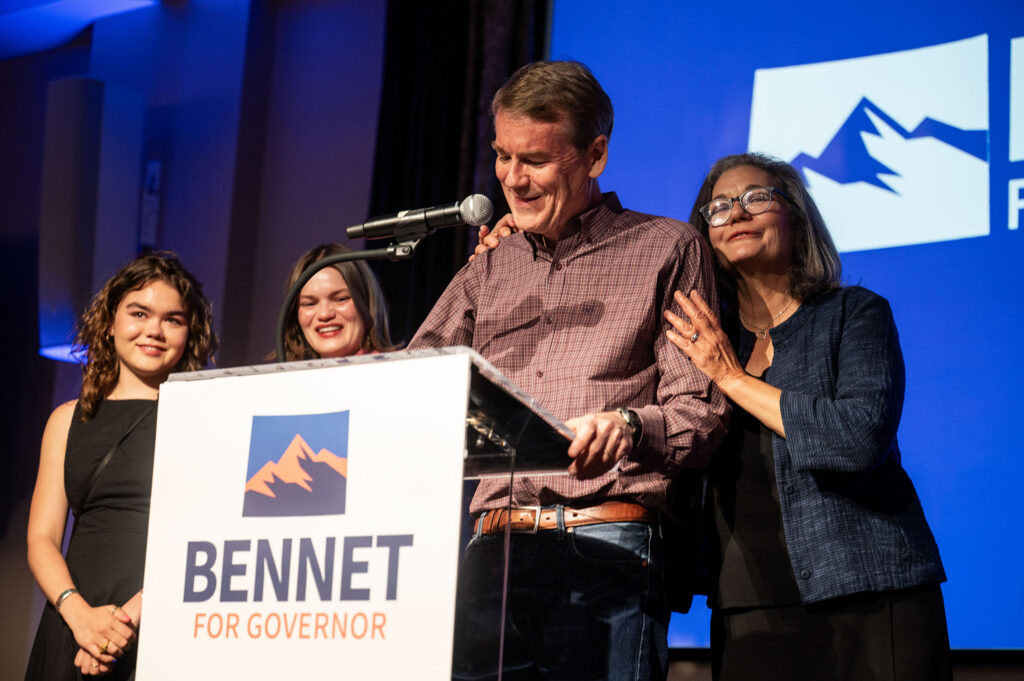
U.S. Sen. Michael Bennet settles campaign finance complaints, admits violating state law
Marianne Goodland
marianne.goodland@coloradopolitics.com
Updated 2 hours ago
U.S. Sen. Michael Bennet’s gubernatorial campaign has agreed to pay a $7,433 fine for using his U.S. Senate campaign account to pay for gubernatorial travel expenses. The July 31 settlement includes an admission by Bennet and his campaign that they...

Colorado to implement new laws on jail standards, safe haven rules, and agricultural labeling
Marissa Ventrelli
marissa.ventrelli@coloradopolitics.com
Updated 2 hours ago
In mid-August every year, a slew of recently passed laws in Colorado go into effect 90 days after the end of the legislative session. This year, all bills without a specified effective date or safety clause — a provision stating...

Colorado records 17th wolf death as CPW kills yearling tied to livestock losses
Marianne Goodland
marianne.goodland@coloradopolitics.com
Updated 3 hours ago
A yearling male wolf in Grand County has become the 17th wolf to die in Colorado in the past two years. Colorado Parks and Wildlife announced the wolf was killed by staff on Aug. 4, because it was believed responsible...

Keeping Colorado’s kids’ trust online | PODIUM
Colorado Politics
colorado-politics@coloradopolitics.com
Updated 16 hours ago
By Stuart Jenkins Almost every day, the kids and teens we serve across Colorado are introduced to new generative artificial intelligence and other emerging technology, including conversational AI systems designed to simulate human conversation. These tools are no longer a...

Marx’s ‘through line’ predates Trump, connects to Maes | FEEDBACK
Colorado Politics
colorado-politics@coloradopolitics.com
Updated 16 hours ago
Eric Sondermann is of course correct Victor Marx is an unserious, unelectable, embarrassing Republican nominee for governor of Colorado. But I respectfully submit that the “through line,” as Mr. Sondermann describes it, is not from Trump to Marx, despite their...

Federal judge rejects DOJ bid to force Colorado to hand over voter information
Marissa Ventrelli
marissa.ventrelli@coloradopolitics.com
Updated 22 hours ago
A U.S. district court judge has dismissed a lawsuit filed by the U.S. Department of Justice against Colorado Secretary of State Jena Griswold for refusing to provide the agency with personal voter information. Last December, the DOJ’s Civil Rights Division asked...

Cedric Pride’s blueprint for opportunity through the trades | The OpEdge Podcast
Tony Olivero
tony.olivero@gazette.com
Updated 1 day ago
Cedric Pride, CEO of the nonprofit Pride Initiative in Denver, joins The OpEdge with a blueprint for workforce development, skilled trades, and economic opportunity. Pride tells host and investigative columnist Jimmy Sengenberger why he believes the trades offer a path...
PREV
PREVIOUS

Proposal outlines $300M deal separating Pinnacol from Colorado state government
Colorado lawmakers are weighing a proposal that would allow Pinnacol Assurance to sever its remaining ties to the state in exchange for a $300 million payment, a long‑debated shift that supporters say could stabilize the insurer’s future and help plug a looming budget shortfall. A draft of the bill obtained by Colorado Politics spells out […]

Guardianship is not a homelessness policy | OPINION
By Amelia McKeon The federal government’s proposal to expand guardianship for homeless veterans is being framed as compassionate. It is anything but. It is a dangerous shift toward using one of the most restrictive legal tools we have as a substitute for real solutions — and it risks turning guardianship into a mechanism for forced […]