

Colorado House lawmakers approve bill to increase water plan funding using sports betting revenue
Colorado House lawmakers on Monday approved a bill that they hope would increase funding for the state’s water plan.
The funding is tied to Proposition DD, which voters passed in 2019. The measure directs a portion of sports betting tax revenue to the water plan.
House Bill 1311 removes certain tax incentives that have allowed sports betting organizations to exempt taxes on customer pay-outs, federal excise tax and “free bets.”
That means an effective tax rate of 5.89%, rather than 10%, which was approved in Proposition DD.
The change could mean an extra $5 million in 2025-26 for the state water plan, and as much as $13 million in 2026-27.
In a statement Monday, House Speaker Julie McCluskie, D-Dillon, a co-sponsor of HB 1311, said, “Colorado is losing significant tax revenue that could go to conserving and protecting our water.”
McCluskie said the bill “brings sports betting companies closer to the voter-approved effective tax rate of 10%, which means our state can capture more revenue to fund essential conservation and preservation projects. “
HB 1311 passed on a vote of 52 to 13.
More than 90% of tax revenue ($97 million) from sports betting goes to the Colorado water conservation program, which has helped pay for hundreds of projects in the last several years.
That’s been the most significant tranche of funds for the state water plan, which was set up in 2015 by then-Gov. John Hickenlooper.
Initial estimates called for $20 billion by 2050, with $3 billion expected from state funds and the rest from local and private funding. More recent estimates place the total cost at $40 billion.
According to Water Education Colorado, the water plan’s funding source came largely from appropriations by the General Assembly and severance taxes from oil and gas activities before 2019.
However, severance tax revenue has been unpredictable. Lawmakers are hoping to task the Department of Natural Resources with a study on severance taxes and water funding in the next year. The report, due next January, would develop recommendations for ways to continue funding water needs and energy impact grants in the face of decreasing severance tax revenue.
The study is in a bill currently working its way through the House.


Like Hart, sky-high political prospects of Swalwell given ‘The Monkey Business’ | Miller Hudson
Miller Hudson
miller-hudson@coloradopolitics.com
Updated 1 day ago
Eric Swalwell’s promising political career has likely reached an ignominious terminus. The man who aspired to the presidency in 2020 was plotting another route to that destination. Having entered California’s 2026 jungle primary for the governor’s office in Sacramento, he...

State clean-energy edicts trump local concerns, interests in Elbert County | Rachel Gabel
Rachel Gabel
rachel-gabel@coloradopolitics.com
Updated 1 day ago
A commission appointed by one man, the state’s governor, overruled the decision of a board of county commissioners elected by stakeholders across Elbert County. The Colorado Public Utilities Commission (PUC) overturned the county’s rejection of land use permits to Xcel...

Assisted-living facility in Colorado faced minimal fine after death of 73-year-old man
Jenny Deam
jenny-deam@coloradopolitics.com
Updated 2 days ago
On Jan. 6, just after 8:30 p.m., Robert Dutkevitch rolled his wheelchair onto the smoking patio outside The Argyle assisted-living facility in Denver. Minutes later, the 73-year-old suddenly slumped in his chair, his head lolling to the side. He then...

Such hubris never before seen in Colorado | Jon Caldara
Jon Caldara
jon-caldara@coloradopolitics.com
Updated 3 days ago
The great 19th-century historian Lord Acton said it best: “Power tends to corrupt, and absolute power corrupts absolutely.” Acton was building on the teachings of his mentor, Homer Simpson, who put it more plainly: “The more power you have, the...

Governor OK’s funding for summer food assistance for Wyoming kids | OUT WEST ROUNDUP
The Associated Press
the-associated-press@coloradopolitics.com
Updated 4 days ago
WYOMING Governor funds kids’ summer meals Gov. Mark Gordon secured funding for a summer food assistance program for kids and directed its implementation through an executive order. After the Wyoming legislature declined to fund the SUN Bucks program—designed to provide...

Trump says suspect was armed with multiple weapons at White House correspondents’ dinner
Alanna Durkin Richer
alanna.durkin.richer@associatedpress.com
Updated 1 day ago
WASHINGTON (AP) — President Donald Trump is addressing reporters at the White House after he and other top leaders of the United States were evacuated from an annual dinner of White House correspondents on Saturday night after a shooting incident...
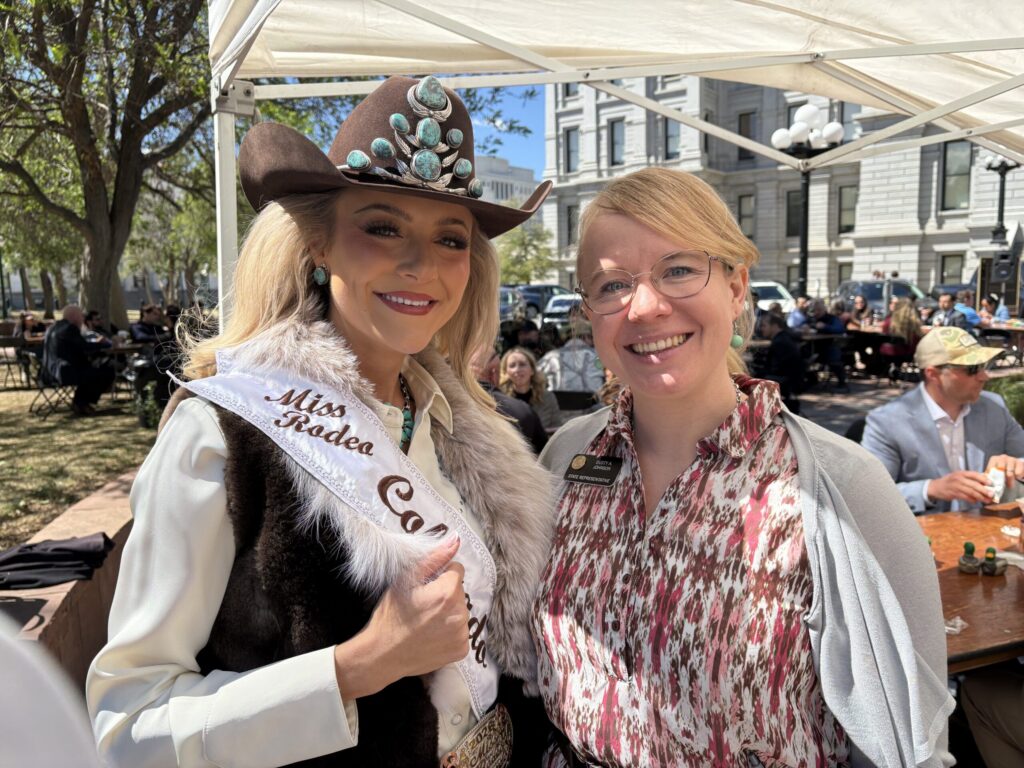
Mountain Lion/Pheasant Green Chile a hit! | Capitol M | Week of April 25, 2026
Marianne Goodland
marianne.goodland@coloradopolitics.com
Updated 1 day ago
The lighter side of the state Capitol, although if you were eating at the barbecue Thursday, you are probably not any “lighter.” With the arrival of spring comes outdoor barbecues at the state Capitol, and the most unusual is the...
Domestic violence rises in Colorado, state rep. seeks to fight back | A LOOK BACK
Rachael Wright, Special to Colorado Politics
rachael.wright@coloradopolitics.com
Updated 4 days ago
Forty-Five Years Ago This Week: A bill sponsored by Rep. Jeanne Faatz’, R-Denver, House Bill 81-1336, was the final compromise bill intended to counteract the rising tide of domestic violence in Colorado. According to FBI figures, 40,000 women in 1980...

Passenger train service from Denver to Fort Collins? | Cronin and Loevy
Tom Cronin Bob Loevy
tom-cronin-bob-loevy@coloradopolitics.com
Updated 1 day ago
A “Joint Service” plan is being developed that would bring passenger rail service from Denver north to Fort Collins by 2029. The passenger trains would be paid for with existing funds from the Denver Regional Transportation District (RTD) and other...

Colorado candidates square off up and down the ballot ahead of primary election
Ernest Luning
ernest.luning@coloradopolitics.com
Updated 2 days ago
With just over two months to go until ballots are counted in Colorado’s primary, candidates are squaring off in high-stakes contests for their party’s nominations in statewide and congressional races approaching the midterm election. For the first time in memory,...