

Newly elected Colorado GOP Chair Brita Horn says she’s working to mend divided party, ‘move forward’
When Brita Horn took over as chair of the Colorado Republican Party after winning a vote at a state GOP meeting late last month, the volunteer fire department chief and rancher’s wife from Routt County faced the prospect of trying to lead a sharply divided party still reeling over a months-long attempt by some Republicans — including Horn — to remove and replace the previous slate of state party leaders just months before last year’s election.
Horn, 62, stressed the need to mend festering divisions between rival Republican factions before members of the GOP’s state central committee elected her to the party’s top job on March 29 at the party’s biennial reorganization meeting in Colorado Springs.
“We don’t need any more distractions,” Horn told the assembled Republicans. “We don’t need any more division. We just need results.”
Horn argued that the pervasive infighting wasn’t doing anything to help reverse the fortunes of the party, which for decades boasted a hefty lead in voter registration and, at one point, occupied nearly every statewide office and held what appeared to be permanent majorities in the legislature. Starting in 2004, however, the GOP’s dominance in Colorado has eroded, and the party’s candidates haven’t won a statewide election in a decade.
“We have all these things going on, debating about the past,” Horn told the central committee. “And guess what? Guess what the Democrats are doing right now. They’re winning election, and they’re also setting policy — and they’re leaving us behind. We can’t do that anymore. We have to stop the infighting and start fighting for the party.”
Horn, a former Routt County treasurer and longtime activist, defeated outgoing state chair Dave Williams’ favored successor, former Weld County Commissioner and former state Rep. Lori Saine, with 53% of the vote to Saine’s 47% in the second round of balloting after an initial seven-candidate field had winnowed to a two-way race.
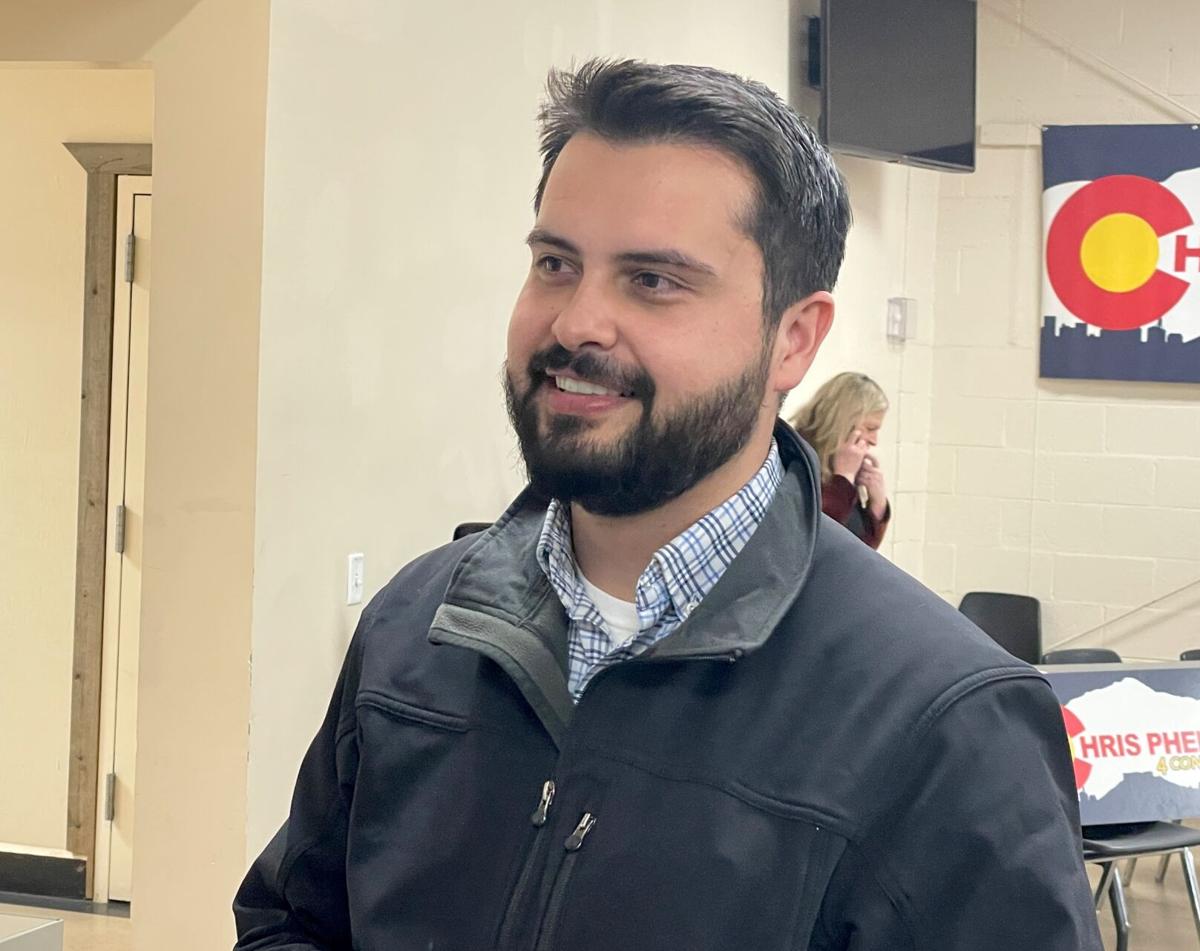
Then-Colorado Republican Party Chair Dave Williams speaks with fellow Republicans at a congressional candidate debate sponsored by the Douglas County GOP ahead of the 2024 primary election in Castle Rock.
(Ernest Luning/Colorado Politics)

Williams, a former state lawmaker and two-time congressional candidate from Colorado Springs, announced weeks before the party election that he wouldn’t seek a second, two-year term, guaranteeing that the state GOP would be naming its seventh party chair in as many terms.
Horn was among a loosely aligned group of Republicans who spent much of last year trying to force Williams from office over complaints that, under his leadership, the party was taking sides in primaries while attacking both fellow Republicans and the state’s LGBTQ community, potentially alienating voters the GOP could otherwise attract.
The state GOP’s internal conflict — fueled by competing lawsuits and rival factions who convened party meetings across the state while insisting their opponents’ meetings were unauthorized — culminated late last summer when Horn and other Williams critics convened at a church in Brighton to vote out Williams and the other state party officers, and elect replacements, including Horn, who was named state vice chair. A subsequent court ruling, however, determined that the rebels hadn’t adhered to party bylaws and negated their actions.
At the same March 29 reorganization that elected Horn as chair, her fellow newly elected state party officers — Vice Chair D. Lee Phelan Sr., a Las Animas County GOP official, and party Secretary Russ Andrews, a former congressional candidate — prevailed over Williams allies Hope Sheppelman, who was seeking a second term as vice chair, and Anna Ferguson, who ran for reelection as secretary but withdrew after Horn’s win.
‘We don’t know who started the fire. We’re blaming each other.’
Accepting the nomination at a meeting everyone agreed was legitimate, Horn related a story from her firefighting days to illustrate her point.
“There was a a house fire a couple towns away, and we were seeing flames going and billowing, and people were panicking,” she said. “And as we were rolling into the call, we saw these people, and I was like, ‘What are you guys doing in front of the fire?’ They were like, ‘We don’t know who started the fire. We’re blaming each other. We’re pointing fingers.'”
Horn paused to make an exaggerated “can you believe it?” face as some Republicans began chuckling.
“Well, here we are in the heat of the fire, people in front of it, and they’re blaming and pointing fingers,” she continued. “That’s not what we need to do. We need to put the fire out that’s in front of us.”
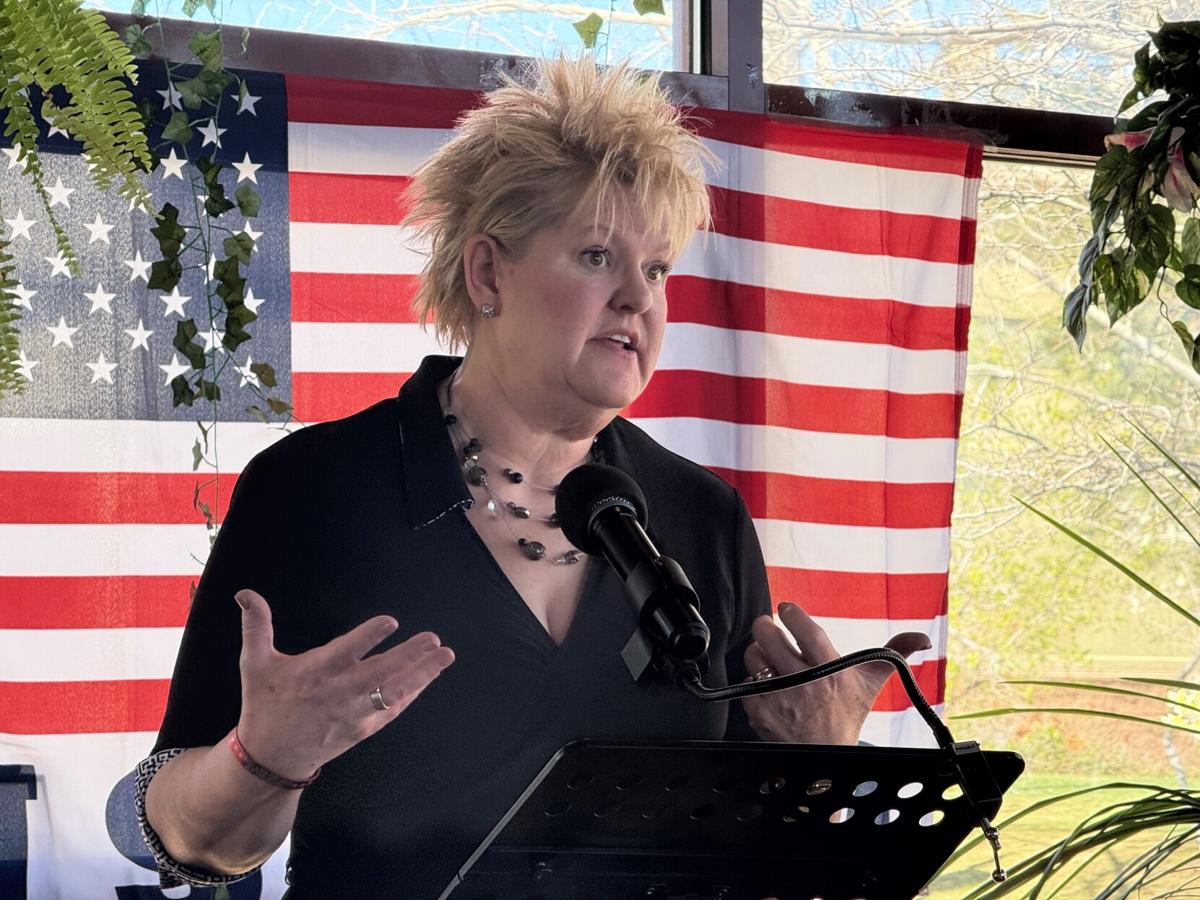
Colorado Republican Party Chair Brita Horn addresses the weekly meeting of the Jefferson County Republican Men's Club on April 7, 2025, at an IHOP in Lakewood.
(Ernest Luning/Colorado Politics)

In the weeks since taking the reins, Horn told Colorado Politics she’s confident she’s at least begun to tame the fire, though some embers are still smoldering.
Horn laid out an ambitious agenda during a lunchtime meeting of the Jeffco Republican Men’s Club at a Lakewood restaurant just over a week after her election as chair, including opening regional state party offices throughout Colorado and updating the party’s voter-contact technology. Several Republicans who had questions for her, though, pressed Horn about the lingering dispute between her supporters and party members who sided with Williams.
Acknowledging that Williams “made some major mistakes,” one Republican at the luncheon asked Horn if she really thought it had been “a good use of your time to go after Dave” last year with so much at stake, just weeks before ballots went out for the November election.
“To me,” he said, “that’s not unity.”
“It was not so much going after David as it was fixing what was going wrong with the party,” Horn replied. “The reason was, we had to put a tourniquet on it and stop the bleeding, because nothing was happening for the candidates. People were not getting the information that they needed. They weren’t getting the money they needed.”
Horn added that national Republicans agreed, with the National Republican Congressional Committee routing funds to support Colorado congressional candidates Jeff Hurd and Gabe Evans — who both won close races —through the Arizona GOP, instead of Colorado’s party.
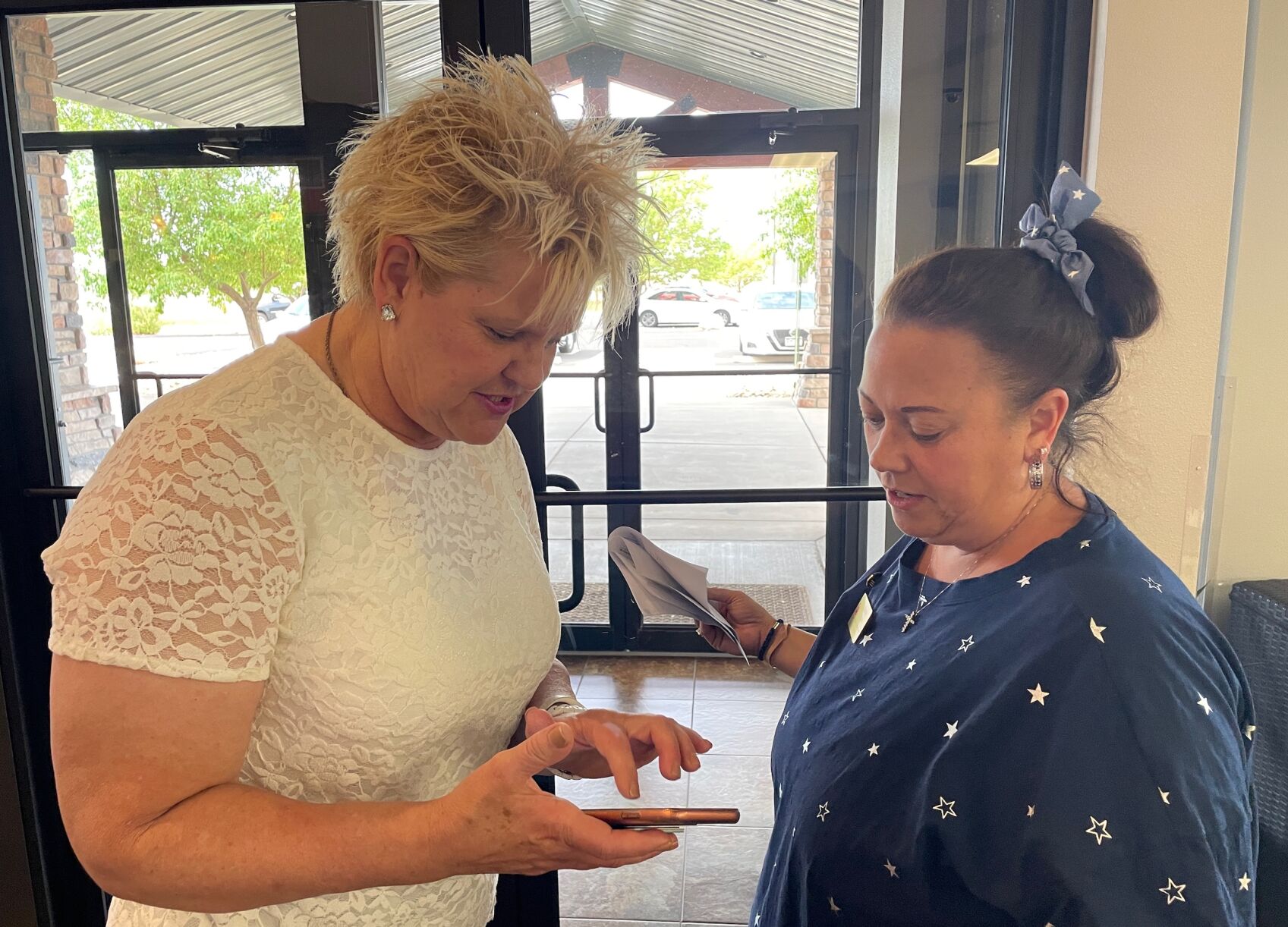
Colorado Republican Brita Horn, left huddles with Republican National Committeewoman Christy Fidura at a meeting of state GOP central committee members on July 27, 2024, at a meeting held by critics of the state party's then-chair Dave Williams. Horn was elected to replace Williams on March 29, 2025.
(Ernest Luning/Colorado Politics)

Horn also told the group that she plans to reorient the state party away from staking out positions or advocating for particular policy outcomes and instead primarily work toward electing Republicans.
“The past couple of chairs used this platform for their, let me say, their advocacy,” Horn said. “That’s not the job. The job is to be a machine, to be a factory, and build community, build the party and get more Republicans elected. And we can’t do that if we start picking up different agendas. So, we’ll work in parallel with all the different coalitions.”
‘Let’s have a brand new start here’
Another Republican at the lunch said he spoke from experience about the need to reach out to bring warring factions under the same Republican tent.
Tom Tancredo — a former five-term congressman, three-time gubernatorial candidate and 2008 Republican presidential hopeful — said the rift in the GOP was nothing new and urged Horn to take the initiative.
“I would think that at this point in time, it would almost have to be the present leadership saying, “OK, let’s have a brand new start here,'” he told Horn.
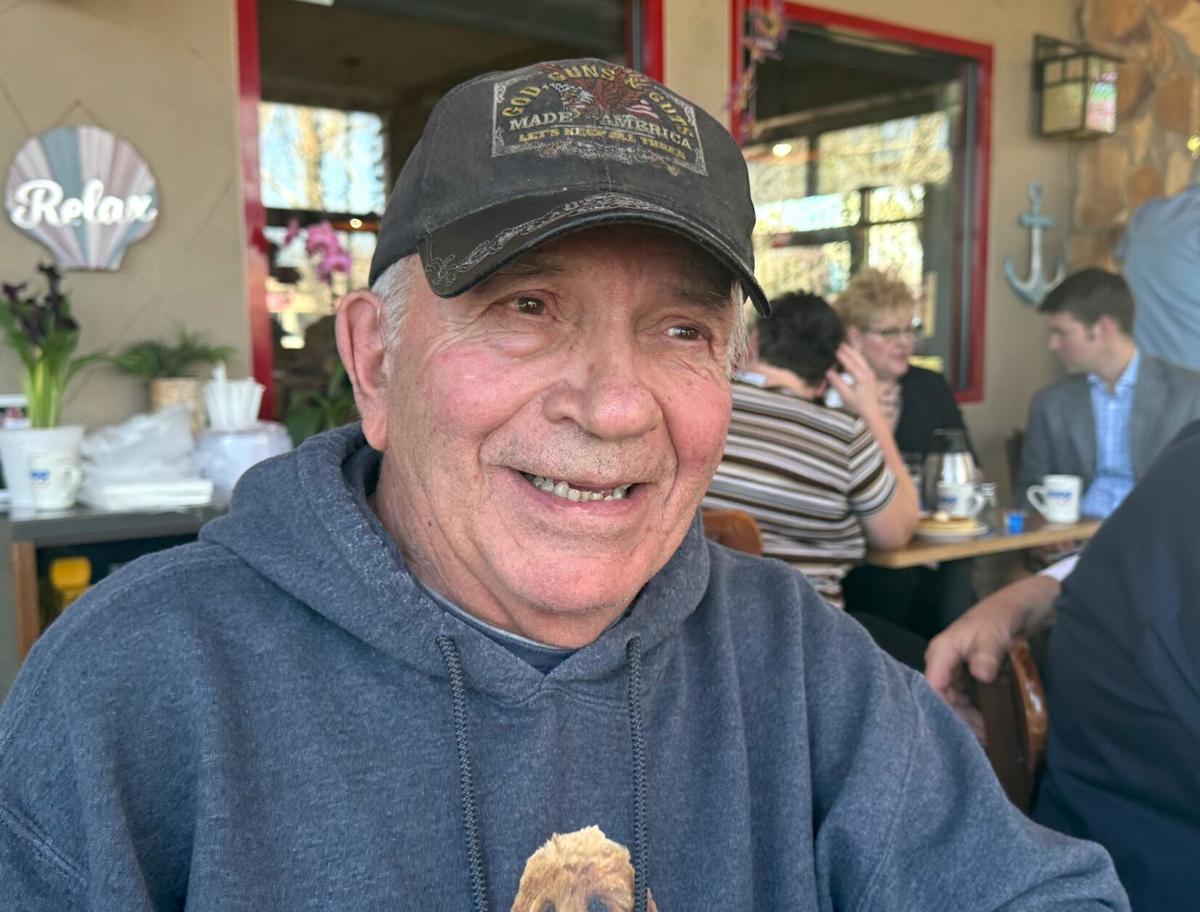
Former U.S. Rep. Tom Tancredo, a Colorado Republican, speaks with a reporter at a meeting of the Jefferson County Republican Men's Club on April 7, 2025, at an IHOP in Lakewood.
(Ernest Luning/Colorado Politics)

A veteran of intra-party battles — he recalled disputes with GOP legislative leaders when Tancredo was a young state lawmaker in the 1970s and his vehement disagreements over immigration policy with Arizona Sen. John McCain on the presidential campaign trail — Tancredo told Colorado Politics that in the end, bringing the party together was what counted.
“The only question I think that matters today is how you patch things up, how you create a much more solidified base of support for Republican Party principles,” Tancredo said. “I can’t give you a silver bullet or a way to do it for sure, but I know that it has to come from the leadership, it has to start there, right now, it seems to me. Set aside all the recriminations — and believe me, there are plenty on both sides — but if you could just sweep that all aside for a moment.”
Trancredo laughingly said that Horn might consider creating a “Truth and Reconciliation Commission,” adding, “Of course, everybody would fight like hell over what was the truth.”
Horn said in an interview after the group’s meeting that she was “hitting the ground running” and had already patched up relations between the state GOP, national Republicans and the White House. The RNC and Trump’s team had reached out, she added, and told her they were “very happy with the transition, happy with what we’re doing and can’t wait to meet me.”
She detailed her plan to open a state party office in each of the state’s quadrants — defined by Interstates 25 and 70 — and potentially move out of the party’s headquarters in Greenwood Village.
“We’re hoping to have field directors,” she said, adding that she hopes fundraising will support hiring that additional staff. “So, we’ll have more of a constant place, where it has all the information that (candidates) need, all the supplies they need, all the resources, all the training.”
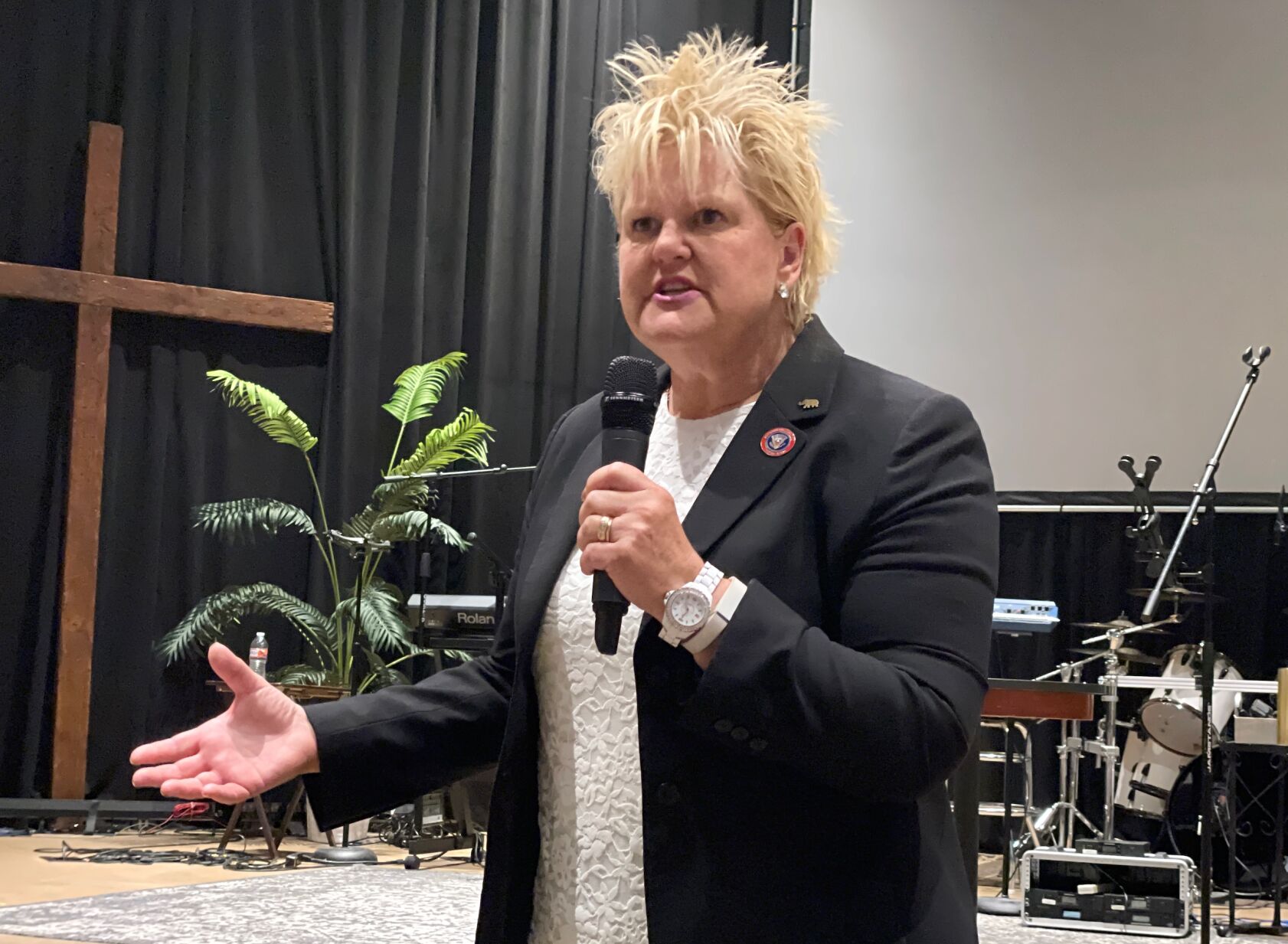
Colorado Republican Party Chair Brita Horn addresses members of the state GOP central committee on July 27, 2024, at a meeting held by critics of the state party's then-chair Dave Williams. Horn was elected to replace Williams on March 29, 2025.
(Ernest Luning/Colorado Politics)

Horn said she plans to reverse the party’s Williams-era policy of taking sides in primaries.
“We’re certainly not going to do pre-primary endorsements,” she said. “That just was an epic failure, and there’s no reason to even try doing that anymore.”
She also pledged to be transparent about party operations.
“I don’t want to be opaque,” she said. “Republicans need to know what’s going on all the time, not only in communications about what we’re doing and the resources and the pieces we’re working on and building, but also, obviously, the finances. We’re not going to earn our integrity, we’re not going to earn our honesty, we’re not going to get any of that truth back and people wanting to give money — if they don’t know where it’s going. We need to pull back that curtain, say where it is, where it isn’t, what happened, and move forward.”
“I want to be moving forward. I don’t want to be having to continue to clean up,” she said with a smile. “What do you say, ‘Clean up on aisle six’? I mean, come on, let’s move forward.”
Horn said the party will continue funding a lawsuit challenging the constitutionality of Proposition 108, the voter-approved initiative that created the state’s semi-open primary system, which lets unaffiliated voters cast ballots in either major parties’ primaries. But she sounded less certain about pushing the central committee to “opt out” of next year’s primary, which would mean the party would instead pick its nominees in party assemblies, a move Williams pushed unsuccessfully ahead of last year’s elections.
“We’ll have to see, yeah, see how it works,” Horn said, shrugging. “We’ll see if people want it.”
Horn opposed previous attempts to cancel the party’s participation in primaries under the theory that banishing the state’s unaffiliated voters from the Republicans’ primary would send the wrong message to a near-majority of state voters.
“We don’t need to make the party any smaller,” she said. “We can’t win if we stay this small or get smaller. You know, there’s no need for us to become a minority party. We can definitely get some strides, move the needle and win elections.”


Colorado Politics Calendar Aug. 3-9
Rachael Wright, Special to Colorado Politics
rachael.wright@coloradopolitics.com
Updated 3 days ago
CoPo’s weekly political calendar will help you find political and public-policy events throughout Colorado. It includes candidate and issue campaign events, public policy meetings, court hearings, state and local party conventions, assemblies, debates, rallies, parades, speaking engagements, traveling dignitary appearances,...
Susemihl wins surprise victory to replace Steve Durham as Colorado Springs state senator | A LOOK BACK
Rachael Wright, Special to Colorado Politics
rachael.wright@coloradopolitics.com
Updated 3 days ago
Forty-five years ago this week: In a closed session, the vacancy committee for Colorado’s Senate District 12 selected attorney Peter Susemihl to complete Sen. Steve Durham’s, R-Colorado Springs, term. Durham resigned his seat to become Region 8 Director of the...
The primary political reform and precondition for all others | SONDERMANN
Eric Sondermann
eric-sondermann@coloradopolitics.com
Updated 3 days ago
In its current state, the American political system has no end of ailments. Far too many factors accelerate polarization and work against moderation and narrowing the differences. Media, and the way so many citizens limit themselves to agreeable, reinforcing sources,...

10th Circuit partially revives lawsuit over 2020 Denver protest injuries
Michael Karlik
michael.karlik@coloradopolitics.com
Updated 24 hours ago
The Colorado-based federal appeals court revived a man’s claims against Denver on Friday after concluding a trial judge resolved the case in the city’s favor without analyzing two of the three instances of alleged excessive force and other constitutional violations....
At conservative summit, Colorado Republican leaders concede Democrats’ election edge
Marissa Ventrelli
marissa.ventrelli@coloradopolitics.com
Updated 5 hours ago
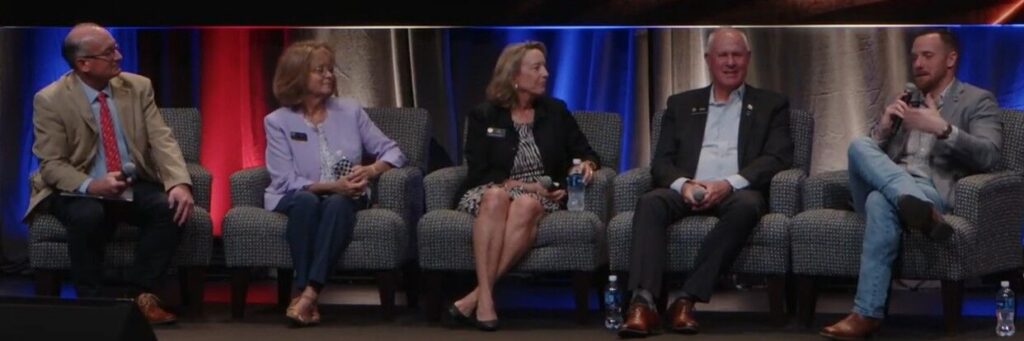
Four Republican state lawmakers told attendees at a gathering of conservative leaders on Friday they doubt their party can win statewide races, noting that Colorado’s electorate has been shifting toward Democrats but adding they see an opening in several pockets....
Federal judges find Colorado immigration judge violated several orders
Michael Karlik
michael.karlik@coloradopolitics.com
Updated 1 day ago
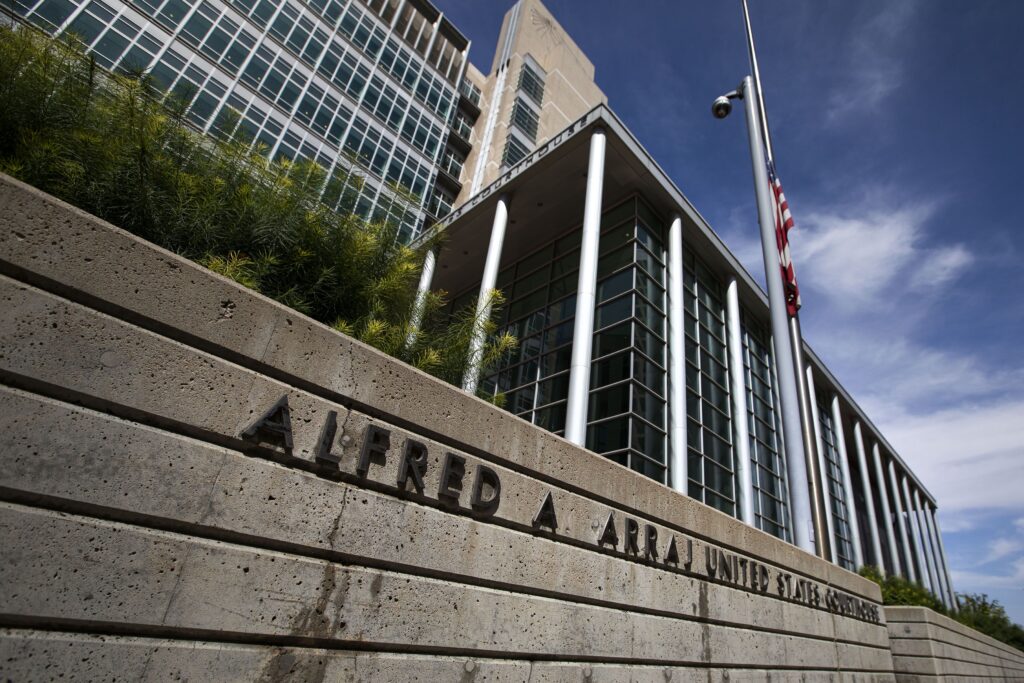
Multiple federal judges in Colorado have freed people from immigration custody after determining that one immigration judge violated their directives for properly conducting bond hearings. For nearly a year, Colorado’s U.S. District Court has faced a flood of “habeas corpus” petitions...
Q&A with Mike Pence | Former vice president says GOP’s populist turn from conservatism isn’t permanent
Ernest Luning
ernest.luning@coloradopolitics.com
Updated 2 hours ago
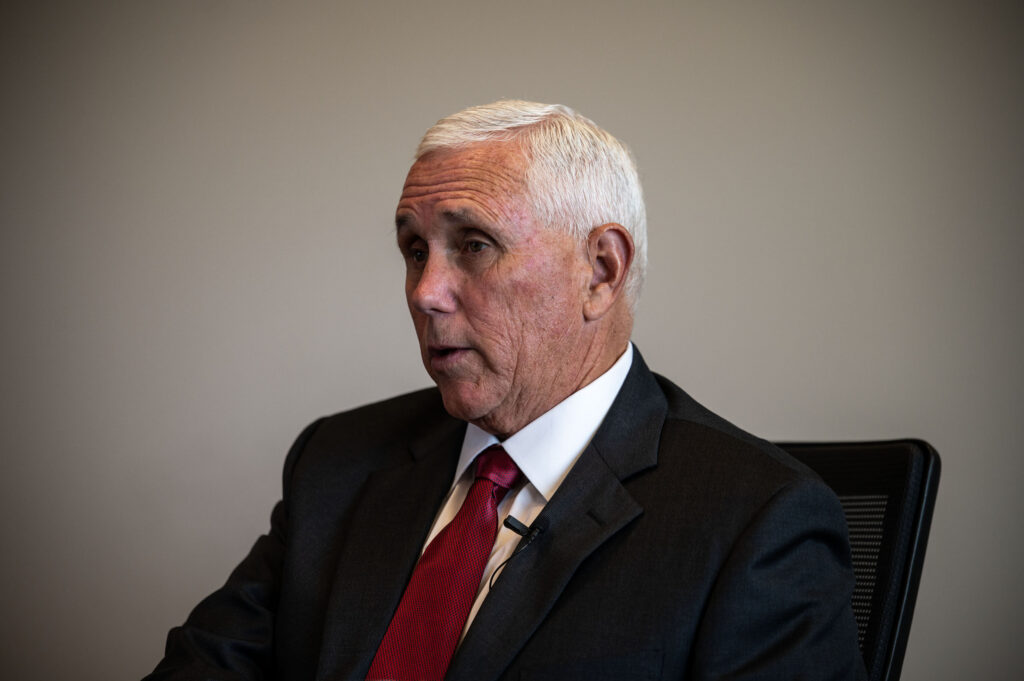
Former Vice President Mike Pence says he’s concerned that the Republican Party has taken a populist turn away from bedrock conservative principles during President Donald Trump’s second term, but he believes the party will return to its roots when Trump...
New federal plan sets short-term rules for Colorado River management
Marianne Goodland
marianne.goodland@coloradopolitics.com
Updated 24 hours ago
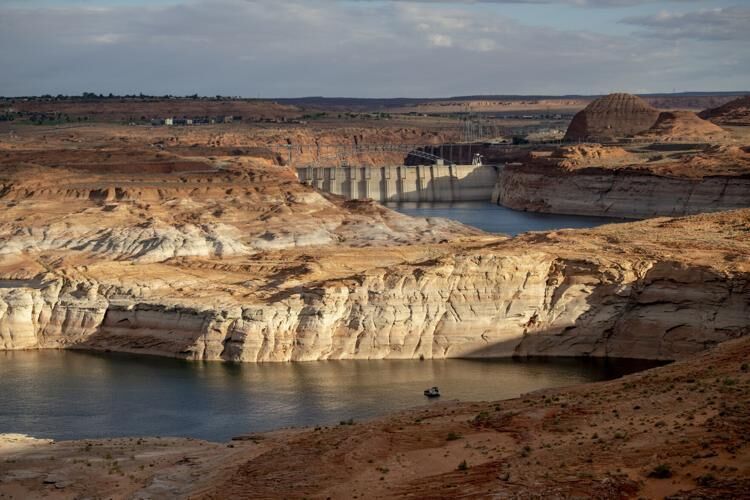
Interior Department’s plan spares Colorado from mandatory cuts for now After years of stalled negotiations among the seven states that rely on the Colorado River, the federal government on Friday released its own plan for managing the drought-strained system. Calling...
Fauci’s diary details blooming outrage toward ‘far right,’ softness toward Biden and China
Hudson Crozier
hudson.crozier@washingtonexaminer.com
Updated 1 day ago
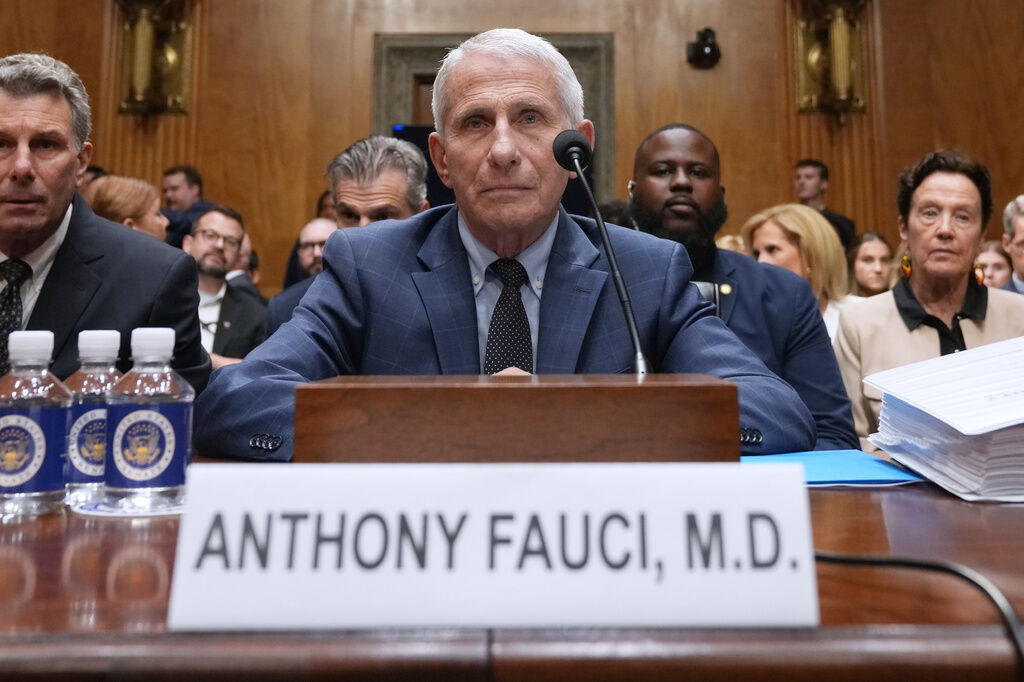
Dr. Anthony Fauci increasingly railed against “far right” critics of his approach to COVID-19 issues while describing strong support from the Biden White House in his pandemic-era diary, which was recently released by Congress. The former National Institute of Allergy...

Colorado is spared mandatory cuts under federal Colorado River proposal
The Associated Press
the-associated-press@coloradopolitics.com
Updated 1 day ago
California, Arizona and Nevada to take less water under plan While Colorado has been spared from mandatory reductions, Arizona, California and Nevada would take less water from the Colorado River under a proposal announced Friday by the federal government to...