

Federal judge temporarily blocks National Institutes of Health funding cuts
A federal judge Monday temporarily halted the National Institutes of Health’s decision to cut “indirect cost” rates for medical research grants following a lawsuit filed by 22 states that included Colorado.
At issue is the costs that institutions across the country can charge the government for expenses related to conducting research.
The states argued that the effect of the change — NIH said it would apply a 15% across-the-board rate — would be “immediate and devastating” and it would mean “layoffs, suspension of clinical trials, disruption of ongoing research programs, and laboratory closures.”
In announcing the cuts, NIH said it needs to “carefully steward grant awards,” noting that of the $35 billion it spent in fiscal year 2023, about $26 billion went to “direct costs” for research, while $9 billion was allocated to “overhead” expenses through the indirect cost rate. The agency said the average indirect cost rate has averaged between 27% and 28% over time, with many organizations charging rates of more than 50%.
In Colorado, the cuts would translate to a $74 million impact on the University of Colorado Anschutz Medical Campus. Last year, Colorado research institutions received $566.8 million in grants from the National Institutes of Health (NIH), the primary source of federal dollars for medical research. Most of this research is being conducted at public and private universities and colleges.
Colorado stands to lose roughly $90 million in NIH grants to three institutions of higher learning, according to the states’ complaint.
Colorado Attorney General Phil Weiser said the cuts would be “devastating” to research.
“This illegal action cutting NIH funding — taken abruptly, recklessly, without reflecting on its painful impact, and with no justification for a dramatic change — will harm Colorado universities, undermine important research efforts, and damage our economy,” Weiser said in a statement.
“Government agencies are required to act fairly and reasonably, ensuring that affected parties have notice of potentially dramatic changes and an opportunity to be heard,” added Weiser, who is running to succeed Gov. Jared Polis, who is term-limited.
Weiser has joined other states in bringing at least six lawsuits against the Trump administration on a string of issues from Elon Musk’s Department of Government Efficiency to an executive order ending birthright citizenship.
The lawsuit named NIH and the U.S. Department of Health and Human Services (HHS).
An HHS spokesperson declined to comment Monday.
In addition to CU Anschutz in Aurora, which is among the largest academically-based healthcare providers in the country, the NIH cuts also include the University of Colorado Boulder, which has received $203.3 million for research, and Colorado State University at $77.9 million.
On Friday, though, NIH officials touted $4 billion in annual savings by slashing the maximum indirect cost rates research institutions can charge the government to 15%.
Officials effectively said these costs have run amok, with some institutions more than 60%.
In her order temporarily blocking the NIH directive, federal judge Angel Kelley set a court hearing for Feb. 21.
Meanwhile, U.S. District Court Judge John McConnell on Monday found that the Trump administration had not fully complied with his order to unfreeze billions in spending and instructed the White House release the federal funding.
The states’ complaint alleged that the action violates the Administrative Procedure Act, including a directive Congress passed in Trump’s first term, which prohibits the NIH from requiring categorical and indiscriminate changes to the reimbursement of indirect costs.
These NIH funding cuts jeopardize life-saving research, said Julia Milzer, a spokesperson for CU Anschutz.
“Reduced research capacity means fewer scientific discoveries, job losses, and delayed advancements on therapies and cures that could improve — and save — lives,” Milzer said in an email to The Denver Gazette. “The results of these cuts would be devastating to research and also the world-class care we provide.”
As the state’s only academic medical campus, CU Anschutz supports more than 1,000 clinical trials with 14,000 enrollments in research studies. Campus medical providers also annually see more than two million adult and pediatric patients.
Medical research funding with NIH grants has led to scientific breakthroughs, including cancer treatment, the first DNA sequencing and the development of the MRI, which creates detailed internal pictures that can aid in the diagnosis of disease.
In announcing the cuts, NIH said most private foundations that fund research provide lower indirect costs and that universities readily accept the money. The NIH cited a study saying the “most common rate of indirect rate reimbursement by foundations was 0%, meaning many foundations do not fund indirect costs whatsoever.”
The NIH also cited an analysis that said of the 72 universities in its sample size, 67 were “willing to accept research grants that had 0% indirect cost coverage.”
Trump has signed hundreds of executive orders since assuming office last month. Many of his orders are being challenged in court, particularly those involving Congressionally-approved spending.
The Associated Press contributed to this report.


Registered voters on the eve of the 2026 primaries | Cronin & Loevy
Tom Cronin Bob Loevy
tom-cronin-bob-loevy@coloradopolitics.com
Updated 2 days ago
The Colorado Secretary of State’s Office has published the latest voter registration figures for the state and its counties as of June. Colorado ranks among the highest states for independent, or unaffiliated, voters. Only Alaska and Massachusetts have more. New Hampshire, New Jersey, Maine and Oregon also rank highly. So here...
A decade after Standing Rock protests, Dakota Access oil pipeline segment gets OK | OUT WEST ROUNDUP
The Associated Press
the-associated-press@coloradopolitics.com
Updated 5 days ago
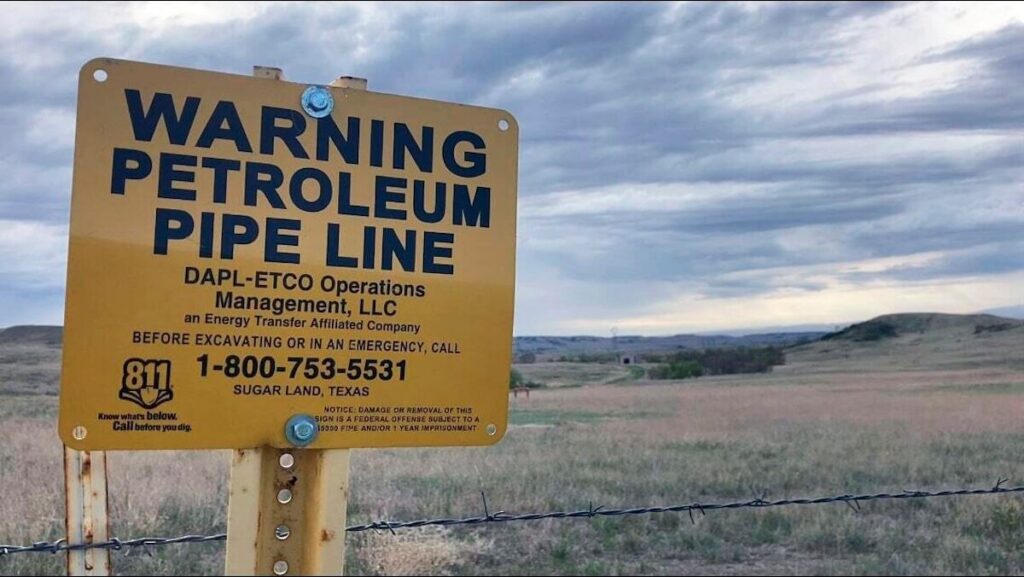
NORTH DAKOTA Pipeline segment OK’d BISMARCK — Federal officials on May 21 gave final approval for the Dakota Access oil pipeline to continue operating its contentious Missouri River crossing, an outcome that comes nearly a decade after boisterous protests against...
Rep. Jeff Crank thinks Democrats are too focused on Trump, not enough on Colorado Springs | Vince Bzdek
Vince Bzdek
vince.bzdek@gazette.com
Updated 12 hours ago
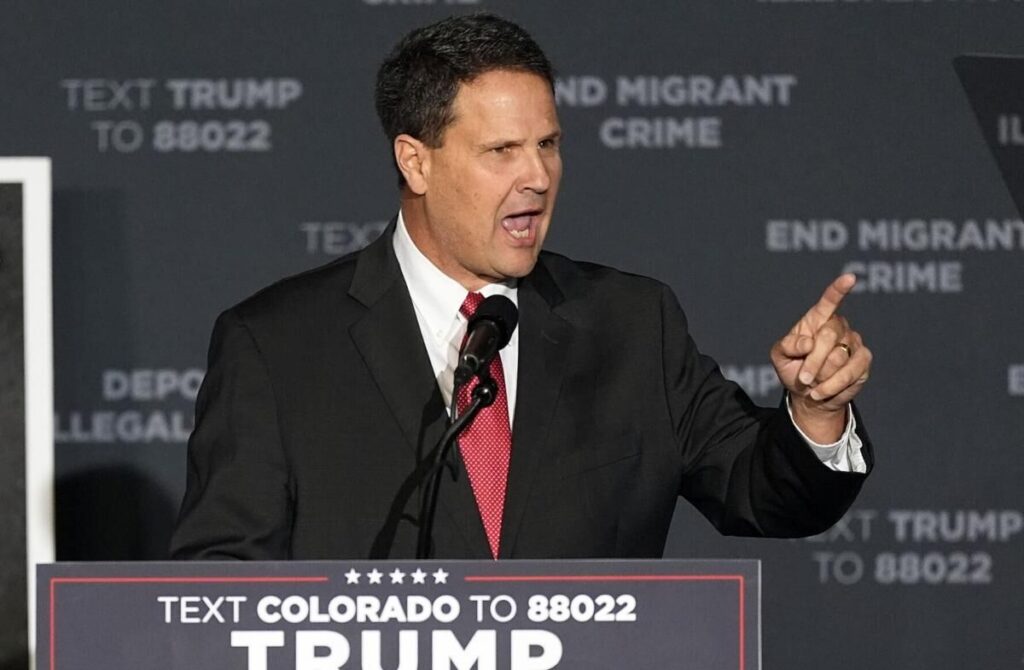
For U.S. Rep. Jeff Crank, who’s unopposed in the Republican primary for the 5th Congressional District but the main target of both candidates in the lively Democratic primary, the big question in the midterms is not who will stand up...

Colorado Politics Calendar June 22-28
Rachael Wright, Special to Colorado Politics
rachael.wright@coloradopolitics.com
Updated 5 days ago
CoPo’s weekly political calendar will help you find political and public-policy events throughout Colorado. It includes candidate and issue campaign events, public policy meetings, court hearings, state and local party conventions, assemblies, debates, rallies, parades, speaking engagements, traveling dignitary appearances,...

Vice president attends Denver event to support energy freedom; more news from the past | A LOOK BACK
Rachael Wright, Special to Colorado Politics
rachael.wright@coloradopolitics.com
Updated 5 days ago
Forty-Five Years Ago This Week: Vice President George H.W. Bush flew to Denver to address the annual meeting of the American Association of Petroleum Landmen, where he assured the audience that the Reagan administration’s strong belief was that the private...
Does character matter anymore? | SONDERMANN
By Eric Sondermann
by-eric-sondermann@coloradopolitics.com
Updated 5 days ago
The last few weeks have been illuminating in the manner of a headlamp pointing the way to some deep, dark, murky netherworld. Graham Platner, a hero to the populist set on the Democratic side, became his party’s Senate nominee in...
A special edition of Capitol M: In remembrance of the outrageous Lynn Bartels
Marianne Goodland
marianne.goodland@coloradopolitics.com
Updated 3 days ago
I had Lynn Bartels envy. For almost longer than I can remember. There, I said it. And it’s true. Lynn died Friday, age 69, after a short battle with glioblastoma. I was just heartsick when that news of her diagnosis...

Bernie Sanders endorses DeGette challenger Melat Kiros in Colorado’s 1st CD Democratic primary
Ernest Luning
ernest.luning@coloradopolitics.com
Updated 3 days ago
U.S. Sen. Bernie Sanders on Friday endorsed congressional candidate Melat Kiros, one of two Democrats challenging 15-term U.S. Rep. Diana DeGette in Colorado’s June primary. Sanders, a Vermont independent who caucuses with the Democrats, called the 29-year-old Kiros “exactly the...
Trump’s 10th Circuit nominee recuses from cases against federal government without explanation
Michael Karlik
michael.karlik@coloradopolitics.com
Updated 15 hours ago
President Donald Trump’s nominee to fill a vacancy on the Denver-based federal appeals court recused himself without a clear explanation from nine cases against the executive branch while he was undergoing vetting by the White House this spring. U.S. District...

Trump’s low approval unchanged as Iran war perceptions continue to plague him
Rena Rowe, Washington Examiner
rena.rowe.washington.examiner@gazetteedit.wpenginepowered.com
Updated 3 days ago
A new poll shows most Americans disapprove of President Donald Trump’s handling of Iran, with views on the issue closely mirroring his overall job approval rating. Just 37% of U.S. adults approve of the way Trump is handling his presidency,...