

Trump’s DEI takedown an attack on America’s strength in diversity | HUDSON
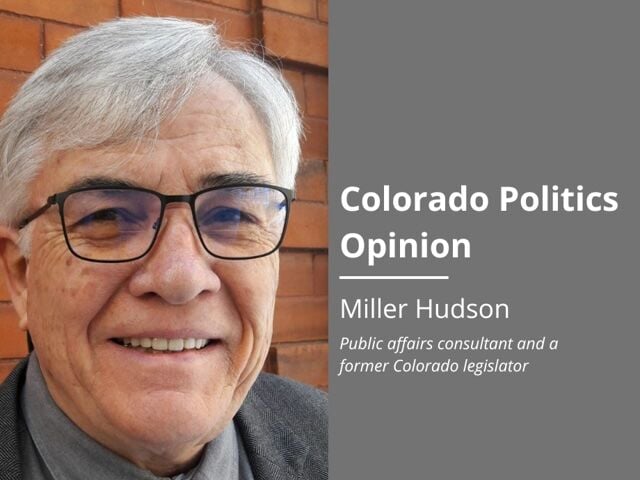
Miller Hudson

Miller Hudson
I was just nine years old and still finishing fourth grade in 1954 when I heard my parents talking about the Supreme Court’s Brown v. Board of Education decision requiring public schools to integrate. This was a little confusing since my twin brother and I were attending a parochial elementary school in Alexandria, Virginia, together with negro classmates — using the vernacular of the period. The Catholic hierarchy in the United States may often appear conservative today, but it always has believed every soul is created equal and, therefore, worthy of saving in the eyes of God. Several of our fellow altar boys were Black, as were a sprinkling of the nuns teaching our classes. I was puzzled to realize Virginia’s public schools operated two parallel systems — one for white children and another for Blacks.
The following year our family moved to Fort Worth, Texas, and our school had no negro students or faculty. For sixth grade we returned to the Washington, D.C. area — this time on the Maryland side of the Potomac. McKinney Hills elementary in Montgomery County was again all white. Entering seventh grade in 1957 at Sherwood Junior-Senior High School, our classes suddenly shared desks with 20% to 25% Black students. Segregation had officially ended for Maryland public schools. Many of the local restaurants and stores in Sandy Springs refused to accept Black patrons. It took a student boycott in 1960 to break down these barriers. Although we fielded integrated sports teams, there was very little socialization between black and white students. Sixty years later, graduates still hold separate reunions which disappoints me.
Stay up to speed: Sign up for daily opinion in your inbox Monday-Friday
With the emergence of the civil rights movement during the 1960s and Congressional approval of the civil rights and voting rights legislation guaranteeing equal access to public accommodations as well as the ballot box. Social tensions rose to a boil, primarily in the Confederate south. Most of these states had dodged the implications of desegregation by establishing private white academies and leaving underfunded public schools for Black kids. Although the University of Maryland was open to all applicants, integration of the student body was a slow process as many African-American graduates opted to attend one of the state’s Historically Black Colleges — most noted, Morgan State near Baltimore. I was surprised in a return to campus last year to learn full student acceptance didn’t arrive until well into this century.
By the late 1960s, public discussion of guaranteed Equal Employment Opportunity and affirmative action programs to assure such results were emerging. There was resistance, to be sure, but there was also a growing consensus the benefits flowing from America’s post war prosperity should be fairly shared with all segments of society — that access to higher education, hiring into good jobs and equal consideration for promotions were the fair and ethical way to conduct both government and private business. It was not long before objections to affirmative action as a form of “reverse discrimination” were launched. Legal arguments that, though perhaps once needed, affirmative action was no longer required. We only have to look at the decline in minority admissions at colleges and universities since the Supreme Court blessed this argument to recognize that assistance was leveling the playing field.
Diversity, equity and inclusion (DEI) is the child of the affirmative action movement. Less threatening, perhaps, than its predecessor, it still has its enemies. There is ample evidence diverse workforces outperform those which are homogeneous — 36% more profitable as reported by McKinsey and Company. Not every DEI curriculum or initiative has proven effective. As Colette Phillips, author of “The Includers: The 7 Traits of Culturally Savvy, Anti-Racist Leaders” wrote recently, “…those who support its (DEI) goals should show some patience and grace to those who are still grappling with understanding it — welcoming them to the discussion rather than chastising them.” There is evidence cruder, more confrontational approaches can actually backfire, leaving participants angrier than they were before they participated. This is no reason to throw the baby out with the bathwater.
When I left Chesapeake & Potomac telephone to enter the Navy in 1968, I recommended Geraldine Anderson, a Black graduate of Howard University with a master’s from the Sorbonne in Paris, should be promoted into my slot. When I returned from my service, she was still stuck in her entry-level job. I provided a letter to accompany her complaint to the EEOC where she won a substantial severance award. Gerry went on to become vice president of the country’s second largest natural gas company. My advocacy on her behalf, call it affirmative action, is one of my proudest decisions. Occasionally EEO or diversity priorities can injure opportunity for a member of the majority. In 1977 Mountain Bell, my employer, asked me to take an assignment and promotion at A&T headquarters in Basking Ridge, New Jersey. After I agreed, the offer was withdrawn when someone at Basking Ridge noticed the company wasn’t sending enough women to the Bell System’s career accelerator program. Instead of being resentful or whining about reverse discrimination, I decided to run for the Colorado legislature which took my career in an entirely new and unexpected direction. I didn’t have to hang around for Joe Nacchio’s looting of QWEST.
President Donald Trump has chosen to throw out the executive order issued by then-President Lyndon Johnson 60 years ago forbidding discrimination in the award of federal contracts. Johnson’s instincts sound reasonable and far better than crony capitalism. Since then, women- and minority-owned businesses have been guaranteed 15% of such work. Hardly a fair share but a step in the right direction, particularly since women pay more than half of federal income taxes. DEI critics claim every tax dollar should be awarded solely on the basis of merit — every hire offered to only the most qualified applicants. We know where this leads — to fewer black and brown faces in federal offices and the workforces of federal contractors. The animus directed at DEI is so vicious the president and two of his cabinet appointees have placed blame for last week’s air collision over the Potomac on diversity hiring at the Federal Air Administration. Pete Buttigieg was singled out for personal responsibility, and he promptly issued an eloquent rebuttal. I’ll bet you don’t have any trouble figuring out why they would do that.
Miller Hudson is a public affairs consultant and a former Colorado legislator.

Gong-Show Griswold’s latest data dump a disaster | George Brauchler
George Brauchler
george-brauchler@gazette.com
Updated 15 hours ago
Last week, Colorado Secretary of State Jena Griswold’s office discovered they exposed for weeks the addresses of more than 130,000 “confidential voters” — including victims of sexual assault, domestic violence — and her political opponent in the attorney general’s race,...
Colorado’s education paradigm déja-vu | Paula Noonan
Paula Noonan
paula-noonan@coloradopolitics.com
Updated 15 hours ago
Déja-vu for 10 years. In 2015-2016, state standardized testing was fully integrated into teacher performance evaluation. The tests comprised 50% of teacher “performance.” The idea was to follow the General Electric “rank-and-yank” human resources model. At GE, the model went...
Don’t trade away our TABOR refunds | PODIUM
Barb Kirkmeyer
barb-kirkmeyer@gazette.com
Updated 2 days ago
Here we go again — tax-and-spend politicians going in the wrong direction. Colorado families are being asked to believe a familiar lie: the only way to fund education is to let politicians keep more of your money — forever. Proposition...
Trump’s ‘BBB’ casts aside rural Colorado healthcare | Hal Bidlack
Hal Bidlack
hal-bidlack@coloradopolitics.com
Updated 3 days ago
Well, as I often do, let me start by yet again telling you what I am not going to be writing about (Editor: sigh…). I’m not going to talk about President Donald Trump’s most recent (of many, many) attacks on...
A course correction Canada would concur with | Miller Hudson
Miller Hudson
miller-hudson@coloradopolitics.com
Updated 6 days ago
I’ve always harbored a soft spot for Canada. My father was stationed there twice, once in the 1960s as the Atomic Energy Commission’s American liaison with the Canadian nuclear reactor program in Chalk River, Ontario and again in the 1970s...

Private property rights challenge rural Colorado communities | Rachel Gabel
Rachel Gabel
rachel-gabel@coloradopolitics.com
Updated 6 days ago
If there were ever a topic I believe deeply in, it’s private property rights. If there were ever a topic that leaves me in a moral conundrum more often than not, it’s private property rights. The northern portion of Weld...

Gaylord — you never check in, but still pay | Jon Caldara
Jon Caldara
jon-caldara@coloradopolitics.com
Updated 7 days ago
I go to a lot of conferences, often in beautiful cities I never actually see. Friends hear where I’ve been and ask depressing questions like, “Did you visit the famous museum?” No. I saw Ballroom C, the lobby bar and...
Reflections on Weiser-Lopez, Crank-Killian debates | Tom Cronin
Tom Cronin
tom-cronin@coloradopolitics.com
Updated 6 days ago
Thursday night, The Gazette and KOAA TV hosted two important candidate debates. The first featured incumbent Republican U.S. Rep. Jeff Crank, who is just completing his first term representing El Paso County in Congress, and Jessica Killian, a Democrat who has...

What courageous citizenship really looks like | Vince Bzdek
Vince Bzdek
vince.bzdek@gazette.com
Updated 5 days ago
By Vince Bzdek What exactly is courage? Ernest Hemingway famously called it grace under pressure. Mark Twain wrote that “courage is resistance to fear, mastery of fear — not absence of fear.” C.S. Lewis refined that even more: “Courage is...
The coming election and mischief in the making | SONDERMANN
Eric Sondermann
eric-sondermann@coloradopolitics.com
Updated 1 week ago
America’s tribalism is such these days that we struggle to even agree on the basic rules. Elections have always been hotly contested. As the saying goes, “Politics ain’t beanbag.” The process has long involved elements of nastiness and underhanded conduct....