

Colorado House committee advances psilocybin bill, pending FDA approval
A panel of Colorado lawmakers approved a bill that would legalize synthetic psilocybin medications for certain conditions, contingent upon approval by the FDA.
Crystalline polymorph psilocybin has been proven effective at treating conditions like post-traumatic stress disorder, traumatic brain injuries, and treatment-resistant depression, according to bill sponsors Reps. Anthony Hartsook, R-Parker, and Kyle Brown, D-Louisville.
Hartsook, a retired lieutenant colonel, said he has known several soldiers who have been helped by psilocybin treatments.
“I’ve seen firsthand the cutting-edge technology in the military that’s been passed on to the civilian sector to work in treating PTSD and TBIs. There’s a whole laundry list,” he told the House Health and Human Services committee. “This bill is designed to add another tool to the toolkit for psychiatrists, psychologists, MDs, and counselors in the treatment of PTSD and TBIs.”
Hartsook made sure to reiterate that crystalline polymorph psilocybin was not the same as “magic mushrooms,” which were legalized in 2022.
Similar to the state’s upcoming psilocybin clinics, under the proposal, the crystalline polymorph psilocybin would be administered in a controlled environment by a licensed professional, and patients would not be allowed to leave the clinic until the medication is completely out of their system.
British biotechnology company Compass Pathways has developed and patented a psilocybin treatment called COMP360, which the company said has been proven successful in helping to treat treatment-resistant depression. Compass Pathways would be the sole proprietor of COMP360 until its patent expires and generic forms can be manufactured.
As a trigger bill, the measure would only go into effect if the FDA approves crystalline polymorph psilocybin for lawful use. Colorado passed a similar trigger bill for MDMA in 2022.
According to Brown, a similar form of therapy using the anesthetic ketamine is currently legal in Colorado.
“We in Colorado have a history of trying to make sure that we are trying to expand access to mental health care,” he said. “This bill makes sure that when synthetic crystalline polymorph psilocybin is approved by the FDA and determined to be safe and effective for the diagnoses that they study and treat, then those products would be available as soon as possible to Coloradans. I think that’s the kind of bill that I certainly want to support.”
Jimmy Smerz, a financial analyst, argued that while the bill may seem like a good thing at first glance, it could have devastating impacts on Colorado’s economy.
He called the bill “unnecessary and potentially harmful,” adding that it gives Compass Pathways an unfair advantage while placing financial burdens on taxpayers and local businesses seeking to get involved in Colorado’s natural medicine industry.
“HB25-1063 is going to cause problems to an already fragile financial model by giving a competitive advantage to one company, Compass Pathways, and we area probably a couple years away from when this trigger bill will actually occur,” he said, adding that he estimates the bill would cost the state $3 million a year with only $1 million in profits.
“Moving forward at this time with HB1063 imposes an undue financial burden, not only on taxpayers, but on local entrepreneurs who are sinking a significant amount of money into obtaining a license,” he said.
John Armstrong, the fiscal analyst for the bill, said he calculated the fiscal impact for the bill to be zero dollars, as the bill itself only exempts crystalline polymorph psilocybin from the state’s list of schedule one drugs.
The financial impacts outlined by Smerz were potential downstream impacts of the bill, Armstrong argued, and therefore did not need to be included in the fiscal note, which only discussed the direct impacts of the bill.
The bill passed with a vote of 12-1, with Rep. Brandi Bradley, R-Roxborough, saying she likes the concept of the bill but wants to see research that proves the medication’s efficacy.


US service member missing after Iran shot down fighter jet has been rescued, US officials say
Associated Press
associated-press@coloradopolitics.com
Updated 26 minutes ago
JERUSALEM — President Donald Trump announced early Sunday that the U.S. had rescued an aviator nearly two days after he was shot down over Iran. The extraction came after a frantic search in what appears to be a remote, mountainous region of...

Who are the kings being crowned here in Colorado? | Jon Caldara
Jon Caldara
jon-caldara@coloradopolitics.com
Updated 3 days ago
Though most of us celebrate “No Kings Day” on July 4, the Trump-deranged got a head start last weekend with rallies around the state. Attendees bravely fought oppression by blocking traffic for people with jobs. Rally-goers demanded freedom from tyranny,...

Low and slow meets forever: US postage stamps honor lowrider car culture | OUT WEST ROUNDUP
The Associated Press
the-associated-press@coloradopolitics.com
Updated 4 days ago
NEW MEXICO Stamps honor lowrider culture ALBUQUERQUE — From Mexican American and Chicano barrios in the American Southwest to the halls of the Smithsonian on the National Mall and even the streets of Japan, lowrider culture has become part of...
An April Fool’s Day to remember | Capitol M | Week of April 4, 2026
Marianne Goodland
marianne.goodland@coloradopolitics.com
Updated 3 days ago
The lighter side of the Capitol, and if light were weight, the Capitol would have lifted off better than the Artemis II rocket on April Fool’s Day. There was a plethora of Fools at the Capitol for April Fool’s Day...

Democrats rebounding without learning necessary lessons | SONDERMANN
Eric Sondermann
eric-sondermann@coloradopolitics.com
Updated 1 day ago
“When we fight, we win!” That, reportedly, was the chant heard over and over again at the Colorado Democratic Assembly a week ago. It suggests that pugilism has been the piece missing from the Democratic toolkit. Perhaps it was just...
Colorado Politics Calendar Apr. 6-12
Rachael Wright, Special to Colorado Politics
rachael.wright@coloradopolitics.com
Updated 4 days ago
CoPo’s weekly political calendar will help you find political and public-policy events throughout Colorado. It includes candidate and issue campaign events, public policy meetings, court hearings, state and local party conventions, assemblies, debates, rallies, parades, speaking engagements, traveling dignitary appearances,...
Federal judge sides with Mesa County school district in ex-student’s First Amendment claims
Michael Karlik
michael.karlik@coloradopolitics.com
Updated 2 days ago
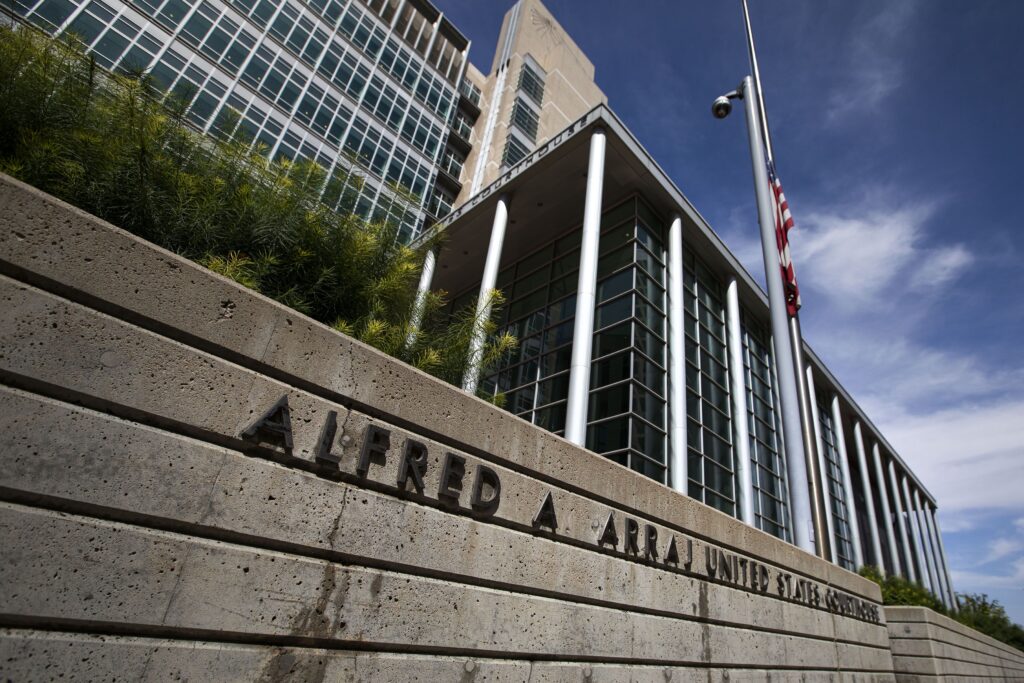
A federal judge concluded last week that Mesa County Valley School District 51 and three of its administrators did not violate the First Amendment rights of a former student when they imposed minor discipline in response to disruptive behavior. In...

Colorado Supreme Court intervenes in 4 ongoing cases
Michael Karlik
michael.karlik@coloradopolitics.com
Updated 2 days ago
The Colorado Supreme Court recently moved to intervene in four ongoing cases, including two criminal prosecutions, a civil lawsuit, and a child welfare proceeding. At least four of the court’s seven members must agree to hear a case outside of...
Colorado ski resorts announce early closures amid historic snowpack lows, high temperatures
Kyla Pearce
kyla.pearce@gazette.com
Updated 23 hours ago
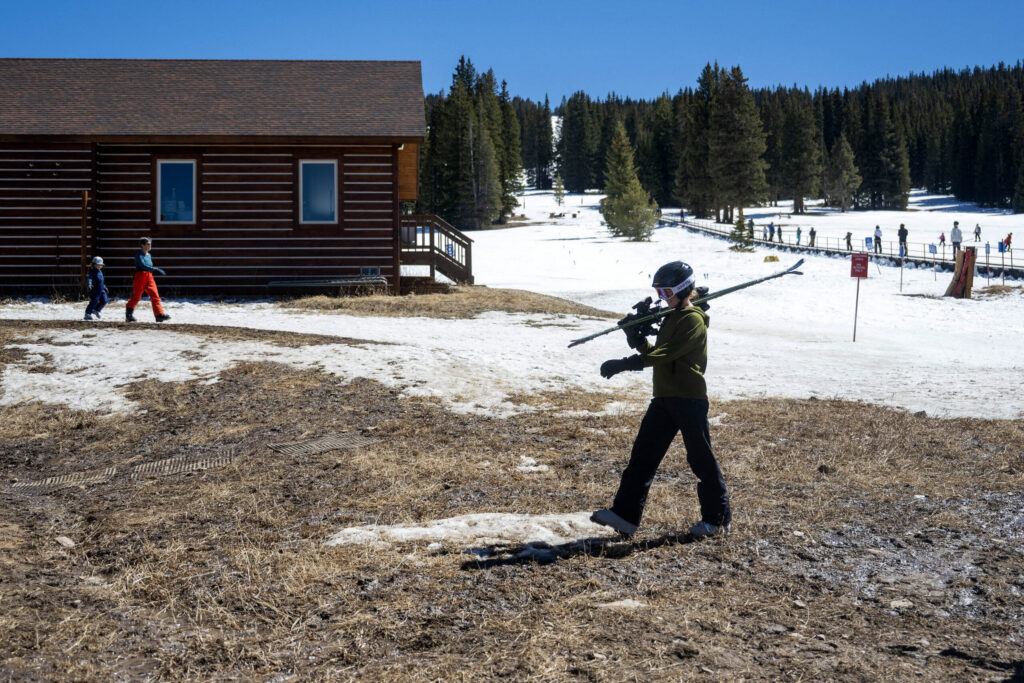
Vail Resorts is the latest area to announce season closure Wednesday As Colorado’s historically low snowpack year comes to a close and spring conditions take over the mountains, the state’s major ski resorts are announcing closing dates — some of...

Kentucky Gov. Andy Beshear set to headline Colorado Democrats’ annual fundraising dinner
Ernest Luning
ernest.luning@coloradopolitics.com
Updated 2 days ago
Kentucky Gov. Andy Beshear, one of the Democrats’ top 2028 presidential prospects, is scheduled to deliver the keynote address at the Colorado Democratic Party’s annual fundraising dinner in June in Denver, the party said Friday. Serving his second term as...