

The path forward for wolf-livestock coexistence in Colorado | PODIUM
Lenny Klinglesmith

Lenny Klinglesmith
Eric Washburn

Eric Washburn
Gray wolves roamed across Colorado’s mountains for thousands of years. But by 1940, the last of Colorado’s gray wolves, like those throughout most of the Rocky Mountains, had been killed off. Then in 1995, the Fish and Wildlife Service reintroduced wolves into Yellowstone National Park and central Idaho, to help restore the natural ecological balance to northern Rocky Mountain ecosystems. And in 2020, Colorado voters approved the reintroduction of wolves here.
But restoring wolves into our Rocky Mountains does not come without cost. By the time Proposition 114 was passed, a quarter-century of experience from the northern Rockies showed where wolves and ranches occupy the same geographic area, some wolves inevitably will kill livestock.
In April, reintroduced wolves settled south of Parshall, known as the Copper Creek Pack, began depredating cattle and sheep in that area. CPW and the Colorado Department of Agriculture (CDA) worked with the local ranchers to deploy non-lethal measures to deter depredations, including providing funding for a range rider to patrol the area. But depredations continued into the summer and in August, CPW began an operation to capture and relocate the pack to prevent further depredations of livestock.
Stay up to speed: Sign up for daily opinion in your inbox Monday-Friday
CPW’s capture and relocation of the Cooper Creek Pack was not without controversy. It received criticism from wolf advocates who felt more should have been done to employ non-lethal techniques to prevent depredations before engaging in such an ambitious operation. At the same time, ranchers became frustrated by repeated depredations and felt it took too long for CPW to make the decision to relocate the pack.
Amidst all this, in June, CPW Director Jeff Davis convened an ad hoc wolf-livestock coexistence working group to advise the agency on how to prevent livestock depredations. In addition to CPW leadership, the group includes representatives of the ranching community, the wolf advocacy community, a wolf coexistence specialist from Colorado State University and a wolf conflict prevention specialist from the Colorado Department of Agriculture (CDA).
The ad hoc working group has been extraordinarily helpful in forging relationships and in advancing mutual understanding of the concerns and ambitions of ranchers and wolf advocates. Through our discussions, we have developed respect and appreciation for each other’s perspectives and built a considerable amount of trust. In doing so we have laid the foundations for a long-term constructive dialogue among CPW, CDA, ranchers and wolf advocates regarding the future of wolf management in the state.
Much of the discussion of the working group has focused on the use of non-lethal tools and carcass management to deter wolf predation, as well as when it will be necessary to take more drastic steps like lethally removing chronically depredating wolves, as contemplated in the Wolf Restoration and Management Plan. The working group’s deliberations brought to light three main goals:
- Clarify the responsibilities of ranchers and state personnel to avoid subjectivity in applying these rules
- Encourage producers to work with local district wildlife managers (DWMs) to conduct ranch vulnerability assessments, which will pave the way for state-funded and state-implemented non-lethal coexistence tools to be deployed: and
- Provide a “warranty” to producers that if those non-lethal tools fail to prevent a wolf from crossing a clear, quantitative chronic depredation threshold, then lethal removal of the offending wolf or wolves will be granted by CPW.
After numerous meetings and much debate, the ad hoc working group recommended if a rancher chooses to undertake a vulnerability assessment and allow the state to fund and deploy reasonable non-lethal coexistence measures, and manages his or her carcass disposal pit in accordance with said site assessment, then if a wolf or wolves engage in three depredation events within 30 days, CPW will permit lethal removal.
Ultimately, CPW incorporated the advice of the working group into a policy document that will guide its future decision making regarding the management of wolves. This will help ensure everyone understands the rules related to achieving wolf-livestock coexistence and ranchers can be assured they will not have to endure chronic depredations by wolves indefinitely. Social acceptance of wolves in Colorado will be important to the long-term success of the reintroduction program, and effective prevention of livestock depredations will be a key factor in achieving that goal. This new CPW policy is intended to help.
Nevertheless, since the issuance of the chronic depredation policy in December, some ranchers have expressed concerns about the standard of proof for depredations and about the potential for subjectivity to influence lethal removal decisions. Ag representatives on the ad hoc expressed concerns regarding the chronic definition of three in 30 days as being too high of a threshold. Science has proven for every confirmed depredation there can be five to seven missing not confirmed; Therefore the members agreed a hard line be drawn with no subjectivity when wolves depredate three times in 30 days. The ad hoc group understands not all details of wolf management can be covered in a document, and trust in producers and local staff by the executive management team and the general public will be needed. We have been assured by CPW Director Davis CPW will continue to convene the working group throughout 2025 so it can assess the effectiveness of the policy in achieving coexistence, and recommend further changes to address these and other aspects of the policy if necessary.
Important signs of progress in achieving coexistence are emerging. To date, 50 ranch vulnerability assessments have been completed or are in the process of being completed. Sixty-eight people have expressed interest in becoming range riders. Dozens of guard dogs have been placed on ranches. Turbo fladry and electric fencing have been deployed successfully on numerous ranches. CDA is providing grants for range riding and carcass management. And CPW and CDA are holding coexistence and stockmanship workshops in potentially affected counties. The ad hoc group is still divided as to whether the landscape will have enough coverage with site assessments before the release of wolves from British Columbia.
Ultimately, Colorado can become a model for successful wolf-livestock coexistence. From experiences in other states and now Colorado, we have learned quite a bit about how to prevent depredation of livestock. We are also aware a small percentage of wolves will habituate to non-lethal deterrents and lethal removal will be necessary if this leads to chronic depredations. We know CPW and CDA will need adequate human and financial resources to conduct vulnerability assessments of ranches, and deploy non-lethal coexistence measures like fladry, range riders, guard dogs and even drones. Some funding sources have already been established for this purpose, like Colorado’s Born to be Wild license plate, which provides $600,000 per year for deployment of non-lethal coexistence measures. But more funding will be needed to ensure state personnel can deploy these measures.
Successfully implementing a comprehensive statewide plan to prevent livestock depredation in Colorado will require more than money. All entities, including the governor, the state legislature, CPW, CDA, individual ranchers, producer organizations and wolf advocacy organizations will play an important role during the years to come. However, the real work will be done on the ground between individual producers, land owners and the local DWMs for CPW. These people will be on the front line dealing with wolves, livestock and ranchers, day and night, 365 days per year. If trust cannot be established in both directions at this level, then wolf livestock coexistence will be a battle for years to come. The northern Rockies took one to two decades to reach this point. Let’s hope Colorado can accomplish this in one-tenth that time and show we can effectively manage conflicts between wolves and livestock. Doing so will be a big win for ranchers and their livestock, wolves and wolf advocates. Finally, we would be remiss if we did not sincerely commend the ongoing efforts put forth by the leadership and staff of CPW and CDA to achieve coexistence in Colorado.
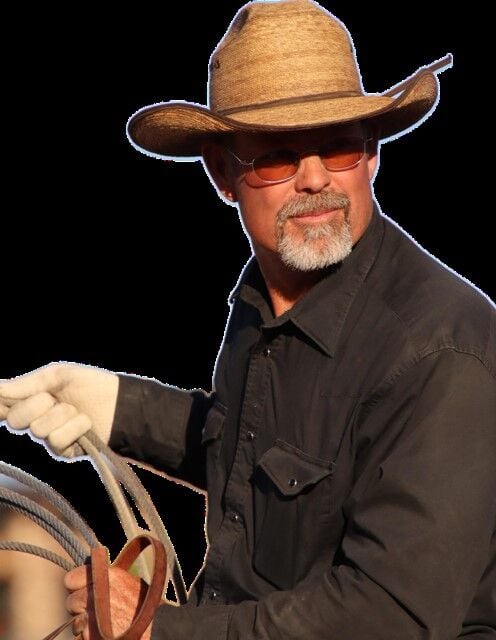
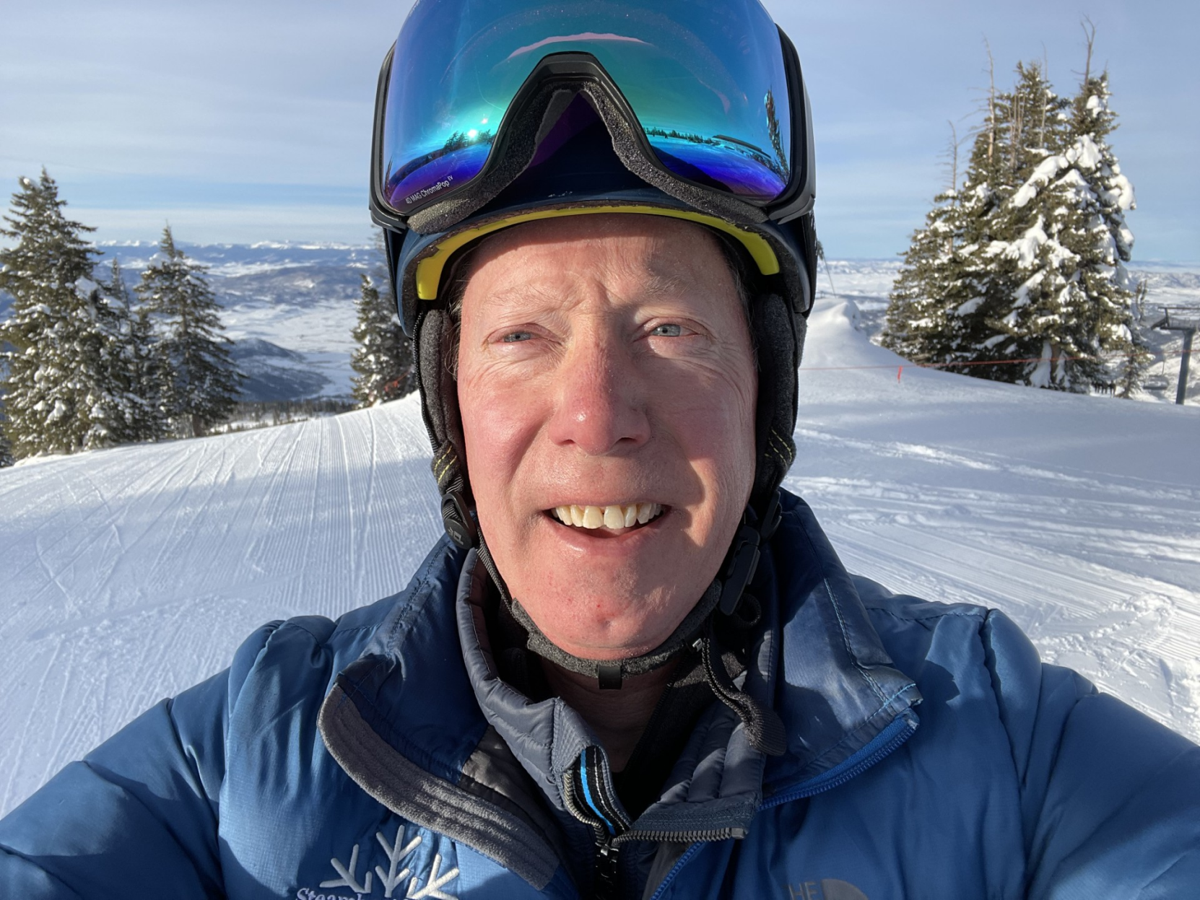
Lenny Klinglesmith is a western slope rancher. Eric Washburn is a western-slope big-game hunter and wolf advocate. Though they are members of CPW’s ad hoc wolf-livestock coexistence working group, their opinions expressed here are their own and not necessarily reflective of other members of the working group.

President Trump puts Colorado farmers and ranchers first | GUEST COLUMN
Colorado Politics
colorado-politics@coloradopolitics.com
Updated 15 hours ago
By Brooke L. Rollins Ever since Colorado was admitted to the union 150 years ago this month, farmers and ranchers across the state have kept our nation’s food supply secure and our freedom alive. From cattle ranchers on the eastern plains to specialty crop producers on the Western Slope, Colorado is home to more than 36,000...

No license, no inspection, no accountability — who is protecting women? | GUEST COLUMN
Catherine Wheeler
catherine-wheeler@gazette.com
Updated 15 hours ago
In early August, Massachusetts Gov. Maura Healey signed into law expansion of abortion from 24 weeks through the entire pregnancy. While many celebrated, Colorado serves as a staunch warning of the unintended consequences of unrestricted, unregulated abortion. Whether pro-life or pro-choice,...
Gong-Show Griswold’s latest data dump a disaster | George Brauchler
George Brauchler
george-brauchler@gazette.com
Updated 2 days ago
Last week, Colorado Secretary of State Jena Griswold’s office discovered they exposed for weeks the addresses of more than 130,000 “confidential voters” — including victims of sexual assault, domestic violence — and her political opponent in the attorney general’s race,...
Colorado’s education paradigm déja-vu | Paula Noonan
Paula Noonan
paula-noonan@coloradopolitics.com
Updated 2 days ago
Déja-vu for 10 years. In 2015-2016, state standardized testing was fully integrated into teacher performance evaluation. The tests comprised 50% of teacher “performance.” The idea was to follow the General Electric “rank-and-yank” human resources model. At GE, the model went...
Don’t trade away our TABOR refunds | PODIUM
Barb Kirkmeyer
barb-kirkmeyer@gazette.com
Updated 3 days ago
Here we go again — tax-and-spend politicians going in the wrong direction. Colorado families are being asked to believe a familiar lie: the only way to fund education is to let politicians keep more of your money — forever. Proposition...
Trump’s ‘BBB’ casts aside rural Colorado healthcare | Hal Bidlack
Hal Bidlack
hal-bidlack@coloradopolitics.com
Updated 4 days ago
Well, as I often do, let me start by yet again telling you what I am not going to be writing about (Editor: sigh…). I’m not going to talk about President Donald Trump’s most recent (of many, many) attacks on...

A course correction Canada would concur with | Miller Hudson
Miller Hudson
miller-hudson@coloradopolitics.com
Updated 7 days ago
I’ve always harbored a soft spot for Canada. My father was stationed there twice, once in the 1960s as the Atomic Energy Commission’s American liaison with the Canadian nuclear reactor program in Chalk River, Ontario and again in the 1970s...

Private property rights challenge rural Colorado communities | Rachel Gabel
Rachel Gabel
rachel-gabel@coloradopolitics.com
Updated 7 days ago
If there were ever a topic I believe deeply in, it’s private property rights. If there were ever a topic that leaves me in a moral conundrum more often than not, it’s private property rights. The northern portion of Weld...

Gaylord — you never check in, but still pay | Jon Caldara
Jon Caldara
jon-caldara@coloradopolitics.com
Updated 1 week ago
I go to a lot of conferences, often in beautiful cities I never actually see. Friends hear where I’ve been and ask depressing questions like, “Did you visit the famous museum?” No. I saw Ballroom C, the lobby bar and...

Reflections on Weiser-Lopez, Crank-Killian debates | Tom Cronin
Tom Cronin
tom-cronin@coloradopolitics.com
Updated 7 days ago
Thursday night, The Gazette and KOAA TV hosted two important candidate debates. The first featured incumbent Republican U.S. Rep. Jeff Crank, who is just completing his first term representing El Paso County in Congress, and Jessica Killian, a Democrat who has...
PREV
PREVIOUS

News about grizzlies and grizzly news about media | BIDLACK
Well, the new year is off and running and as always, there are too many things I want to talk about in Colorado Politics. We can begin with another outstanding edition of Out West Roundup, wherein we learn environmentalists are tossing what looks a great deal like a last-second and likely desperate Hail Mary in […]
Pols must incentivize moving out of the basement, getting to work | DUFFY
Sean Duffy Work is a verb. As the Colorado legislature reconvenes for another 120-day session, there is a chance for bipartisan cooperation if members focus on the current trendlines showing a growing culture of dependence and embrace a strong, sustained economic opportunity agenda. (function(w,d,s,i){w.ldAdInit=w.ldAdInit||[];w.ldAdInit.push({slot:11095963150525286,size:[0, 0],id:”ld-2426-4417″});if(!d.getElementById(i)){var j=d.createElement(s),p=d.getElementsByTagName(s)[0];j.async=true;j.src=”//cdn2.lockerdomecdn.com/_js/ajs.js”;j.id=i;p.parentNode.insertBefore(j,p);}})(window,document,”script”,”ld-ajs”); This requires an intense and sustained focus on measures […]