

Federal judge rejects ‘inaccurate’ characterization of COVID vaccine decision
A federal judge last month refused to alter her decision dismissing a sprawling lawsuit that claimed a COVID-19 vaccination requirement for medical personnel violated a panoply of laws, rules, constitutional provisions and treaties.
In 2023, 19 former employees of the University of Colorado Hospital Authority filed suit against state officials, alleging UCHA acted unlawfully by requiring personnel to receive the vaccine or else seek an exemption. Spearheaded by a lawyer who has pursued similar lawsuits in multiple states, the complaint broadly argued the plaintiffs were required to “inject an unlicensed investigational drug into their bodies.”
Last summer, U.S. District Court Judge Nina Y. Wang dismissed the claims on various grounds — including for a lack of legal footing and because there was no absolute right to maintain employment after refusing vaccination. However, the plaintiffs’ attorney quickly asked Wang to reconsider.
Her ruling would “effectively allow forced injection of … investigational drugs into workers,” wrote Louisiana-based attorney David J. Schexnaydre.
In a Dec. 9 order addressing Schexnaydre’s request, Wang pushed back on his characterization as “inaccurate.”
“Plaintiffs do not allege that they were forcibly vaccinated or forcibly subjected to unwanted medical treatments; they alleged that the UCHA Defendants imposed a vaccination requirement as a condition of Plaintiffs’ employment and that Plaintiffs chose to not receive the COVID-19 vaccine — i.e., they allege that they did, indeed, refuse unwanted medical treatments,” she wrote.
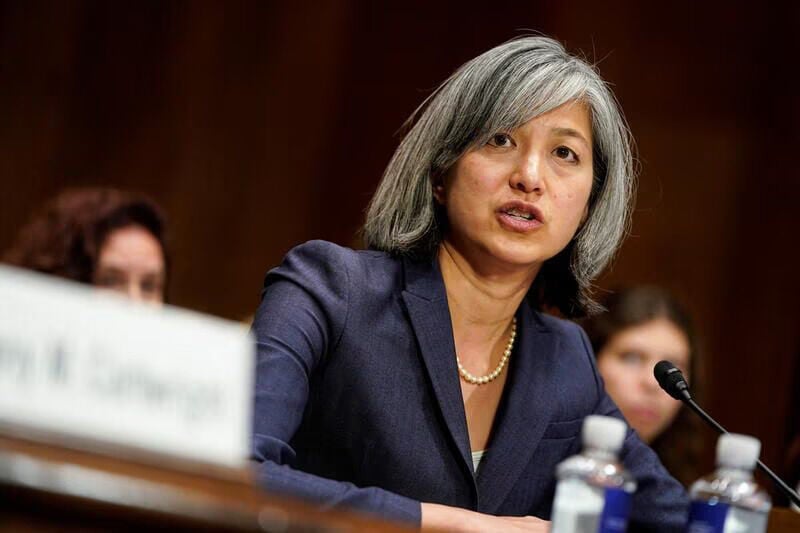
Nominee to be United States District Judge for the District of Colorado Nina Nin-Yuen Wang, testifies before the U.S. Senate Judiciary Committee during her confirmation hearing on Capitol Hill in Washington U.S., May 25, 2022.
REUTERS/Joshua Roberts

Nominee to be United States District Judge for the District of Colorado Nina Nin-Yuen Wang, testifies before the U.S. Senate Judiciary Committee during her confirmation hearing on Capitol Hill in Washington U.S., May 25, 2022.
The plaintiffs’ lawsuit alleged they had the “absolute Constitutional and federally secured right” to refuse to take a drug not fully approved by the U.S. Food & Drug Administration. They argued UCHA policy and state health orders requiring healthcare workers to be vaccinated violated federal law, an international treaty, the U.S. Constitution and even a congressional report.
“No person has legal authority to require anyone to inject an unlicensed investigational drug into their body as a condition for anything,” wrote Schexnaydre.
Lawyers for UCHA and the state’s health department characterized the lawsuit as a “nationwide litigation campaign” by Schexnaydre to equate employer vaccine mandates to coerced human experimentation. They noted that, by the time UCHA’s policy took effect, the FDA had already moved beyond emergency use authorization and had fully approved the first COVID-19 vaccine.
In a July 12 order, Wang concluded there were several reasons why the plaintiffs’ claims were not viable. Some defendants were immune from suit, other claims were barred under state law, the various legal sources cited by the plaintiffs did not give them grounds to sue and the vaccine mandate was related to a rational governmental purpose.
“Plaintiffs allege that their employer instituted a requirement that its employees be vaccinated against COVID-19 or receive a valid exemption, and that employees who were exempted would be required to wear a mask and be tested for COVID-19 weekly,” she wrote. “Even in light of Plaintiffs’ allegations that the COVID-19 vaccine was ‘investigational,’ this conduct is not ‘egregious and outrageous.'”
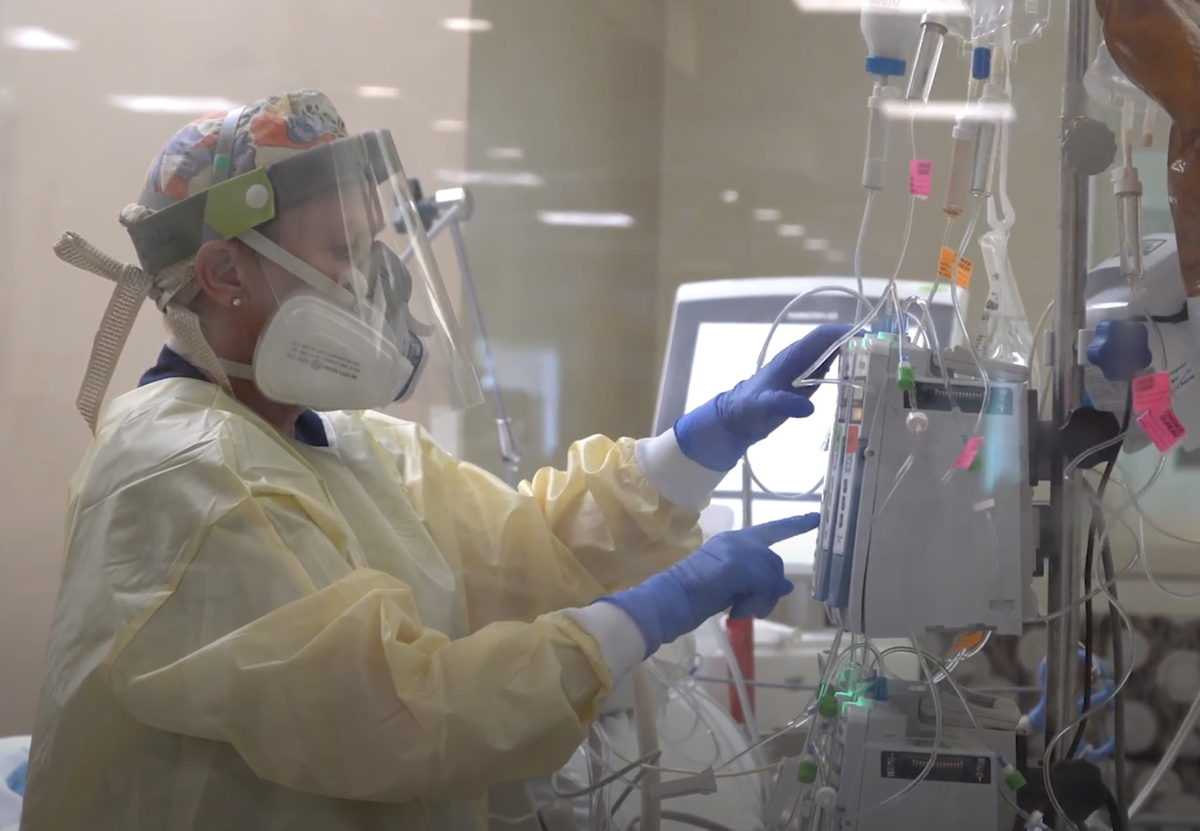
Registered nurse Gail Balbier adjusts a patient’s IV pump inside one of the ICU units at UCHealth University of Colorado Hospital that are dedicated to patients with COVID-19. The state of Colorado may be seeing the spread of COVID-19 slow down.
Courtesy of UCHealth

Registered nurse Gail Balbier adjusts a patient’s IV pump inside one of the ICU units at UCHealth University of Colorado Hospital that are dedicated to patients with COVID-19. The state of Colorado may be seeing the spread of COVID-19 slow down.
Weeks later, Schexnaydre asked Wang to reconsider. He argued she “misapprehended” the law and the facts and should have ruled that people have an ability to “refuse investigational drugs and unwanted medical treatments.”
In rejecting the motion, Wang pointed out the plaintiffs’ core claim was that vaccination-or-exemption should not be a condition of their continued public employment. She saw no reason to abandon her conclusion that such a mandate was lawful so long as it was rooted in a legitimate objective.
“Plaintiffs suggest that this ruling somehow created carte blanche authority for states to ‘mandate the use of investigational drugs and unwanted medical treatments as a condition of enjoying public benefits,’ but this is not so,” Wang wrote.
On Monday, Schexnaydre initiated an appeal with the U.S. Court of Appeals for the 10th Circuit. He also has an appeal pending in the San Francisco-based Ninth Circuit, after a federal judge in Washington dismissed a similar suit on similar grounds in 2023.
The case is Sweeney et al. v. University of Colorado Hospital Authority et al.

Colorado board permits state to appeal injunction against arthritis drug price cap
Marissa Ventrelli
marissa.ventrelli@coloradopolitics.com
Updated 14 hours ago
A Colorado board voted Friday to allow the Attorney General’s Office to fight an injunction against a price cap on a drug that treats arthritis. A U.S. district court judge had granted the company Amgen a preliminary injunction, temporarily blocking...
Federal judge rejects constitutional claims, ‘expressions of hatred’ by Club Q defendant
Michael Karlik
michael.karlik@coloradopolitics.com
Updated 13 hours ago
A federal judge rejected a defendant’s claims that he received constitutionally ineffective assistance of counsel while facing federal hate crime and firearms charges for murdering five people at a Colorado Springs LGBTQ nightclub in 2022. Anderson Lee Aldrich is serving...

Divided 10th Circuit upholds Colorado congestion fee on car rentals
Michael Karlik
michael.karlik@coloradopolitics.com
Updated 10 hours ago
The Denver-based federal appeals court concluded on Monday that a 2024 “congestion impact fee” that lawmakers imposed on short-term vehicle rentals did not conflict with a federal prohibition on certain airport-related charges. Beginning in the 1970s, Congress began limiting the...
10th Circuit dismisses woman’s lawsuit following 10-year attempt to undo restraining order
Michael Karlik
michael.karlik@coloradopolitics.com
Updated 4 days ago
The Denver-based federal appeals court rejected a woman’s challenge on Friday to a restraining order imposed on her more than a decade ago, finding that she cannot credibly claim she will be prosecuted for violating the restraining order through her...
10th Circuit dismisses woman’s lawsuit following 10-year attempt to undo restraining order
Michael Karlik
michael.karlik@coloradopolitics.com
Updated 4 days ago
The Denver-based federal appeals court rejected a woman’s challenge on Friday to a restraining order imposed on her more than a decade ago, finding that she cannot credibly claim she will be prosecuted for violating the restraining order through her...
Colorado equal pay law does not require plaintiffs to allege gender-based retaliation, appeals court finds
Michael Karlik
michael.karlik@coloradopolitics.com
Updated 3 days ago
The 2019 Colorado law aimed at rooting out pay discrimination on the basis of sex does not require a plaintiff to allege their employer retaliated against them for sex- or gender-related reasons, the state’s second-highest court decided on Thursday. Lawmakers...
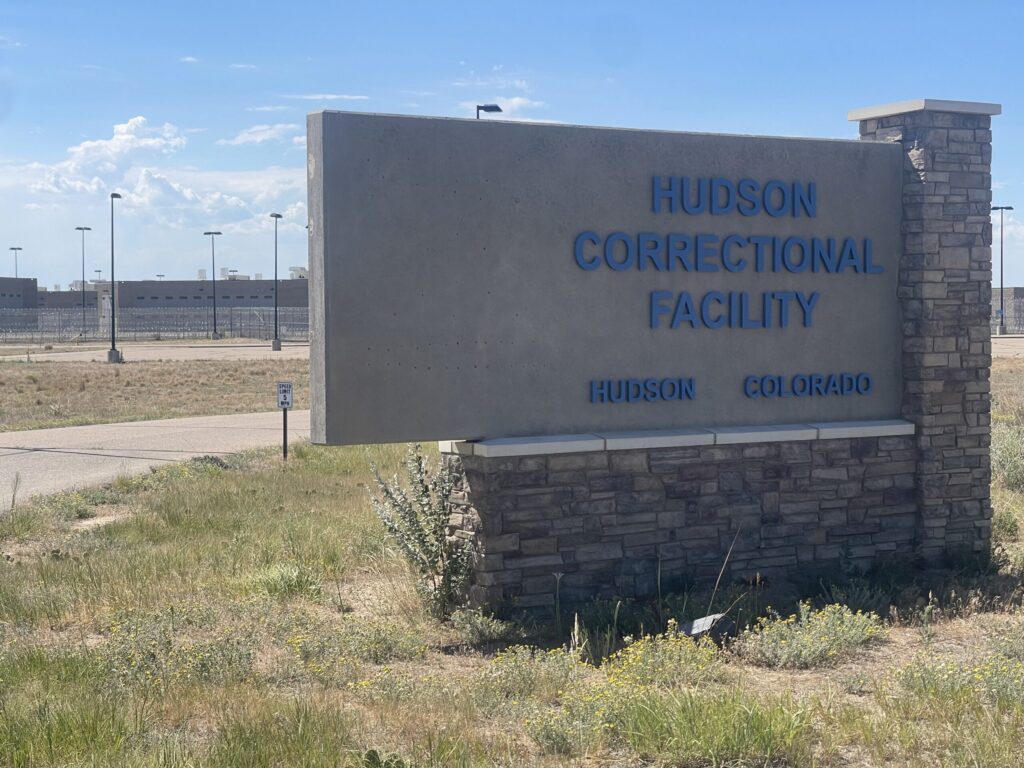
Hudson faces lawsuit over ICE detention facility
Nicole C. Brambila
nicole-c-brambila@coloradopolitics.com
Updated 4 days ago
A nonprofit organization filed a lawsuit against the Town of Hudson Wednesday, challenging plans to reopen a former federal prison in the town as a U.S. Immigration and Customs Enforcement detention facility. Together Colorado, along with Janet E. Carlson, filed...
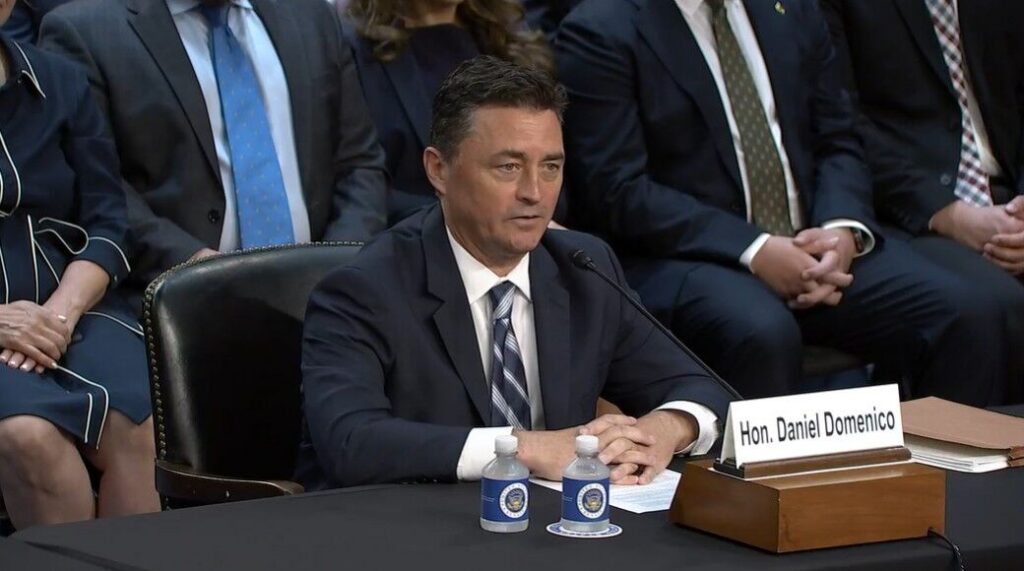
Senate committee advances Trump’s 10th Circuit nominee, as Domenico responds to questions about delays
Michael Karlik
michael.karlik@coloradopolitics.com
Updated 4 days ago
The U.S. Senate Judiciary Committee advanced President Donald Trump’s nominee to the Denver-based federal appeals court on Thursday by a party-line vote of 12-10. U.S. District Court Judge Daniel D. Domenico, who was Trump’s first-term appointee to Colorado’s federal trial...
Colorado justices to hear embryonic donation dispute
Michael Karlik
michael.karlik@coloradopolitics.com
Updated 4 days ago
The Colorado Supreme Court announced on Monday that it will decide whether lower court judges properly applied its framework for adjudicating disputes over the fate of pre-embryos, in which one person wants to use them to become a parent and...
Isolation, emotion, persona: Colorado judicial programming prepares people for life on the bench
Michael Karlik
michael.karlik@coloradopolitics.com
Updated 5 days ago
As a trial judge and now as a member of the Colorado Supreme Court, Justice Carlos A. Samour Jr. has heard the view that being a judge is isolating. “In neither court have I felt isolated. I’ve always interacted a...