

10th Circuit reinstates constitutional rights lawsuit against Douglas County child welfare workers
The federal appeals court based in Denver reinstated a father’s lawsuit on Thursday against two Douglas County child welfare workers, who allegedly violated his constitutional rights in their investigation of suspected child abuse.
A three-judge panel for the U.S. Court of Appeals for the 10th Circuit noted a trial judge had previously dismissed the lawsuit by wrongly relying on materials submitted by the defendants, rather than focusing on the allegations of impropriety by plaintiff Dennis Mundt.
“The district court improperly credited as true the contents of exhibits attached to the motion to dismiss, including factual assertions that are inconsistent with the allegations in the complaint,” wrote Senior Judge Paul J. Kelly Jr. in a Dec. 12 order.
Mundt alleged he had no contact with his teenage son for three months, and waited nearly 10 months before regaining equal parenting time, following the child’s removal from Mundt’s home in January 2021.
Mundt’s lawsuit alleged that on Jan. 5, 2021, his ex-spouse contacted Camille Gadziala, who was employed with Douglas County’s human services department. The message alleged Mundt had taken the couple’s child, D.J.M., to unauthorized medical appointments and potentially gave D.J.M. amphetamine.
Gadziala allegedly spoke with a nurse at the facility where D.J.M. received treatment, learning that Mundt had done nothing improper from the medical office’s point of view. She also reportedly reviewed medical records tending to undermine the allegations against Mundt.
The following day, Mundt’s ex-spouse asked Parker police to make a welfare check on D.J.M. The responding officer spoke with D.J.M. at Mundt’s house and found nothing amiss.
However, hours later, Gadziala obtained an emergency order from a state judge to remove D.J.M. from Mundt’s home. As reflected in the judge’s order, Gadziala made multiple statements Mundt considered false, including that he was “unnecessarily seeking medical care” for D.J.M., that D.J.M. “became tearful” during a home visit and that Gadziala had spoken with medical professionals beyond the one contact with the nurse.
The county then sought temporary custody of D.J.M., also using allegedly false representations. As a result, an order prevented Mundt from having contact with D.J.M. for three months.


Mundt further claimed Joi Johnson, the permanency caseworker for D.J.M., was supposed to meet with Mundt at least once per month. Instead, she failed to meet with him at all.
Mundt sued Gadziala and Johnson for violations of his constitutional right to due process and for unlawfully seizing D.J.M. The defendants asserted they were entitled to qualified immunity, which is a judicial doctrine shielding government employees from civil lawsuits unless they violate a person’s clear legal rights. Johnson also asserted she was entitled to absolute immunity because her work was “integral to the judicial process.”
In arguing that Gadziala acted reasonably by relying upon the accusations of Mundt’s ex-spouse, the defendants attached the Parker police officer’s report, the state judge’s order to remove D.J.M. and Gadziala’s affidavit outlining the history of tension between Mundt and his ex-spouse over their son’s medical care.
In January, U.S. District Court Judge Charlotte N. Sweeney found the defendants were immune from lawsuit. She determined Johnson, as the permanency caseworker, was “an official aid of the judge,” which shielded her from any liability.
As for Gadziala, Sweeney noted there must be “judicial deception” — meaning allegations that D.J.M. would not have been removed if Gadziala had not knowingly submitted false statements. Sweeney determined Gadziala could rely on the ex-spouse’s accusations to seek emergency intervention, and any discrepancies in Gadziala’s statements did not rise to the level of deception.
“Mr. Mundt falsely equates the absence of any recorded evidence of D.J.M. crying with the notion that Ms. Gadziala simply fabricated D.J.M.’s tearfulness. This equivalence borders on absurdity,” she wrote.
Sweeney concluded the 11 allegedly false statements Gadziala made were “improperly attributed” to her, “mere expressions of concern or suspicion” or “misleadingly presented,” given the documents the defendants submitted. Even if she were to ignore the challenged statements, Sweeney concluded Gadziala had enough information supporting D.J.M.’s emergency removal.
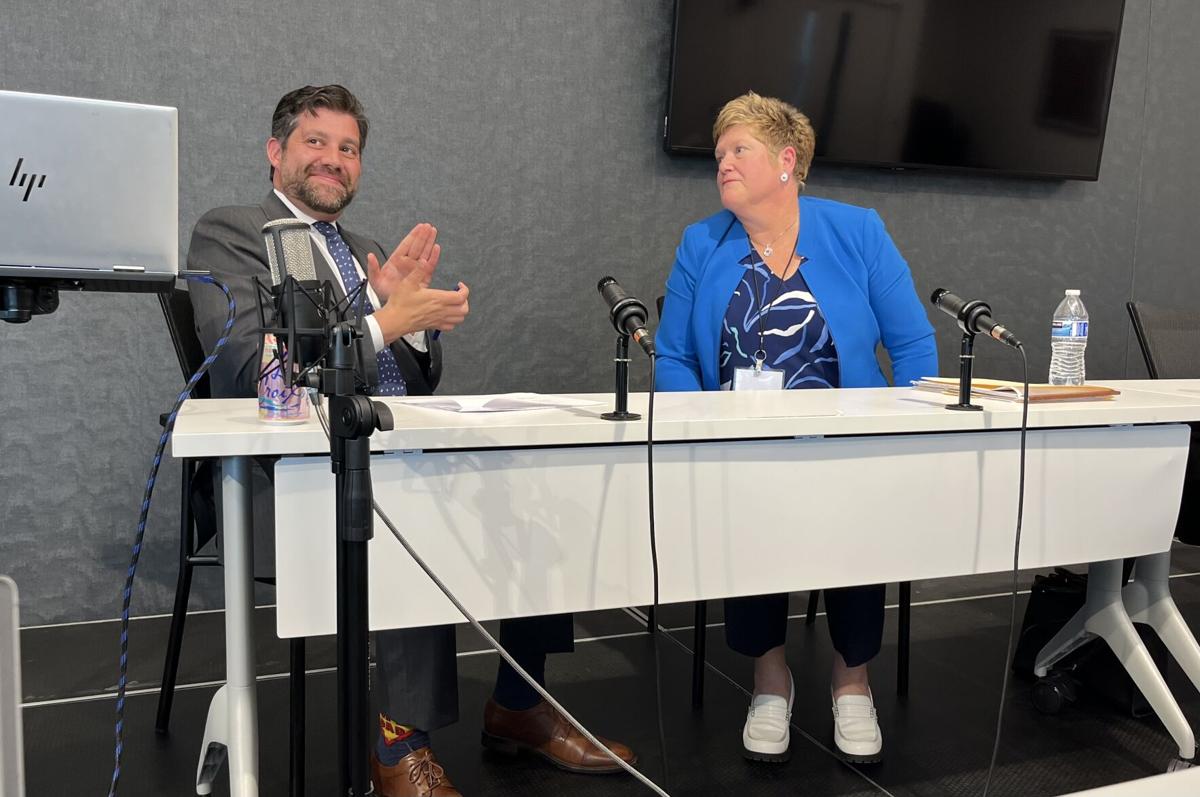
Attorney David Gartenberg applauds for U.S. District Court Judge Charlotte N. Sweeney at a legal event in Denver on July 21, 2023.
Michael Karlik michael.karlik@coloradopolitics.com

Attorney David Gartenberg applauds for U.S. District Court Judge Charlotte N. Sweeney at a legal event in Denver on July 21, 2023.
Mundt appealed to the 10th Circuit, arguing, among other things, Sweeney had jumped the gun by relying on the extra documentation for her decision, rather than focusing on the allegations in Mundt’s complaint.
The 10th Circuit panel agreed with him, suggesting Sweeney was not just skeptical of his allegations, but used the documents to establish the facts of the case.
Kelly pointed out there were other materials that could be relevant, including medical records, body-worn camera footage and a parental evaluation that allegedly cast doubt on the credibility of Mundt’s ex-spouse. Those documents “might have undermined” the defendants’ arguments, Kelly wrote, had they, too, been included.
“Because the district court’s incorrect factual assessment permeated its qualified immunity analysis,” Kelly elaborated, the panel returned the case to Sweeney to redo her decision based solely on Mundt’s complaint.
As for Johnson, the permanency caseworker, the 10th Circuit determined she was not acting in a way “integral to the state judicial process.” Therefore, she was not entitled to absolute immunity. The panel once again directed Sweeney to consider whether Johnson was eligible for qualified immunity.
The case is Mundt v. Gadziala et al.


A new day? Colorado’s troubled guardianship office pursues ‘cultural reset’
Marianne Goodland
marianne.goodland@coloradopolitics.com
Updated 3 days ago
Colorado’s guardianship program, long criticized for mismanagement and high staff attrition, is undergoing a “cultural reset,” as its new director works to repair partnerships and prepare for a major expansion under recent legislation. Created by lawmakers in 2017, the Office...

Local party leaders, incoming judge among members of judicial performance commission that violated law
Michael Karlik
michael.karlik@coloradopolitics.com
Updated 19 hours ago
A local Democratic leader and 2024 presidential elector. A legislative aide and leader in the Young Republicans. An incoming county court judge freshly appointed by the governor. They are among the eight members of the northeastern Colorado judicial performance commission...

Judge dismisses lawsuit seeking records from Colorado Democratic group
Marianne Goodland
marianne.goodland@coloradopolitics.com
Updated 2 days ago
A lawsuit seeking to obtain records from Democratic lawmakers affiliated with a caucus has been thrown out by a Denver District Court judge. On July 17, Judge Ericka Englert dismissed the April lawsuit filed by progressive activist Derrick Blanton, who...
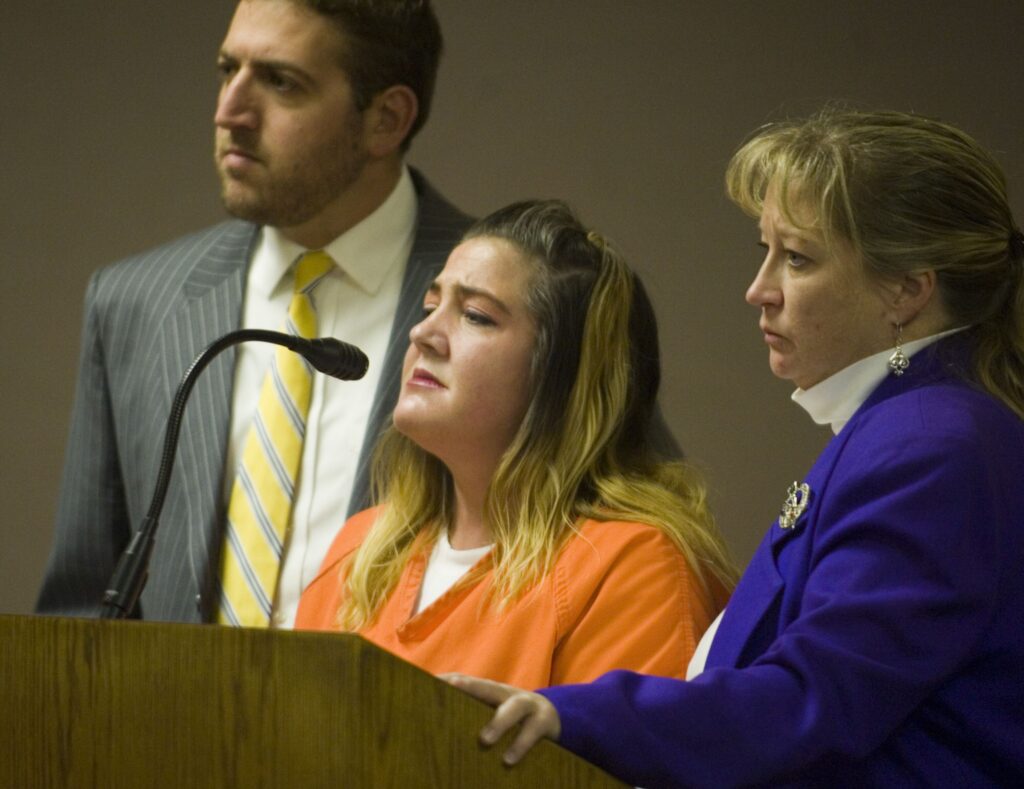
Colorado Springs mother Deborah Nicholls’ murder conviction overturned
Nick Smith
nick-smith@coloradopolitics.com
Updated 3 days ago
A Colorado Springs mother convicted in 2008 of murdering her three children in a house fire might get a new trial after a judge ruled that prosecutors withheld key evidence that could have impacted the jury’s verdict. Deborah Nicholls, whose...
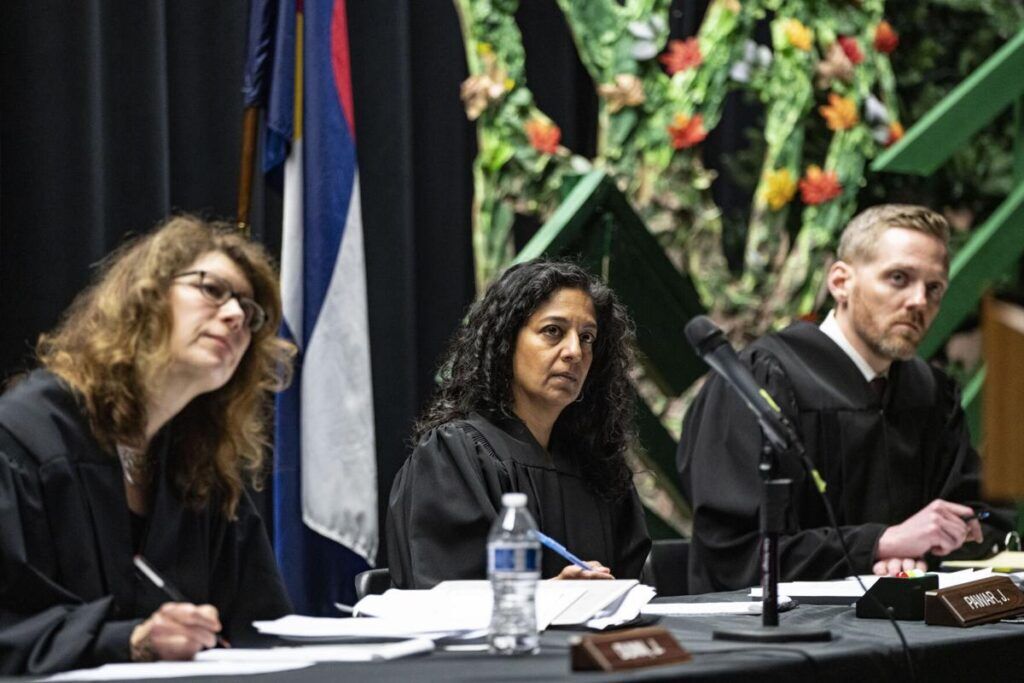
Colorado court overturns illegal $7,000 restitution order
Michael Karlik
michael.karlik@coloradopolitics.com
Updated 2 days ago
Colorado’s second-highest court overturned a Weld County defendant’s obligation to pay more than $7,000 in crime victim restitution on Thursday because a trial judge failed to issue a legally compliant restitution order at the time of sentencing. In Colorado, as...

Appeals court rejects former DougCo commissioner’s legal fee claim
Nicholas Fogleman
nicholas.fogleman@denvergazette.com
Updated 2 days ago
The Colorado Court of Appeals rejected a former Douglas County commissioner’s bid for reimbursement of attorney fees she incurred while responding to multiple investigations into her conduct. The dispute stemmed from a 2019 anonymous letter sent to county officials alleging...
Appeals court orders second look at Denver Water’s immunity for cyclist’s injury
Michael Karlik
michael.karlik@coloradopolitics.com
Updated 3 days ago
Colorado’s second-highest court ordered another look at a bicyclist’s negligence lawsuit against Denver Water on Thursday, concluding that a trial judge needed to evaluate the utility’s potential immunity using the state Supreme Court’s new guidance. Joseph A. “Joey” Scott alleged...
Labels, duration not definitive proof of ‘intimate relationship,’ Colorado court rules in domestic violence case
Michael Karlik
michael.karlik@coloradopolitics.com
Updated 2 days ago
Colorado’s second-highest court clarified on Thursday that the length of a couple’s relationship and the labels they attach to it are not conclusive evidence of whether it is an “intimate relationship” that can give rise to a domestic violence prosecution....

Colorado AG urges Supreme Court to let Boulder climate lawsuit proceed
Marissa Ventrelli
marissa.ventrelli@coloradopolitics.com
Updated 3 days ago
Colorado Attorney General Phil Weiser has filed a court brief with the U.S. Supreme Court in a lawsuit brought by Boulder city officials seeking to hold oil companies liable for their environmental impact. The case began in 2018, when the...
10th Circuit says landowner cannot sue ex-Routt County judge for statements in decision
Michael Karlik
michael.karlik@coloradopolitics.com
Updated 4 days ago
A Routt County landowner cannot sue a former judge for his allegedly inaccurate statements in a case where the landowner was not a party, the Denver-based federal appeals court decided on Wednesday. Anne Fitzsimmons, who lives in Germany, owns a...