

Colorado Supreme Court censures ex-Denver juvenile Judge Brett Woods for alcohol use, retaliation
The Colorado Supreme Court censured former Denver Juvenile Court Presiding Judge D. Brett Woods on Monday for being intoxicated on the job and for firing an employee who first reported his problematic alcohol use five years ago.
Woods was a judge on Denver’s freestanding juvenile court for 17 years before stepping down in February. His departure came months after the Supreme Court suspended him pending an investigation.
Although the nature of the inquiry was confidential, the Supreme Court’s unsigned censure decision revealed Woods’ use of alcohol on the job was long a concern. However, it went unreported after Woods retaliated against an employee who spoke up in 2019 about Woods’ behavior. Woods then lied about the truthfulness of the allegations.
“During the timeframe that Judge Woods admitted to being under the influence and other employees had concerns, Judge Woods terminated parents’ rights in over one hundred cases. If parents had come to court under the influence, they could be ordered to test and subject to contempt, with serious implications for reunification for their children,” said Melissa Michaelis Thompson, executive director of the Office of Respondent Parents’ Counsel, which represents indigent parents in child welfare proceedings.
“The double standard applied to a judicial officer, the length of time it took for this censure to be issued, and the continued lack of transparency about how Judge Woods’ use of alcohol may have impacted his decision-making is disappointing,” she added.
A set of disciplinary documents filed with the Supreme Court, which included Woods’ signed admission to the allegations on Nov. 15, indicated the problem began in 2017 after the juvenile court hired a new clerk. Within two years, the clerk suspected Woods was drunk on the job and smelled alcohol on his breath.
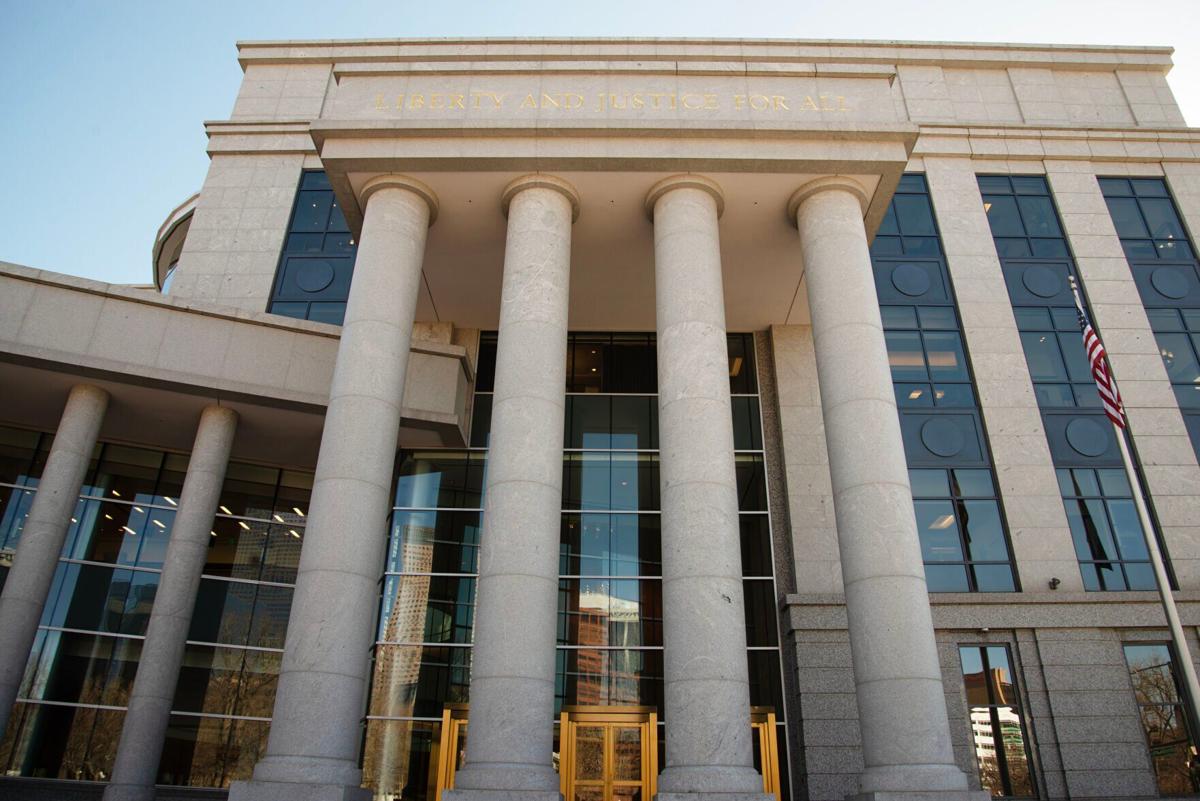
FILE PHOTO: The Ralph L. Carr Judicial Center houses both the Colorado Supreme Court and the Colorado Court of Appeals as seen on Friday, March 1, 2024. The facility's namesake is the former Colorado Governor, Ralph Lawrence Carr, who served between 1939 and 1943 and was known for his opposition to Japanese Interment camps during the time.
Tom Hellauer/Denver Gazette

FILE PHOTO: The Ralph L. Carr Judicial Center houses both the Colorado Supreme Court and the Colorado Court of Appeals as seen on Friday, March 1, 2024. The facility’s namesake is the former Colorado Governor, Ralph Lawrence Carr, who served between 1939 and 1943 and was known for his opposition to Japanese Interment camps during the time.
The clerk reported concerns to their supervisors, who then passed along the allegations to Woods himself — a practice that is now prohibited. Woods told the judicial branch’s human resources department he wanted to fire the clerk because of the false allegations.
“Judge Woods now admits that the reporting employee’s concerns were legitimate and that he was at times under the influence of alcohol while at work,” the disciplinary filings stated.
The clerk subsequently negotiated a separation agreement with the Judicial Department.
“For the next four years, no other Denver Juvenile Court staff formally reported concerns about Judge Woods’ alcohol impairment at work because of a fear of retaliation,” continued the filings signed by Woods.
In 2023, staff finally reported their concerns about Woods’ intoxication on the job. In its request that the Supreme Court suspend Woods on Dec. 21, 2023, the Colorado Commission on Judicial Discipline warned that Woods showed up to a “send-off gathering” for Judge Pax L. Moultrie, who the governor had recently appointed to the Court of Appeals, and was “visibly intoxicated.” Woods allegedly told others he would be driving home afterward.
“This reported habitual alcohol use includes Judge Woods concealing alcohol in a Starbucks cup that he keeps at his desk. Judge Woods is reported to use alcohol ‘all day, every day’ with him having struggled with alcoholism for at least 14-years,” wrote the commission’s executive director at the time, Christopher S.P. Gregory. “In addition to direct observations of Judge Woods’s alcohol use, additional witnesses have observed Judge Woods be typically disengaged in the performance of his judicial functions and, often, to improperly delegate his decision-making to others.”
Gregory added there were “imminent risks of harm” to public safety unless the Supreme Court suspended Woods immediately.
A resident and two local groups are suing Colorado Springs after the City Council approved controversial plans to build the 50-unit Launchpad Apartments for homeless young adults on the city's west side. (Getty Images, Gazette file)
Getty Images

A resident and two local groups are suing Colorado Springs after the City Council approved controversial plans to build the 50-unit Launchpad Apartments for homeless young adults on the city’s west side. (Getty Images, Gazette file)
The discipline commission later argued Woods should have known it was “both illegal and unethical” to fire the clerk for reporting Woods’ intoxication, regardless of what the human resources department told him.
Woods admitted he behaved with impropriety, engaged in retaliation and failed to perform his duties competently and diligently. He declined to seek a hearing and accepted the Supreme Court’s Dec. 9 censure.
A spokesperson for the Judicial Department did not immediately respond to questions about whether any of Woods’ colleagues on the Denver Juvenile Court were aware Woods had fired an employee for truthfully reporting his misconduct.
The Denver Gazette previously reported that at least three judges, including Justice Brian D. Boatright and Denver Juvenile Court Judge Laurie A. Clark, were approached with general concerns about Woods’ behavior.
Boatright did not participate in the censure decision. As is the Supreme Court’s practice, he did not disclose the reason he recused himself.
Editor’s note: This story has been updated to reflect that Woods was a judge on the Denver Juvenile Court for 17 years.

Denver detox center did not violate man’s rights with 10-hour hold, 10th Circuit says
Michael Karlik
michael.karlik@coloradopolitics.com
Updated 1 hour ago
The Colorado-based federal appeals court concluded on Tuesday that Denver’s detoxification facility did not violate a man’s rights by holding him against his will for 10 hours until his blood alcohol content was projected to reach zero. Unusually, Brian Garrett’s...
Federal judge clarifies ex-GOP treasurer candidate’s burden to prove defamation claims
Michael Karlik
michael.karlik@coloradopolitics.com
Updated 1 hour ago
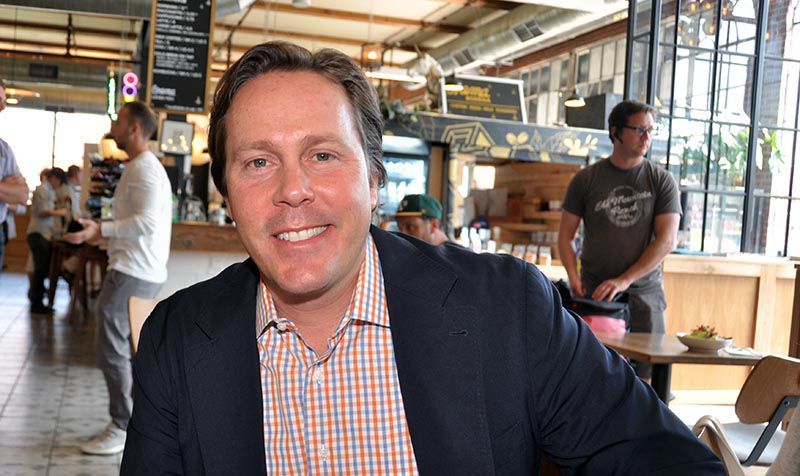
A federal judge clarified last week that businessman and former Republican statewide candidate Brian Watson will need to surmount a higher hurdle in proving his claim that a party guest’s alleged description of him as a “criminal” amounted to defamation....
Colorado board permits state to appeal injunction against arthritis drug price cap
Marissa Ventrelli
marissa.ventrelli@coloradopolitics.com
Updated 9 hours ago
A Colorado board voted Friday to allow the Attorney General’s Office to fight an injunction against a price cap on a drug that treats arthritis. A U.S. district court judge had granted the company Amgen a preliminary injunction, temporarily blocking...

Federal judge rejects constitutional claims, ‘expressions of hatred’ by Club Q defendant
Michael Karlik
michael.karlik@coloradopolitics.com
Updated 1 day ago
A federal judge rejected a defendant’s claims that he received constitutionally ineffective assistance of counsel while facing federal hate crime and firearms charges for murdering five people at a Colorado Springs LGBTQ nightclub in 2022. Anderson Lee Aldrich is serving...

Divided 10th Circuit upholds Colorado congestion fee on car rentals
Michael Karlik
michael.karlik@coloradopolitics.com
Updated 22 hours ago
The Denver-based federal appeals court concluded on Monday that a 2024 “congestion impact fee” that lawmakers imposed on short-term vehicle rentals did not conflict with a federal prohibition on certain airport-related charges. Beginning in the 1970s, Congress began limiting the...
10th Circuit dismisses woman’s lawsuit following 10-year attempt to undo restraining order
Michael Karlik
michael.karlik@coloradopolitics.com
Updated 4 days ago
The Denver-based federal appeals court rejected a woman’s challenge on Friday to a restraining order imposed on her more than a decade ago, finding that she cannot credibly claim she will be prosecuted for violating the restraining order through her...
10th Circuit dismisses woman’s lawsuit following 10-year attempt to undo restraining order
Michael Karlik
michael.karlik@coloradopolitics.com
Updated 4 days ago
The Denver-based federal appeals court rejected a woman’s challenge on Friday to a restraining order imposed on her more than a decade ago, finding that she cannot credibly claim she will be prosecuted for violating the restraining order through her...
Colorado equal pay law does not require plaintiffs to allege gender-based retaliation, appeals court finds
Michael Karlik
michael.karlik@coloradopolitics.com
Updated 3 days ago
The 2019 Colorado law aimed at rooting out pay discrimination on the basis of sex does not require a plaintiff to allege their employer retaliated against them for sex- or gender-related reasons, the state’s second-highest court decided on Thursday. Lawmakers...
Hudson faces lawsuit over ICE detention facility
Nicole C. Brambila
nicole-c-brambila@coloradopolitics.com
Updated 4 days ago
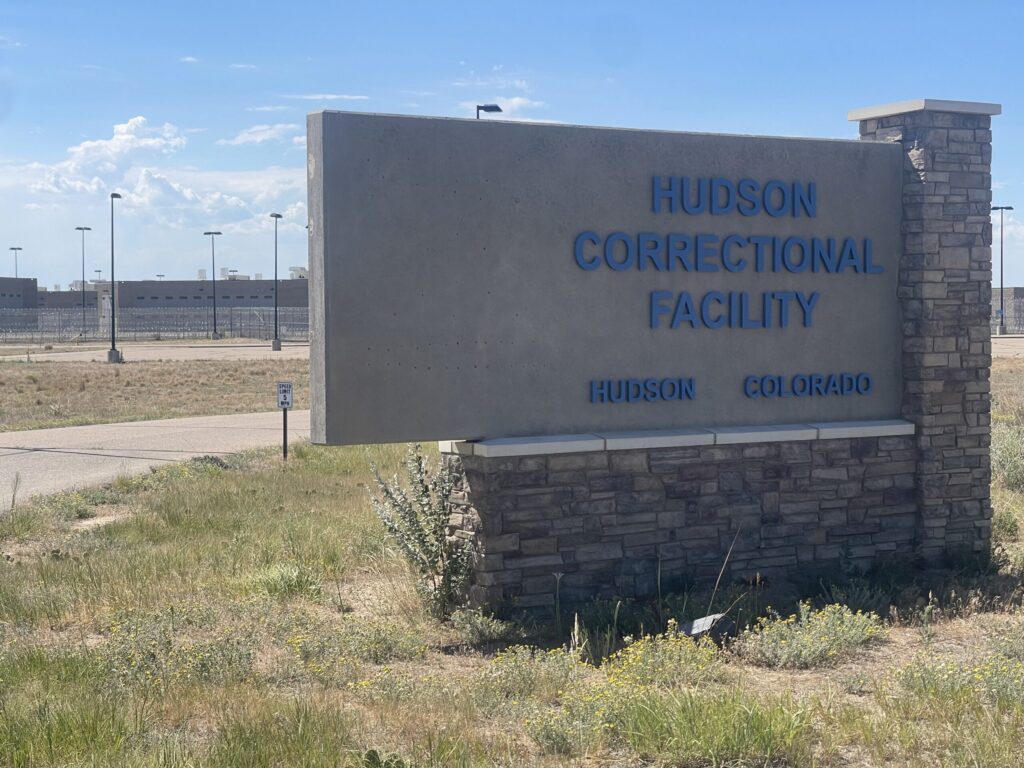
A nonprofit organization filed a lawsuit against the Town of Hudson Wednesday, challenging plans to reopen a former federal prison in the town as a U.S. Immigration and Customs Enforcement detention facility. Together Colorado, along with Janet E. Carlson, filed...
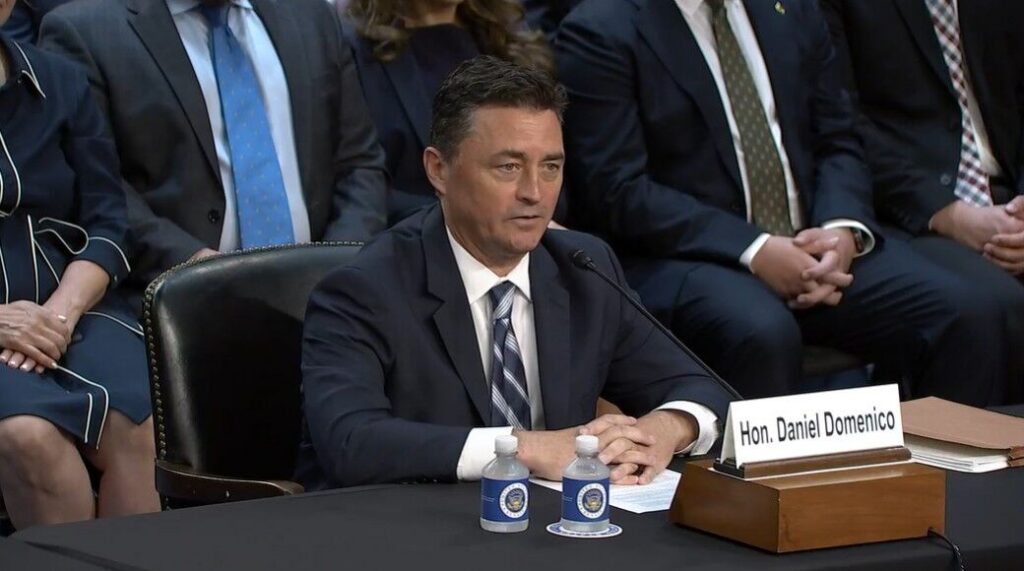
Senate committee advances Trump’s 10th Circuit nominee, as Domenico responds to questions about delays
Michael Karlik
michael.karlik@coloradopolitics.com
Updated 4 days ago
The U.S. Senate Judiciary Committee advanced President Donald Trump’s nominee to the Denver-based federal appeals court on Thursday by a party-line vote of 12-10. U.S. District Court Judge Daniel D. Domenico, who was Trump’s first-term appointee to Colorado’s federal trial...