

Homeowners’ associations band together to halt accessory dwelling units | Cronin and Loevy
There is a new political movement taking place in Colorado Springs and environs. Volunteer homeowners’ associations, previously content to wend their own way in city politics and serve only their own interests, are banding together to put broader political pressure on our City Council.
A prime example is Westside Watch, an informal association of 20 or so neighborhood associations which estimates it represents from 80,000 to 100,000 homes. It was founded a few years ago to successfully oppose a giant 400-unit apartment development off Flying W Ranch Road because of fire hazards.
Another example is Historic Neighborhoods Partnership, a combination of 10 homeowners’ associations that surround downtown Colorado Springs. It was founded in April 2021 to resist city government plans to densify the population in older neighborhoods in the central city.
Westside Watch and Historic Neighborhoods Partnership will combine forces for the first time this coming Wednesday at a regular meeting of the city Planning Commission.
They will jointly oppose a proposal by the city to allow two accessory dwelling units (ADUs) to be added to every single-family zoned residence in Colorado Springs.
An ADU is an additional house that is built on the lot of an existing house and rented to a separate family.
Westside Watch and Historic Neighborhoods Partnership will also oppose allowing the two ADUs on the lot to each be the same size as the original dwelling unit on the property.
The result would be a former single-family building lot crowded with three homes for three different families (two of the homes would be rental properties).
Backyard space for family activities such as cookouts, croquet and badminton would soon be taken over as the site for the newly allowed two ADUs.
Westside Watch and Historic Neighborhoods Partnership also charge that the “two accessory dwelling units in every backyard” proposal is being rushed through the Planning Commission and the City Council with inadequate time given for reviewing and critiquing such a complex and neighborhood-changing plan.
The two homeowners’ associations have had little more than three weeks to consider this two-ADU-per-lot plan.
They are also concerned about the impact on Colorado Springs Utilities. Since the population of neighborhoods that add multiple ADUs to multiple properties will go up, so will the demand for electricity, gas, water, and sewer and the expensive infrastructure that bring them into neighborhoods.
Key neighborhoods in the founding of Westside Watch were the Broadmoor, Cheyenne Canyon, Skyway and Mountain Shadows. Added neighborhoods included Cedar Heights, Rockrimmon and Peregrine.
But interest in joining the work of Westside Watch quickly spread to areas outside the west side of Colorado Springs. Distant neighborhoods such as the Black Forest joined up and were represented.
Dana Duggan, who lives in the Broadmoor neighborhood, is a key figure in the work of Westside Watch. She listed three subjects she believes the City Council has not paid appropriate amounts of attention: approval of the loud amphitheater that disturbed north-side neighborhoods; inadequate provision of evacuation routes from wildfires on the west side; and the proposed controversial skyscraper in downtown Colorado Springs.
Dianne Bridges, the chair of Historic Neighborhoods Partnership, lives in Historic Uptown, the quaint old neighborhood between downtown and Colorado College. She is joined by Mike Anderson of the Old North End, who serves as treasurer of Historic Neighborhoods Partnership.
Anderson is concerned that allowing two ADUs on each single-family lot will attract real estate investors, who will tear down the existing single-family home and put up a three-family apartment house for rent: a “tri-plex.”
This is not a new debate. Some urban planners love densification because it may reduce infrastructure costs and increase city revenues, among other things. It also can provide new homes for single people and young couples without children.
On the other side, as these emboldened neighborhood organizers in Westside Watch and Historic Neighborhoods Partnership attest, Colorado Springs has become an award-winning and uncommonly attractive city because of its vibrant and well-landscaped “single-family” neighborhoods.
As the pressure builds to allow denser residential patterns in Colorado Springs, expect to see more combinations of existing homeowners’ associations resisting such densification.


Zuckerberg spokesperson says his yacht did not hear call for maritime assist
The Associated Press
the-associated-press@coloradopolitics.com
Updated 2 minutes ago
The crew of a yacht owned by Mark Zuckerberg did not hear a radio call for a maritime assist from a small skiff that ran out of fuel off the coast of Alaska, and by the time it did, another...

A daring and fearless rescuer — is afraid of a debate | Dick Wadhams
Dick Wadhams
dick-wadhams@coloradopolitics.com
Updated 2 days ago
Victor Marx, the Republican nominee for governor who says he can exorcize demons and who claimed he has fearlessly rescued 45,000 women and children during 150 “high-risk” missions around the world, appears to be intimidated by the notion of debating...

Proposed EPA changes could save truckers billions | Rachel Gabel
Rachel Gabel
rachel-gabel@coloradopolitics.com
Updated 2 days ago
Agriculture is in distress across nearly every segment across much of the nation, and certainly to a more dire degree in the western United States. If it were not a historic drought, some pressures could be eased. Others can be...
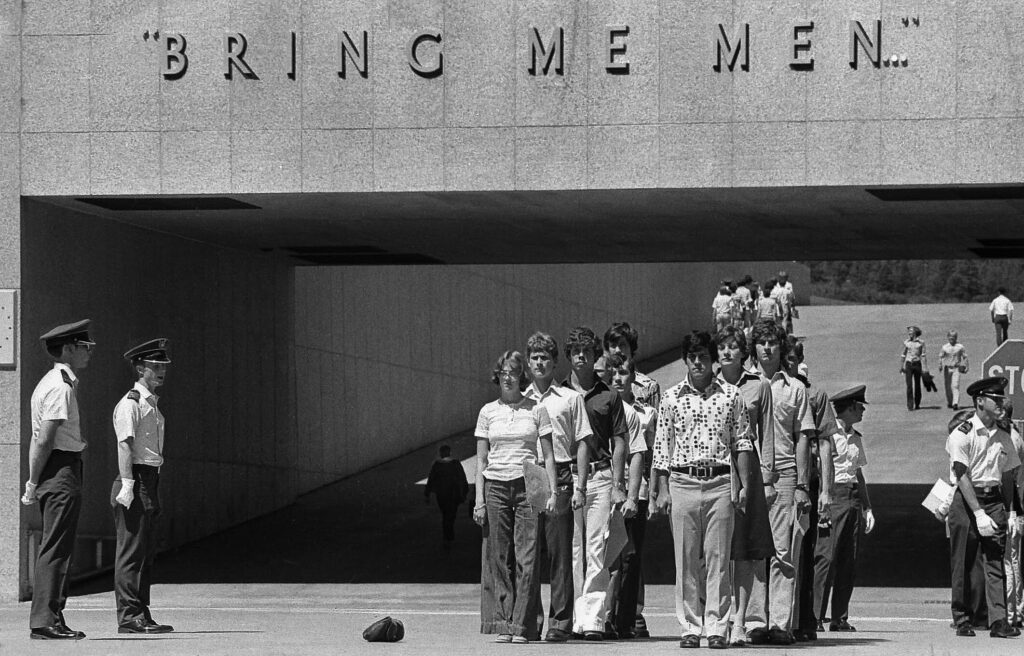
Fifty years later, women reflect on first coed class at the Air Force Academy, struggle for equality
Mary Shinn
mary-shinn@coloradopolitics.com
Updated 2 days ago
When the first female Air Force Academy cadets arrived 50 years ago this summer, they stood in front of an enormous sign on campus that read “Bring me men.” In the shadow of that sign, Kathleen Utley Kornahrens, one of...

Colorado Democrats, your time is coming | Jon Caldara
Jon Caldara
jon-caldara@coloradopolitics.com
Updated 2 days ago
Hey, Colorado Democrats! All the fun you’ve had watching Republican dysfunction in Colorado for the last 20 years was just a preview of what is about to happen to you. The Colorado Republican Party no longer exists as a competitive...

A new day? Colorado’s troubled guardianship office pursues ‘cultural reset’
Marianne Goodland
marianne.goodland@coloradopolitics.com
Updated 4 days ago
Colorado’s guardianship program, long criticized for mismanagement and high staff attrition, is undergoing a “cultural reset,” as its new director works to repair partnerships and prepare for a major expansion under recent legislation. Created by lawmakers in 2017, the Office...

As Lake Powell shrinks, marinas are having to adapt to dwindling water levels | OUT WEST ROUNDUP
The Associated Press
the-associated-press@coloradopolitics.com
Updated 5 days ago
ARIZONA Reservoirs near record lows PAGE — The Colorado River’s Lake Powell, the second largest reservoir in the U.S., is shrinking. A record-dry winter and extreme heat — as well as decades of overuse, chronic drought and climate change —...

U.S. Senate OKs funding bill to avoid government shutdown
Wire Services
wire-services@coloradopolitics.com
Updated 2 days ago
Hemp provision became point of contention WASHINGTON • The U.S. Senate in an overnight vote Saturday approved a short-term measure to fund federal agencies into early December and avoid a government shutdown during the middle of campaign season. The late-summer...

Colorado Politics Calendar Aug. 10-16
Rachael Wright, Special to Colorado Politics
rachael.wright@coloradopolitics.com
Updated 4 days ago
CoPo’s weekly political calendar will help you find political and public-policy events throughout Colorado. It includes candidate and issue campaign events, public policy meetings, court hearings, state and local party conventions, assemblies, debates, rallies, parades, speaking engagements, traveling dignitary appearances,...

Wirth downplays Social Security disaster talk | A LOOK BACK
Rachael Wright, Special to Colorado Politics
rachael.wright@coloradopolitics.com
Updated 4 days ago
Forty-five years ago this week: “As time goes on,” said Democratic U.S. Rep. Tim Wirth, of the 2nd Congressional District, “we are finding that the safety net, which was proposed earlier this year, has some very large holes in it,”...