

Federal judges clarify behind-the-scenes interactions, warn about incentives of motions backlog data
Two members of Colorado’s federal bench spoke on Thursday about the ways in which district judges and magistrate judges interact without compromising each other’s independence, plus they delivered a warning about how the public disclosure of docket data can create problematic incentives to deciding cases.
Most civil cases in Colorado’s federal trial court are assigned to a presidentially appointed district judge as well as a magistrate judge. Magistrate judges are hired by the district judges for renewable terms to help with the court’s workload, but they handle many of the same tasks as their life-tenured counterparts, including presiding over cases on their own.
U.S. Magistrate Judge N. Reid Neureiter said everyone on the court takes the independence of magistrate judges seriously, and he has never experienced pressure to rule a certain way on cases where he was paired with a district judge.
“If I was thinking somehow, ‘If I come down this way, I might not get renewed,’ or if there was pressure from a (district judge),” he said, “then I’m just a glorified law clerk.”
“Those are discussions that don’t take place,” echoed U.S. District Court Judge S. Kato Crews, speaking alongside Neureiter at the Alfred A. Arraj U.S. Courthouse in downtown Denver.
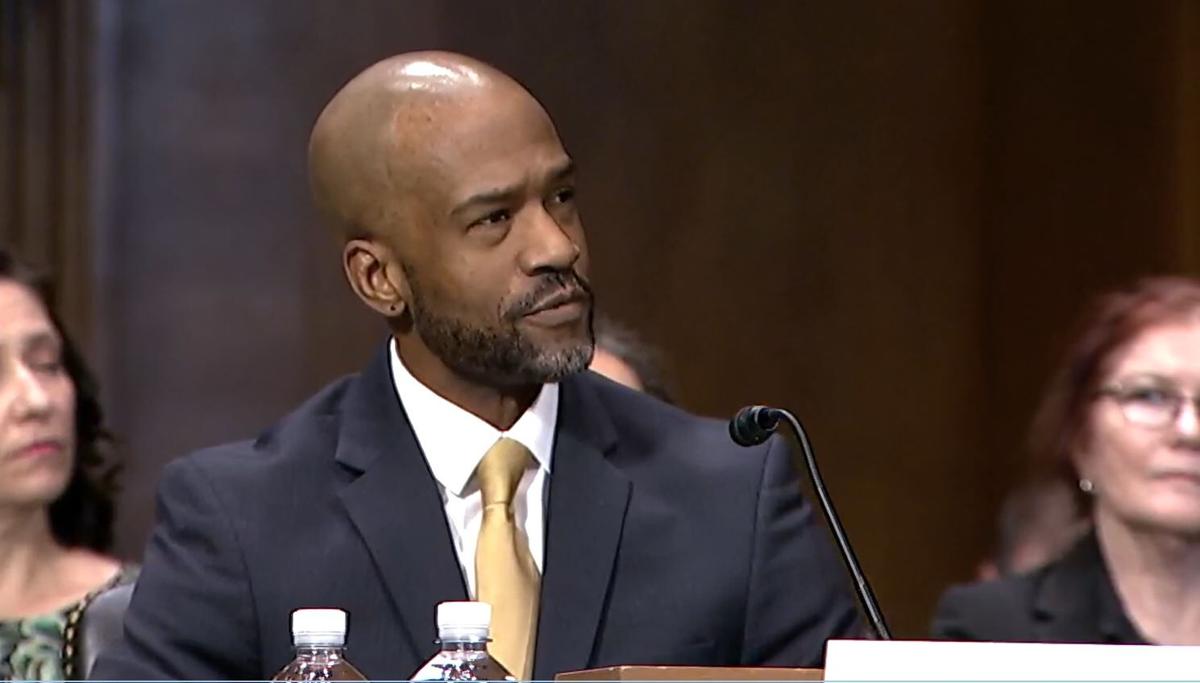
U.S. Magistrate Judge S. Kato Crews testifies at his confirmation hearing to be a district court judge on March 22, 2023.

U.S. Magistrate Judge S. Kato Crews testifies at his confirmation hearing to be a district court judge on March 22, 2023.
The men clarified that district and magistrate judges do communicate about procedural issues in cases or discuss problematic behavior from attorneys. Although district judges will refer certain motions to magistrate judges for a recommendation in lieu of deciding the issue outright, there may also be a conversation about the district judge reclaiming the motion for themselves.
“If a motion were referred and then pulled back, I would have five billion conspiracy theories about why that would happen,” noted attorney Mari Newman, who moderated the discussion.
The judges ticked through reasons why a district judge might legitimately reclaim a motion: to free the magistrate judge up for other business, to better sequence pending matters on the docket or because a referral does not make sense after all.
Neureiter described one instance of having a motion to dismiss referred to him in an incarcerated plaintiff’s lawsuit. The plaintiff, representing himself, filed a 25-page handwritten response, which the district judge’s staff rejected for being five pages longer than the judge’s practice standards outlined.
“This is an inmate writing out longhand and photocopying and sending in this thing,” Neureiter said. “Now this guy has to go back and do this again? If you’re going to refer the motion to me, let me decide whether the motion violates the practice standards.”
He added that he communicated with the district judge on the case, who agreed Neureiter should be the one to decide whether to accept the plaintiff’s filing.
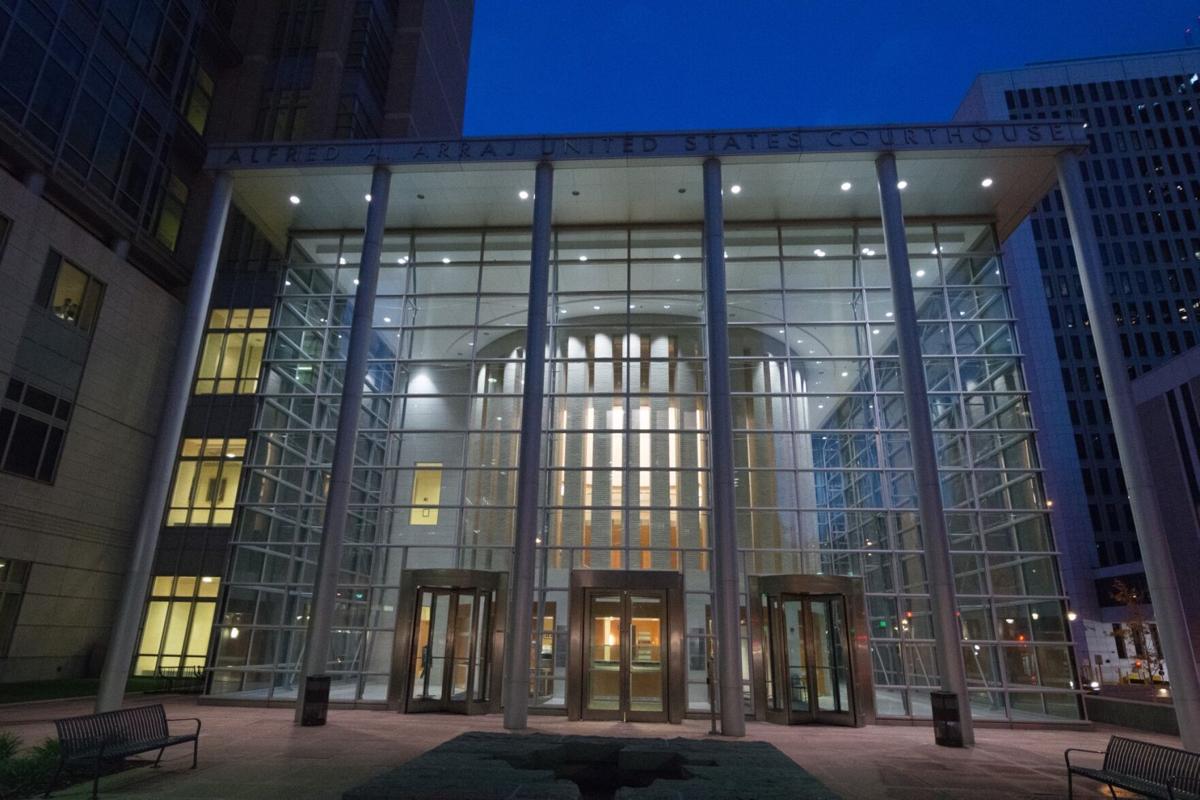
The Alfred A. Arraj U.S. Courthouse in downtown Denver. (Photo courtesy of United States District Court - Colorado)

The Alfred A. Arraj U.S. Courthouse in downtown Denver. (Photo courtesy of United States District Court – Colorado)
Although Neureiter and Crews started as magistrate judges around the same time in 2018, President Joe Biden appointed Crews as a district judge this January. He is one of only three magistrate judges ever to sit on the district bench in Colorado, all of whom are current Biden appointees.
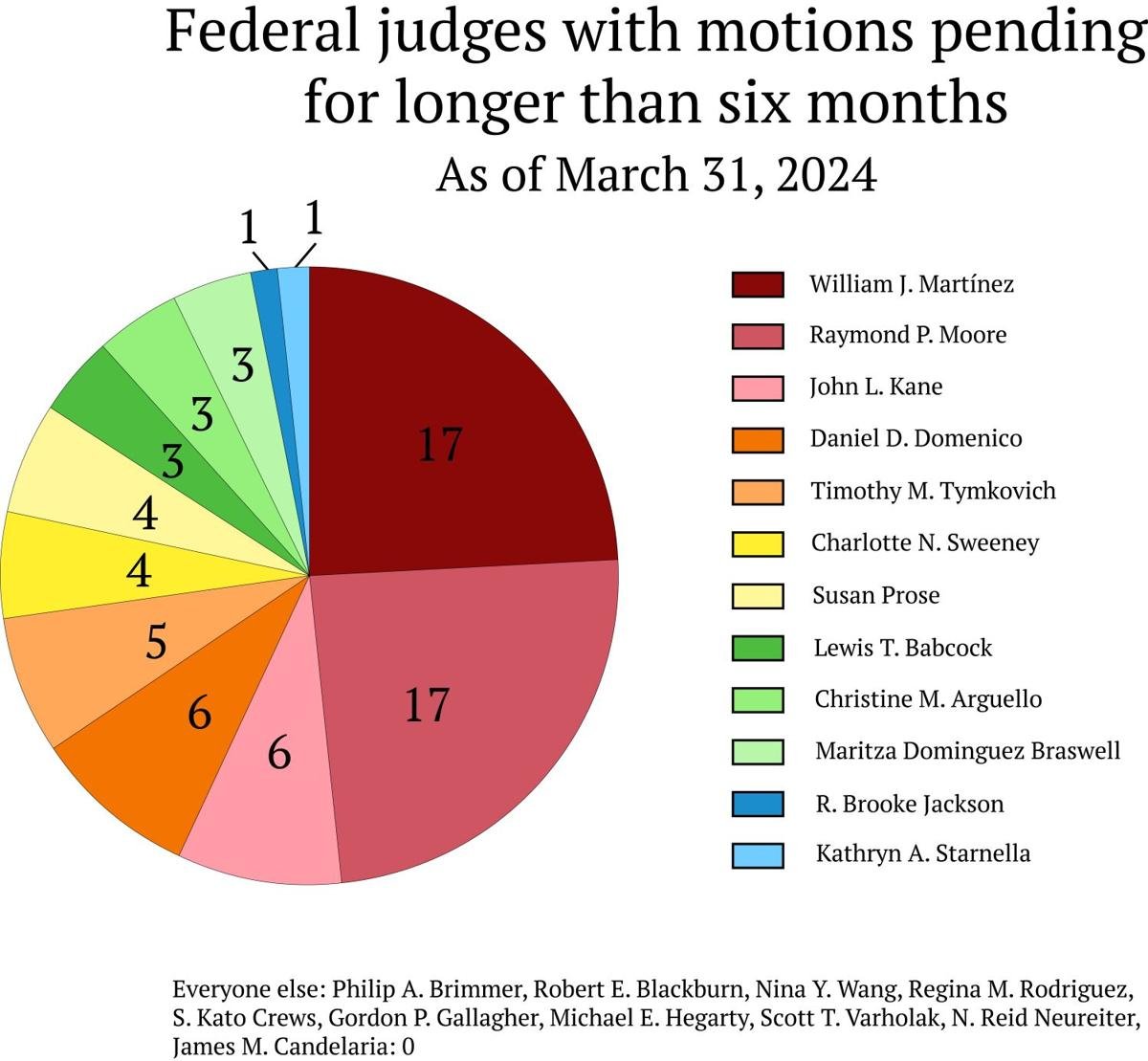
The men spoke about another aspect of the federal judiciary that affects their own work as well as their relationship as district and magistrate judges: the six-month motions list.
Under the Civil Justice Reform Act of 1990, the judiciary issues public reports twice per year showing how many motions were pending for longer than six months as of March 31 and Sept. 30 on each district and magistrate judge’s docket. A motion becomes “pending” 30 days after its filing.
The public disclosure was intended to lead to accountability for trial judges, but Crews said the data can also cause judges to focus too much on clearing their lists.

“At some point, you all need decisions. You all need answers. And judges understand that,” he said. “Some motions are more complex than others and they just take more time. But when a judge ends up having things on their list, it’s not because judges don’t care or judges aren’t working hard. We’re all working hard. But my concern is that if judges are issuing orders just to get that list clean, that’s detrimental to what judging and judicial decision-making is ultimately about.”
Neureiter added that magistrate judges have two lists to keep in mind: the motions pending for cases they are handling on their own and the motions referred to them in cases where they are paired with a district judge. In the latter category, a delayed motion shows up on both judges’ lists.
Sometimes, Neureiter said, a district judge will reclaim a referred motion if it is lingering too long, given the extra period already built in for the parties to object to a magistrate judge’s recommendation prior to the district judge issuing their final order.
“Some judges really care about having that number be zero, as low as possible,” he said, referring to the public pending-motions list. “So, they tell their law clerks, ‘Hey, we’ve got to get everything off the six-month list. Work on those.'”
Neureiter added that parties generally get to trial quicker if they consent to letting a magistrate judge handle the case solo. He said he recently conducted a pretrial conference in which the district judge set the parties for trial in October 2025 — on top of the previous 13 months they spent developing the evidence.
“The bad-faith car wreck case or the hail damage case where it’s one plaintiff, one defendant? Or the slip-and-fall at the Walmart?” Neureiter said. “There’s no reason in the world why that person, or even the defendant, should wait three years for a trial.”
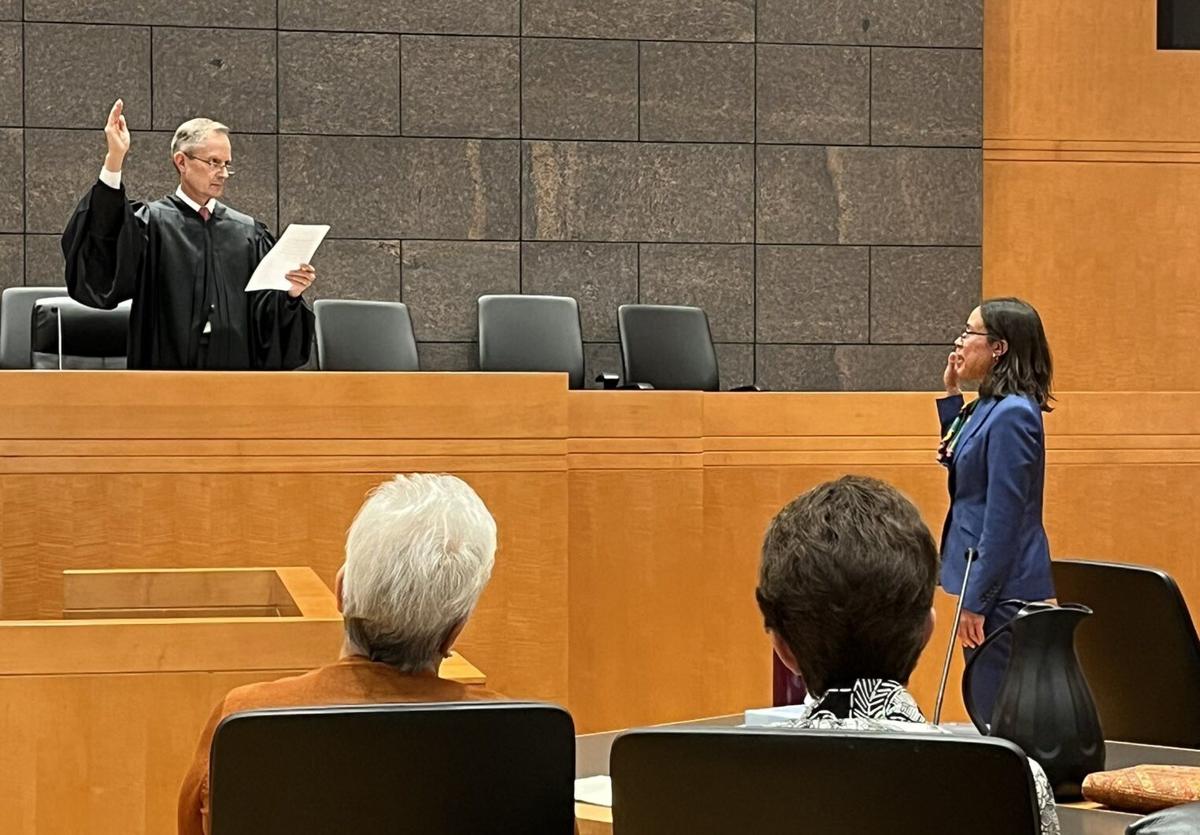
U.S. District Court Chief Judge Philip A. Brimmer swears in U.S. Magistrate Judge Kathryn A. Starnella during her investiture on Oct. 13, 2023. Photo courtesy of Phil Weiser

U.S. District Court Chief Judge Philip A. Brimmer swears in U.S. Magistrate Judge Kathryn A. Starnella during her investiture on Oct. 13, 2023. Photo courtesy of Phil Weiser
Finally, Crews and Neureiter elaborated upon the district court’s creation this year of a “chief magistrate judge” position. Colorado is in the minority of federal judicial districts with such a title, currently held by the most senior magistrate judge, Michael E. Hegarty. Crews said Colorado’s magistrate judges long supported the idea, but there was skepticism elsewhere.
“Perhaps out of concern of creating a hierarchy within the magistrate judges, or how are you going to pick the chief if someone who would make a good chief may not be a good leader?” he said.
Ultimately, Crews said the goal was to have a point person to address issues or communicate with the chief district judge on matters concerning magistrate judges.
“Let’s say a magistrate judge is having a problem with a district judge,” elaborated Neureiter. “Does the magistrate judge go to the chief district judge? What’s the way of talking about, ‘Hey, something’s not working here, but I’m not comfortable going and complaining directly. Is there somebody here who has experience, gravitas?'”
The discussion was sponsored by the Faculty of Federal Advocates.


10th Circuit dismisses Tina Peters’ challenge to confinement as moot
Michael Karlik
michael.karlik@coloradopolitics.com
Updated 10 hours ago
The Denver-based federal appeals court granted the state’s unopposed request on Wednesday to dismiss former Mesa County clerk Tina Peters’ challenge to her confinement as moot. Although Peters received a commutation of her prison sentence last month from Gov. Jared...
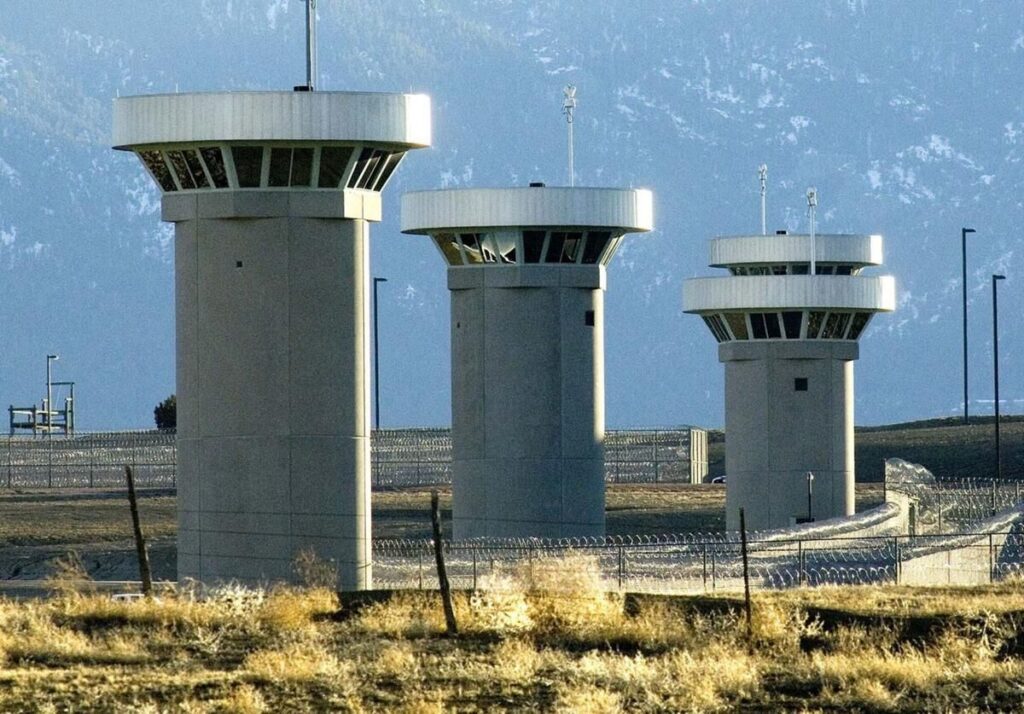
Federal judge declines to recuse from death penalty case after Supermax visit
Michael Karlik
michael.karlik@coloradopolitics.com
Updated 11 hours ago
A federal judge declined to recuse herself last month from a death penalty case arising out of Colorado’s “Supermax” prison, finding that her tour of the facility earlier this year did not bias her decision-making. U.S. District Court Judge Charlotte...
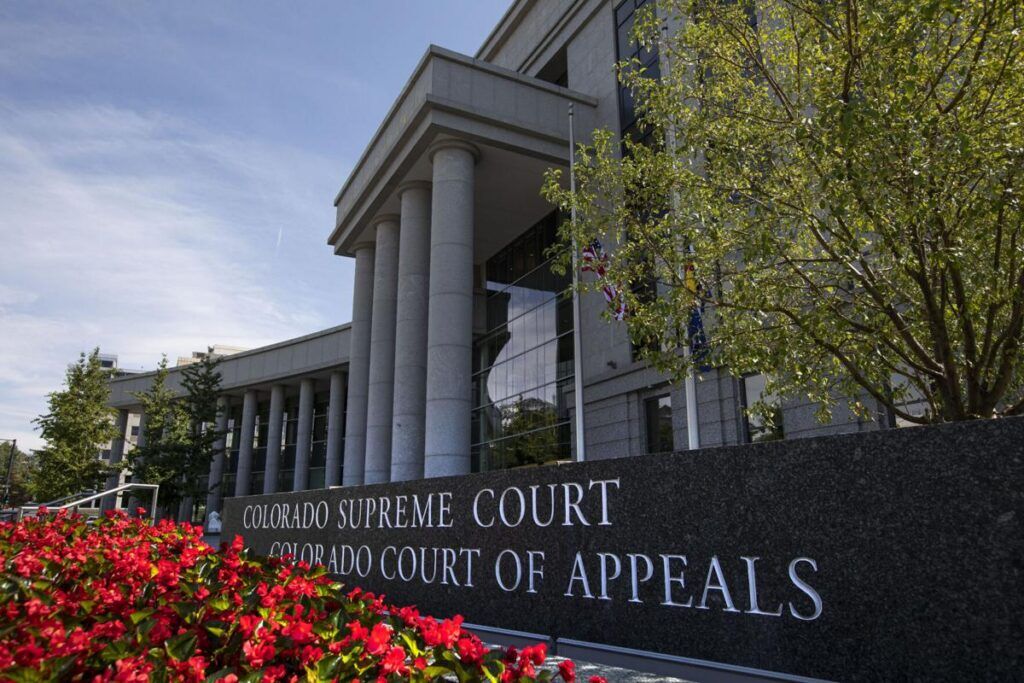
Appeals court clarifies offense of impersonating a peace officer
Michael Karlik
michael.karlik@coloradopolitics.com
Updated 16 hours ago
Colorado’s second-highest court clarified this month that a person commits the offense of impersonating a peace officer if they engage in “any conduct” while pretending to be law enforcement. In a case out of El Paso County, Richard James Coulier...
Colorado Supreme Court reverses 2 Chaffee County judges for imposing fee on habeas petitioner
Michael Karlik
michael.karlik@coloradopolitics.com
Updated 1 day ago
The Colorado Supreme Court rejected two separate appeals earlier this month from an incarcerated defendant seeking immediate release from prison, but concluded that two Chaffee County judges incorrectly required him to prepay filing fees for his cases. David J. Gottorff...
Weld County judge wrongly denied bail to murder defendant in gap between law change
Michael Karlik
michael.karlik@coloradopolitics.com
Updated 1 day ago
Colorado’s second-highest court ruled this month that a Weld County judge was wrong to deny bail to a murder defendant in the window between the state Supreme Court’s recognition of the right to bail and the voters’ subsequent overruling of...
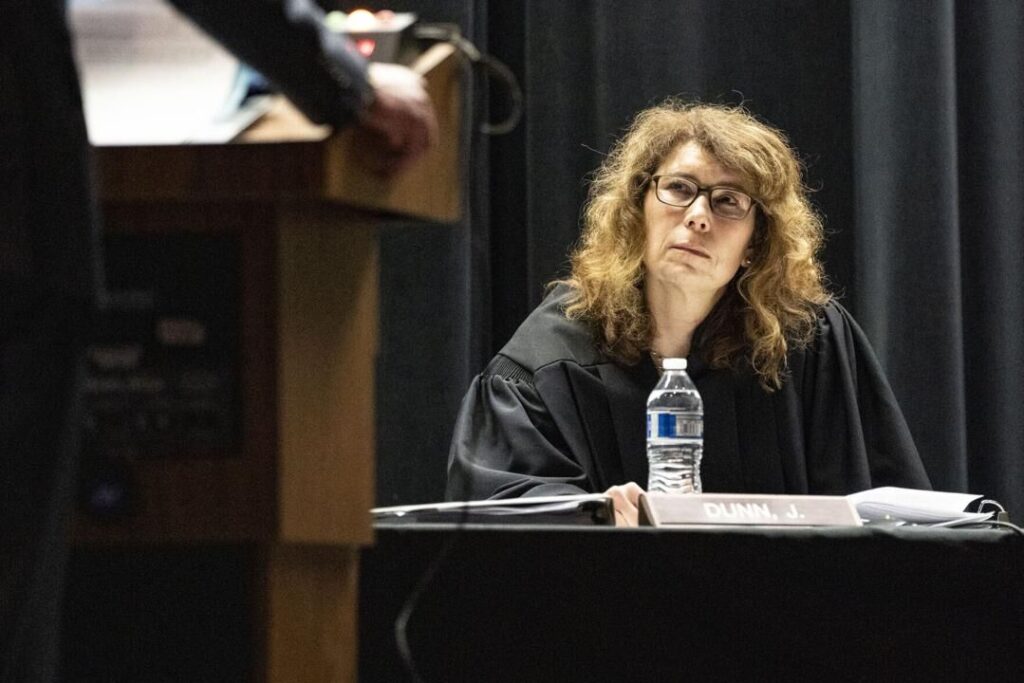
Defendants acquitted by insanity are eligible for records-sealing, appeals court says
Michael Karlik
michael.karlik@coloradopolitics.com
Updated 9 hours ago
Colorado’s second-highest court clarified last month that defendants who are found not guilty by reason of insanity are eligible to have their criminal records sealed from public view. Judges must seal criminal records if, among other things, a defendant is...
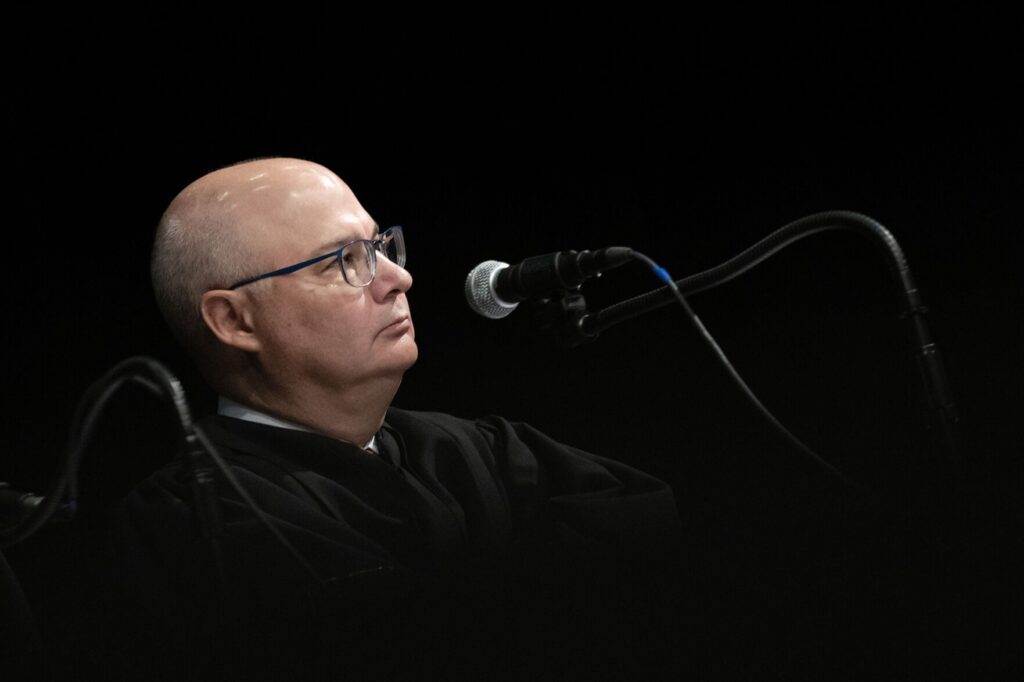
Colorado Supreme Court shuts down ‘new form of representation’ in postconviction cases
Michael Karlik
michael.karlik@coloradopolitics.com
Updated 2 days ago
While unrepresented defendants in postconviction proceedings are permitted to have a court-appointed attorney investigate and augment their claims, that is not the case when a private lawyer authors the original petition, the Colorado Supreme Court decided on Monday. In contrast...

Colorado State Shooting Association files constitutional challenge to firearms dealer law
Marissa Ventrelli
marissa.ventrelli@coloradopolitics.com
Updated 2 days ago
A firearms group has filed a lawsuit challenging a recently signed law expanding regulations for firearms dealers in Colorado. House Bill 26-1126 clarifies that firearms dealers must hold both a federal and state license to operate. The bill also allows the...
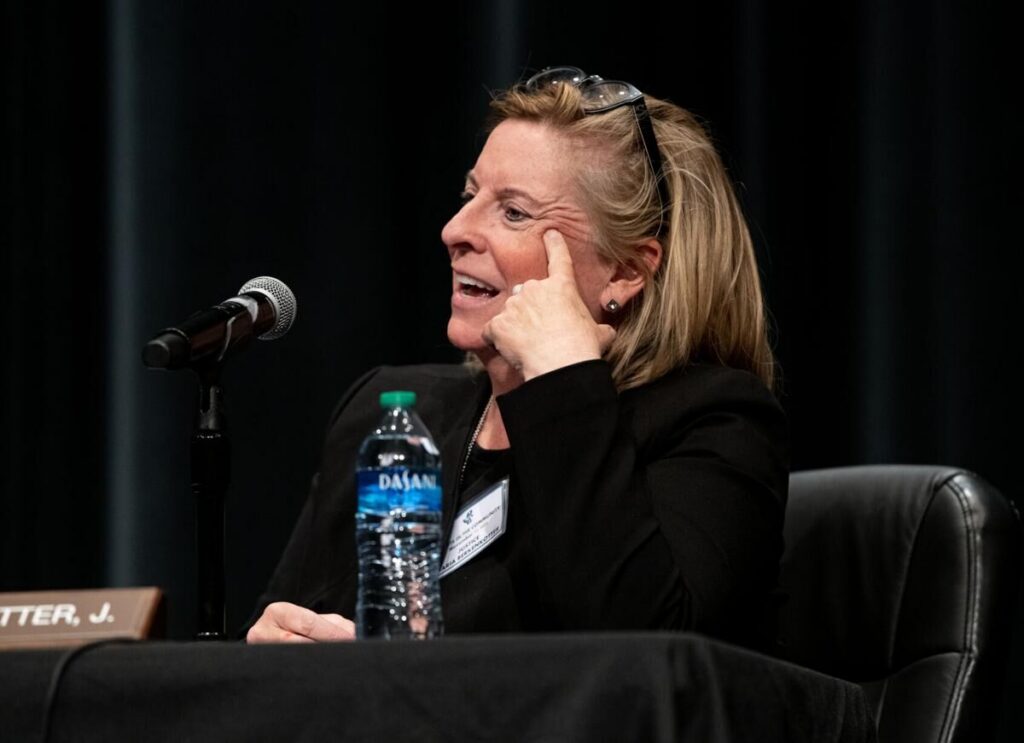
Colorado justices walk back appeals court’s expansion of rezoning via ballot box
Michael Karlik
michael.karlik@coloradopolitics.com
Updated 3 days ago
The Colorado Supreme Court ruled on Monday that rezonings of planned-unit developments cannot occur through a vote at the ballot box, reversing an appellate decision that found such changes were fair game for a popular vote. In contrast to traditional,...

Colorado Supreme Court recognizes right to self-defense in workplace
Michael Karlik
michael.karlik@coloradopolitics.com
Updated 2 days ago
The Colorado Supreme Court recognized on Monday that there is a right to self-defense in the workplace for which employers may not terminate workers so long as they lawfully exercise that right. The court’s majority in the 5-2 decision cautioned...