

Colorado Parks and Wildlife Commission overturns staff on wolf kill, orders payment to rancher
Over the last year, a common issue between Colorado Parks and Wildlife and ranchers is the state agency’s slow response in investigating wolves killing livestock and how a lack of training leads to incorrect determinations.
Last week, the Colorado Parks and Wildlife Commission rejected a staff recommendation to deny a claim for a calf killed by a wolf on a Silver Spur ranch near Walden. The commission instead voted to approve the payment, ordering the wildlife agency to reverse its original decision that it was not a wolf kill.
The commission voted, 5-4, to reject the staff recommendation and identically to approve the payment.
State law allows up to $15,000 per livestock animal on a depredation claim. This is the first time CPW staff has been overruled on a claim denial.
Commissioners who voted in favor of paying the claim cited the age of the calf killed by the wolf last May on a Silver Spur Ranch property. An attorney representing Silver Spur, Nick Haderlie, told the commission on Oct. 3 that the calf was three months old, and that’s not a calf that would be attacked by a coyote, as was claimed by CPW’s Jackson County district wildlife manager Jacob Way.
Haderlie pointed out that CPW staff did not follow agency rules in the claims process, which raised the question of just how much CPW staff know about conducting wolf depredation investigations.
CPW’s Luke Hoffman said the claim was denied based on CPW regulations. These regulations require the claimant to prove with a preponderance of evidence — more likely than not — that a wolf killed the calf.
He said the calf was only a month old and had mostly been consumed, making it difficult for Way to investigate. There were also minor puncture wounds, about an inch apart. A 20 to 30-pound coyote’s teeth are spaced at that distance, whereas a wolf’s spacing is 1.5 inches to two inches. That supports coyote depredation versus wolf depredation, Hoffman said.
He pointed out that there were also coyote tracks near the carcass. After Way finished the investigation, he offered the carcass to the ranch so it could do an independent investigation or get a second opinion, which he said the ranch declined.
Hoffman also disputed the claims, including those made during public comment just minutes earlier, that CPW staff do not know what wolf depredations look like and are not adequately trained to do these investigations.
“This is contrary to what CPW has been working hard to do the last several years,” Hoffman said. “There’s many very skilled CPW staff who really know the differences between what coyote, wolf and big game depredations characteristics look like. Those people serve the communities they work with.”
Haderlie pointed out that Silver Spur has ranches in four states and has been an active partner with the state. That includes allowing state access to its private lands for logging and other state land management needs. About 140,000 acres of Silver Spur land is enrolled in the state’s ranching for wildlife program, making private land available for hunting and wildlife management. It is one of the top 10 cow-calf producers in the country, Haderlie said, adding it has a long history of working cooperatively with the state, including CPW.
Silver Spur ranches date back to the 19th century. They are currently owned by telecommunications pioneer John Malone, who bought them in the 1980s.
The claim was submitted on May 8, but Way asked them to resubmit the application with a different date after staff had allegedly denied it. “We felt that was inappropriate. ” They should have just processed the application that was presented, Haderlie said.
In a phone conversation on May 10, Haderlie said Way indicated he would follow up with all the evidence CPW looked at and investigative materials. Haderlie said he never heard from Way again.
A month later, the ranch got a letter dated June 10 denying the claim and citing regulations without explaining how those regulations applied to the claim, Haderlie said.
“You’re on your own to figure it out,” Haderlie characterized the letter as telling them. It did not include any information on the basis for the denial.
Haderlie denied Hoffman’s assertion that CPW had offered the carcass to the ranch for an independent investigation. Haderlie said that if it had been provided to an employee on the grounds, which would have been inappropriate, it should have gone through him. Despite asking for the evidence, it was never provided despite their asking for it.
Once they got it, they tried to find a biologist to look at the necropsy. “It seems most biologists with wolf expertise are not inclined to help ranchers,” Haderlie said.
Haderlie pointed out that CPW rules require the area wildlife manager to confer with the claimant within 30 days of receipt of the claim to settle. That also never happened, Haderlie said, adding, “No effort to meet with us short of being here today.”
Wolf or coyote?
He said the carcass had clear signs of wolf presence as to the claim itself. Four-inch tracks were near the carcass, and Haderlie said that, while Way was careful not to call them wolf tracks, CPW never disputed it.
The report said a coyote killed the calf, and a wolf consumed the carcass, while Silver Spur believes the exact opposite. Haderlie said the ranch’s argument is based on experience. Wolves are predators, while coyotes are opportunistic scavengers. And, despite running cattle on a million acres, the ranch has never experienced a coyote attacking a healthy calf, he said. The calf weighed over 100 pounds, making it at least two to three months old. Coyotes attack weak or infirm calves, not healthy ones, he added.
Haderlie said Way was unable to determine how the calf died in his report but then claimed there was no evidence of a big game depredation despite what Haderlie called two key pieces of evidence: The wolf-sized tracks further from the carcass, drag marks, and coyote tracks closer to the carcass. This suggests the wolf killed the calf, and coyotes dragged it away, he said.
The other evidence is from the report’s information on bite marks. The report noted bite marks an inch apart, but photos showed the bite marks were larger than that, Haderlie said. He looked for information on canine bites and found a 2018 study that said the sizes of coyotes, wolves, and even foxes overlap.
“That does not conclusively establish that those are not wolf bite marks or coyote bite marks” since they can overlap, he said.
Haderlie said this is not a test case or an effort to make a political point about wolves.
“We need to know what the evidence is to prove” that a wolf attacked a calf, he said, adding that, if wolf tracks and bite marks are not enough, ranchers need more guidance from CPW.
“There’s not significant hemorrhaging” on the calf carcass, and tracks are not enough, Hoffman rebutted. The best information CPW uses is actual damage on the carcass, and sometimes there is not enough damage on the carcass to say it was a wolf, he told the commission.
He also shared the concerns raised by a Jackson County rancher earlier in the meeting who made similar claims about the inexperience of CPW staff.
Haderlie said the case demonstrates the concerns raised by ranchers. By the time CPW gets to a carcass, which can be days after, scavengers have gotten rid of what is left. In the case of the Silver Spur calf, all that was left were bones.
Commissioner Murphy Robinson raised Haderlie’s concerns about CPW’s failure to follow its process. Robinson said he looked at the report and could not find where CPW had made the required notifications or held a settlement discussion.
Hoffman said a settlement was not warranted since the claim was denied and that CPW complied with the regulations.
Haderlie said the rules require a settlement conference and disputed Hoffman’s claim that the carcass was offered to the ranch.
Commissioner Jay Tuchton defended the CPW recommendation, stating the agency did a fair job of evaluating the evidence and that he would trust the staff’s judgment rather than the commission’s.
However, commission members who are ranchers indicated that the staff recommendation does not match their cattle-raising experience. That included Commission Chair Dallas May and Tai Jacober of Carbondale, who were appointed to the commission in August.
Jacober said a coyote would not take down a three-month-old calf. While it “pained him” to go against CPW staff, May said the evidence told him something different. He believed the coyote tracks were a sign of scavenging and said he had never lost a healthy calf to a coyote.
Robinson, who agreed with May, also had concerns about the process, particularly the lack of documentation on a settlement or other problems cited by Haderlie.
The Silver Spur claim is not on the CPW’s wolf depredation website. According to that website, two claims have been paid in 2024, with the largest at $1,514 for a calf killed in Jackson County in April.
At least 17 cattle and eight sheep have been killed by wolves in Jackson and Grand counties in 2024 and since wolves were reintroduced in Colorado last December. However, ranchers said during the Oct. 3 meeting that the number is likely twice as many.
Website links that would provide more information on those claims are not working.


Colorado audit finds $175K wasted on unused state-issued cellphones
Marissa Ventrelli
marissa.ventrelli@coloradopolitics.com
Updated 21 minutes ago
Colorado spent nearly $175,000 on state-issued cellphones for employees of various departments that went unused during Fiscal Year 2025, according to a recent audit by the Office of the State Auditor. According to the audit, about 400 of the 6,688...

Adams County water district may proceed with cost-recovery lawsuit against Denver for contamination
Michael Karlik
michael.karlik@coloradopolitics.com
Updated 49 minutes ago
A federal judge rejected Denver’s arguments last week for pausing or dismissing a lawsuit brought by an Adams County special district seeking to recover its costs for addressing water contamination as a result of Denver firefighting activities. In January, the...
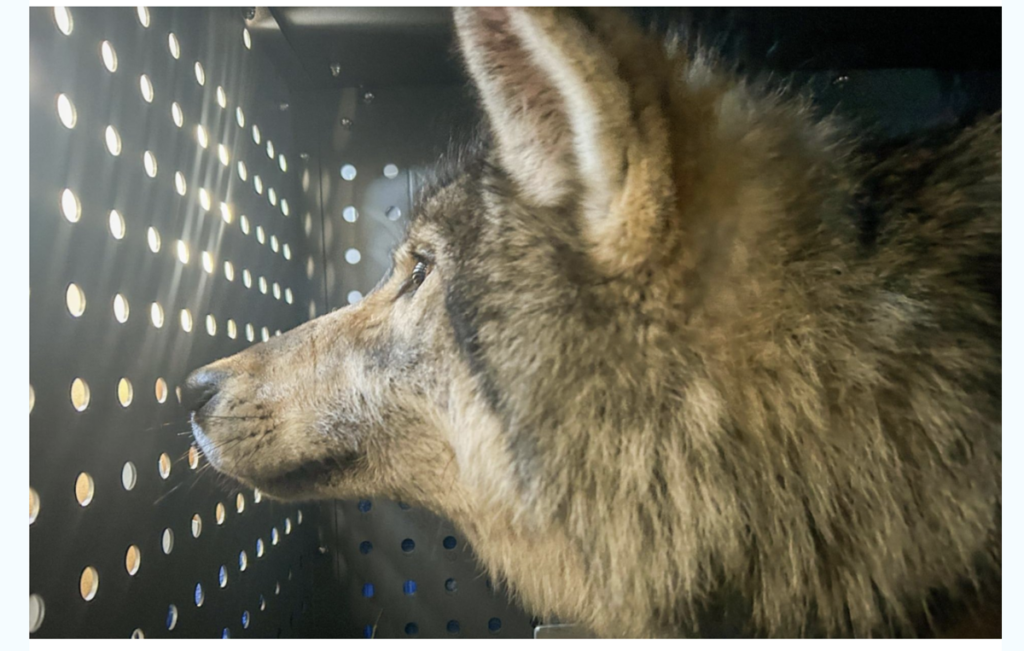
CPW: Hunter shot a protected Colorado wolf after mistaking it for a coyote
Marianne Goodland
marianne.goodland@coloradopolitics.com
Updated 51 minutes ago
Colorado Parks and Wildlife said Monday that a female wolf from British Columbia that died in January was shot by a hunter who mistook her for a coyote. The wolf, identified as 2504‑BC, was one of 17 wolves relocated since...
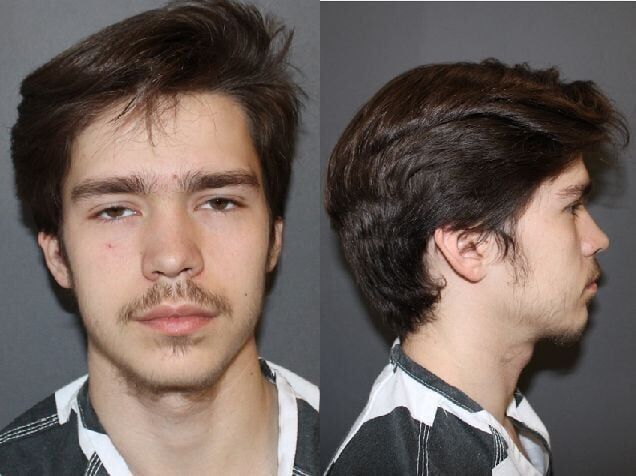
US Rep. Lauren Boebert’s son arrested, faces charges of sexual exploitation of child
Matt Kyle
matt.kyle@denvergazette.com
Updated 15 minutes ago
U.S. Rep. Lauren Boebert’s son Tyler Boebert has been arrested and faces charges of sexual exploitation of a child, according to court records. The case originates out of Garfield County in Western Colorado. Tyler Boebert, 21, faces five counts in...
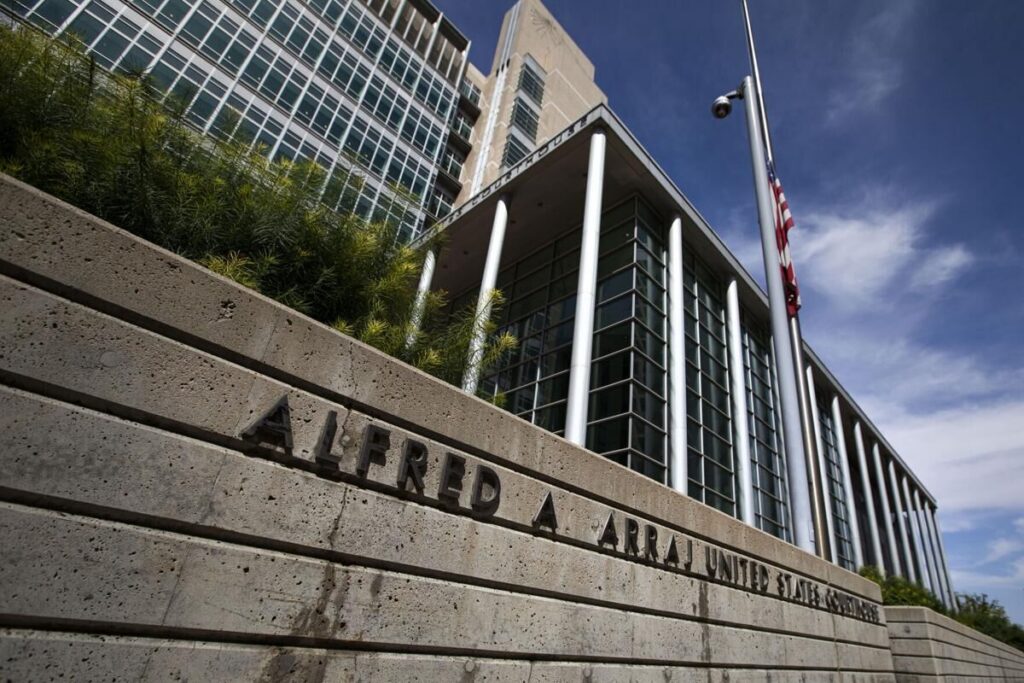
Federal judge declines to dismiss First Amendment retaliation claim against prison official
Michael Karlik
michael.karlik@coloradopolitics.com
Updated 4 hours ago
A federal judge agreed last month that an incarcerated Native American woman may pursue her claim of First Amendment retaliation against a prison official who allegedly interfered with her religious exercise. Yvonne Peterson resided at Buena Vista Correctional Facility for...
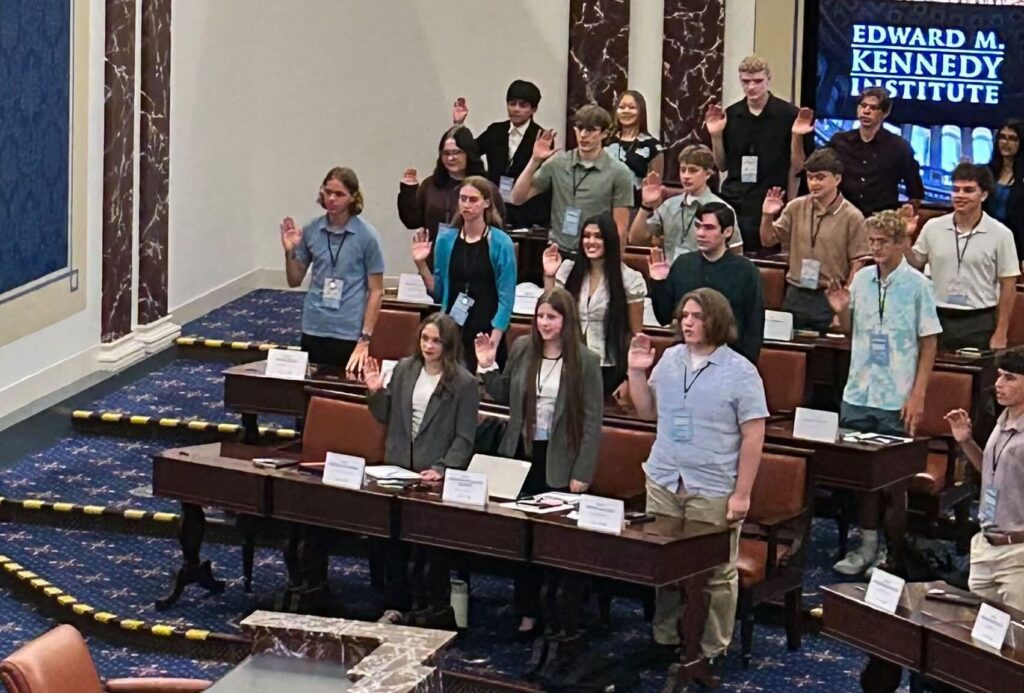
By the students, for the students: Sierra High School represents Colorado in developing national AI framework
Eric Young
eric.young@gazette.com
Updated 4 hours ago
To many, the recent, rapid development of generative artificial intelligence and its lack of frameworks and oversight may evoke comparisons to the unrestrained Wild West in the 1800s or the economic potential of the dot-com boom in the early 2000s....

Colorado’s troubled guardianship office pursues ‘cultural reset’
Marianne Goodland
marianne.goodland@coloradopolitics.com
Updated 4 hours ago
Colorado’s guardianship program, long criticized for mismanagement and high staff attrition, is undergoing a “cultural reset,” as its new director works to repair partnerships and prepare for a major expansion under recent legislation. Created by lawmakers in 2017, the Office...
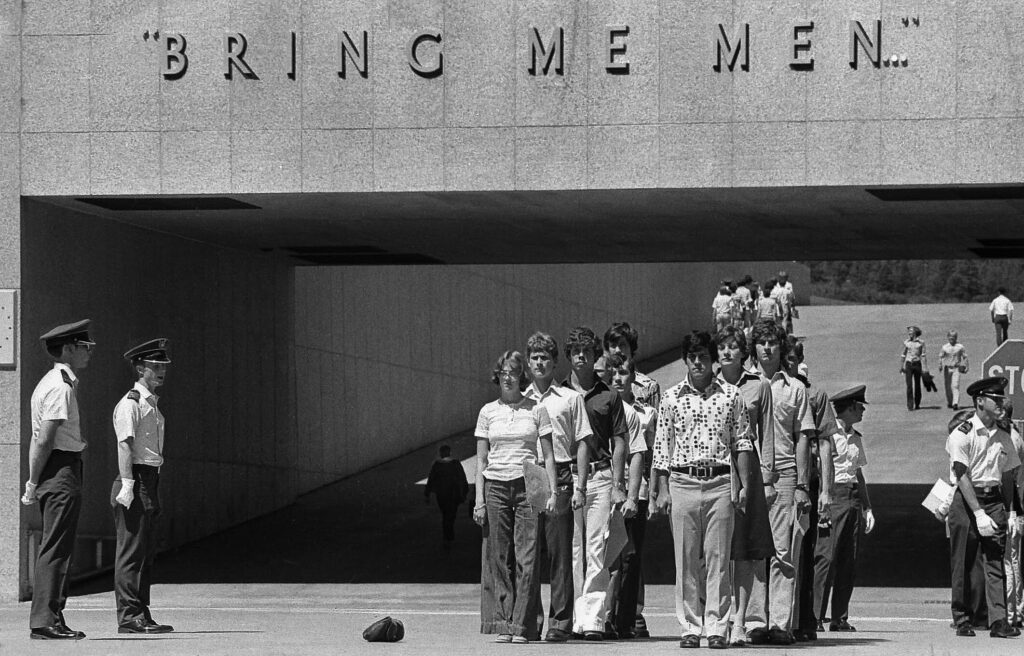
Fifty years later, women reflect on first coed class at the Air Force Academy, struggle for equality
Mary Shinn
mary-shinn@coloradopolitics.com
Updated 2 days ago
When the first female Air Force Academy cadets arrived 50 years ago this summer, they stood in front of an enormous sign on campus that read “Bring me men.” In the shadow of that sign, Kathleen Utley Kornahrens, one of...

As Lake Powell shrinks, marinas are having to adapt to dwindling water levels | OUT WEST ROUNDUP
The Associated Press
the-associated-press@coloradopolitics.com
Updated 5 days ago
ARIZONA Reservoirs near record lows PAGE — The Colorado River’s Lake Powell, the second largest reservoir in the U.S., is shrinking. A record-dry winter and extreme heat — as well as decades of overuse, chronic drought and climate change —...

U.S. Senate OKs funding bill to avoid government shutdown
Wire Services
wire-services@coloradopolitics.com
Updated 2 days ago
Hemp provision became point of contention WASHINGTON • The U.S. Senate in an overnight vote Saturday approved a short-term measure to fund federal agencies into early December and avoid a government shutdown during the middle of campaign season. The late-summer...