

Even vegans should vote against Denver fur, slaughterhouse initiatives | HUDSON
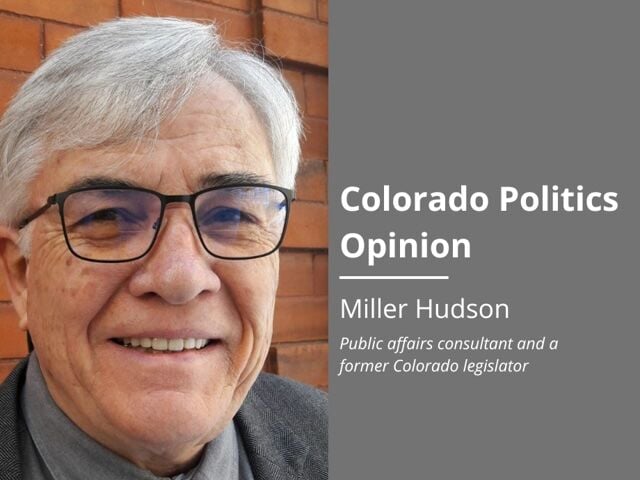
Miller Hudson

Miller Hudson
Denver voters will be considering a pair of citizen-initiated ordinances in November targeting specific business enterprises whose activities can only concern a fraction of residents on a daily basis. Why their legal reach is restricted within the boundaries of the City and County of Denver, rather than applying statewide, reflects the cost and difficulty of placing questions on the general election ballot. Though the purpose of the initiative process established in the Colorado constitution is an estimable Progressive Era effort to afford the citizenry an avenue to legislate when the legislature fails to act on matters of their concern, it’s been contorted into a tool for pursuing the narrowest of personal agendas. Limiting an initiative to the capital city reduces the cost and effort required to place a foot in the public policy door. Think of them as a form of civic virtue signaling.
The pair of ordinances which advanced to the Denver ballot are a prohibition against the “manufacture, distribution, display, sale or trade” of animal fur products, together with the closure of the sole existing slaughterhouse within city limits. The fur ordinance defends its commercial prohibition as a measure that will, “promote community awareness of animal welfare and, in turn, will foster a more humane environment in the city.” There is also scare language linking fur farms to ”reservoirs and transmission vectors for dangerous zoonotic diseases” (primarily coronaviruses). So, what are the practical real-world consequences if this initiative were to pass? For Denver purchasers capable and willing to spend $10,000 or $20,000 to acquire a fur coat, they are unlikely to be deterred by a short drive to Park Meadows or Flatirons mall.
Stay up to speed: Sign up for daily opinion in your inbox Monday-Friday
There’s little doubt the popularity of fur garments has withered considerably in recent decades. When my mother passed in 2004, there wasn’t a single woman or girl in our extended family who wanted her full-length mink coat. It went to charity. There was a taker, however, for her ermine winter cap. It seems a little strange at a time when every other food item at the grocery brags about its paleo benefits that we have so entirely rejected paleo couture. Be that as it may, the ordinance extends far beyond luxury goods. Also affected would be cowboy hats, fly fishing lures and assorted western wear items. There are sure to be legal disputes about what is fur or merely hair.
There are hundreds, perhaps thousands, of Denver jobs at stake. Doug Jones and Paul Andrews, the chair and president of the National Western, have launched “Hands Off My Hat Denver” to defeat this ordinance, saying, “The agriculture community is beginning to ask: Why do we go to Denver and the National Western if Denver won’t support agriculture and our products?” An exception has been made for the transfer or purchase of indigenous fur products, but only between members of federally recognized tribes — no sales to Wasuchis. Say goodbye to future Denver Pow-Wows. As for the slaughterhouse ordinance, it will shut down the only sheep rendering operation along the Front Range, shutting off Colorado sheep ranchers from their only local stockyard. More jobs lost and higher costs.
Sheepskin jackets are also excluded, so I presume I can continue to wear mine in Denver. The real question is whether either of these ordinances makes any sense? In the 1970s, I might have welcomed a law prohibiting bell-bottom trousers for men, but that was a personal issue. No law can mandate good judgment or good taste. As the pro-choice movement argues, “If you don’t like abortions, don’t have one.” If you don’t like fur, don’t wear it. Supporters have argued they hope a success in Denver will provide a blueprint for similar prohibitions around the country. I surely hope not. At a period in our history when both the right and the left are pledging fealty to freedom — we are discovering there is freedom “from” and freedom “to” pursue happiness. I find myself aligned with the freedom to do what I want. Even vegans should vote against both initiatives.
It is probably time to undertake a rewriting of Colorado’s initiative process. In 1980, when Jack McCroskey and I launched the drive for an elected Regional Transportation District Board, petition circulators had to be unpaid volunteers. Any eligible voter could sign, but the signature threshold was far higher. After several court challenges, it was ruled paid circulators should be allowed. Because of the danger of signature fraud, the change restricting signatures to registered voters was understandable. Gradually, the price per signature began to climb and the only groups capable of raising the half-million dollars required to succeed statewide are now corporate or wealthy interests. It took the grocery stores three attempts before they won the right to sell wine and liquor. A couple of campaigns were also needed to permit multiple liquor licenses.
The legislature has periodically tinkered with the petition process, requiring geographically distributed signatures obtained in each state Senate district, further driving up costs. There was a time when nearly any initiative proposed as government “reform” would pass. Alas, reformers have trouble raising dollars for the reforms they seek. Common Cause was able to pass the Gavel Amendment, opening up legislative hearing processes during the 1980s, but recent TABOR reformers have consistently fallen short. A citizen initiative process which only affords ballot access to the well-heeled offers substantial advantage to the privileged — thereby defeating the original, constitutional intent. The first fix should be a return to volunteer circulators.
Miller Hudson is a public affairs consultant and a former Colorado legislator.


What courageous citizenship really looks like | Vince Bzdek
Vince Bzdek
vince.bzdek@gazette.com
Updated 7 hours ago
By Vince Bzdek What exactly is courage? Ernest Hemingway famously called it grace under pressure. Mark Twain wrote that “courage is resistance to fear, mastery of fear — not absence of fear.” C.S. Lewis refined that even more: “Courage is...

The coming election and mischief in the making | SONDERMANN
Eric Sondermann
eric-sondermann@coloradopolitics.com
Updated 3 days ago
America’s tribalism is such these days that we struggle to even agree on the basic rules. Elections have always been hotly contested. As the saying goes, “Politics ain’t beanbag.” The process has long involved elements of nastiness and underhanded conduct....
Colorado’s hunting and fishing traditions rest on science, conservation and a proven heritage | IN RESPONSE
Colorado Politics
colorado-politics@coloradopolitics.com
Updated 2 days ago
By John Howard Eric Washburn’s recent column warns Coloradans the right to hunt and fish amendment is a Trojan horse designed to resurrect “cruel” practices voters have already banned and to elevate killing above every other form of wildlife management....
Why does Colorado limit who can safeguard taxpayer dollars? | GUEST COLUMN
Colorado Politics
colorado-politics@coloradopolitics.com
Updated 2 days ago
By Devin Camacho Recently, PNC Bank announced its purchase of FirstBank Colorado. Not only did Colorado lose a local banking option, but nearly 1,000 people lost jobs, with more job losses coming as the big bank now closes branches too....
Colorado’s precarious position protecting from wildfires | Paula Noonan
Paula Noonan
paula-noonan@coloradopolitics.com
Updated 2 days ago
Fourteen firefighters died in the Storm King Mountain fire west of Glenwood Springs in 1994 when 2,115 acres burned. In August 2020, the Grizzly Creek fire burned 32,631 acres along the Interstate 70 corridor east of Glenwood causing mudslides from flooding...

We must deliver on cost of living | GUEST COLUMN
Colorado Politics
colorado-politics@coloradopolitics.com
Updated 3 days ago
By Ryan Gonzalez Insurance premiums are on the rise. Property taxes are increasing. Groceries are becoming more expensive. Gas prices are reaching record levels. Housing costs are becoming unsustainable. These are the concerns I hear from people in my district....

Dan Haley on the role of oil and gas in Colorado’s energy future | The OpEdge Podcast
Tony Olivero
tony.olivero@gazette.com
Updated 3 days ago
Dan Haley, executive director of Coloradans for Responsible Energy Development, joins The OpEdge to discuss the role of oil and natural gas in Colorado’s energy future amid the state’s aggressive push toward “net zero.” Haley tells host and investigative columnist...

Rural hospitals don’t want special treatment, just a chance to care for locals | PODIUM
Colorado Politics
colorado-politics@coloradopolitics.com
Updated 2 days ago
By Kevin Stansbury As chief executive of Lincoln Health, my responsibility is simple: ensure the people of eastern Colorado have access to high-quality healthcare close to home when they need it most. That mission has never been easy. Rural hospitals...
Blue states should avoid disasters | Hal Bidlack
Hal Bidlack
hal-bidlack@coloradopolitics.com
Updated 4 days ago
Back when I was teaching political science at the U.S. Air Force Academy (and amazingly to me, a week from this column’s publication will mark 20 years since my retirement from active duty. Where the heck did that time go?)...
Right-to-hunt ballot measure’s a cruel, anti-wildlife solution to a nonexistent problem | GUEST COLUMN
Colorado Politics
colorado-politics@coloradopolitics.com
Updated 5 days ago
By Eric Washburn I love to hunt. Every year I try to hunt big game in Colorado and waterfowl in Louisiana. This year, I applied for five Colorado big game licenses — elk, deer, pronghorn, moose and bighorn sheep. I...