

The perils of Colorado’s unregulated abortions | GUEST COLUMN
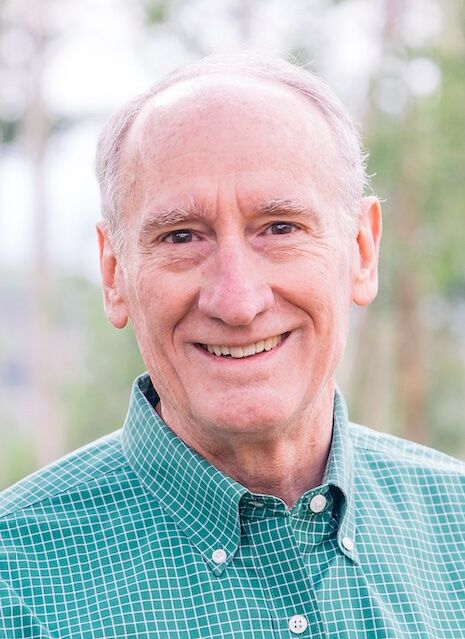
By Tom Perille
How did the movement which grew out of a genuine concern for the health and safety of women become the same movement that undermines women’s health and safety today? Despite good intentions, it was a long route marred by misinformation, uncritical commitment to ideology, and lack of transparency.
In the 1960s, there was a myriad of rationales for the liberalization of abortion policy. Though some feminist leaders viewed abortion primarily as a vehicle to achieve women’s equality and workforce participation, many 1960s activists placed public health as the overriding concern and the principal reason to remove abortion restrictions.
Alan Guttmacher was an early medical advocate for abortion access for public health reasons. Bernard Nathanson and Lawrence Lader, who co-founded NARAL, perpetrated the idea between 5,000 and 10,000 women were dying every year from illegal abortions. These figures were widely circulated in the media, amongst advocacy groups, and in legislative debates in the late 1960s and early 1970s. Even if you opposed elective abortion on moral grounds, the desire to prevent countless maternal deaths seemed compelling. NARAL positioned themselves as the champion of women’s health and safety. And their successful public campaign assumed the counterintuitive notion the number of abortions was fixed, and legalization made abortion safer and not more numerous.
The public health argument was always more impactful than accurate. In his book, “Aborting America”, Bernard Nathanson later admitted the 5,000-10,000 figure was entirely manufactured to garner sympathy for the movement. Actual deaths from illegal abortions were a tiny fraction of that number. In 1972, the year before Roe was decided, the CDC reported 39 deaths from illegal abortions and 24 from legal abortions. There is also empiric evidence legal status substantially influences abortion rates.
After abortion was legalized, public health concerns were eclipsed by the drive to increase abortion access.
In an extensive expose in the New York Times in 2025, it was reported despite a post-COVID fundraising boon, Planned Parenthood spent most of its money on the political and legal promotion of abortion. Consequently, clinics suffered — “many operate with aging equipment and poorly trained staff, as turnover has increased because of rock-bottom salaries.” The Times article reported “scores” of allegations of poor care, including “botched” abortions. Staff concerns were often minimized, and many remained quiet because they were “afraid of damaging the mission.” Protecting and expanding abortion rights became the “mission.”
Public health concerns only reemerged prominently after the Supreme Court Dobbs decision.
ProPublica won a Pulitzer Prize for framing maternal mortality and the deaths of women following abortions or miscarriages as direct consequences of abortion restrictions. The truth is much more complicated. The reality is all states currently enforcing abortion restrictions allow physicians to intervene when continuation of pregnancy threatens the woman’s life. It is not required a woman’s death be “imminent.”
On the other hand, when recent legitimate public health issues are identified, the media is often curiously silent. The abortion industry has made unserious public health claims such as “mifepristone is safer than Tylenol”, but there was no media accountability. When OB/GYNs expose the shocking disregard for women’s safety related to the inappropriate use of telehealth drug-induced abortions — nothing. A large, methodologically rigorous study in 2025 showed powerful associations between abortion and serious adverse mental health outcomes. Crickets from mainstream media.
In Colorado, attempts to understand and mitigate the public health consequences of abortion have been squelched. Colorado’s Maternity Mortality Review Committee doesn’t differentiate abortion-related/associated deaths from other pregnancy-related deaths. Colorado HB21-1183 would have required summary data regarding the reasons women pursued abortion and complications of the procedure in addition to standard CDC demographic/surveillance data to inform reproductive health policies/programs. It was defeated. HB25-1252 and HB26-1243 would have provided CDPHE the oversight authority to ensure high-risk second/third trimester abortion facilities are regulated like other high-risk Colorado medical facilities. Both attempts were defeated despite testimony attesting to an inordinate number of ambulance transfers from a single late-abortion facility in Fort Collins and the death of an 18-year-old woman following her 22-week abortion at the same facility. Public health red-flags are simply ignored.
In contrast to the national attention focused on abortion-related deaths where tenuous correlations to abortion restrictions can be asserted, the death at the Fort Collins facility went unnoticed in Colorado, where there are no abortion restrictions. Even attempts to obtain the coroner’s unredacted autopsy and confirm that the death was a result of a late abortion were frustrated. In court documents, the coroner argued releasing the report “might discourage someone from seeking reproductive health care during their life.” Once again, “mission” over public health.
A movement that was launched with an eye toward public health now turns a blind eye to the very real public health issues arising from unrestricted, unregulated abortion. In Colorado, we effectively have recreated the “back-alley” abortion scenario that gave rise to the abortion rights movement in the 1960s.
The nation, and Colorado in particular, needs to reassess whether abortion access is our primary focus or whether the health and safety of women should be our focus. If we continue to choose the former, Coloradans should brace themselves for more harm, preventable injuries and deaths.
Tom Perille, M.D., is president of Democrats for Life of Colorado.

‘Ticked off’: Third-party US Senate candidate in Colorado launches $1.3 million TV ad campaign
Ernest Luning
ernest.luning@coloradopolitics.com
Updated 4 hours ago
Bob Chew, the Forward Party nominee for U.S. Senate in Colorado, sends household objects flying in a TV ad set to run statewide through September, backed by $1.3 million across multiple platforms, his campaign told Colorado Politics. Meant to demonstrate...

Colorado shifts vaccine authority to state as Trump administration revises childhood framework
Marissa Ventrelli
marissa.ventrelli@coloradopolitics.com
Updated 3 hours ago
As the Trump administration rolls out a revised childhood vaccine framework, Colorado’s law allowing the state to set its own immunization schedule has now taken effect. Issued Monday, President Donald Trump’s executive order separates childhood and adolescent vaccines into three...

Colorado NRA chapter seeks injunction against new gun‑training requirement
Marissa Ventrelli
marissa.ventrelli@coloradopolitics.com
Updated 3 hours ago
The Colorado chapter of the National Rifle Association is seeking an injunction to stop the state from enforcing a new law that took effect earlier this month. The new law requires anyone buying or selling certain firearms to first complete...

Hunting is a privilege, not a constitutional right | PODIUM
Colorado Politics
colorado-politics@coloradopolitics.com
Updated 2 hours ago
By Roland Halpern Colorado voters may soon be asked to place hunting and fishing in the state constitution. Proposition 302 would establish the right to hunt, fish and take wildlife using “traditional methods,” while declaring hunting and fishing are the...

DEA’s Miguel Chino describes Colorado’s place on the ‘fentanyl pill superhighway’ | The OpEdge Podcast
Tony Olivero
tony.olivero@gazette.com
Updated 1 day ago
Miguel Chino, Acting Special Agent in Charge of the Drug Enforcement Administration’s Rocky Mountain Field Division, joins The OpEdge to paint the picture of Colorado’s place on America’s “fentanyl pill superhighways.” Chino updates Gazette and Colorado Politics Deputy Opinion Editor...

Colorado students push AI task force as schools navigate new tech era
Marissa Ventrelli
marissa.ventrelli@coloradopolitics.com
Updated 1 day ago
A group of students is urging lawmakers to establish a task force on artificial intelligence in education to advise districts on how to ensure that pupils and educators use the technology effectively without becoming overly reliant on it. The students...
A right to buy a product? | Hal Bidlack
Hal Bidlack
hal-bidlack@coloradopolitics.com
Updated 2 days ago
A recent story in Colorado Politics caught my eye, as I learned of a “citizen initiative” that has qualified for the November ballot. It seems supporters of Initiative 177 have collected enough signatures, 146,165 legitimate ones out of a total...
Fourteen years after Aurora — we can’t afford to go backward | GUEST COLUMN
Colorado Politics
colorado-politics@coloradopolitics.com
Updated 2 days ago
By John Hickenlooper and Gabby Giffords Two Saturdays ago, a gunman shot and killed three people and wounded several others in Twin Falls, Idaho. This latest deadly shooting comes only days after we remembered the lives we lost 14 years...
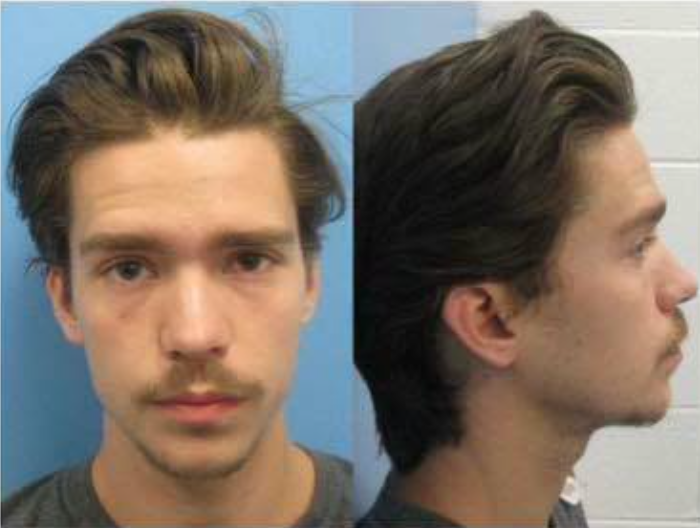
U.S. Rep. Lauren Boebert’s son arrested, faces charges of sexual exploitation of minor
Matt Kyle
matt.kyle@denvergazette.com
Updated 2 days ago
U.S. Rep. Lauren Boebert’s son Tyler Jay Boebert has been arrested and accused of recording and sharing a video depicting himself having intercourse with a minor, according to court records. The case originated in Garfield County in Western Colorado and...
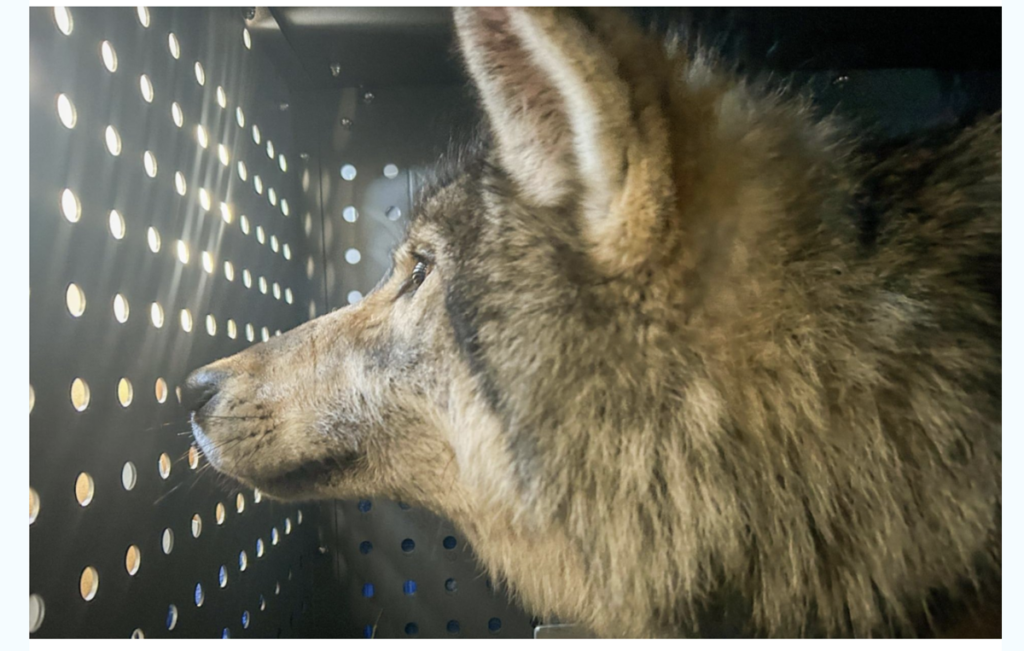
Hunter shot Colorado wolf after mistaking it for a coyote, wildlife office says
Marianne Goodland
marianne.goodland@coloradopolitics.com
Updated 1 day ago
Colorado Parks and Wildlife said Monday that a female wolf from British Columbia that died in January was shot by a hunter who mistook her for a coyote. The wolf, identified as 2504‑BC, was one of 17 wolves relocated since...
PREV
PREVIOUS

Colorado participates in Great American State Fair in Washington
Visitors to Washington, D.C. for the country’s 250th anniversary will have the opportunity to learn about Colorado’s natural beauty and culture during the Great American State Fair, a World’s Fair-style event that opened last week at the National Mall. While all 56 U.S. states and territories will be represented in the fair, at least seven […]

Pueblo’s mayor keeps stirring the pot | Dennis Maes
Pueblo Mayor, Heather Graham, has clearly proven to be a disciple of the Donald Trump school of governance. And, like her mentor, she is experiencing the same catastrophic results. The format is to ignore what the electorate approved and expects at the expense of treating city government as your own little playground. Her disregard for […]