

Colorado improves student attendance, lowers absenteeism — but still below pre-pandemic levels
Student attendance in Colorado continued to recover from the sharp rise in chronic absenteeism following the COVID-19 pandemic, but the state remained below the attendance trendline compared to 2019.
Before the pandemic, attendance was higher and absenteeism was lower than the most recent figures.
The new figures from the Colorado Department of Education showed that student attendance increased by 0.7 percentage points — up to 91.5% — while chronic absenteeism decreased by 3.4 percentage points to 27.7% in 2023-24.
That drop represented roughly 28,000 fewer students who were chronically absent, which meant they had “more consistent engagement in learning,” the state agency said.
Both figures reflected trends from the previous school year, in which attendance rose and absenteeism decreased. Officials recorded the state-high rate of chronic absenteeism at 35.5% during the 2021-22 school year.
“We know that our educators and school leaders are working urgently to keep students engaged and feeling connected to their school communities, and we see that effort reflected in attendance and chronic absentee rates,” Colorado Education Commissioner Susana Córdova said in a statement.
“If students aren’t in school, we know they won’t have access to the opportunities designed to help them continue learning,” she said.
Chronic absenteeism is usually defined as students missing at least 10% of the school year. Across the nation, about one out of four students were chronically absent during the 2022-23 school year.
Despite the positive trends, statewide attendance has yet to reach pre-Covid trendlines. In 2019-20, the state average for attendance stood at 92.8% and the average chronic absentee rate was 22.6%.
During the pandemic, officials shut down schools and transitioned to remote learning, while the state government restricted gatherings and closed some businesses, such as bars, gyms and restaurants, in addition to other mandates.
This year, over 241,000 of the state’s 902,854 students — roughly one in four — were chronically absent.
The problem is more pronounced for higher grades: More than 30% of students in the eighth, 10th, 11th, and 12th grades were chronically absent. Nearly 30% of kindergarteners and ninth graders were also chronically absent.
The trend of missing significant school time coincided with declining test scores during the same years, contributing to substantial learning losses and greater high school dropout rates.
“And we have found that even missing a couple of days here and there can cause problems,” Córdova said. “In the early grades, multiple absences can cause students to fall behind on their reading skills. And, in fact, 83% of chronically absent kids are not reading on grade-level by third grade.”
Beyond pandemic-related factors, others contributors to chronic absenteeism included homelessness, transportation challenges, disengagement and personal and family illnesses.
“So, some of those we have seen increase overtime even if they’re not necessarily new ones,” said Johann Liljengren, the agency’s director of dropout prevention and student reengagement.
State data revealed rates of chronic absenteeism continuing to decline and attendance rising for homeless students, immigrants, special needs and multilingual students. These students groups persistently recorded higher rates of chronic absenteeism than their peers.
The data showed two groups — American Indian/Alaska Native at 44.4% and Hawaiian Pacific Islander at 50.1% — with the highest rates. They were also the smallest groups of students, which meant small movements can mean bigger shifts.
Meanwhile, Black/African American and Hispanic students recorded rates above the state average at 33.2% and 37.1%, respectively.
White students, Asian students, and students with two or more races recorded rates below the average at 20.9%, 17.0% and 26.6%, respectively, the data show.
Nearly 70% of Colorado’s districts improved their attendance rates last year.
The districts with the highest reported rates of chronic absenteeism included Adams County 14 (48.9%), Centennial R-1 (53.5%), Hanover 28 (46.6 %) and Ouray R-1 (60.5%).
The Centennial Board of Cooperative Educational Services reported the highest rate of chronic absenteeism at 80.8%.
Earlier this week, the state education department also released its statewide testing results that revealed promising signs of recovery, though with some caveats.
State testing a mixed bag with slight gains in elementary, big drops in high school math
To help promote attendance in school and push for positive trajectories, the CDE announced the “Every School Day Matters” campaign. The goal, the agency said, is to support students, families and educators in reducing chronic absenteeism to 17.8% by the 2026-27 school year.
The online portal will include training and resources for educators and school leaders, communications tools for districts and an attendance tracking calendar in English and Spanish for families.
“What data tells us, what the research has found and what common sense show is that you can’t grow academically if you’re not in school,” Córdova said.
The campaign’s resources along with complete attendance data can be found at the CDE’s website.


Trump reaches deal to halt tariffs on beef for 90 days in bid to lower prices
Rena Rowe
rena.rowe@washingtonexaminer.com
Updated 16 minutes ago
President Donald Trump announced Friday that he had reached a deal to temporarily ease tariffs on beef imports, saying the move would help lower prices for families as the United States faces a severe cattle shortage and record-high beef prices....
Budget red ink threatens to spike inflation and unemployment
Zach Halaschak
zach-halaschak@coloradopolitics.com
Updated 21 minutes ago
The ticking time bomb that is the national debt just crossed the $40 trillion mark and could spark a fiscal crisis that could throw the economy into disarray, spiking unemployment and exploding inflation. Republicans and some centrist Democrats have long...
Schoolchildren’s presence at child sex-related trial did not harm Arapahoe County defendant, appeals court says
Michael Karlik
michael.karlik@coloradopolitics.com
Updated 54 minutes ago
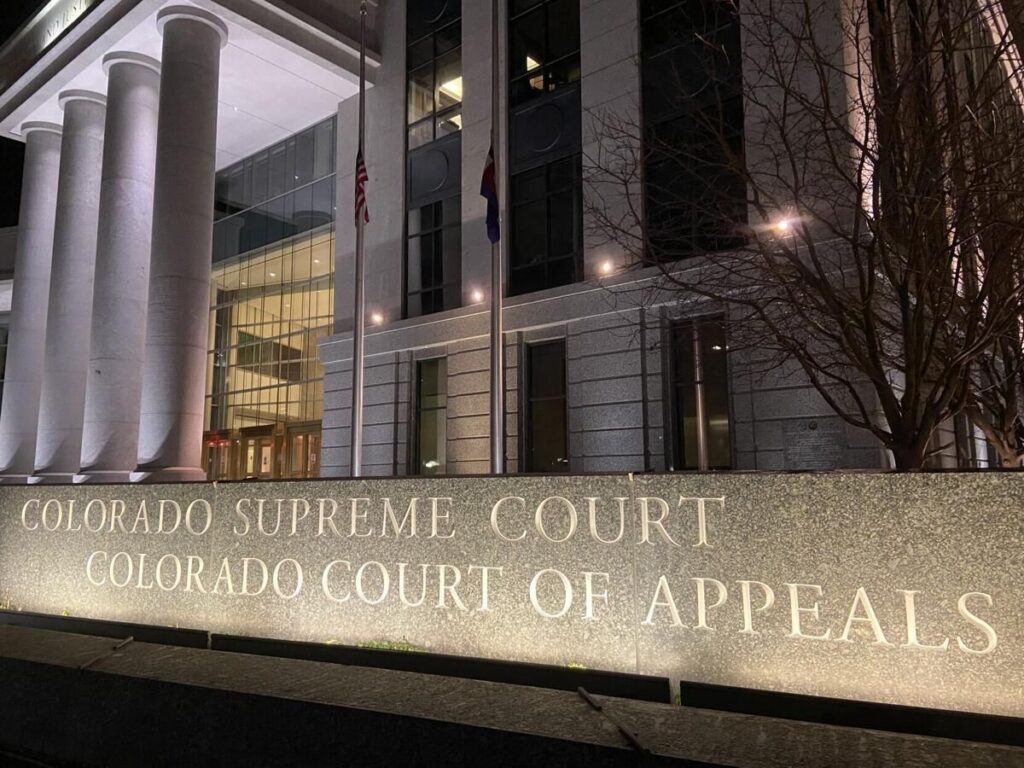
Colorado’s second-highest court decided on Thursday that the presence of a group of schoolchildren on the first day of a child sexual exploitation trial did not violate an Arapahoe County defendant’s constitutional right to a fair trial. Prosecutors charged Jerry...
Colorado Supreme Court names William Hood as next chief justice
Michael Karlik
michael.karlik@coloradopolitics.com
Updated 58 minutes ago
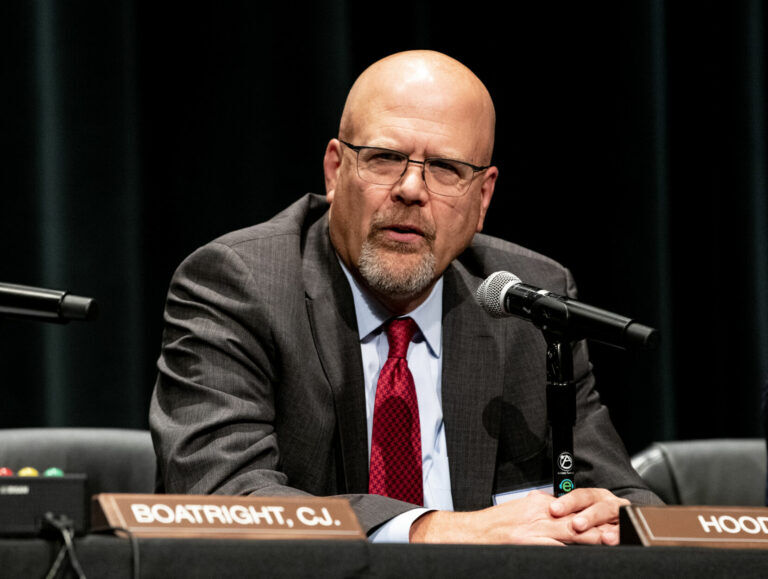
The Colorado Supreme Court has selected Justice William W. Hood III to be the next chief justice, the judicial branch announced on Friday. Hood will succeed Chief Justice Monica M. Márquez, who took over the role in July 2024. “I...
Colorado voters will decide fate of ‘right to hunt’ proposal
Colorado Politics
colorado-politics@coloradopolitics.com
Updated 2 hours ago
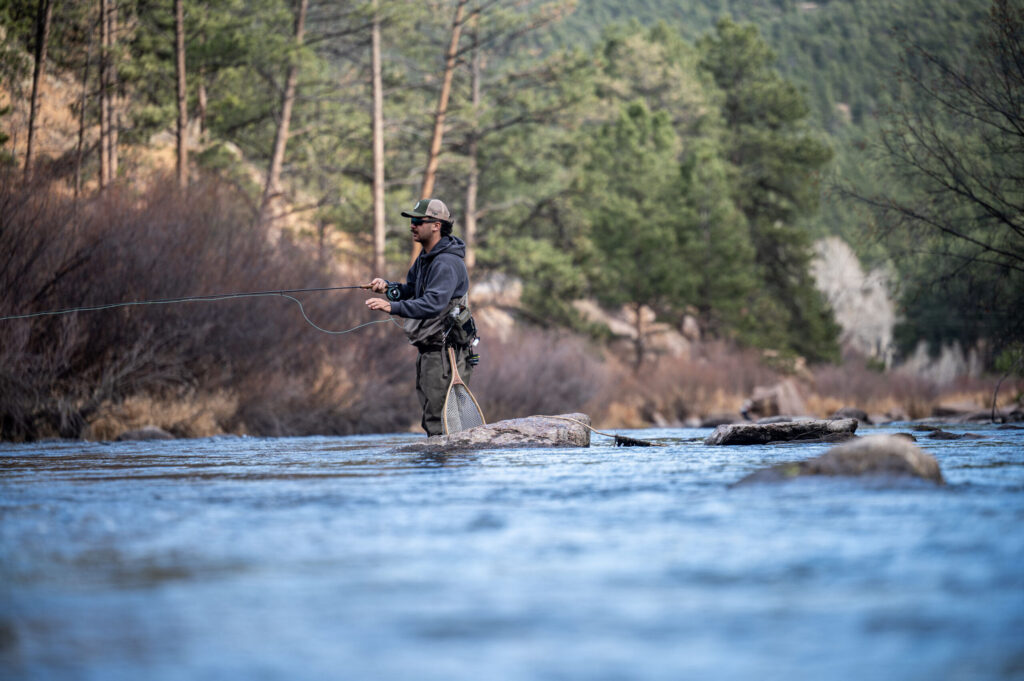
Colorado’s election office said Thursday that a proposal to add a constitutional right to hunting and fishing has qualified for the November ballot. Backed by the International Order of T. Roosevelt, a group dedicated to preserving the North American Model...

Healthcare Freefall: Telluride mother’s roadside birth underscores shrinking access to OB care in Colorado
Rachael Wright, Special to Colorado Politics
rachael.wright@coloradopolitics.com
Updated 3 hours ago
Editor’s Note: Colorado’s healthcare system is entering a period of accelerating instability — a “tsunami,” as multiple leaders describe it — driven by collapsing hospital finances, shrinking Medicaid reimbursements, disappearing services and a political fight over who is responsible for...
Appeals court upholds Park County trophy hunting conviction
Michael Karlik
michael.karlik@coloradopolitics.com
Updated 4 hours ago
Colorado’s second-highest court clarified on Thursday that a defendant may stand convicted under the state’s trophy hunting laws if he abandons a bear carcass but returns later to remove the meat. Under Colorado law, it is a felony to detach...

Healthcare Freefall: Longer drives, fewer options for maternity care in Colorado
Thelma Grimes
thelma.grimes@coloradopolitics.com
Updated 3 hours ago
Editor’s Note: Colorado’s healthcare system is entering a period of accelerating instability — a “tsunami,” as multiple leaders describe it — driven by collapsing hospital finances, shrinking Medicaid reimbursements, disappearing services and a political fight over who is responsible for...
Healthcare freefall: Breast cancer survivor shares strain of rural treatment travel
Hap Fry, Special to The Gazette
hap-fry@gazette.com
Updated 3 hours ago
Editor’s Note: Colorado’s healthcare system is entering a period of accelerating instability — a “tsunami,” as multiple leaders describe it — driven by collapsing hospital finances, shrinking Medicaid reimbursements, disappearing services and a political fight over who is responsible for...
Judge grants partial injunction to GEO in fight against state health inspection law
Kyla Pearce
kyla.pearce@gazette.com
Updated 19 hours ago
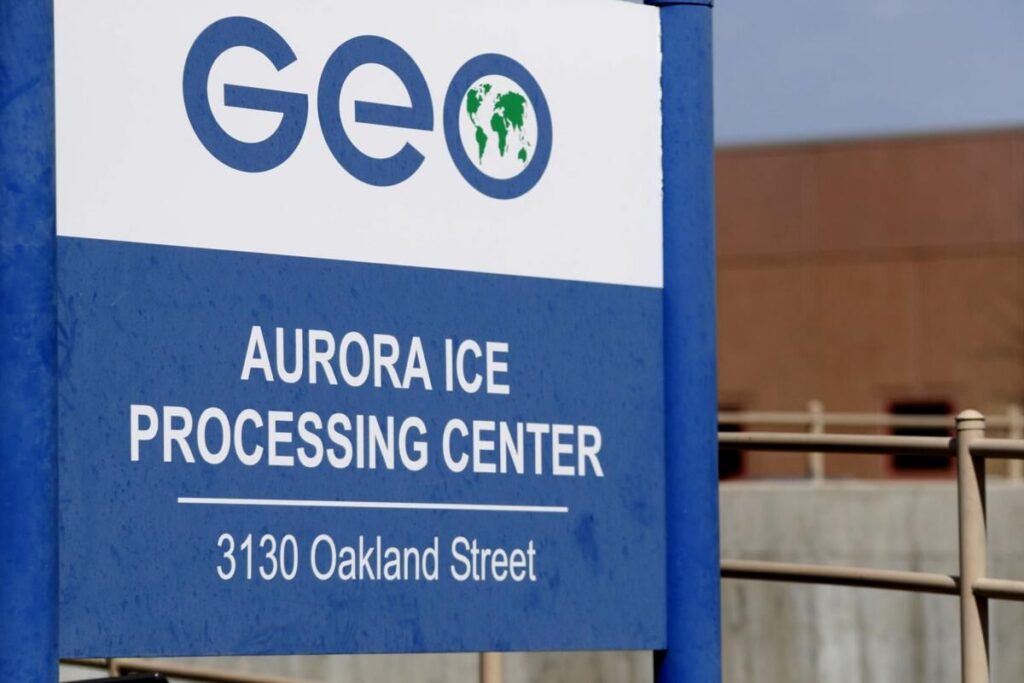
A judge ruled Thursday that The GEO Group does not have to follow parts of a new state law requiring more frequent health and safety inspections at the U.S. Immigration and Customs Enforcement processing center in Aurora. Under the order...