

Massive Cherry Creek projects gets OK from planning board; Tina Peters shocked after computer images showed up online; audit says public defender’s office faces high workload | WHAT YOU NEED TO KNOW
Today is Aug. 8, 2024, and here’s what you need to know:
Cherry Creek West project moves ahead despite neighborhood concerns
The Denver Planning Board on Wednesday approved a rezoning of the west end of Cherry Creek Shopping Center for a huge redevelopment that could bring seven office and apartment buildings — some to 13 stories high — on a site where the old Bed Bath & Beyond store now overlooks University Boulevard.
With the board’s unanimous vote on Wednesday, the Cherry Creek West project moves to the City Council for review and approval, despite worries from neighborhood groups that the planned development might grow larger still as its buildings come out of the ground over the next decade.
Representing a consortium of neighborhood groups, Lou Raders of the Cherry Creek Steering Committee appealed to city planners to better define the size of the project before approval. She and other community members told the board that planned urban development documents comprising the rezoning initiative fail to set specific limits on the scale of the undertaking, including the final numbers of buildings and their possible heights.
An employee of former Colorado clerk Tina Peters who says she was present when her boss allowed an outsider posing as a county employee to breach her voting system’s computer testified Wednesday that Peters was shocked when images from the computer appeared online.
In the summer of 2021, former elections manager Sandra Brown said Peters called her after seeing the photos and videos she took of the Dominion Voting Systems’ hard drive and said, “I don’t know what to do,” using an obscenity to express her distress over the possible consequences. Soon after that, as authorities began investigating what had happened, Peters and her attorney advised Brown and another employee to buy disposable cellphones known as burner phones so their conversations with her and lawyers could not be discovered by investigators and urged them not to talk to law enforcement, Brown said.
After Brown was indicted and turned herself in, Peters came to visit her at jail the same day, she said.
4th Judicial District rules Colorado Springs Dec.16 officer-involved-shooting justified
Colorado’s 4th Judicial District Attorney’s Office has ruled that a Colorado Springs police officer was justified in shooting a juvenile carjacking suspect during a Dec. 16 incident.
The ruling means Colorado Springs Police Department officer Joshua Singels, who shot and struck the juvenile twice, will not face criminal charges.
In accordance with Colorado Revised Statute 16-2.5-30 peace officer-involved shooting investigations protocol, all officer-involved shootings that result in injury or death must by reviewed by a multi-agency team. In the case of the Dec. 16 incident, the El Paso County Sheriff’s Office took the lead in investigating the details surrounding the use of force, and presenting that information to the District Attorney’s office.
Audit: Colorado public defender's office has high workloads, must study staffing
A large percentage of public defenders are working hours that exceed recommended standards, the state auditor’s office found in a recent report, and corrective measures are needed to ensure adequate representation for the criminally accused.
The auditor’s report noted that since its last study of the Office of the State Public Defender in 2003, the number of cases closed had nearly doubled. The office estimates it had only 76% of the attorneys and staff it needed to handle the 130,900 cases it closed last fiscal year.
At the same time, “none of the OSPD attorneys we spoke with indicated that high caseloads caused them to provide representation below the standards established under the Rules of Professional Conduct,” the audit noted, while also cautioning that some public defenders indicated they were working seven days a week.
Aurora shuts down apartment complex, owners blame Venezuelan gang for building's condition
An Aurora landlord is blaming the city’s decision to shut down an apartment complex on a Venezuelan gang — a claim that city officials dismissed, calling it an “alternative narrative” to numerous code violations and the poor condition of the building.
The landlord said it could not resume normal operations at the site because of an immediate threat of danger from the gang that staffers and residents face.
City officials insisted that Tren de Aragua, a Venezuelan prison gang known as TDA, was not responsible for issues that for months have plagued Aspen Grove Apartments at 1568 Nome St. and compelled Aurora to evict dozens of families.
On Wednesday, the city posted eviction notices on every unit and in living areas where homeless people have been camped out for months.
Federal judge sides with Denver Health in ex-paramedic's discrimination lawsuit
A federal judge concluded last month that evidence showed a former Denver Health paramedic was not fired because of his sexual orientation, as he alleged, but because his employer believed he exhibited poor judgment and resisted efforts to coach him professionally.
Jordan Christensen filed suit under federal and state civil rights law asserting unwelcome treatment from his superiors after he posted on Facebook in 2015 that he was gay. He alleged he was the subject of derogatory comments and jokes, intimidation and differential treatment.
Christensen reported the harassment to an investigator in March 2019, but there was no improvement. In December 2020, after Christensen and his superior responded to an emergency call, Denver Health terminated him. Christensen maintained he followed protocol during the call, and that his termination was actually motivated by LGBTQ discrimination.


Democratic gubernatorial candidate Phil Weiser pledges rural outreach director, water adviser if elected
Marianne Goodland
marianne.goodland@coloradopolitics.com
Updated 2 minutes ago
Democratic gubernatorial candidate and current Attorney General Phil Weiser told the Colorado Water Congress Thursday he intends to appoint a rural outreach director and a water policy adviser should he win the election in November. The news was well-received by...

Attorney general candidates present priorities at Colorado Water Congress
Marianne Goodland
marianne.goodland@coloradopolitics.com
Updated 8 minutes ago
The two major-party candidates for attorney general — Republican Michael Allen, the district attorney for Teller and El Paso counties and Democratic Secretary of State Jena Griswold — appeared at the Colorado Water Congress on Thursday to outline their water...

US aircraft carrier arrives in Middle East, relieving long-deployed USS Lincoln
The Associated Press
the-associated-press@coloradopolitics.com
Updated 19 minutes ago
WASHINGTON (AP) — The Asia-based USS George Washington aircraft carrier is now operating in the Middle East, the U.S. military said Thursday, relieving a long-deployed carrier following reports of mental health challenges and supply shortages aboard while it was supporting...

Denver named finalist for 2028 Democratic Convention site
Thelma Grimes
thelma.grimes@coloradopolitics.com
Updated 1 hour ago
The Mile High City is competing with Boston and Philadelphia The list of cities being considered to host the 2028 Democratic National Convention has narrowed even further, with Denver making the cut as one of the final three along with...

A youth movement is coming for the 2028 presidential election
Christian Datoc
christian-datoc@coloradopolitics.com
Updated 4 hours ago
President Donald Trump’s first election in 2016 made him the oldest president ever elected at age 70. Joe Biden, at 78, took that record four years later. Four years after that, in 2024, Trump reclaimed his title at 78 years...
District 49 dissolves longtime provider of special services
Eric Young
eric.young@gazette.com
Updated 2 hours ago
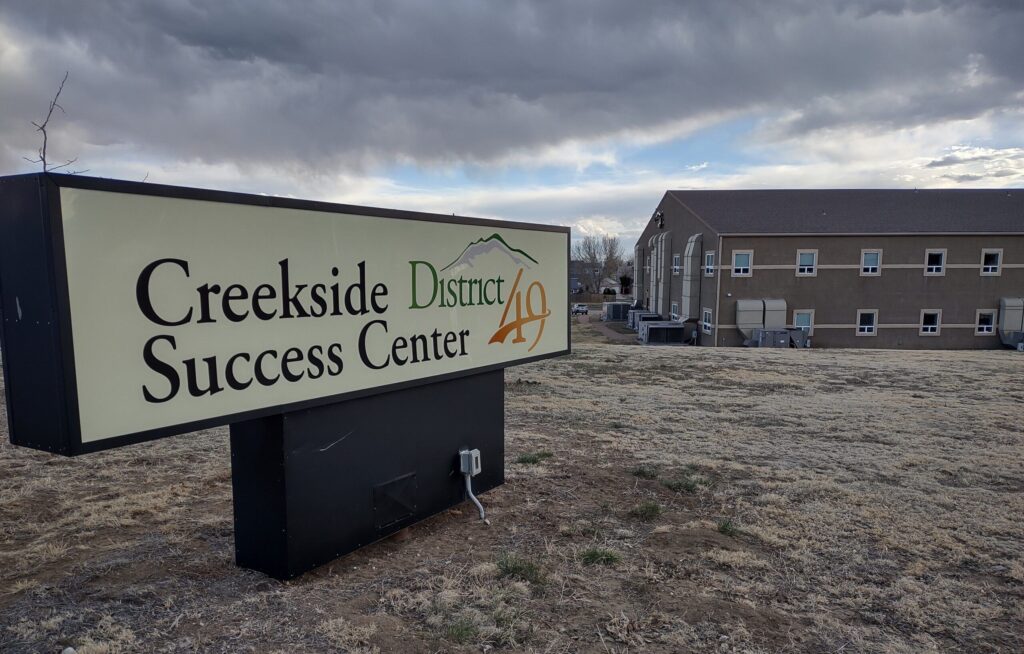
A longtime education service provider that has been subject to recent public and government scrutiny is shutting down. School District 49’s Board of Education approved the dissolution of the Education ReEnvisioned Board of Cooperative Education Services (ERBOCES) during a special...

10th Circuit grants immunity to officers for fatal Manitou Springs shooting
Michael Karlik
michael.karlik@coloradopolitics.com
Updated 19 hours ago
The Denver-based federal appeals court ruled on Wednesday that responding officers from Manitou Springs and El Paso County cannot be held constitutionally liable for shooting and killing a man after a 20-minute standoff. Wilford Deweese allegedly pulled out a gun...

10th Circuit rejects invitation for full-court review of tax-avoidance case
Michael Karlik
michael.karlik@coloradopolitics.com
Updated 16 hours ago
The Denver-based federal appeals court declined to reconsider the standards for holding entities liable for their tax-avoidance schemes, with a majority of judges voting against full-court review on Monday. In April, a three-judge panel of the U.S. Court of Appeals...

GOP gubernatorial candidate Victor Marx pushes aggressive water-storage expansion at Colorado Water Congress
Marianne Goodland
marianne.goodland@coloradopolitics.com
Updated 4 hours ago
Victor Marx, the Republican nominee for governor, took the spotlight Wednesday during the opening day of the Colorado Water Congress, laying out how he says the state should approach its water future. Marx told the standing-room-only audience in Steamboat Springs...

Colorado AG sues GEO Group over noncompliance with tuberculosis investigation
Kyla Pearce
kyla.pearce@gazette.com
Updated 18 hours ago
The Colorado Attorney General’s Office on Wednesday filed a lawsuit against GEO Group, which operates the Aurora ICE Processing Center, alleging the company failed to comply with a state tuberculosis investigation. Weiser’s lawsuit demands that GEO provide “critical information” needed...