

Jared Polis touts Colorado’s work on reducing taxes at ALEC’s annual meeting
Gov. Jared Polis touted his efforts to reduce taxes in Colorado in a “fireside chat” with economist Arthur Laffer at the American Legislative Exchange Council on Friday.
Addressing the largely Republican audience, Polis and Laffer, who served as an economic advisor to former President Ronald Reagan, discussed a range of policy issues, notably taxes, education, and healthcare.
The governor also expressed his desire to eventually eliminate income taxes entirely in Colorado and pitched future reductions in commercial property tax rates.
‘Particularly pernicious’
Polis noted that, when he took office in 2019, the income tax rate stood at 4.63%. Since then, income taxes have been reduced twice through ballot measures, bringing the rate down to a flat 4.4%.
The governor had supported both ballot measures.
He also signed into law this year’s Senate Bill 228, which introduced a mechanism to cut sales tax from 2.9% to 2.7% when the state surplus exceeds $1.5 billion.
He noted big challenges on the property tax front, notably soaring increases in property values that, without intervention, would mean higher taxes for both residential and business property owners.
In 2020, the average home in Denver was valued at $400,000. It has since risen to $600,000, with even greater increases in other parts of the state.
To tackle Colorado’s housing crisis, Polis said, the state needs to remove what he called “artificial constraints on supply”.
“We don’t let people build because government stands in the way,” he said at ALEC’s 2024 annual meeting, which was held at the Hyatt Regency Hotel in downtown Denver from July 24-26,
“So ‘get government out of the way of letting people build’ has been our main mantra,” he said.
Polis pointed to several legislative measures that supporters said would increase the housing inventory in Colorado, including House Bill 1152, which requires certain municipalities to allow “accessory dwelling units,” and House Bill 1313, which certain municipalities in five regional metropolitan planning groups to come up with higher-density housing adjacent to transit routes.
He noted the complications arising out of the 2020 repeal of the Gallagher Amendment. Approved by voters in 1982, the Gallagher Amendment resulted from the property tax “revolt” from the decade before. In response to public pressure, a panel of lawmakers was appointed to study the issue. The Gallagher Amendment arose out of those efforts.
At its crux, the Gallagher Amendment split the state’s property tax obligations — 45% of the total must come from residential property, while 55% must be collected from commercial property. The amendment also fixed the assessment rate for commercial property at 29%, while the residential rate is adjusted in order to maintain the 45-55 split.
To supporters, the Gallagher Amendment had the overall effect of keeping taxes low. To critics, it depressed revenue for local jurisdictions, such as schools, fire departments, and other public services.
Over the past four years, legislators struggled to devise a permanent solution to replace the amendment, which left commercial property tax rates among the highest in the nation. Until this year, they only managed to adopt temporary fixes.
Polis praised the repeal of the Gallagher Amendment, arguing that “stabilized” residential property taxes, but he acknowledged that Colorado has room for improvement when it comes to commercial property taxes.
Polis said Colorado state currently ranks “in the middle of the pack” for commercial property tax rates, but that he believes lowering those rates could attract more businesses to the state.
Under Senate Bill 233, a major piece of legislation from the 2024 session, commercial property tax rates would be reduced from 29% to 25% over a two-year period.
Polis called the measure, which will only take effect if voters don’t approve competing ballot measures this November, “very exciting to make our businesses more competitive.”
The competing ballot measures seek to reduce in residential and business property tax rates down to roughly 2022 levels and cap future revenue growth to no more than 4% year over year. Proponents said they are not convinced the agreement struck by Polis, Democrats and Republicans in the Colorado General Assembly and several groups offered meaningful relief to businesses and homeowners.
The governor said one challenge he has yet to figure out a fix for is the disparity between home values and property tax rates.
As an example, he cited Commerce City, where property taxes are some of the highest in the state, despite home values being nearly half of those in Denver.
Polis called the issue “particularly pernicious.”
“It’s a hard one to fix,” he added.
Hospital prices: ‘People need to know what they’re paying’
The governor also touted Colorado’s work on hospital price transparency, notably a major law passed in legislation in 2017.
Polis called pricing transparency a “fundamental piece” of market-oriented solutions for healthcare, a concept he said both Democrats and Republicans agree on.
“People need to know what they’re paying,” he said. “These ledgers at these hospitals are in sync, because they’re charging 18 different paying parties 18 different rates for the exact same procedure. Until now, that’s all been in a lockbox in the CFO’s office.”
“So, we opened up that lockbox,” he said.
Since the 2017 legislation, Colorado has expanded its policy to include requirements for hospitals to provide information about out-of-pocket costs, payment options, and estimates for planned procedures and services through several subsequent laws.
Former President Donald Trump had signed an executive order on hospital price transparency in 2019, which President Joe Biden continued. But Polis argued that these federal mandates were insufficient due to a lack of serious consequences for non-compliant hospitals.
“We added real teeth to it in Colorado, where essentially hospitals have to (comply) or they risk their participation in a number of different things that they have to have to be able to operate,” he said. “There’s no dunning of people who didn’t know what they got. They go in there, they get a bill, and then they get dunned by collectors until they go bankrupt.”
The governor said 20% of the country’s GDP is spent on healthcare, even when healthcare outcomes are getting worse.
“This is a cancer on our economy,” he said. “If we had better results and we were all super healthy and living longer, we might say it’s worth it, but we’re not. We’re middle of the pack on results and we pay almost twice as much. Whether it’s businesses, individuals, government, many different payers, but it is effectively a very dangerous cancer in our economy that makes America less competitive.”
Universal preschool
Polis also talked about Colorado’s universal preschool program, enacted last year, which seeks to provide free preschool to all four-year-old children in the state.
Polis highlighted support for the program, which was approved via ballot measure in 2022.
“This passed with more than two-thirds of the vote at the ballot box,” he said. “It passed in red counties, blue counties, rural, suburban, urban. Parents said kids ought to be able to go to preschool.”
Polis said he views early childhood education as essential to increasing workforce numbers. Many parents, he said, are unable to work because they can’t afford childcare. He also stressed the importance of including community and private preschool providers in the program, alongside school districts, to give parents the freedom to choose what kind of school their children attend.
“This is a necessity if you want to boost your workforce participation rates,” he told attendees.
About a dozen other states, including California, Florida, and Oklahoma have similar universal preschool programs.
The rollout of Colorado’s preschool program hasn’t been without a hitch. The Polis administration had billed it as a “full-day” program. It turned out the state couldn’t afford what it promised.
It also faced a lawsuit. A few weeks ago, a federal judge concluded Colorado’s universal pre-kindergarten program impermissibly infringes on the rights of two Catholic parishes with its treatment of students’ religious affiliation, while at the same time rejecting large swaths of their challenge to a related LGBTQ non-discrimination requirement.
Two Catholic institutions, St. Mary Catholic Parish in Littleton and St. Bernadette Catholic Parish in Lakewood, filed suit against the state, alleging their preschools cannot participate in the publicly funded program because the church’s religious views on sexual orientation and gender identity run afoul of the requirements. Two parishioners of St. Mary with a preschool-age child are also parties to the litigation.


At Colorado’s 150th anniversary, leaders offer birthday wishes
Thelma Grimes
thelma.grimes@coloradopolitics.com
Updated 1 minute ago
As Colorado’s 150th anniversary approaches, leaders from across the state reflect on the spirit that binds the plains, mountains, Western Slope and Front Range — a shared commitment, they underscored, to opportunity, community, stewardship and personal freedom. Their tributes highlight...
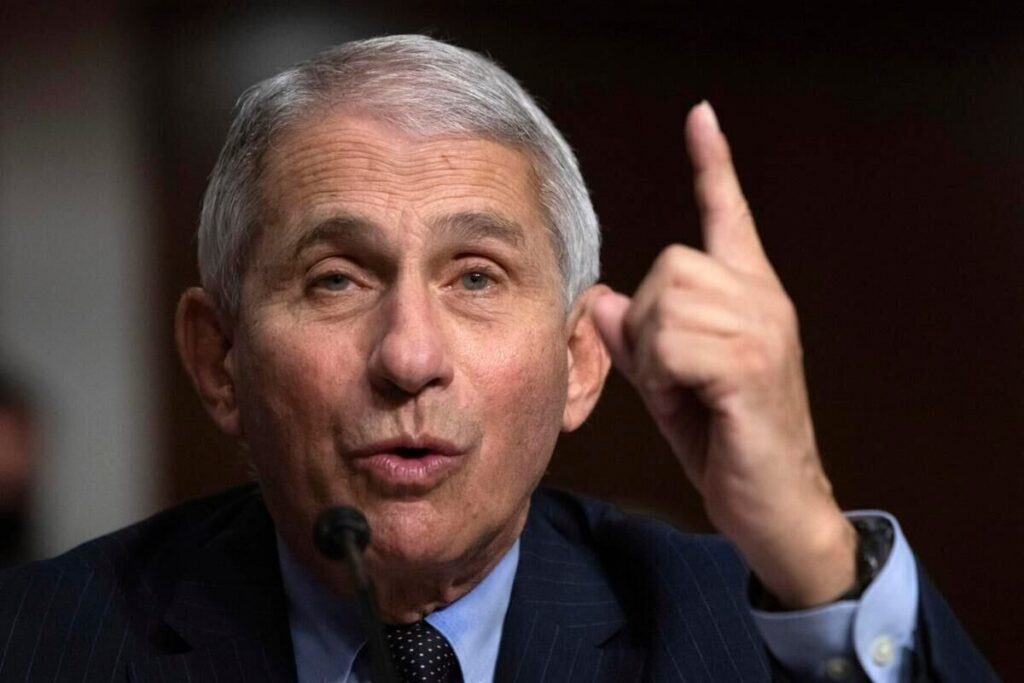
Fauci’s private COVID-19 diaries: Six takeaways on fame, prize money and the lab leak debate
The Washington Examiner
the-washington-examiner@coloradopolitics.com
Updated 2 hours ago
Anthony Fauci’s private writings from 2020 and beyond portray a public health official who was fixated on his growing celebrity while privately grappling with a pandemic response he believed was chaotic, leaderless and consumed by internal rivalries. The writings of...

Denver City Council sends Xcel franchise deal to voters
Deborah Grigsby
deborah.smith@denvergazette.com
Updated 2 hours ago
This November, Denver voters will decide whether to renew the city’s longstanding franchise agreement with Xcel Energy. Members of the Denver City Council approved on Monday sending a proposed 20-year franchise agreement with Xcel that would deliver more than $180...

Denver weighs permanent restriction on low-level traffic stops
Deborah Grigsby
deborah.smith@denvergazette.com
Updated 2 hours ago
A Denver City Council committee is considering permanently limiting certain types of low-level traffic stops used to investigate unrelated crimes and requiring better public reporting about why such stops happen. Members of the Budget and Policy Committee on Monday were...
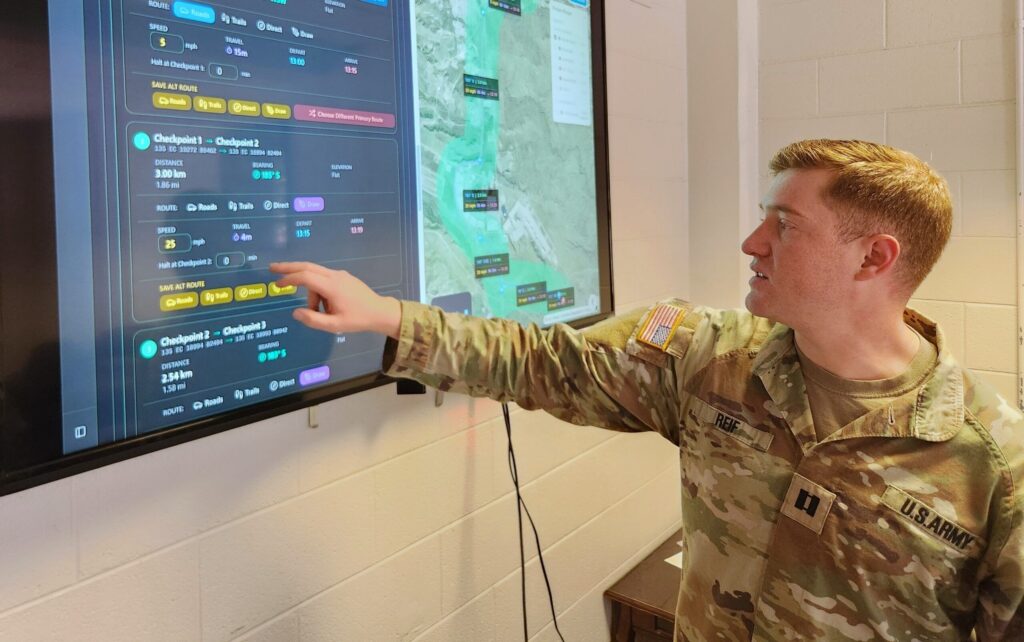
Fort Carson soldiers develop app to plan convoys as part of Next Generation Command and Control
Mary Shinn
mary-shinn@coloradopolitics.com
Updated 2 hours ago
Planning the details of a military convoy with numerous vehicles, personnel, weapons, radios and other details can take a platoon leader three days. In addition to plotting a safe route, leaders need to map out checkpoints to track the convoy’s...
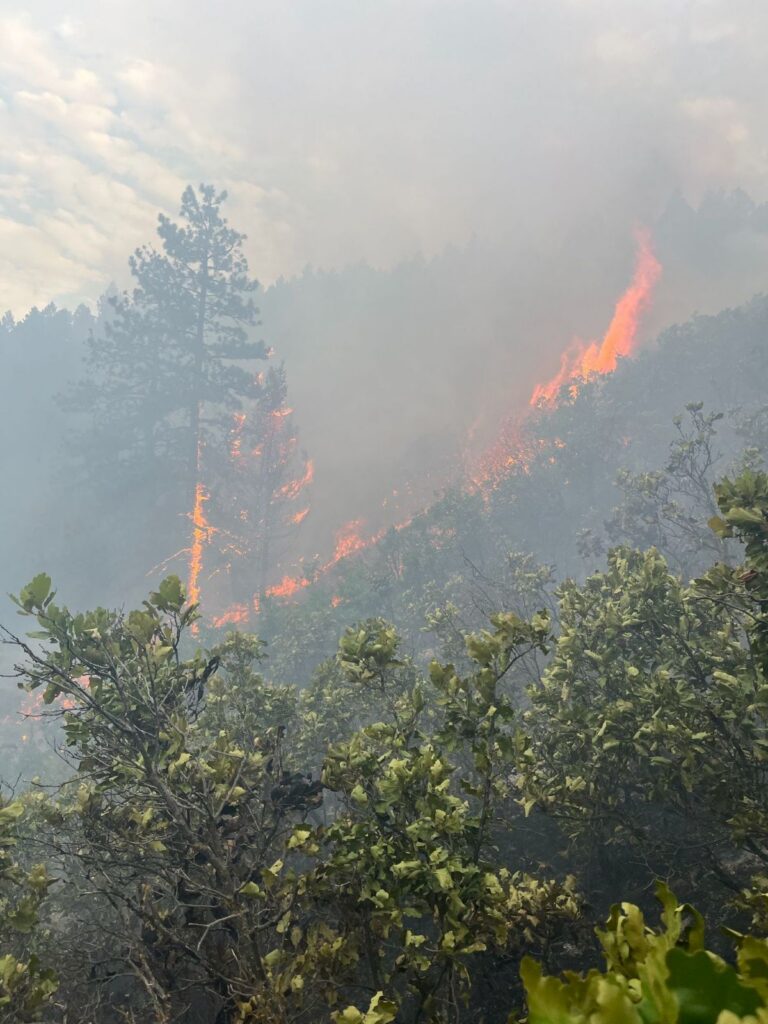
Penley fire near Sedalia reaches 75% containment
Nicholas Fogleman
nicholas.fogleman@denvergazette.com
Updated 2 hours ago
Fire crews battling the Penley fire west of Sedalia made significant progress overnight, holding the wildfire at about 3 acres and reaching 75% containment Monday, according to Douglas County officials. The fire, which sparked Sunday west of Sedalia, prompted evacuation...
Colorado board permits state to appeal injunction against arthritis drug price cap
Marissa Ventrelli
marissa.ventrelli@coloradopolitics.com
Updated 1 hour ago
A Colorado board voted Friday to allow the Attorney General’s Office to fight an injunction against a price cap on a drug that treats arthritis. A U.S. district court judge had granted the company Amgen a preliminary injunction, temporarily blocking...

Federal judge rejects constitutional claims, ‘expressions of hatred’ by Club Q defendant
Michael Karlik
michael.karlik@coloradopolitics.com
Updated 17 hours ago
A federal judge rejected a defendant’s claims that he received constitutionally ineffective assistance of counsel while facing federal hate crime and firearms charges for murdering five people at a Colorado Springs LGBTQ nightclub in 2022. Anderson Lee Aldrich is serving...

Divided 10th Circuit upholds Colorado congestion fee on car rentals
Michael Karlik
michael.karlik@coloradopolitics.com
Updated 13 hours ago
The Denver-based federal appeals court concluded on Monday that a 2024 “congestion impact fee” that lawmakers imposed on short-term vehicle rentals did not conflict with a federal prohibition on certain airport-related charges. Beginning in the 1970s, Congress began limiting the...

Space Force should measure workforce needs as it prepares to double in size, GAO report says
Mary Shinn
mary-shinn@coloradopolitics.com
Updated 23 hours ago
The Space Force needs more people. It’s just not precisely sure how many more. A Government Accountability Office report released earlier this month found that the youngest and smallest military branch does not have a process to consistently or accurately...