

Misguided attempt to reduce carbon footprint | GABEL


An athlete I’m not. If you ever see me running, you should run, too, because whatever is pursuing me is terrifying. Lucky for you, though, if it hasn’t yet caught me, we can assume it’s also slow.
While I have limited experience in fueling athletes, I hope the Olympians bound for Paris are bringing their vitamins because 60% of the meals served to the athletes will be plant-based and vegan. Meat-free hot dogs and plant-based tuna are on the menu that is shouting the health benefits from the rooftops of Paris. I’m not suggesting foie gras be the base of the Olympic food pyramid either, but vegan and plant based in the name of carbon footprint reduction is false.
I’m supportive of not only choosing your own dang lunch, but also for supporting other sectors of agricultural production outside animal protein. That said, serving a large percentage of vegan meals while touting the purpose is to reduce the carbon footprint is patently untrue.
The court of public opinion has trumped the science on greenhouse gas emissions (GHG) and carbon footprints. How someone can look at the Front Range and blame a pasture of cattle for pollution seems a stretch, but here we are.
Methane has long been the antagonist of the storyline fed to the public and it is produced through the digestion process in cattle. Because they are ruminants, they can upcycle forage that can’t be consumed by humans on lands that are inappropriate for tillage and turn it into edible protein. They were upcycling long before thrifting was en vogue. To eliminate cattle in the name of environmental stewardship would be misguided and would ignore their upcycling ability, the benefits of grazing as conservation, and the ability of the U.S. to feed itself high quality protein.
There have been multiple studies on feed additives that can be added to cattle rations to reduce methane production. Among them are essential oils, citrus, and red seaweed. I can’t imagine a truckload of essential oils is cheap and the trucking on red seaweed or citrus could very well negate any benefit since feedyards are not located near oceans or orange groves.
Water consumption also tends to be a sticking point for messaging about the evils of beef production. I’m not certain of the comparison between the water utilized by cattle production and the water utilized by lawns and sprayed onto roadways by poorly aligned sprinklers in metro areas, but it would be interesting.
Dr. Frank Mitloehner is the GHG Guru at UC Davis and maintains the environmental impact of livestock production is overstated. According to Mitloehner, livestock emissions are responsible for 4% of greenhouse gasses, while fossil fuels contribute 80%. Additionally, the cattle industry has been committed to reducing carbon emissions. Ranchers are the original conservationists and lecturing a fifth-generation rancher about the need for him to become sustainable is tone deaf.
The factoid that is thrown out is a 2013 estimate by the Food and Agriculture Organization of the United Nations. It claims that livestock production is responsible for 14.5% of global GHG emissions.
American beef production leads the world in reducing environmental impacts and that is reflected in the numbers. Between 1961 and 2019, the U.S. beef industry has reduced emissions per pound of beef produced by more than 40% while also producing more than 67% more beef per animal. Emissions from cattle, including those that come from the feed production, fuel, and electricity account for 3.7% of the total greenhouse gas emissions in the U.S. Currently, emissions from U.S. beef cattle are less than 0.5% of the world’s greenhouse gas emissions. Emissions from beef cattle represent 2.2% of total U.S. greenhouse gas emissions. It’s time to stop throwing out bad data about an industry that is far from an environmental enemy.
Beef plays a solid role in a healthy diet by providing more nutrients in fewer calories than many food choices. A 3 oz. serving of beef provides over 50% of the daily value of protein and is an excellent source of zinc, vitamins B6 and B12, niacin, and phosphorus and a good source of iron. To consume the same amount of protein in that 3 oz of beef, an athlete would have to eat six tablespoons of peanut butter or three cups of quinoa and the substantial amount of calories those food contain in that amount. The beef is 156 calories compared to 564 for peanut butter of 666 for quinoa. I’ve sat through enough Weight Watchers meetings to do that math.
Removing all livestock and poultry from the U.S. food system would only reduce global greenhouse gas emissions by only 0.36 percent. It would also, more importantly, take affordable, high-quality protein off the plates of those who need it. Besides, seven days without beef makes one weak.


Processing plants are an important piece of the ag puzzle | Rachel Gabel
Rachel Gabel
rachel-gabel@coloradopolitics.com
Updated 17 hours ago
Concrete barricades blocked the entrance to the Cargill beef plant in Ft. Morgan, Colo., on May 20. About 1,700 workers had been locked out by the company after months of contract negotiations ended with workers voting to reject the company’s...

As AI advances, are the accompanying AI advances for the better? | Miller Hudson
Miller Hudson
miller-hudson@coloradopolitics.com
Updated 17 hours ago
You may have noted Elon Musk was in court suing Sam Altman of OpenAI. If you were praying there was a way both of these greed bros could lose, you nearly got your wish. Emails exchanged between the parties reflect...

Too much Tina | Jon Caldara
Jon Caldara
jon-caldara@coloradopolitics.com
Updated 4 days ago
Really? This much hullabaloo over Tina Peters? We enjoy being distracted by the silliest things, don’t we? Our governor’s commutation of Peters’ sentence is just that — a silly thing. Just as it was nonsensical for the “Free Tina Peters”...
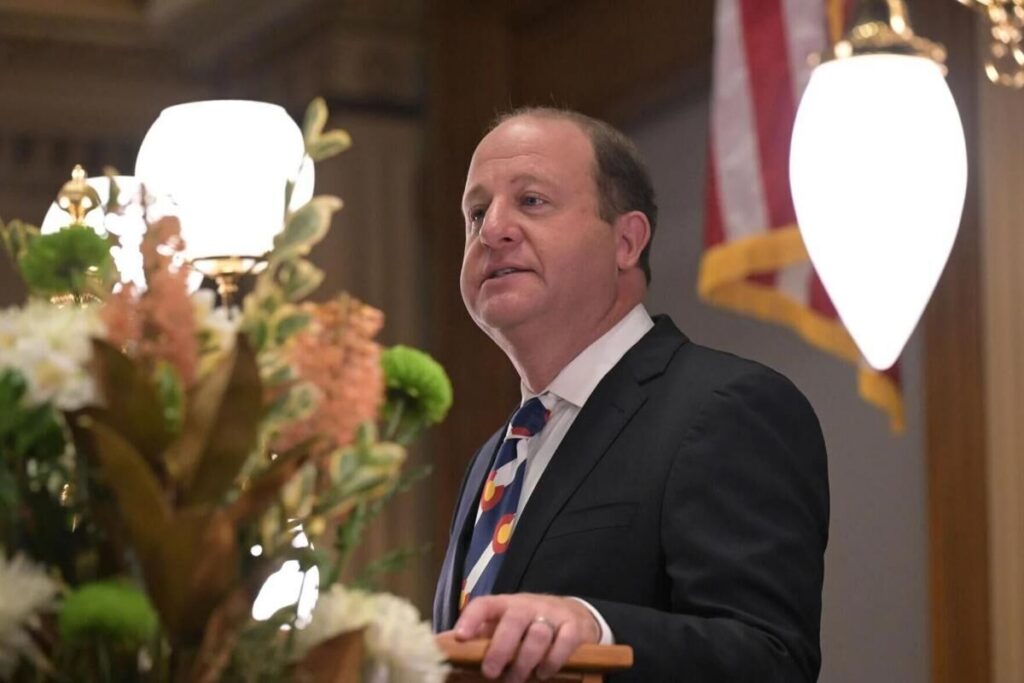
A mistaken commutation and an over-the-top reaction | SONDERMANN
By Eric Sondermann
by-eric-sondermann@coloradopolitics.com
Updated 4 days ago
It seemed an itch that Gov. Jared Polis just had to scratch. After months of hints and speculation, Polis put his signature on a commutation of the prison sentence of Colorado’s election-denying queen, former Mesa County Clerk Tina Peters. True,...

Colorado is too wealthy to keep cutting basic services | GUEST COLUMN
Colorado Politics
colorado-politics@coloradopolitics.com
Updated 4 days ago
By Kathy White and Lydia McCoy Colorado is a wealthy state. It may be hard to believe right now because so many of us are feeling the strain. Costs are high. Many families are struggling to keep up. There is...
Polis’ — and the replacement candidates’ — positions on Colorado’s most contested 2026 legislation | Paula Noonan
Paula Noonan
paula-noonan@coloradopolitics.com
Updated 4 days ago
The knock on the word “assume” is it can make an “a**” out of “(yo)u” and “me.” Let’s nevertheless assume the 2026 General Assembly addressed big problems facing the state. Let’s further assume the current governor can move on these...
SPONSORED: What you’re missing about housing — an open letter to all of Colorado’s candidates for governor
Colorado Politics
colorado-politics@coloradopolitics.com
Updated 5 days ago
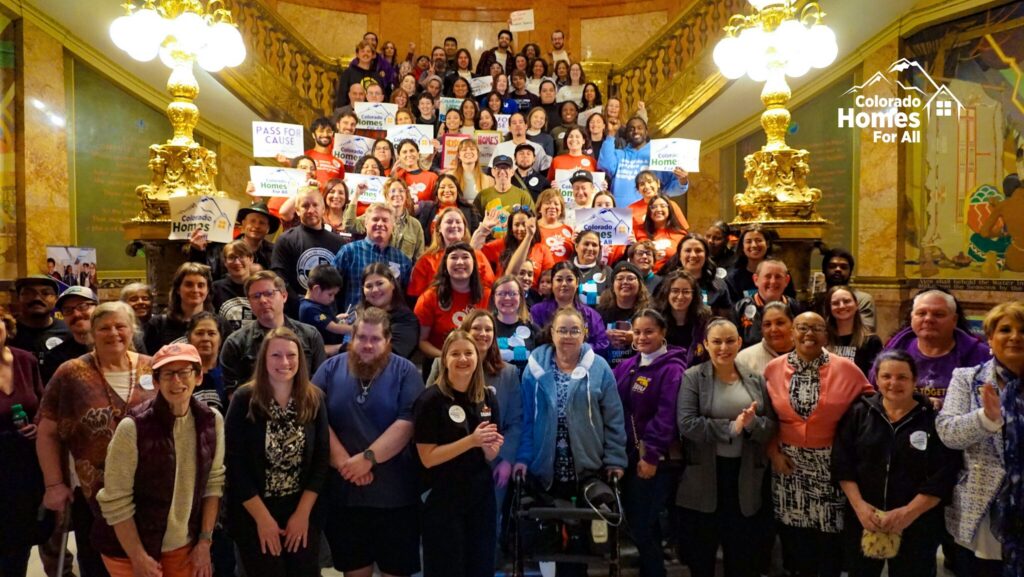
By Colorado Homes For All You say affordable housing, we say housing we can actually afford. As working-class people from across the state who are renters, we are struggling to keep up with our housing costs and we are being...

Colorado’s prisons are underfunded, not overcrowded | PODIUM
Colorado Politics
colorado-politics@coloradopolitics.com
Updated 5 days ago
By John Kellner The state does not have a “prison crowding” problem. It has a prison under-capacity problem. This is a crucial distinction for lawmakers and the public to understand. If it is not properly understood, the state risks falling...

DJ Summers dives into the costlier state of Colorado | The OpEdge Podcast
Tony Olivero
tony.olivero@gazette.com
Updated 6 days ago
Common Sense Institute’s Director of Communications & Research Operations DJ Summers dives deep with The OpEdge Podcast host and investigative columnist Jimmy Sengenberger regarding Colorado’s drop in the institute’s Free Enterprise Competitive Index. Summers shares shrewd insights regarding Colorado’s curious,...

Sorry, Governor — you are wrong on this one | Hal Bidlack
Hal Bidlack
hal-bidlack@coloradopolitics.com
Updated 7 days ago
If you have read even a handful of my several hundred columns during the past few years, you likely ran across me saying nice things about Gov. Jared Polis. I genuinely like the guy, whom I met during our mutual...