

El Paso County felony murder conviction overturned after appeals court cites numerous errors
Colorado’s second-highest court last month ordered a new trial for a woman convicted of felony murder in El Paso County, finding multiple errors that were not individually damaging compromised the fairness of her trial when taken together.
Felony murder does not require that a person kill the victim themselves. Instead, a defendant can be guilty of felony murder when they participate in certain serious crimes, such as robbery or sexual assault, and someone dies as a result.
Jurors convicted Vanessa Jeanette Taylor of felony murder in 2021 based on a multi-tiered theory: Taylor allegedly had the intent to aid Kyree Howard-Walker in the robbery of a Colorado Springs smokeshop, Howard-Walker did rob the smokeshop, and his killing of employee Benjamin Nandin made Taylor liable for felony murder.
Taylor’s actions, which amounted to driving Howard-Walker to and from the robbery location, resulted in a sentence of life in prison under the law in effect at the time.
Howard-Walker did not stand trial, having died by suicide amid a standoff with police weeks after he allegedly killed Nandin and went on another shooting and carjacking spree.
On appeal, Taylor raised multiple claims of error, from police interrogating her without a Miranda warning and insufficient evidence to prosecutorial misconduct.
“We acknowledge that the evidence of Taylor’s intent is thin,” wrote Judge David H. Yun for a three-judge panel of the Court of Appeals, concluding the information presented to the jury could nonetheless support a guilty verdict.
However, the panel believed Taylor was correct about three errors that affected her trial.
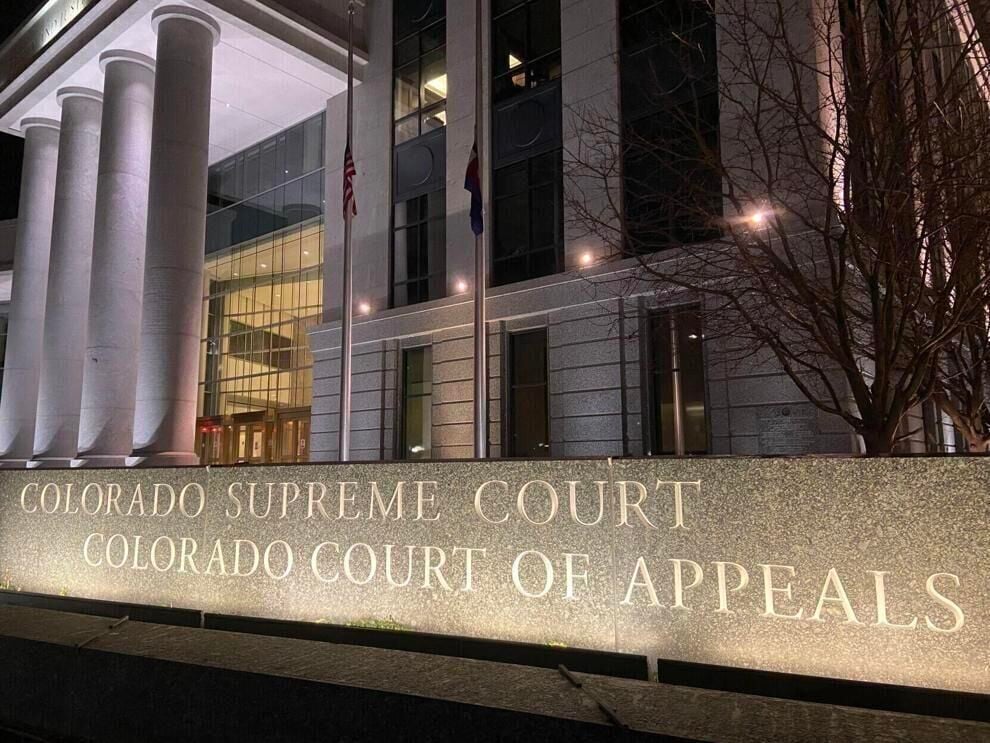
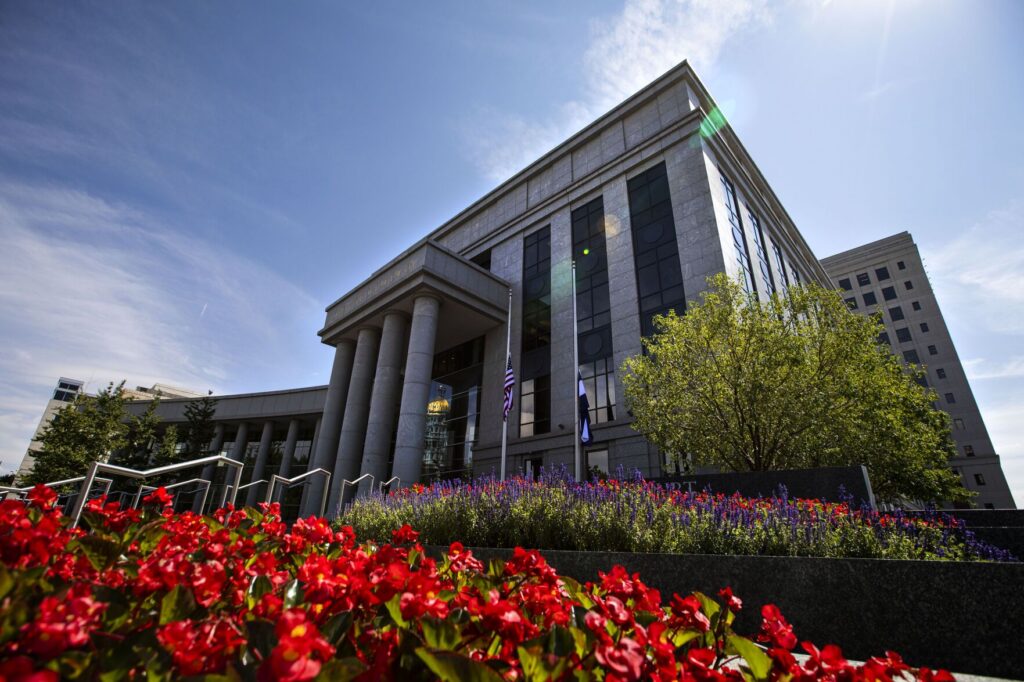
The Ralph L. Carr Colorado Judicial Center in downtown Denver houses the Colorado Supreme Court and Court of Appeals.
(Michael Karlik / Colorado Politics)

The Ralph L. Carr Colorado Judicial Center in downtown Denver houses the Colorado Supreme Court and Court of Appeals.
First, the jury heard that Taylor told a detective she had driven Howard-Walker and his girlfriend to Denver and back sometime between the smokeshop robbery and Howard-Walker’s death. Taylor admitted she knew the police wanted Howard-Walker, but she did not know why.
“She’s part of a willing process of moving him wherever it is that he needs to go,” the unnamed prosecutor argued to jurors. “And it doesn’t matter to her whether it’s legal or not.”
Taylor contended the evidence of her driving, which was not part of the robbery, only served to suggest she was a “bad” person who “knowingly helps criminals get away.”
The appellate panel agreed jurors should not have heard that information because of its unnecessary reflection on Taylor’s character.
Second, District Court Judge David Shakes provided jurors an instruction for how to find Taylor guilty of felony murder under the theory that she was complicit in the smokeshop robbery. However, the instruction noted jurors must find Taylor had the intent to aid Howard-Walker in committing “that crime” — which the instruction designated as murder, not robbery.
The directive “did not instruct the jury about complicity in the robbery. Instead, the instruction required the jury to find that she had the desire, purpose, or design to aid Howard-Walker in committing felony murder,” wrote Yun in the June 27 opinion. “This was obvious instructional error.”
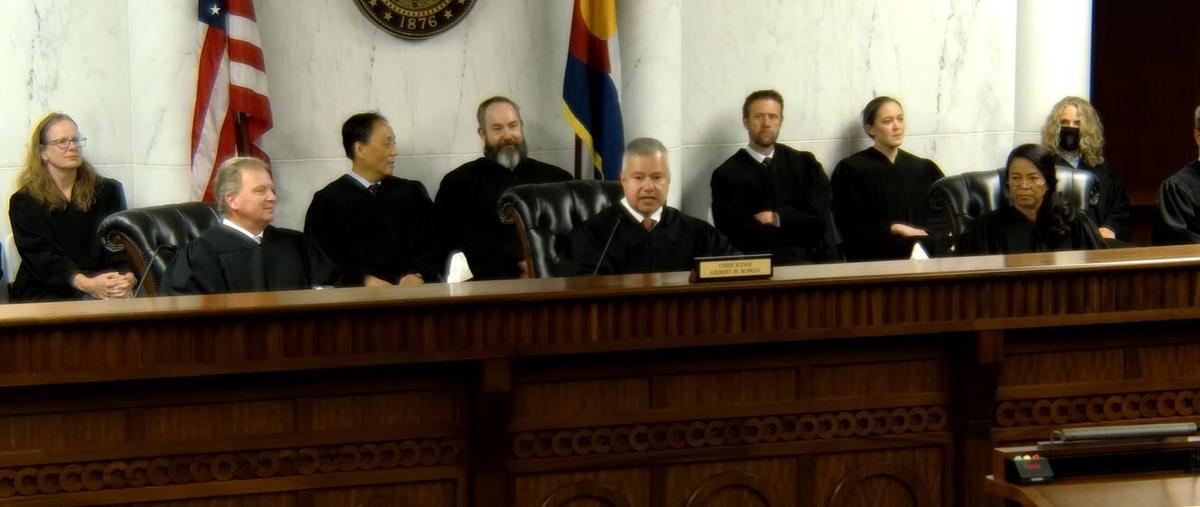
FILE PHOTO: Members of Colorado's Court of Appeals gather at the ceremonial swearing-in of Judge Grant T. Sullivan.
image from video

FILE PHOTO: Members of Colorado’s Court of Appeals gather at the ceremonial swearing-in of Judge Grant T. Sullivan.
Finally, Taylor contended the prosecution made numerous improper comments during its closing argument. While the appellate panel found most challenged statements were appropriate, it flagged one for misconduct.
Howard-Walker was “desperate to get away, and the first thing and the only thing he knows to do is to contact the Bonnie to his Clyde, Vanessa Taylor, and that’s what he does,” said the prosecutor.
“This not only constituted name-calling,” argued public defender Chelsea E. Mowrer, “but also, by comparing them to Bonnie and Clyde, the prosecutor suggested that the two, like Bonnie and Clyde, had committed other crimes together.”
The appellate panel agreed it was wrong for the prosecutor to compare Howard-Walker and Taylor to “the infamous criminal duo,” but noted the defense did not object at the time.
Individually, Yun wrote, the errors would not merit a new trial. However, the Court of Appeals unusually relied on the theory of “cumulative error” to find the improprieties all targeted the jury’s understanding of Taylor’s intent to help Howard-Walker commit the robbery.
The confusing jury instruction, the evidence impugning her character and the prosecutor’s suggestion that Howard-Walker and Taylor had a history of committing crimes could have affected the outcome, the panel concluded.
“We disagree with the (prosecution) that the evidence in this case was overwhelming,” Yun wrote for himself and Judge Craig R. Welling. “Particularly with respect to the intent element, this was a close case. Throughout her police interviews, Taylor repeatedly and adamantly denied that she knew anything about Howard-Walker’s plans to rob the headshop.”
Judge Katharine E. Lum wrote separately to say she agreed with the majority’s decision to grant Taylor a new trial. However, she would have reached the same conclusion based solely on the wrongly worded jury instruction.
“Without any indication in the record as to the jury’s thought process, we do not and cannot know how it interpreted” the instruction, Lum wrote.
The case is People v. Taylor.


Judicial performance evaluations released, Montezuma County judge disciplined | COURT CRAWL
Michael Karlik
michael.karlik@coloradopolitics.com
Updated 16 hours ago
Welcome to Court Crawl, Colorado Politics’ roundup of news from the third branch of government. Colorado’s citizen-led judicial performance commissions released their voter narratives for the judges standing for retention in November, plus a disciplinary panel imposed consequences on a...
Federal judge holds off on dismissing formerly bankrupt medical contractor from Jeffco jail death lawsuit
Michael Karlik
michael.karlik@coloradopolitics.com
Updated 18 hours ago
A federal judge declined on Monday to dismiss the formerly bankrupt medical contractor from a lawsuit over a detainee’s death in Jefferson County jail, but indicated she would do so if the plaintiffs’ attorneys go through the process to ensure...
Federal judge green-lights excessive force, retaliation claims for trial against Fort Collins officers
Michael Karlik
michael.karlik@coloradopolitics.com
Updated 3 days ago
A federal judge green-lit a jury trial last week against multiple Fort Collins police officers on claims that they used excessive force on one man who was standing unarmed in his underwear, and retaliated against another man for exercising his...

10th Circuit revives wage violation lawsuit against Papa John’s operator
Michael Karlik
michael.karlik@coloradopolitics.com
Updated 4 days ago
The Denver-based federal appeals court on Tuesday reinstated a former Papa John’s delivery driver’s lawsuit alleging violations of federal and state wage law. Steve Mighell worked for one month at a Denver Papa John’s location in summer 2023. He alleged...
Colorado appeals judge’s delays in releasing opinions noted by performance commission
Michael Karlik
michael.karlik@coloradopolitics.com
Updated 3 days ago
The citizen-led performance commission that provides guidance to voters about whether to retain members of Colorado’s second-highest court raised concerns by judges and attorneys that Judge Elizabeth L. Harris sometimes struggles with releasing opinions promptly. Harris, who joined the Court...

Colorado judge explores sanctions against DOJ, ICE for rearresting man 4 days after release on bond
Michael Karlik
michael.karlik@coloradopolitics.com
Updated 4 days ago
A federal judge in Colorado is considering sanctions against the government after immigration agents rearrested a man four days after an immigration judge found him suitable for release on bond. On July 28, U.S. Magistrate Judge N. Reid Neureiter ordered...
Divided disciplinary panel censures Montezuma County judge after agreement reached
Michael Karlik
michael.karlik@coloradopolitics.com
Updated 4 days ago
A disciplinary panel formally imposed a public censure, suspension, and further training on Montezuma County Court Judge Ian J. MacLaren on Tuesday by a 2-1 vote. Under constitutional Amendment H, which voters adopted in November 2024, MacLaren was set to...
Colorado’s Western Slope magistrate judges describe unique role in federal judiciary
Michael Karlik
michael.karlik@coloradopolitics.com
Updated 6 days ago
Two of Colorado’s federal judges stationed on the Western Slope spoke to lawyers on Wednesday about their unique roles, the ways their workloads differ, and the need for more criminal defense lawyers to take cases outside the Front Range. “Here...

Denver sues Philip Morris, other tobacco companies over cigarette butt litter
Deborah Grigsby
deborah.smith@denvergazette.com
Updated 4 days ago
Denver is demanding that some of the biggest tobacco companies in the world pay for the cleanup of discarded cigarette butts on its streets, following a similar campaign that cities in other states have pursued. Denver’s lawsuit, filed this week...

Federal judge rules that request for bond hearing not necessary to challenge immigration detention
Michael Karlik
michael.karlik@coloradopolitics.com
Updated 4 days ago
A federal judge in Colorado ruled last week that it is not mandatory for a person to seek a bond hearing with an immigration judge before they challenge the lawfulness of their detention in federal court. For the past year,...