

YMCA camp’s policy to sort campers by gender identity stirs controversy
With school ending, summer camps are getting ready for weeks of raucous outdoor activities, campfire singalongs, new friendships and everyone having a blast.
Along with the traditional fun and games, a developing trend is playing out at the YMCA’s longstanding Camp Shady Brook near Deckers in Douglas County.
The sold-out resident summer camp is one of the few in the region that places campers and staff members in cabin groups according to their gender identity.
That means children, teens and employees at Camp Shady Brook can sleep in male- and female-divided cabins based on their gender identity and preference, according to the Colorado Springs-based YMCA of the Pikes Peak Region, which owns and operates Camp Shady Brook.
Camp for Colorado foster kids delivers emotional, behavioral support along with fun
Thus, adult and minor males who are transgender and identify as female could stay overnight in the same cabin as biological girls, and adult and minor transgender females who identify as male could sleep in the same cabin as biological boys.
And fellow campers and parents wouldn’t necessarily know that’s the case.
Michael Van Osch, the YMCA’s executive director of marketing and communication, initially granted The Gazette an interview with a camp executive but then denied the request and would not answer questions about the camp’s gender-inclusion policy, instead reiterating statements that appear on its website. Van Osch did not give a reason why no one from the organization would provide comments or respond to questions about the subject.
Along with chosen pronouns being respected and honored, “All campers have the right to maintain privacy about one’s gender status and/or presentation at camp,” according to the YMCA’s website.
So, if transgender minor campers or adult employees do not want their choice of gender known to others, it will not be disclosed.
In addition to sleeping quarters, the use of bathrooms and showers also apply under the YMCA’s gender-inclusion rules.
“Gender assigned at birth, physical characteristics or presentation will not dictate use of gendered space (such as restrooms and overnight accommodations),” the policy states.
Children and adults who identify as “nonbinary,” which the Merriam-Webster Dictionary defines as “relating to or being a person who identifies with or expresses a gender identity that is neither entirely male nor entirely female,” are asked to select a cabin gender in which they will feel more comfortable during the camping session, according to the YMCA.
New Inside Out community center for LGBTQ+ teens, young adults opens in Colorado Springs
Van Osch referred to a state statute, Discrimination in Places of Public Accommodations, which lawmakers revised this month and broadly defines public accommodations as a host of locations that include “a campsite or trailer camp,” as well as “a public facility of any kind whether indoor or outdoor.”
The statute specifies that it is considered discriminatory to not allow “the full and equal enjoyment of the goods, services, facilities, privileges, advantages or accommodations of a place of public accommodation” for a long list of considerations that include sexual orientation, gender identity and gender expression.
Also, the Colorado Department of Regulatory Agencies’ Civil Rights Commission issued rules governing resident camps that were revised in 2018 and added two conditions regarding gender segregation, said Ian McGuire, spokesman for the Colorado Department of Early Childhood.
Nothing prohibits segregation of facilities based on gender, however all applicable entities must “allow individuals the use of gender-segregated facilities — which include restrooms, locker rooms, dressing rooms and dormitories — that are consistent with their gender identity.”
And in gender-segregated facilities where undressing in front of others occurs, “covered entities shall make reasonable accommodations to allow access consistent with an individual’s gender identity.”
The term “gender identity” is defined in the rules as “an innate sense of one’s own gender.”
Mixed public reaction
The state’s laws do not address whether such accommodations for gender should be disclosed to other people.
Churches, synagogues, mosques or other places principally used for religious purposes are exempt from the state statute.
The YMCA, an acronym for Young Men’s Christian Association, was founded in London in 1844. Today, every YMCA location in the United States is independently operated.
The YMCA of the Pikes Peak Region states online as its mission: “To put Christian principles into practice through programs that build healthy spirit, mind and body for all.”
A Gazette query on social media about special provisions for transgender children at resident camps drew mixed reactions about what’s become a politically charged debate nationally.
‘Superhero’ foster dad in Colorado Springs recognized for dedication to helping at-risk youth
Comments in favor included: “I think that’s great — anything we can do to make kids more comfortable with themselves,” and “Let’s have respect for kids and let them use the spaces that correspond with their gender identity,” “Allowing children to express themselves and be who they feel like they really are, is excellent.”
Remarks in opposition included: “As a father of two wonderful little girls, that’s a hard ‘no,’” and “You’re born how you’re born,” “Boys do not belong in girls’ bathrooms, period. Forcing women to just accept it is cruel,” and “Zero kids told an adult out of the blue that they want to use the other bathroom. One hundred percent were influenced and heard it from society first.”
A Colorado court case in 2013 supported the right of a 6-year-old transgender male-to-female student in Fountain-Fort Carson School District 8 in El Paso County to use the girls’ restroom that aligned with her gender identity.
The Gazette’s informal call out did not solicit comments regarding camp practices pertaining to transgender adults.
Pikes Peak region pioneer
The issue of transgender children and adults sharing facilities at camps and not being identified to peers and parents has been raised in other Colorado communities, including Durango, where Colvig Silver Camps offers a similar gender-inclusion model.
Camp Shady Brook seems to be a pioneer in the Pikes Peak region.
It’s hard to find camps in southern Colorado that make gender-inclusive accommodations for LGBTQ+ youth, said Aimee Davis, development director for Kids Crossing. The Colorado Springs-based licensed foster care agency oversees nearly 100 foster homes statewide and also has offices in Denver, Pueblo and La Junta.
Before debuting its camp for foster children last summer, Davis said the agency called many camps in the area to inquire about how they handle transgender and nonbinary students.
“Camp Shady Brook is one of the very few camps that has a really open policy in terms of making sure that kids that come to camp are honored for their gender identity and not just bunked for their biological birth sex,” Davis said. “That was important to us.”
Many camps in the region are faith-based and fall under the state’s exemption clause for religious organizations.
The YMCA’s website says, “inclusion is our culture” and its programs — which in addition to summer camp include day camp, before- and after-school activities, youth sports, exercise facilities and operation of city-owned swimming pools — do not have a faith component or focus.
“Camp Shady Brook is a safe, diverse community that exists to share our environment with you,” the website says. Overall, the YMCA of the Pikes Peak Region says it has three focuses: “nurturing the potential of every child and teen” through youth development, heathy living, and “giving back and providing support to our neighbors” through social responsibility.
Helping youth feel supported
For the second year, Kids Crossing selected Camp Shady Brook as the location for its weekend overnight camp in April largely because of its considerations for the LGBTQ+ community, Davis said.
The foster care agency emphasizes gender inclusivity, she said, because national statistics show that nearly 1 in 3 minors in foster care identify as lesbian, gay, bisexual, transgender, queer and other descriptions such as intersex.
Top 3 trails in Colorado Springs
Of Kids Crossing’s 97 licensed foster homes, 11 include someone who’s part of the LGBTQ+ community, Davis said, and the agency recruits LGBTQ+ foster parents to provide a family-model option.
Nationally, 44% of LGBTQ+ foster children were either removed, ran away or thrown out of their homes directly because of their gender identity, Davis said research shows.
Both last year and this year, the agency’s foster kids camp for ages 9-18 included LGBTQ+ youth affiliated with Kids Crossing’s offices, she said.
With the help of their therapists and camp staff, youth filled out a “gender support plan” to decide whether they wanted other children and adults to know about their gender preferences and what their selections for using restrooms, showering and bunking.
Davis said the youths’ decisions are based on “What’s going to make them most comfortable, so that youth felt completely supported.”
Without such considerations, she said, some adolescents would not have attended the unique camp that seeks to provide a comparable experience for kids in foster care, who usually do not have an opportunity to participate in childhood camping.
“One youth we had this year is constantly misgendered at school, so it was really important they could be who they are,” Davis said. “We want these kids to have an opportunity to advocate for themselves and have a great time without feeling like they are being ‘outed.’”
Parents are notified of the camp’s approach to bunking and other facility uses with a general disclaimer on the YMCA’s website, “We honor the gender identity of all our campers,” she said.
“The nice part is it’s just out there, so families can choose if they’re comfortable sending their kids to Camp Shady Brook,” Davis said.
The facility’s showers and restrooms have stalls, she said, which makes bathroom routines easier for transgender youth.
“It’s not like old school — we have a lot of privacy we’re giving our youth,” Davis said, adding that the agency has not encountered any complaints about the camp’s gender allowances.
“One of the things I really admire is the (Shady Brook) camp director said to me that they will tell people, ‘There’s plenty of camps that don’t do this, so if this an issue there’s plenty of other camps you can go to. This is our policy,’” Davis said.
The Colorado Department of Early Childhood licenses 47 summer camps statewide. The agency does not track which are faith-based and it does not collect enrollment information for each camp, he said, so does not know how many transgender children attend overnight camps.
The state’s anti-discrimination laws covering employment rights based on sexual orientation, gender identity and gender expression also pertain to staff at summer camps.
Another development regarding the U.S. Department of Education’s proposed changes presented more than a year ago for students’ eligibility for athletic teams under federal Title IX protection remains ongoing.


For Vance, Iran deal presents opportunity and risk
W. James Antle III Washington Examiner
wjamesantleiiiwashingtonexaminer@wpstage.coloradopolitics.com
Updated 25 minutes ago
Vice President JD Vance has a lot riding on the deal to end the war in Iran. The memorandum of understanding between the United States and Iran came together at the outset of Vance’s book tour, but that’s not the...
Some pointed questions for the gubernatorial hopefuls | George Brauchler
George Brauchler
george-brauchler@gazette.com
Updated 16 hours ago
Earlier this month, the Republican and Democratic candidates for governor participated in a televised interview moderated by well-known, left-leaning legacy media folks. Predictably, the questions asked of the GOP candidates were more aggressive, pointed, biographical and almost entirely disconnected from...
Chaotic funding throws monkey wrench into governor’s-race money madness | Paula Noonan
Paula Noonan
paula-noonan@coloradopolitics.com
Updated 16 hours ago
Chaos Monkey, Inc., gave a trifle $20,000 donation to Rocky Mountain Way (RMW), the independent expenditure committee (IEC) supporting U.S. Sen. Michael Bennet for Colorado governor. But why, Coloradans should ask, would a guy who has assigned his contributor name...
10th Circuit dismisses Tina Peters’ challenge to confinement as moot
Michael Karlik
michael.karlik@coloradopolitics.com
Updated 17 hours ago
The Denver-based federal appeals court granted the state’s unopposed request on Wednesday to dismiss former Mesa County clerk Tina Peters’ challenge to her confinement as moot. Although Peters received a commutation of her prison sentence last month from Gov. Jared...
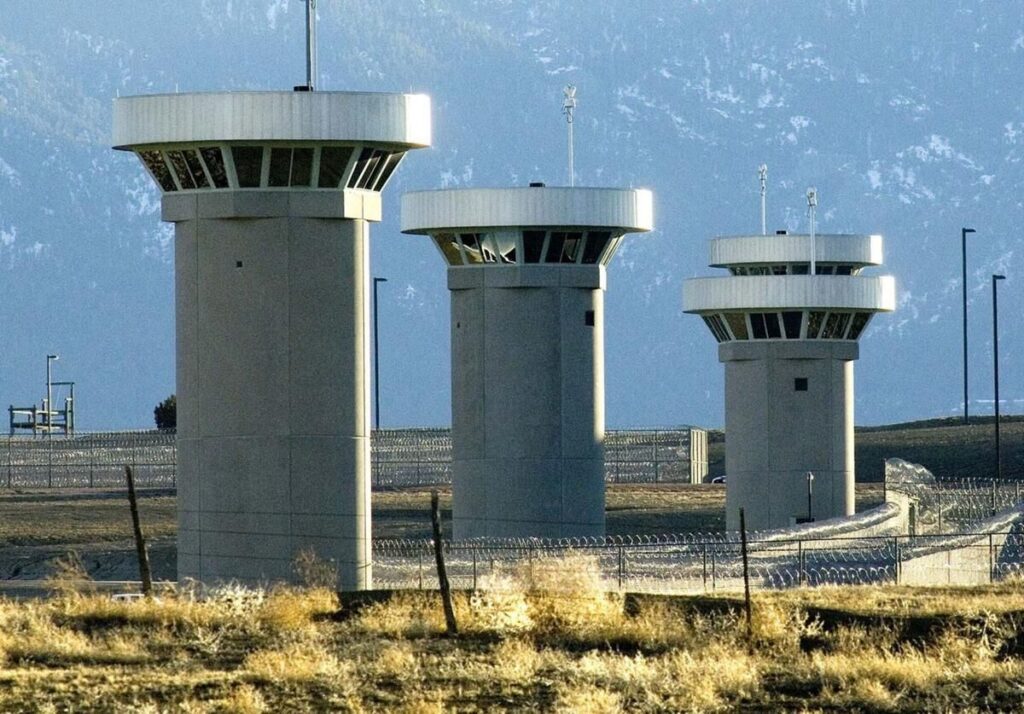
Federal judge declines to recuse from death penalty case after Supermax visit
Michael Karlik
michael.karlik@coloradopolitics.com
Updated 18 hours ago
A federal judge declined to recuse herself last month from a death penalty case arising out of Colorado’s “Supermax” prison, finding that her tour of the facility earlier this year did not bias her decision-making. U.S. District Court Judge Charlotte...

Amid public pressure, Colorado candidates tackle social media regulations for minors
Bethany Johnson
bethany.johnson@denvergazette.com
Updated 8 minutes ago
Following the accidental overdose of her daughter in 2020, Patti Lujan pursued a lawsuit against Snapchat, the social media platform that, she claimed, connected her daughter with a drug dealer. In a news release announcing the lawsuit, Lujan alleged that...
Colorado state Senate: Meet the primary election candidates
Marianne Goodland
marianne.goodland@coloradopolitics.com
Updated 16 hours ago
Colorado’s June 30 primary features a slate of state Senate contests, with several incumbents stepping aside and competitive fields emerging in both parties. These are some of the races to watch as voters begin to submit ballots. Senate District 3:...

Top five hot mic moments from world leaders at G7 Summit
David Zimmermann Washington Examiner
davidzimmermannwashingtonexaminer@wpstage.coloradopolitics.com
Updated 20 hours ago
As the 52nd annual G7 Summit came to a close on Wednesday in France, world leaders not only discussed diplomacy front and center, but also engaged in lighter conversations on the sidelines. There were many hot-mic moments in which President Donald...
Appeals court clarifies offense of impersonating a peace officer
Michael Karlik
michael.karlik@coloradopolitics.com
Updated 23 hours ago
Colorado’s second-highest court clarified this month that a person commits the offense of impersonating a peace officer if they engage in “any conduct” while pretending to be law enforcement. In a case out of El Paso County, Richard James Coulier...

When having fun gets a little, or a lot, messy | NONPROFIT REGISTER
Joanne Davidson Special to Colorado Politics
joanne-davidson-special-to-colorado-politics@coloradopolitics.com
Updated 23 hours ago
CHILDREN’S MUSEUM OF DENVER AT MARSICO CAMPUS Denver News: If your child’s definition of a good time is to dive head-first into a giant mound of mud, or to dance their hearts out in pools of fluffy foam, consider paying a visit...