

Ensure all Coloradans receive same quality critical medical care | OPINION
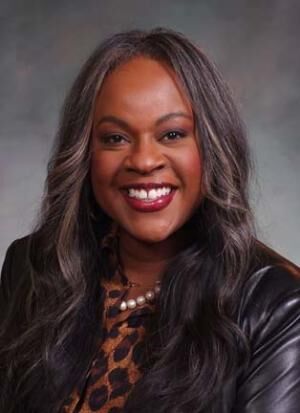
Leslie Herod

Leslie Herod
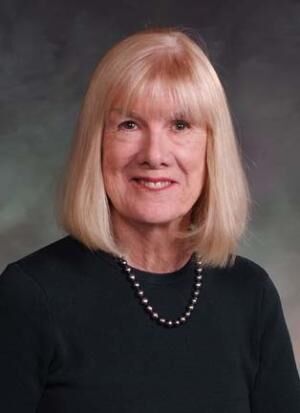
Mary Young

Mary Young
Health care affordability and accessibility are issues that have been at the top of Colorado patients’, families’ and lawmakers’ minds for decades. In recent years, more specifically the importance of health equity has emerged — the idea all people deserve access to the same quality of health care.
Colorado has taken a step, however, to make health care access and treatment less equitable in our state by significantly decreasing the Medicaid reimbursement rate for anesthesia care. The rate recommended by the governor’s proposed budget this year cuts the reimbursement rate for this critical care by a staggering 37.5%.
Every year the Medicaid Provider Rate Review Advisory Committee (MPRRAC) presents the state’s Joint Budget Committee (JBC) with an overview of the reimbursement rates and with suggested strategies for responding to the findings of the review. The 2023 review for anesthesia rates, conducted after consultation with just one provider, resulted in the recommendation to benchmark the Medicaid reimbursement rate for anesthesia care to Medicare — a cut of nearly 40%.
Stay up to speed: Sign up for daily opinion in your inbox Monday-Friday
This significant cut affects both anesthesiologists and nurse anesthetists alike, but its strongest impacts will be felt by Colorado patients. This massive rate reduction could increase already significant inequities in health care faced by those most likely to need anesthesia care under the Medicaid program including low-income Coloradans, pregnant women, children, people of color, people with disabilities the elderly and those living in rural regions of the state.
Medicaid programs cover one in four Coloradans, and 66% of these patients are people of color. Though the majority of Medicaid patients live in urban centers, more than 20 rural counties rely on Medicaid to serve more than 35% of their population. Three rural counties rely on Medicaid programs to serve more than 50% of their population. Decreasing the Medicaid reimbursement rate for critical anesthesia care disproportionately jeopardizes the health and medical outcomes for Medicaid patients, further increasing already significant health equity gaps.
Though this cut will result in lower standards of care and potentially worse health outcomes for patients on Medicaid, it won’t meaningfully reduce health care costs.
This policy was developed by bureaucrats, not providers or caregivers, and is based on flawed data out of line with other carriers and medical reimbursement rates. No other payment system in Colorado benchmarks anesthesia rates to Medicare. Commercial insurers do not, Colorado workers’ compensation does not, and Colorado Medicaid, prior to this recent proposal, has not.
The Medicare reimbursement rate for anesthesia care is due to a fundamental flaw in the original design of the system that did not account for the true cost of anesthesia services. To this date, the error has not been corrected. According to a 2020 report, Medicare pays significantly less for anesthesia services compared to the commercial market than it does for other physician services. In fact, Medicare payment rates are roughly one-third of the rates in the commercial market while Medicare payments for services performed by other physicians are about 75% of the commercial rates. Anesthesia practices have a limited ability to offset payment rate reductions, and the payment rate reduction impacts anesthesiologists, nurse anesthetists and anesthesiologist assistants across the board.
There are countless policies and practices entrenched in our health care system that disenfranchise and exclude certain populations, resulting in different tiers of care based on your income, race, region of the state or other factors. This tiered system also results in significantly disparate health care outcomes. It’s impossible to overstate the importance of adequate anesthesia care for patients. Access to proper anesthesia care plays a critical role in reducing surgical complications, patient pain levels, recovery times and overall costs, as well as increasing mobility and positive patient outcomes overall.
In addition, in a recent report the Colorado Department of Health Care Policy and Financing found there were opportunities to address health disparities in two major areas including increasing access to care in lower-cost, outpatient surgery centers and working to improve pregnancy outcomes and reduce maternal morbidity and mortality. What is not accounted for, however, is the critical role access to optimal anesthesia care plays in finding success in both areas.
We should all be working to ensure everyone in Colorado can access the same high-quality care we would want for ourselves or our loved ones. Though we understand the state has a budget shortage, it should not be balanced on the backs of Medicaid patients who already face serious barriers to health care.
State Rep. Leslie Herod represents House District 8 in Denver and serves on the Appropriations and Judiciary Committees. State Rep. Mary Young represents House District 50 in Weld County and serves as vice-chair of the Health and Human Services Committee and on the Education Committee.


‘CoCo’ would take taxpayers for a ride | John Caldara
Jon Caldara
jon-caldara@coloradopolitics.com
Updated 2 days ago
Colorado wants taxpayers to spend another $4.73 billion on passenger rail. Don’t worry. They have a plan. Which is a little like your brother-in-law announcing he’s launching another exciting restaurant venture after his last three restaurants ended in bankruptcy. Please....

The through line from Donald Trump to Victor Marx | SONDERMANN
By Eric Sondermann
by-eric-sondermann@coloradopolitics.com
Updated 4 days ago
Over 10 years ago, before Donald Trump could ever defeat Hillary Rodham Clinton, he had to first engineer a hostile takeover of the Republican Party. Prior to his descent of that golden escalator, the previous seven Republican presidential nominees had...
Primary voters rejected big money in politics | Paula Noonan
Paula Noonan
paula-noonan@coloradopolitics.com
Updated 1 day ago
While we’re in an election campaign lull between now and Labor Day, we have time to consider the impact of $102 million in campaign contributions in the primary. In the general election, more money will fill candidate campaign coffers, and...
Colorado’s primary proved in this political climate money doesn’t buy electoral happiness | Paula Noonan
Paula Noonan
paula-noonan@coloradopolitics.com
Updated 3 days ago
To catch you up, campaign committees from this 2026 election cycle already collected and shoveled out a lot of cash: $102.64 million. That’s contributions in all forms — dollars, in kind, loans, etc. — from December 2024 to now. Total...
Protecting Colorado from wildfire starts before fire arrives | PODIUM
Colorado Politics
colorado-politics@coloradopolitics.com
Updated 4 days ago
By Rick Cables Colorado is once again being reminded of how significantly wildfires can affect the people and places we love. In southern Colorado, the Aspen Acres fire has burned through the Wet Mountains near Beulah and Rye, quickly becoming...
Stop making business the health care scapegoat | GUEST COLUMN
Colorado Politics
colorado-politics@coloradopolitics.com
Updated 1 week ago
By John Carson It is perhaps a sad commentary in the wake of our nation’s 250th birthday to note even in this hyper-polarized age, one thing nearly every American can agree on is American health care is a mess. But...
Could an independent win CD-1?
Greg Fulton
greg-fulton@coloradopolitics.com
Updated 4 days ago
Turnout in Colorado’s 2026 primary election should concern many citizens. Only 36% of active registered voters participated, meaning a relatively small share of the electorate effectively determined the choices voters will see on the November ballot. Low participation has allowed...
Affronts to our children’s children | Hal Bidlack
Hal Bidlack
hal-bidlack@coloradopolitics.com
Updated 5 days ago
As my regular reader (hi Jeff!) will recall, I’m quite fond of the Colorado Politics section called Out West Roundup. On that page, readers can learn about quite a few things happening in the American west that missed the front...
The CPW Commission’s act of courage | GUEST COLUMN
Colorado Politics
colorado-politics@coloradopolitics.com
Updated 1 week ago
By Eric Washburn Winston Churchill once said: “Courage is rightly esteemed the first of human qualities because, as has been said, it is the quality which guarantees all others.” Until this year, CPW has allowed hunters to kill as many...
The CPW Commission’s act of courage | GUEST COLUMN
Colorado Politics
colorado-politics@coloradopolitics.com
Updated 1 week ago
By Eric Washburn Winston Churchill once said: “Courage is rightly esteemed the first of human qualities because, as has been said, it is the quality which guarantees all others.” Until this year, Colorado Parks & Wildlife has allowed hunters to...