

Protecting Colorado from wildfire starts before fire arrives | PODIUM
By Rick Cables
Colorado is once again being reminded of how significantly wildfires can affect the people and places we love.
In southern Colorado, the Aspen Acres fire has burned through the Wet Mountains near Beulah and Rye, quickly becoming one of the 10 largest fires in Colorado history. For me, this fire is personal. As a Colorado native, born in Pueblo, the Wet Mountains hold some of my earliest and most cherished memories. With my grandmother as my guide, I caught my first fish in a cold, tumbling creek there as a boy. I learned to hunt turkey in those oak brush draws and chased elk through the timber as the aspens turned gold. To me, that country was the last best place of my youth, a landscape that shaped who I became.
What makes it even more meaningful is in recent years, I have watched my own children fall in love with those same mountains. I have stood with them in the early morning quiet, watched them learn the patience a good hunt demands, and seen the same wonder in their eyes I felt decades ago. Knowing that fire is now moving through that country brings home, in the most personal way, exactly what is at stake.
On the Western Slope, we are mourning Emily Barker, Nick Hutcherson, and Sydney Watson, three firefighters from the Rifle Helitack crew who lost their lives in service to others.
There is no way to talk about this wildfire season without honoring their courage. We owe recognition and thanks year-round to our wildland firefighters and countless other local agencies and individuals.
The passionate professionals who protect Colorado do not just respond to fire. Many work all year round in preparing for fire. Long before smoke is in the air, firefighters, foresters, landowners and local leaders prepare our forests and communities for when fire arrives.
Every one of these firefighters and forest professionals learns the fire triangle. Fire needs three things: oxygen, heat and fuel. In Colorado, we cannot control the wind. We cannot control every lightning strike. We cannot stop every careless or accidental ignition.
We can do something about the fuel.
Fuel for Colorado wildfires means unmanaged, unhealthy forests. Places that have not benefited from the natural cycles and processes that shaped and created our beautiful outdoor landscapes.

A forest choked with excess fuel is not protected. A watershed waiting for a high-severity fire is not protected. A mountain community surrounded by unmanaged vegetation is not protected. And firefighters asked to defend homes in those conditions have fewer tools available to them and are put at greater risk.
The encouraging news is Coloradans are not powerless. We know how to prepare landscapes and neighborhoods before fire arrives. I spent my career with the U.S. Forest Service, including as regional forester here in the Rocky Mountain Region. I have seen that preparation up close.
Proactive forest care is about choosing care over neglect. It is a decision to commit to action that protects what Coloradans care about most: our homes, our water, our wildlife habitat, our recreation, our rural economies and the future of our forests.
This work has to be collaborative. Federal agencies, state foresters, local fire districts, counties, utilities, water providers, ranchers, landowners and homeowners all have a role. No single forest management project or agency can solve the challenge alone. But when people work together across property lines and jurisdictions, the landscape becomes healthier, and communities become safer.
This quiet collaboration rarely makes headlines. A shaded fuel break outside a subdivision is not as dramatic as a wall of flames on the evening news. A successful prescribed fire does not draw the same attention as an evacuation order. Your local power utility, partnering with foresters and landowners to clear defensible space, will never know which ember they stopped from becoming a disaster.
The best wildfire success stories are the ones most people never hear about because preparation worked and communities were ready.
We cannot eliminate wildfire. Fire is part of the western U.S. We can only choose whether we are going to react after smoke is in the air, or whether we will invest in the hard work that protects the things that matter to us.
Protecting what matters means supporting the foresters, firefighters and local leaders doing this work. It means giving communities the tools and funding they need. It means giving land managers the ability to act at the scale and pace this challenge requires. It means being honest trees will need to be cut, brush will need to be cleared, and some fire will need to be carefully reintroduced under controlled conditions.
Ultimately, our choice is not between a managed forest and a natural forest. Our choice is between a forest we help prepare for fire and a forest we leave to burn under the worst possible conditions.
The best choice is a cared-for forest: one prepared for fire, capable of renewing itself, and able to continue providing the water, wildlife, scenery, recreation, and sense of home Coloradans cherish. It is the choice that ensures the creek where I caught my first fish, the draws where I hunted turkey, and the timber where my children and I have made new memories will still be there for the generations that follow.
For the families evacuating near Beulah, for the communities watching the sky turn orange, and for the firefighters who put themselves in harm’s way, prevention cannot be an afterthought.
It has to be the work we do now.
Rick Cables is a former forest supervisor on the Pike-San Isabel Forest.

CoComandering? | Miller Hudson
Miller Hudson
miller-hudson@coloradopolitics.com
Updated 21 hours ago
At 8 a.m., Friday morning, Aug. 28, 70 or 80 mostly bleary-eyed visitors to the Transportation Technology Center outside Pueblo packed a conference room to attend the Front Range Passenger Rail District’s (FRPRD) Board meeting. With the exception of those...

Even Dem court couldn’t abide theft of GOP seats | Dick Wadhams
Dick Wadhams
dick-wadhams@coloradopolitics.com
Updated 16 hours ago
Thanks to the Colorado Supreme Court, Colorado voters will be able to reaffirm their support for the Independent Congressional Redistricting Commission after the court struck down the Democratic scheme to steal three Republican congressional seats. Billionaire-funded national Democratic groups from...

Chaotic meeting began with attempt to squelch public comment | Rachel Gabel
Rachel Gabel
rachel-gabel@coloradopolitics.com
Updated 16 hours ago
When Attorney General Phil Weiser takes the governor’s office in January, he must immediately address the chaos of the latest round of appointees to the Colorado Parks and Wildlife Commission to assure stakeholders he’s willing to put pressure on the...

Graduated income tax proposal is a flat tax in disguise | Jon Caldara
Jon Caldara
jon-caldara@coloradopolitics.com
Updated 3 days ago
“Youth is wasted on all the wrong people.” That’s one of my favorite lines from “It’s a Wonderful Life.” The older I get, the less it sounds like a joke. Every generation inherits victories it did not win. Young Americans...
AI optimism vs. anxiety — podcasters debate this every night | Tom Cronin
Tom Cronin
tom-cronin@coloradopolitics.com
Updated 2 days ago
President Donald Trump, CNBC’s “Mad Money” host Jim Cramer and entrepreneurial “accelerationists” celebrate the AI revolution and the infrastructure data-center build-out. Cramer recently gushed, “I like data centers so much that I wish I lived in one.” Trump criticized any community...

Colorado House ethics committee issues ‘stern letter’ to Democrat over caucus funds mismanagement
Marianne Goodland
marianne.goodland@coloradopolitics.com
Updated 19 hours ago
The Colorado House ethics committee on Friday voted unanimously to issue a “stern letter” to Rep. Mandy Lindsay, D-Aurora, regarding her mismanagement of House Democratic caucus funds. The committee further voted to request that Lindsay resign as Democratic Caucus co-chair...
Manny Rutinel resigns from Colorado legislature to focus on congressional race
Marissa Ventrelli
marissa.ventrelli@coloradopolitics.com
Updated 2 days ago
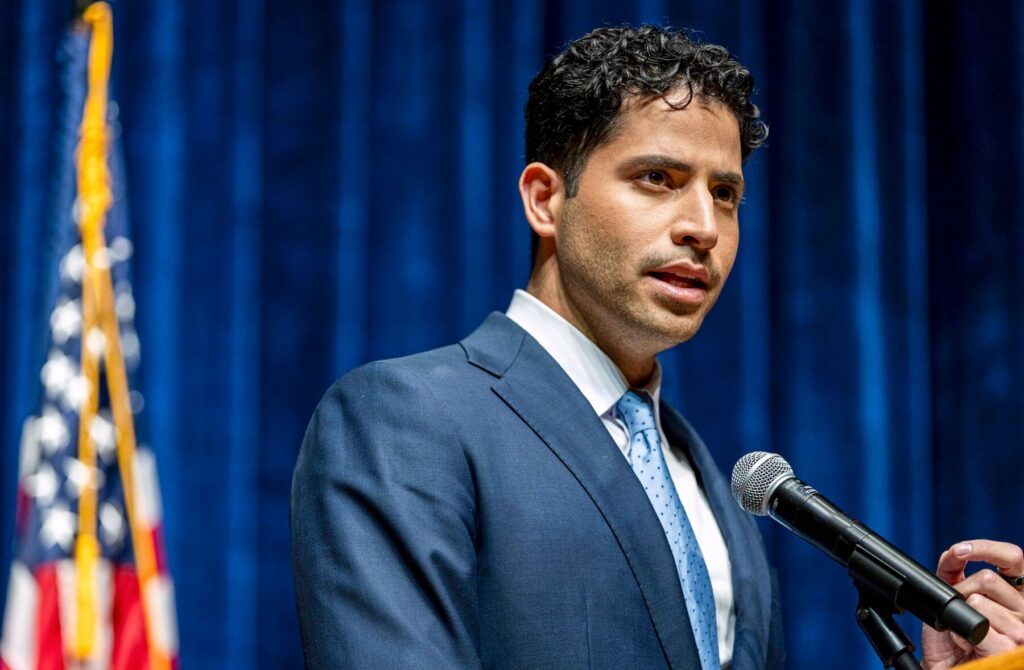
The Democrat running for a key congressional race — whose outcome could decide the balance of power in the U.S. House — on Friday resigned from the Colorado legislature. State Rep. Manny Rutinel is turning his attention to his campaign...
Colorado secures FEMA support for wildfire, flooding and mudslide recovery
Marissa Ventrelli
marissa.ventrelli@coloradopolitics.com
Updated 2 days ago
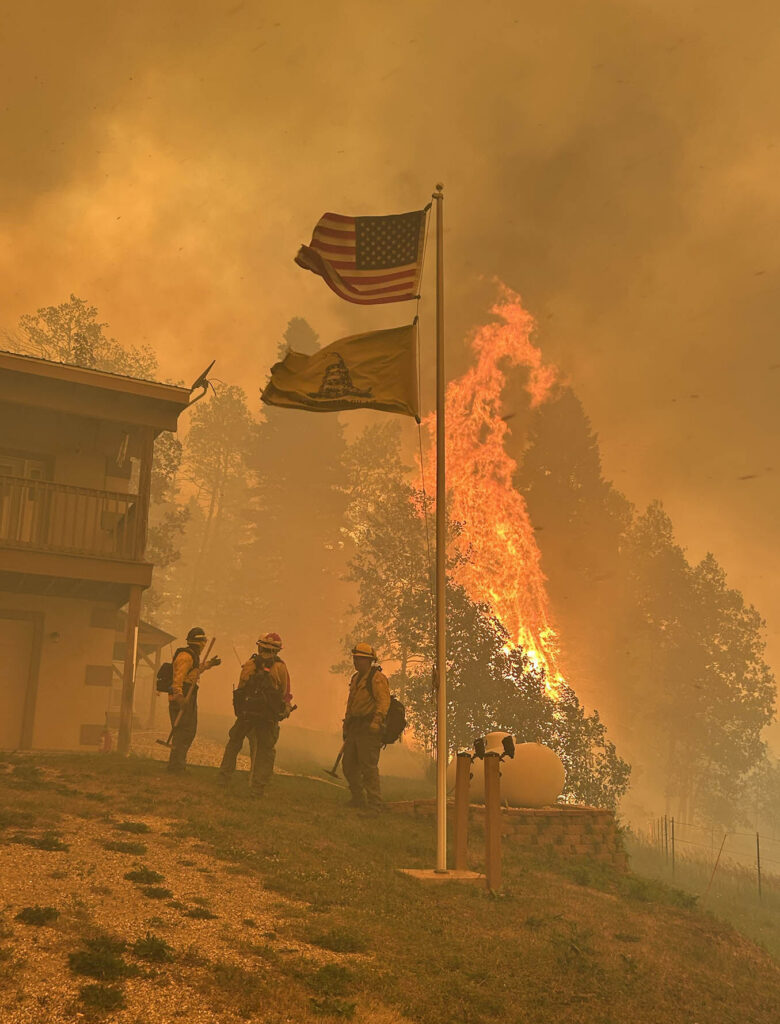
Federal authorities on Friday approved Colorado’s request for federal public assistance to help communities devastated by the Aspen Acres and Gold Mountain Fires. The Federal Emergency Management Agency did not announce how much the state would receive but confirmed that...
State seeks $50K penalty against GOP candidate Victor Marx over alleged campaign finance violations
Deborah Grigsby
deborah.smith@denvergazette.com
Updated 2 days ago
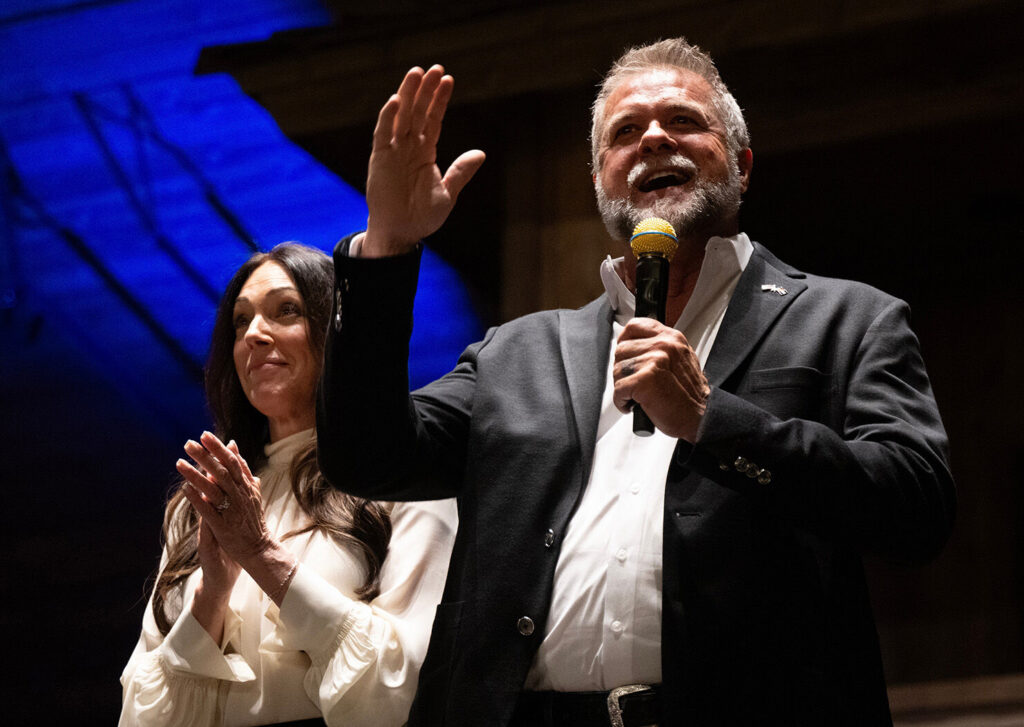
Republican gubernatorial candidate Victor Marx is looking at more than $50,000 in fines in what the Elections Division of the Office of the Secretary of State calls “unprecedented” campaign finance violations. The state has not imposed that fine yet, and...
Judge puts Colorado Libertarians’ secretary of state candidate on ballot after party’s 1st nominee drops out
Ernest Luning
ernest.luning@coloradopolitics.com
Updated 2 days ago
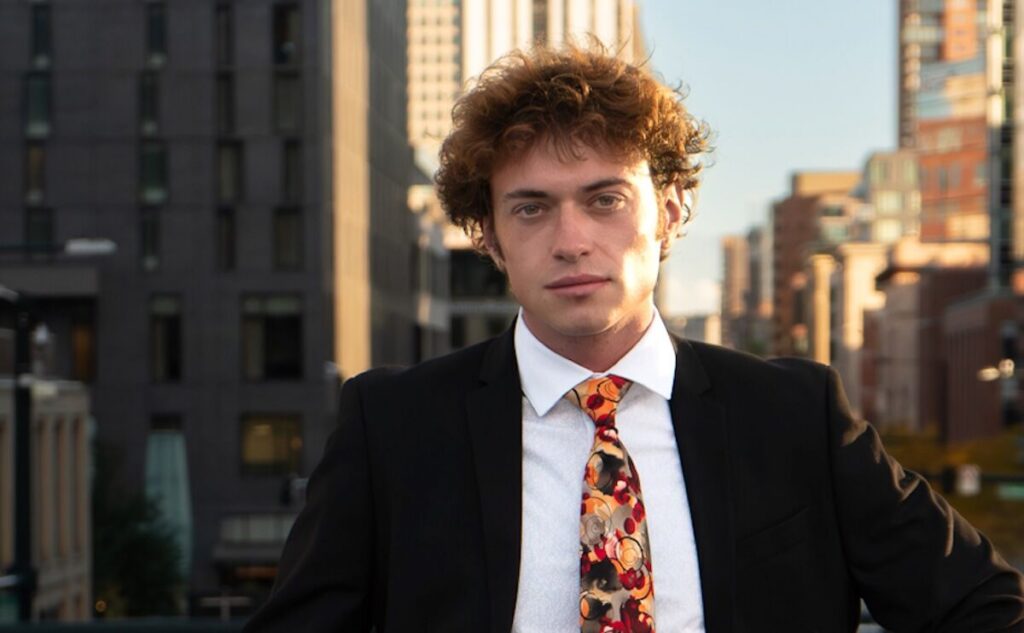
A Denver judge ruled Friday that the Colorado Libertarian Party’s pick for secretary of state will appear on the November ballot after the party’s original nominee withdrew one day after the deadline to replace minor party candidates. Following a hearing...
PREV
PREVIOUS
Stop making business the health care scapegoat | GUEST COLUMN
By John Carson It is perhaps a sad commentary in the wake of our nation’s 250th birthday to note even in this hyper-polarized age, one thing nearly every American can agree on is American health care is a mess. But as we look to solutions, it is important to remember where the blame for that […]
Details emerge after teen motorcycle parental consent bill is set to become law in Colorado
Gov. Jared Polis this year signed a bill that requires minors to obtain parental consent for a motorcycle instruction permit — legislation inspired by a young man who almost died in a crash last year. The measure, House Bill 26-1079, sailed through the House and Senate with unanimous support in both chambers and all committees […]