

Stop making business the health care scapegoat | GUEST COLUMN
By John Carson
It is perhaps a sad commentary in the wake of our nation’s 250th birthday to note even in this hyper-polarized age, one thing nearly every American can agree on is American health care is a mess. But as we look to solutions, it is important to remember where the blame for that lies. Decades of government interventions, mandates and “fixes” made this system what it is, yet the comfortable norm is to blame American business instead.
Here in Colorado, and across the country, we have fallen into a lazy habit: when the price of something goes up, we look for a villain rather than a cause. When egg prices spiked, no serious person suggested we shut down the grocery stores that sold them. The stores were not the reason prices were high. Yet when it comes to health care, we routinely confuse the businesses that deliver a product with the forces that actually drive the cost. The store on the corner is not the disease. It is usually a symptom of policy choices made far upstream.
The current fight over pharmacy benefit managers, or PBMs, is a case in point. PBMs are the middlemen who negotiate prescription drug prices on behalf of insurers, and they emerged as a private-sector response to rising drug demand and rising drug prices. Many have since become part of larger companies that combine negotiating, pharmacy, and mail-order operations under one roof. That structure is not unlawful. It is how a lot of modern businesses deliver services at scale and hold down cost.
But unfortunately, as happens all too often in American politics — and with appalling regularity here in Colorado over the last several years — the conversation has shifted from an examination of the factors influencing real or perceived problems and how best to address them, to a more instantly gratifying, but ultimately disastrous, exercise in finding a convenient villain and using the force of government to shut it down. We have come to expect this sort of knee-jerk, class warfare approach in Colorado; but sadly, even some Republicans run states are not immune to this anti-business lure.
Consider Arkansas, for instance, which recently passed a law prohibiting PBMs from owning or operating pharmacies in the state. The idea, apparently, was to simply break up existing vertical integrations that they consider to be Ma Bell-type monopolies. On paper, this maybe seems like a good idea; but economic reality does not always match the central planner’s blueprints.
The reality is this bill would force a number of retail, mail-order and specialty pharmacies in the state to cease operations. This would include a retail pharmacy with 23 locations in the state that may be forced to eliminate more than 500 jobs and leave more than 340,000 patients in the lurch.
How will those pharmacies be replaced? Obviously not by another major chain that runs both a retail pharmacy and a PBM. What about the smaller independent pharmacies? Isn’t that who the new law was supposed to help?

Not so fast… it turns out independent community pharmacies do not always have the capacity or resources to fill the void left by running bigger businesses out of town on a rail. Independent pharmacies certainly have their place — but so do larger pharmacies, and it is the job of the market, not the government, to decide what those are. Far from creating an artificial opening for smaller independent pharmacies to flourish, the government is instead threatening to create pharmacy deserts in the predominantly rural areas that were serviced by national retail pharmacy chains and mail order pharmacies.
Frustratingly, Tennessee — another Republican-led state — appears to be willing to be led down the same populist, anti-business path. A similar law was recently passed that could close upwards of 250 retail pharmacies in the state and similar impact critical mail-order and specialty pharmacies. Thousands of people may lose their jobs, and hundreds of thousands more may lose their access to prescription drugs, virtually overnight.
Now there are concerns Colorado might go down the same road. Adopting these same policies here would be as premature as they would be economically harmful. The state legislature passed a bill just last year, HB25-1094, which imposes pricing restrictions and disclosure requirements on PBMs. Though I did not support that bill, we should at least give it some time to see how those reforms work before we go about engaging in Colorado’s new favorite political pastime of importing radically bad economic ideas from other states.
None of this is to say there is no room for improvement. Truly market-driven policies that improve competition and transparency may well be in order, and options ought to be explored and discussed. But heavy handed, shock-and-awe government intervention in the marketplace to arbitrability ban particular business models and shut down companies just because they are convenient political targets should not be the default option that it is sadly becoming — and certainly not for Republicans.
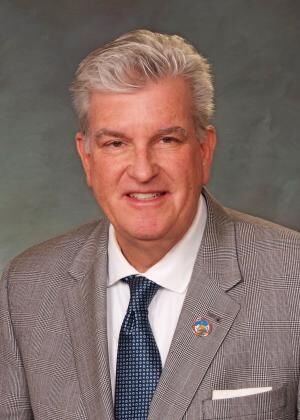
John Carson is a Colorado state senator who previously served on the Senate Health and Human Services Committee and currently serves on the Judiciary Committee.


CoComandering? | Miller Hudson
Miller Hudson
miller-hudson@coloradopolitics.com
Updated 20 hours ago
At 8 a.m., Friday morning, Aug. 28, 70 or 80 mostly bleary-eyed visitors to the Transportation Technology Center outside Pueblo packed a conference room to attend the Front Range Passenger Rail District’s (FRPRD) Board meeting. With the exception of those...

Even Dem court couldn’t abide theft of GOP seats | Dick Wadhams
Dick Wadhams
dick-wadhams@coloradopolitics.com
Updated 15 hours ago
Thanks to the Colorado Supreme Court, Colorado voters will be able to reaffirm their support for the Independent Congressional Redistricting Commission after the court struck down the Democratic scheme to steal three Republican congressional seats. Billionaire-funded national Democratic groups from...

Chaotic meeting began with attempt to squelch public comment | Rachel Gabel
Rachel Gabel
rachel-gabel@coloradopolitics.com
Updated 15 hours ago
When Attorney General Phil Weiser takes the governor’s office in January, he must immediately address the chaos of the latest round of appointees to the Colorado Parks and Wildlife Commission to assure stakeholders he’s willing to put pressure on the...

Graduated income tax proposal is a flat tax in disguise | Jon Caldara
Jon Caldara
jon-caldara@coloradopolitics.com
Updated 3 days ago
“Youth is wasted on all the wrong people.” That’s one of my favorite lines from “It’s a Wonderful Life.” The older I get, the less it sounds like a joke. Every generation inherits victories it did not win. Young Americans...

AI optimism vs. anxiety — podcasters debate this every night | Tom Cronin
Tom Cronin
tom-cronin@coloradopolitics.com
Updated 2 days ago
President Donald Trump, CNBC’s “Mad Money” host Jim Cramer and entrepreneurial “accelerationists” celebrate the AI revolution and the infrastructure data-center build-out. Cramer recently gushed, “I like data centers so much that I wish I lived in one.” Trump criticized any community...

Colorado House ethics committee issues ‘stern letter’ to Democrat over caucus funds mismanagement
Marianne Goodland
marianne.goodland@coloradopolitics.com
Updated 18 hours ago
The Colorado House ethics committee on Friday voted unanimously to issue a “stern letter” to Rep. Mandy Lindsay, D-Aurora, regarding her mismanagement of House Democratic caucus funds. The committee further voted to request that Lindsay resign as Democratic Caucus co-chair...
Manny Rutinel resigns from Colorado legislature to focus on congressional race
Marissa Ventrelli
marissa.ventrelli@coloradopolitics.com
Updated 2 days ago
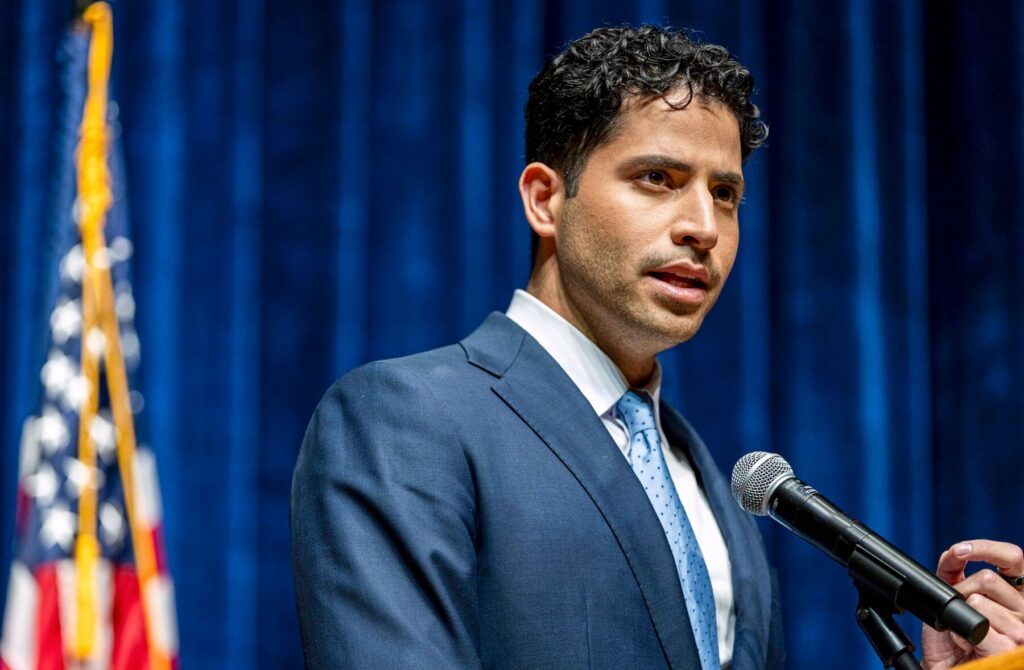
The Democrat running for a key congressional race — whose outcome could decide the balance of power in the U.S. House — on Friday resigned from the Colorado legislature. State Rep. Manny Rutinel is turning his attention to his campaign...

Colorado secures FEMA support for wildfire, flooding and mudslide recovery
Marissa Ventrelli
marissa.ventrelli@coloradopolitics.com
Updated 1 day ago
Federal authorities on Friday approved Colorado’s request for federal public assistance to help communities devastated by the Aspen Acres and Gold Mountain Fires. The Federal Emergency Management Agency did not announce how much the state would receive but confirmed that...

State seeks $50K penalty against GOP candidate Victor Marx over alleged campaign finance violations
Deborah Grigsby
deborah.smith@denvergazette.com
Updated 2 days ago
Republican gubernatorial candidate Victor Marx is looking at more than $50,000 in fines in what the Elections Division of the Office of the Secretary of State calls “unprecedented” campaign finance violations. The state has not imposed that fine yet, and...

Judge puts Colorado Libertarians’ secretary of state candidate on ballot after party’s 1st nominee drops out
Ernest Luning
ernest.luning@coloradopolitics.com
Updated 2 days ago
A Denver judge ruled Friday that the Colorado Libertarian Party’s pick for secretary of state will appear on the November ballot after the party’s original nominee withdrew one day after the deadline to replace minor party candidates. Following a hearing...
PREV
PREVIOUS

Could an independent win CD-1?
Turnout in Colorado’s 2026 primary election should concern many citizens. Only 36% of active registered voters participated, meaning a relatively small share of the electorate effectively determined the choices voters will see on the November ballot. Low participation has allowed highly motivated factions to dominate caucuses and primaries. Many primary voters tend to be driven […]

Protecting Colorado from wildfire starts before fire arrives | PODIUM
By Rick Cables Colorado is once again being reminded of how significantly wildfires can affect the people and places we love. In southern Colorado, the Aspen Acres fire has burned through the Wet Mountains near Beulah and Rye, quickly becoming one of the 10 largest fires in Colorado history. For me, this fire is personal. […]